
Wristwatches · Wristwatch
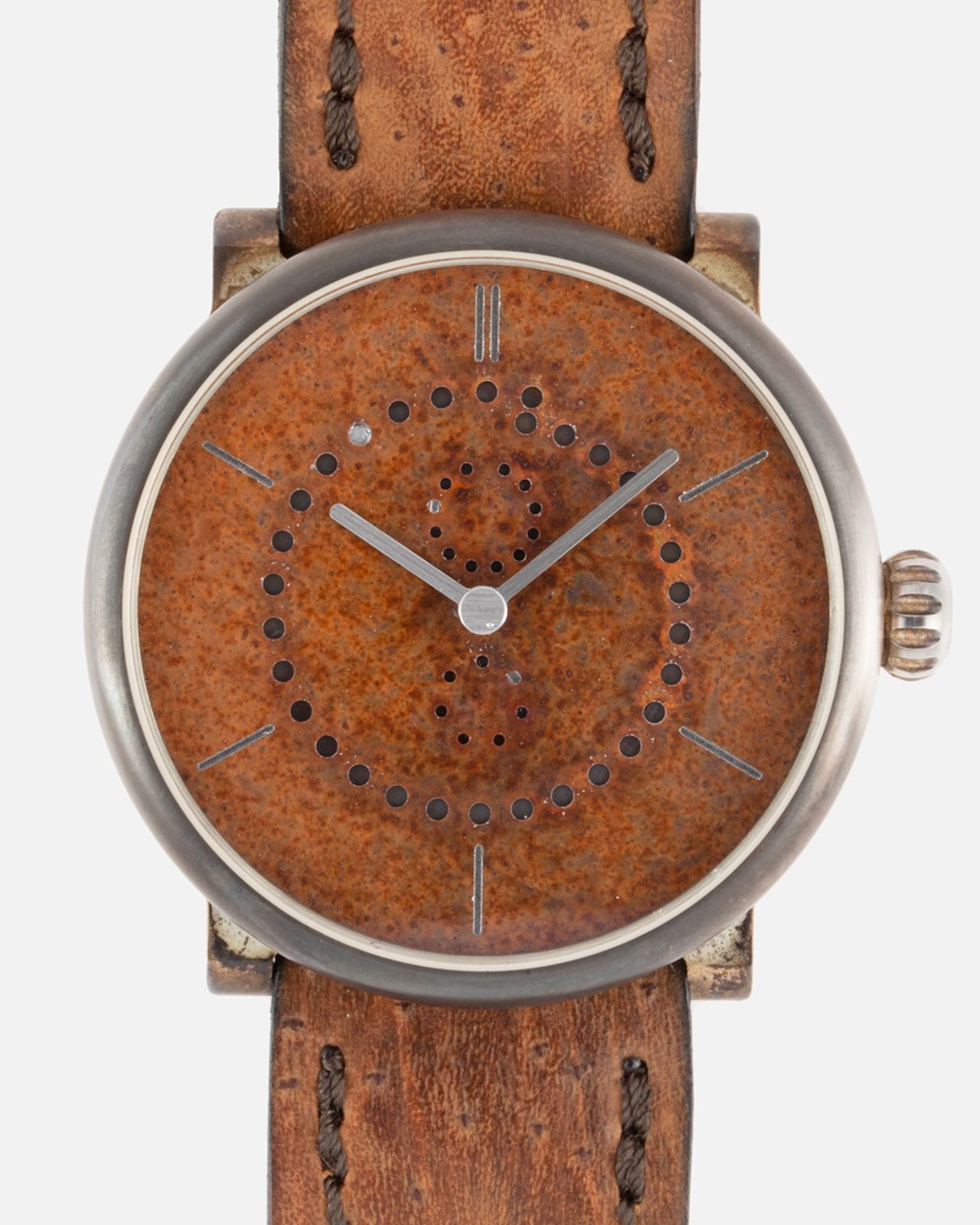
Ochs Und Junior Annual Calendar Rust, 2017
- Maker / attribution
- Ochs und Junior (maker)
- Date
- 2017
- Historical period
- Contemporary Horology (2010 – Present)
- Country of origin
- Unrecorded in source
- Object type
- Wristwatch
- Stock no.
- Product 4286862164055
- Credit line
- Dealer listing, S.Song Watches (product 4286862164055)
- Catalogue title (original)
- Ochs Und Junior Annual Calendar Rust (English)
View the source record (dealer listing) ↗ (opens another website in a new tab)Suggest a correction
Record summary
Catalogued by S.Song Watches (dealer), Seattle (stock number Product 4286862164055), this is a wristwatch by Ochs und Junior, dated 2017. The Atlas places it in the Contemporary Horology period (2010 – Present) of its Wristwatches collection. The record is illustrated with 6 photographs.
Assembled from the source record's structured fields. Dates and attributions are given as the source states them; where a field is missing the Atlas leaves it blank rather than estimating.
Catalogue description
Dealer description — S.Song Watches
While most watch companies are rated by how complicated and intricate their timepieces are, the folks over at independent brand Ochs und Junior strive in the other direction- simplicity. Truly and avant-garde brands, they have over the years garnered a loyal following for their unique approach to watchmaking. Beginning with their philosophy, it was their goal to create pieces with only essential parts, meaning the fewer components the better. Strange to think that most watches use the number of parts as a selling point whereas here is a brand striving for the opposite. Furthermore, customization was a big part of how Ludwig Oechslin wanted to run his brand and as a result, you can create and request all kinds of dial design and case material. The example you see here today is a result of this and one that perfectly encapsulates the philosophy of Ochs und Junior. This is an Annual Calendar model housed in a sterling silver 925 case and rust treated dial. That’s quite a lot to digest but let's start with the mechanics- an annual calendar is considered a high-end complication that takes into account 30 and 31 days of the month, needing only to be adjusted once a year in February. While Patek Philippe uses 154 parts to produce their annual calendar, Ochs und Junior only uses six individual parts using a gear system. This is incredibly forward-thinking and impressive and is in line with the less the better, improving reliability and servicing times. Looking at the dial, the layout is as simple as it gets with dots on the outside indicating the day of the month, the top inner sub-dial indicating the month and the bottom inner sub-dial showing the day of the week. And just like that, it is immediately understandable. Aesthetically the watch is super rugged, with a sterling silver case that has developed a beautiful patina. The rust dial was a custom order and has a beautiful texture to it contrasted with the cold silver steel hands and dots. Ochs und Junior watches do not come with papers and exist as a watch only, showing how extreme the brand is going with simplicity. You either love or hate Ochs und Junior but you have to commend their forward thinking and beautifully unique complications and timepieces.
Historical context
Contemporary Horology (2010 – Present)
Silicon components, connected watches, optical-lattice research clocks and a thriving independent scene.
Smartwatches became the world's best-selling watches, while mechanical watchmaking focuses on craft, innovation (silicon components, new escapements) and independent makers.
Read the period in the timelineMore wristwatches from this periodEarlier: Mechanical Renaissance
Atlas type guide
Calendar, moon-phase and perpetual calendar watches
Calendar complications range from a simple date to the perpetual calendar, which automatically allows for months of different lengths and leap years until 2100. Pocket watches with perpetual calendars were made in the eighteenth and nineteenth centuries; Patek Philippe made the first perpetual calendar wristwatch in 1925, and series production followed in 1941. The annual calendar (Patek Philippe, 1996) needs correction only once a year.
Moon-phase displays use a disc with two moons and 59 teeth advanced daily, approximating the 29.5-day lunation; more precise trains reduce the error to one day in over a century.
What to look for
- Apertures or subsidiary dials for day, date, month and leap year.
- Moon disc under a 'bosom' shaped aperture.
- Recessed correctors on the case band for setting the calendar.
Dating clues
- Triple-date wristwatches: popular c. 1940–1955.
- Perpetual calendar wristwatches: from 1925 (unique) and 1941 (series).
General guidance written by the Atlas editors about this kind of object. It is not a statement about this particular piece; for that, rely on the source record above and on physical examination.
Related records
Wristwatches · 2010
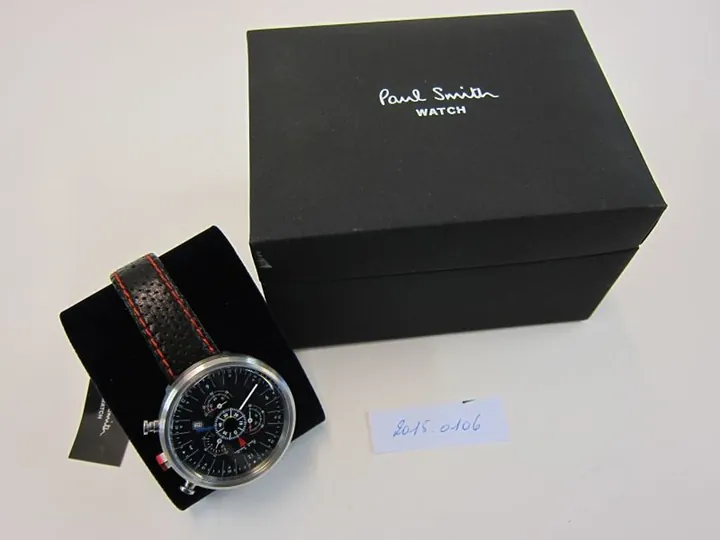
Wristwatch, 2010
Modemuseum Hasselt
Wristwatches · 2018 (Series 4 released in September 2018; '1977' in the source is the model number A1977)
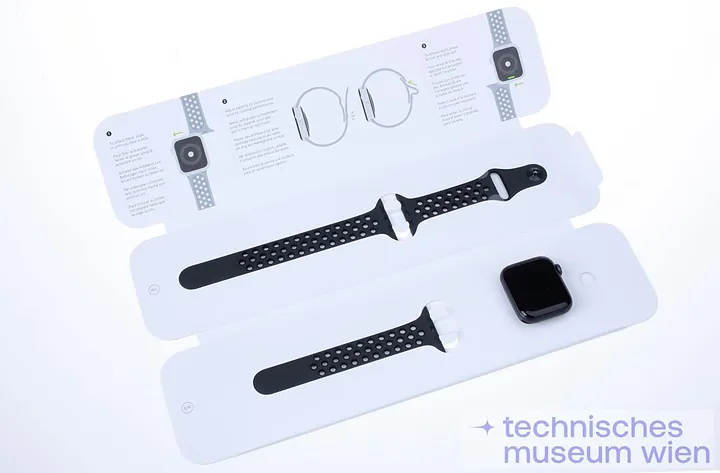
Apple Watch Series 4 (GPS, 40 mm, model A1977), 2018
Vienna Museum of Science and Technology
Wristwatches · c. 2010s
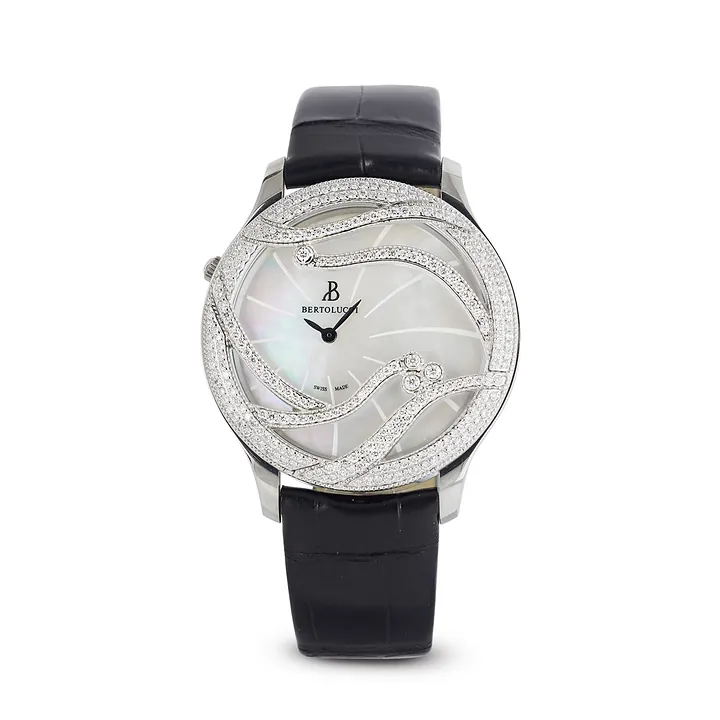
Bertolucci Stria III, ref. 11513.50.45.B88.6C1.501, c. 2010s
Antiquorum auction archive, Geneva
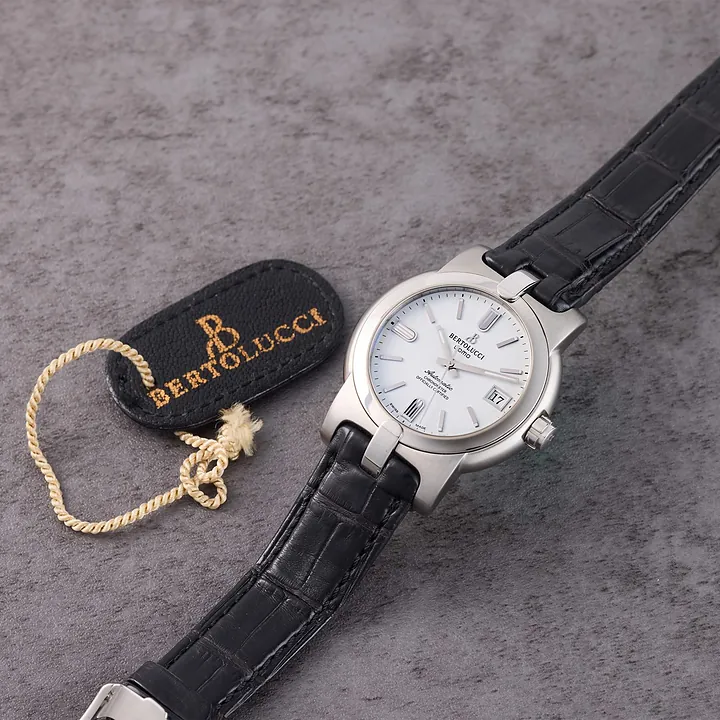
Wristwatches · c. 2010s
Bertolucci Uoma, ref. 824.51.41.10B, c. 2010s
Antiquorum auction archive, Geneva

Wristwatches · c. 2010s
Breguet Type XXI, ref. 3810, c. 2010s (Antiquorum Lot 381-24)
Antiquorum auction archive, Geneva

Wristwatches · c. 2010s
Breguet Type XXI, ref. 3810, c. 2010s (Antiquorum Lot 386-229)
Antiquorum auction archive, Geneva

Wristwatches · Sold in September 2010
Breitling Cosmonaute, ref. A 22322, Sold in September 2010
Antiquorum auction archive, Geneva
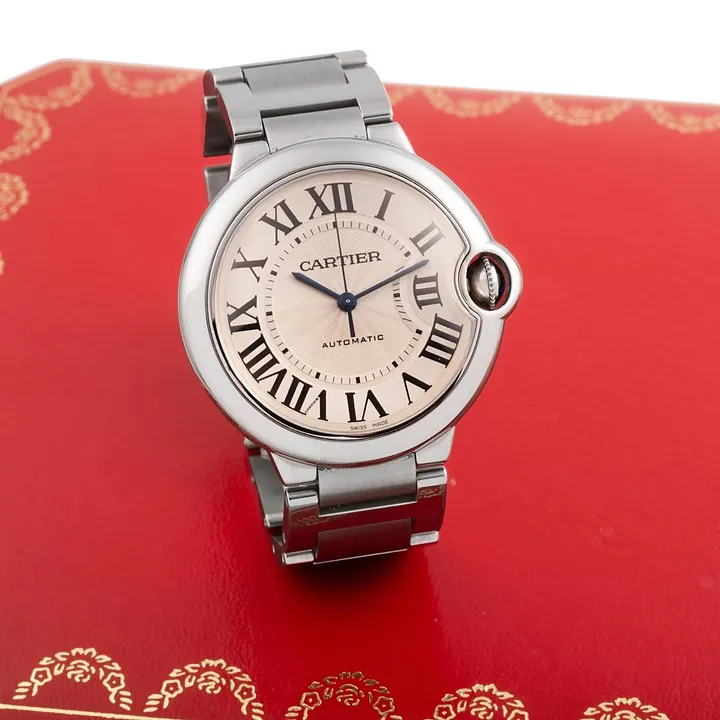
Wristwatches · c. 2010s
Cartier Ballon Bleu, ref. 3284, c. 2010s
Antiquorum auction archive, Geneva