
Instruments · Nocturnal
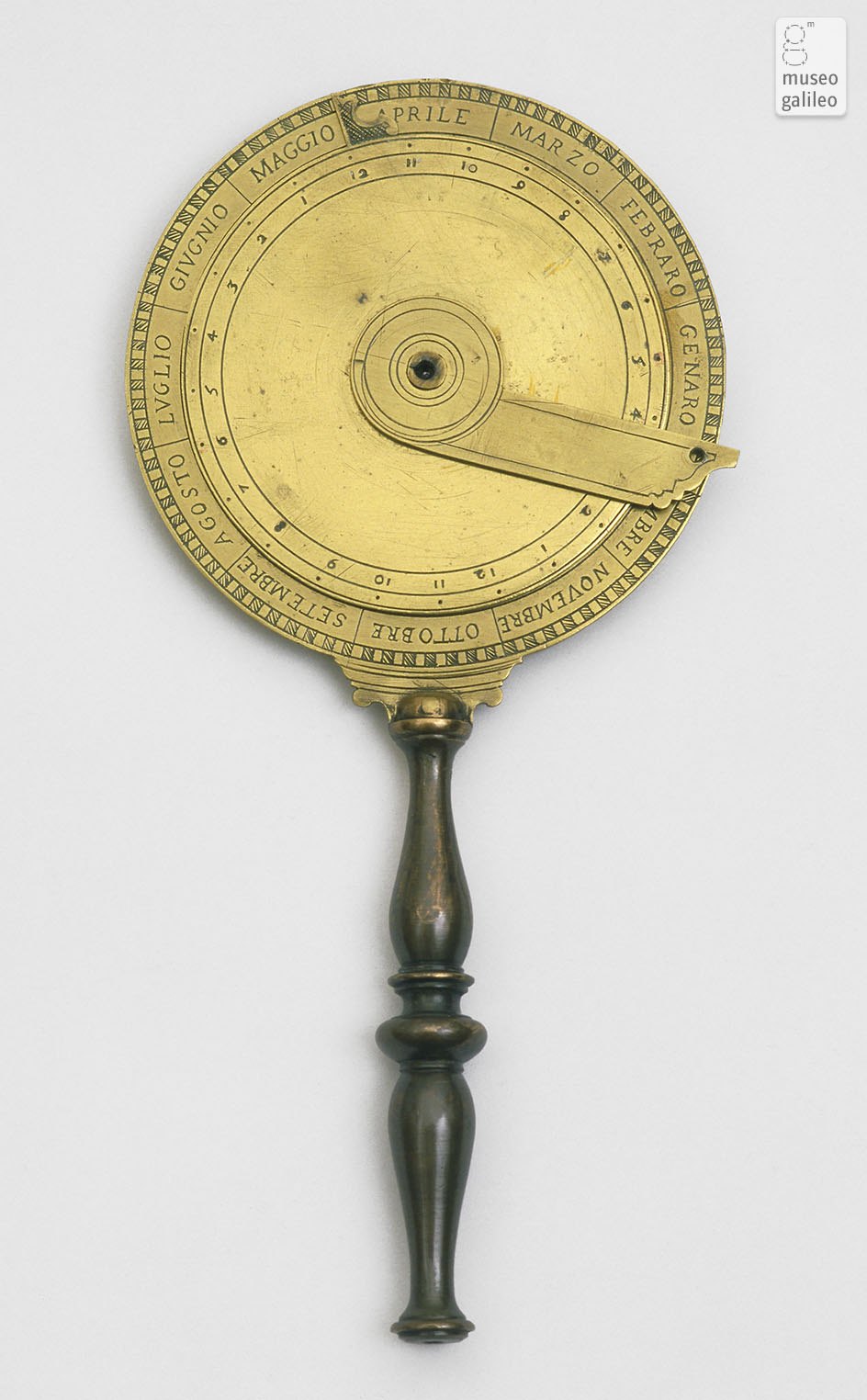
Nocturnal, Italy, mid-17th century
- Maker / attribution
- Unrecorded in source
- Date
- mid-17th century
- Historical period
- Early Modern Horology (1600 – 1750)
- Country of origin
- Italy
- Place
- Italian
- Object type
- Nocturnal
- Materials / technique
- brass, bronze
- Dimensions
- 186x88 mm
- Holding institution
- Museo Galileo, Florence
- Accession / object no.
- Inv. 2493
- Credit line
- Museo Galileo, Florence
- Catalogue title (original)
- Nocturnal (English)
View the source record ↗ (opens another website in a new tab)Suggest a correction
Record summary
Held and catalogued by Museo Galileo, Florence (object number Inv. 2493), this is a nocturnal, made in Italian, Italy, dated mid-17th century. The Atlas places it in the Early Modern Horology period (1600 – 1750) of its Instruments collection. Materials and techniques recorded by the source: brass, bronze. Recorded dimensions: 186x88 mm. The record is illustrated with 1 photograph.
Assembled from the source record's structured fields. Dates and attributions are given as the source states them; where a field is missing the Atlas leaves it blank rather than estimating.
Catalogue description
Catalogue description — Museo Galileo
Nocturnal comprising two superposed brass disks of different diameter. The larger carries the markings of the months, the other the markings of the hours. Around the central opening is mounted the index. The instrument rests vertically on a molded bronze handle. Provenance: Medici collections.
Provenance
Medici collections
Historical context
Early Modern Horology (1600 – 1750)
Huygens' pendulum and balance spring transform accuracy; English makers develop the anchor and deadbeat escapements.
Pocket sundials, Butterfield dials and sandglasses remained essential companions to imperfect clocks; navigators used sandglasses and the log line; observatories began to combine telescopes with pendulum clocks.
Read the period in the timelineMore instruments from this periodEarlier: Renaissance Horology
Atlas type guide
Nocturnals
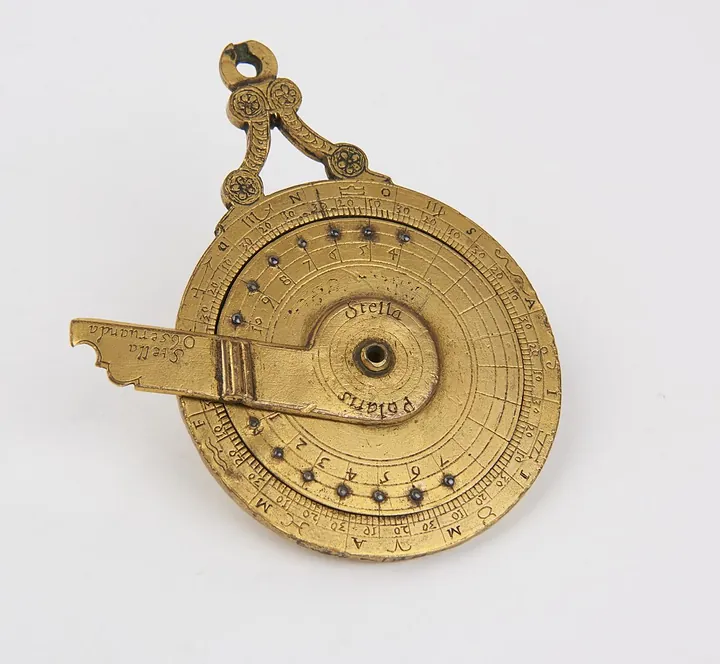
A nocturnal tells the time at night from the rotation of the stars around the celestial pole. The user sights Polaris through the central hole and turns a long pointer to align with the 'guard' stars of the Little Bear or the 'pointers' of the Great Bear. A calendar scale set to the date converts that angle to the hour.
Nocturnals were used from the sixteenth to the eighteenth century by navigators and travellers. Many are made of boxwood or brass, with tactile teeth on the hour disc so that the time can be counted in the dark.
What to look for
- A central sighting hole and a long index arm.
- Engraved letters such as 'B' (Bear) or 'BB' indicating which constellation to use.
- Teeth on the hour disc with a longer tooth for midnight.
Dating clues
- Most surviving nocturnals date from about 1550 to 1750.
General guidance written by the Atlas editors about this kind of object. It is not a statement about this particular piece; for that, rely on the source record above and on physical examination.
Related records
Instruments · 1575–1625
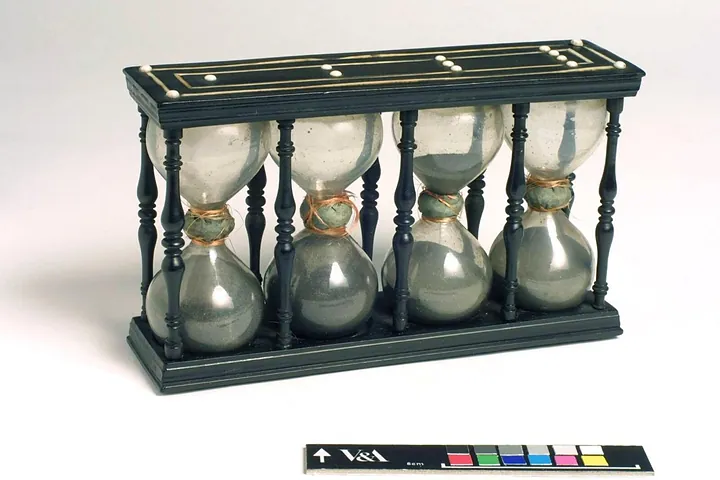
Sand-glass set (x4) fitted into an ebony case, inlaid with ivory. Italian, c1600
Victoria and Albert Museum, London
Instruments · 1601–1700
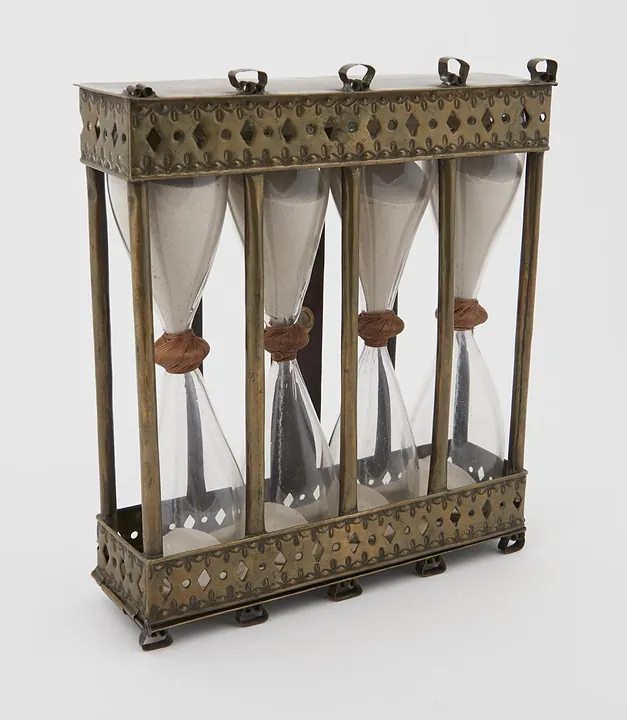
17th century Italian four-way hour glass with brass stand
Science Museum Group, London
Instruments · 1601–1700
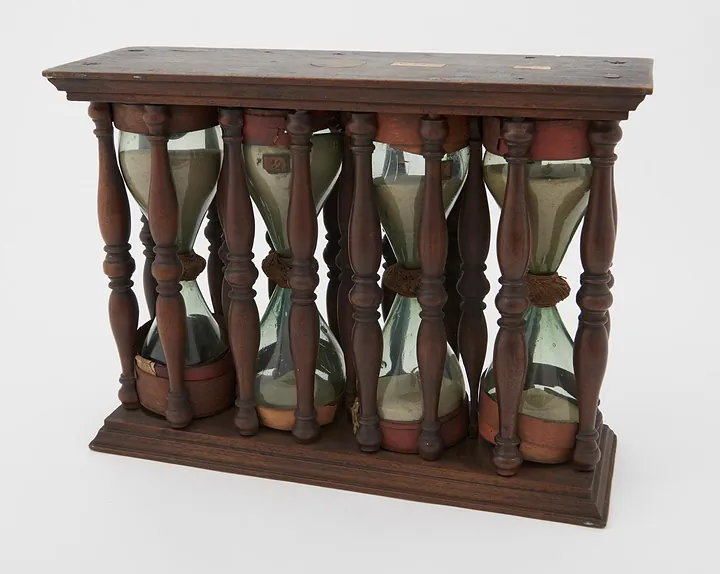
Italian four-way hour glass with wooden frame, 1601–1700
Science Museum Group, London
Instruments · 1601–1650
Nocturnal, brass gilt, diameter 2 3/4in. Italian, 1601–1650
Science Museum Group, London
Instruments · 1601–1700
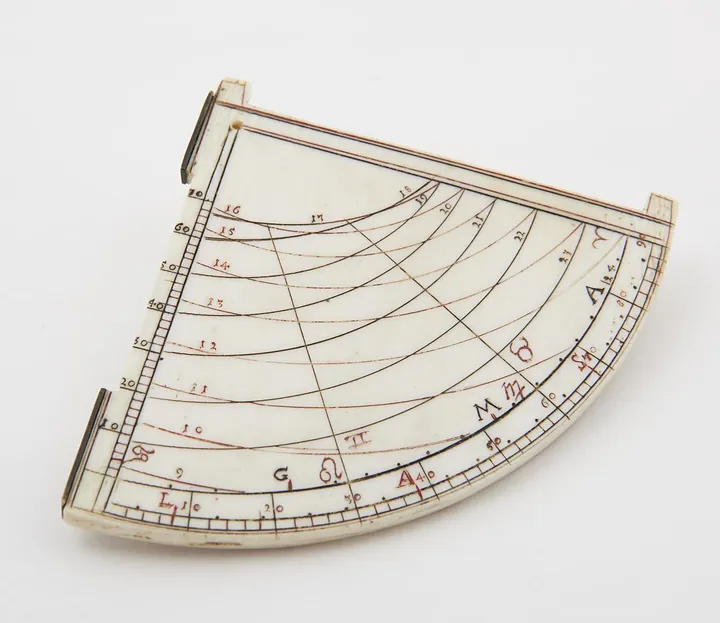
Quadrant sundial of ivory, Italian hours, for use at latitude 44°, Italy, 1601–1700.
Science Museum Group, London
Instruments · 1651–1700
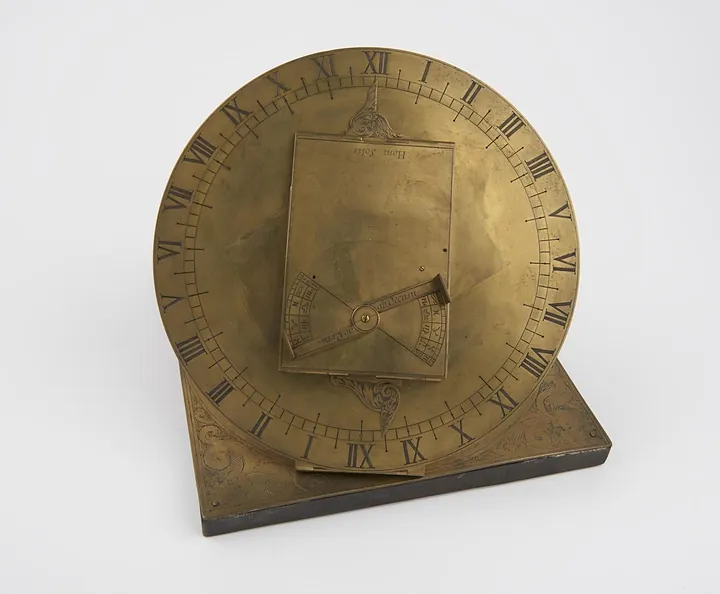
Azimuth Sundial, brass, "Jacobus Lusuerg" fa: Romae
Science Museum Group, London
Instruments · 1677
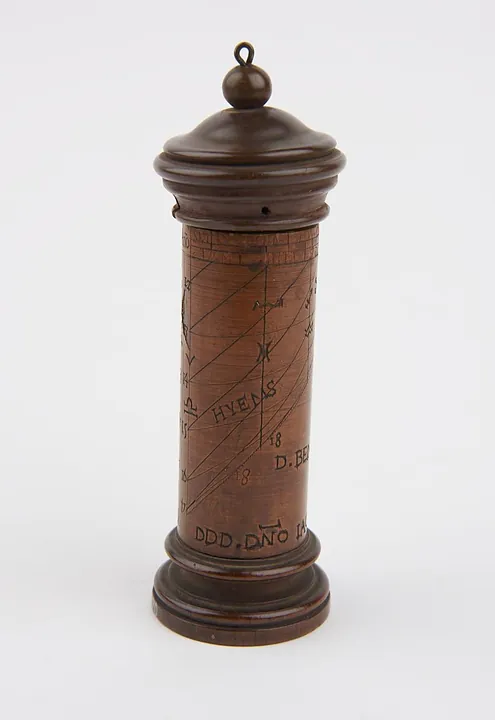
Wooden column sundial, showing Italian hours, signed and dated 1677. Probably Italian.
Science Museum Group, London
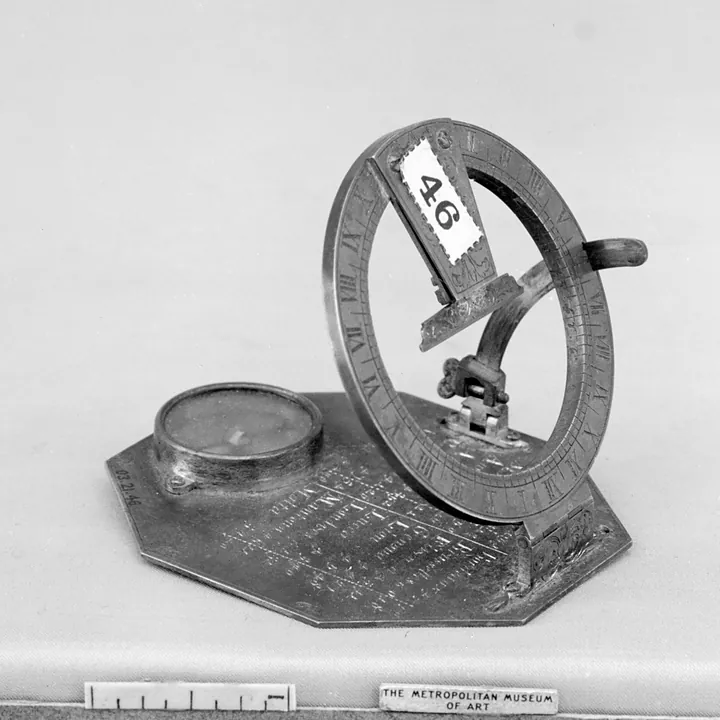
Instruments · 1701
Portable equatorial or equinoctial sundial by Dominicus Lusuerg, 1701
The Metropolitan Museum of Art, New York