
Wristwatches · Wristwatch
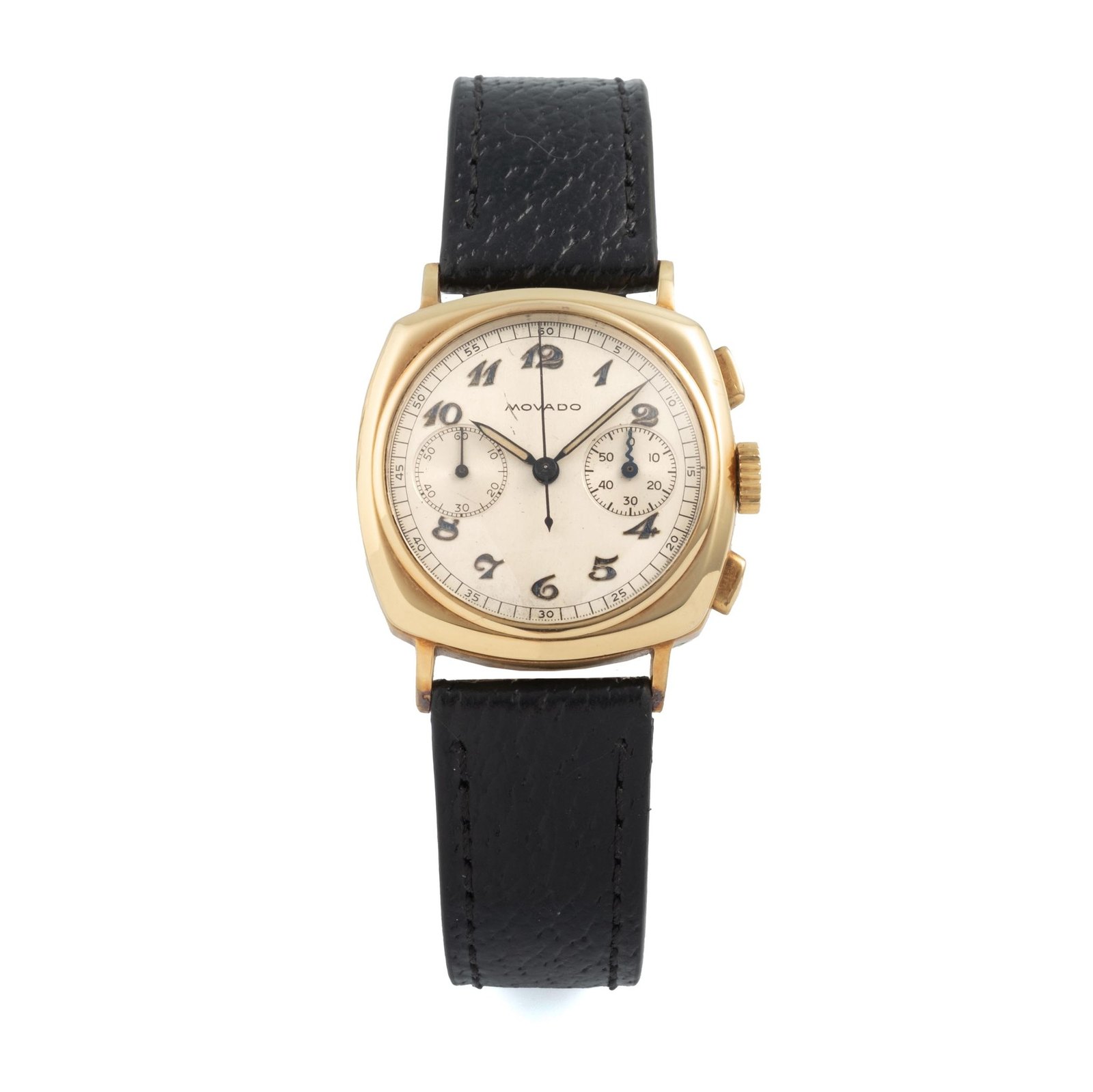
Movado wristwatch, ref. 9013, Chronograph, circa 1950's
- Maker / attribution
- Movado (brand / maker)
- Date
- c. 1950s
- Historical period
- Modern Mechanical Horology (1945 – 1969)
- Country of origin
- Switzerland
- Object type
- Wristwatch
- Materials / technique
- 18k yellow gold
- Dimensions
- diameter 30 x 36 (with lugs) mm
- Auction house
- Antiquorum auction archive, Geneva
- Lot
- Lot 381-42
- Credit line
- Auction lot record: LOT 42, Geneva, November 8th-9th, 2025
- Catalogue title (original)
- MOVADO, SWITZERLAND, REF. 9013, CHRONOGRAPH, 18K YELLOW GOLD (English)
View the source record (auction lot) ↗ (opens another website in a new tab)Suggest a correction
Record summary
Catalogued by Antiquorum auction archive, Geneva (lot Lot 381-42), this is a wristwatch by Movado, made in Switzerland, dated c. 1950s. The Atlas places it in the Modern Mechanical Horology period (1945 – 1969) of its Wristwatches collection. Materials and techniques recorded by the source: 18k yellow gold. Recorded dimensions: diameter 30 x 36 (with lugs) mm. The record is illustrated with 1 photograph.
Assembled from the source record's structured fields. Dates and attributions are given as the source states them; where a field is missing the Atlas leaves it blank rather than estimating.
Catalogue description
Antiquorum catalogue description
A very fine and rare, 18k yellow gold, manual wind wristwatch, silver dial with Breguet indexes
Lot specifications (Antiquorum)
Model: Chronograph; Reference: 9013; Case No.: 97022; Bracelet: gold plated buckle; Caliber: M 90, 17 jewels; Diameter: 30 x 36 (with lugs); Weight: approx 35g; Signature: case, dial and movement
Inscriptions & marks
case, dial and movement
Provenance
Property of an Italian collector
Historical context
Modern Mechanical Horology (1945 – 1969)
Tool watches for divers, pilots and astronauts; electric watches anticipate the electronic age.
The classic era of the mechanical wristwatch: dive watches, chronographs for motor racing and space flight, GMT watches for jet travel, slim dress watches, automatic calendars, and the rise of Japanese manufacturers alongside Swiss, American, German and Soviet industries.
Read the period in the timelineMore wristwatches from this periodEarlier: Golden Age of Mechanical Watchmaking
Atlas type guide
Chronographs and split-seconds watches
A chronograph is a watch with an additional seconds hand that can be started, stopped and returned to zero independently of the timekeeping. Louis Moinet built an early example in 1816 and Nicolas Rieussec a recording 'chronographe' in 1821; Adolphe Nicole's heart-shaped reset cam (patented 1862) made the modern return-to-zero possible. Split-seconds (rattrapante) chronographs add a second hand that can be stopped for intermediate times; flyback chronographs restart instantly.
Chronographs were essential tools for doctors (pulsometer scales), artillery (telemeter), engineers and sport. In wristwatches, Valjoux, Venus, Lemania and later the automatic chronographs of 1969 (Zenith El Primero, the Chronomatic Calibre 11 group and Seiko 6139) are milestones.
What to look for
- Push-pieces on the case band or a single button in the crown (monopusher).
- Subsidiary registers for minutes and hours; tachymeter, telemeter or pulsometer scales.
- Column wheel versus cam control visible in the movement.
- Calibre markings of specialist makers (Valjoux, Lemania, Venus, Landeron).
Dating clues
- Pocket chronographs with heart cam reset: after 1862.
- Wrist chronographs: from c. 1910; two-button designs from the 1930s.
- Automatic chronographs: from 1969.
General guidance written by the Atlas editors about this kind of object. It is not a statement about this particular piece; for that, rely on the source record above and on physical examination.
Read next:Flyback chronographChronograph
Related records
Pocket Watches · c. 1960s
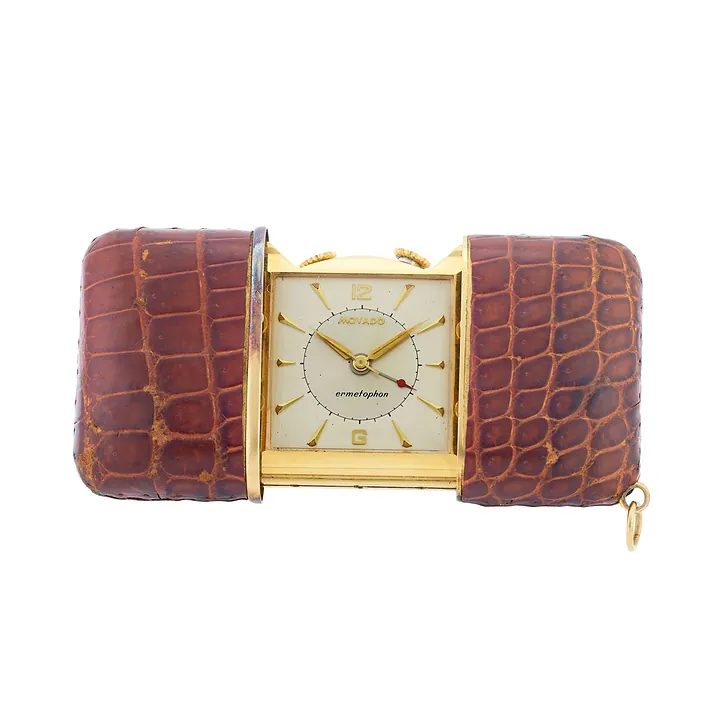
Movado Ermetophone, c. 1960s
Antiquorum auction archive, Geneva
Wristwatches · c. 1920s
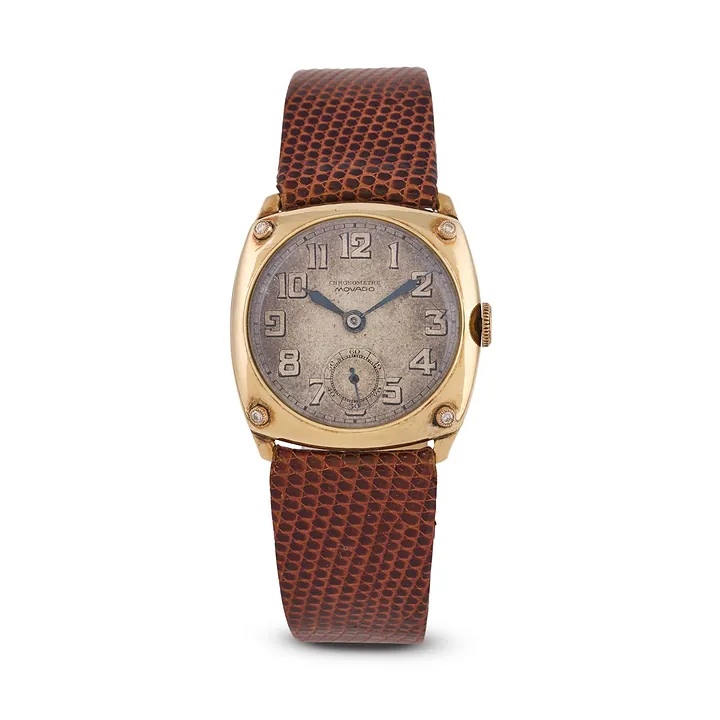
Movado Chronometre, ref. 41536, c. 1920s
Antiquorum auction archive, Geneva
Wristwatches · c. 1930s
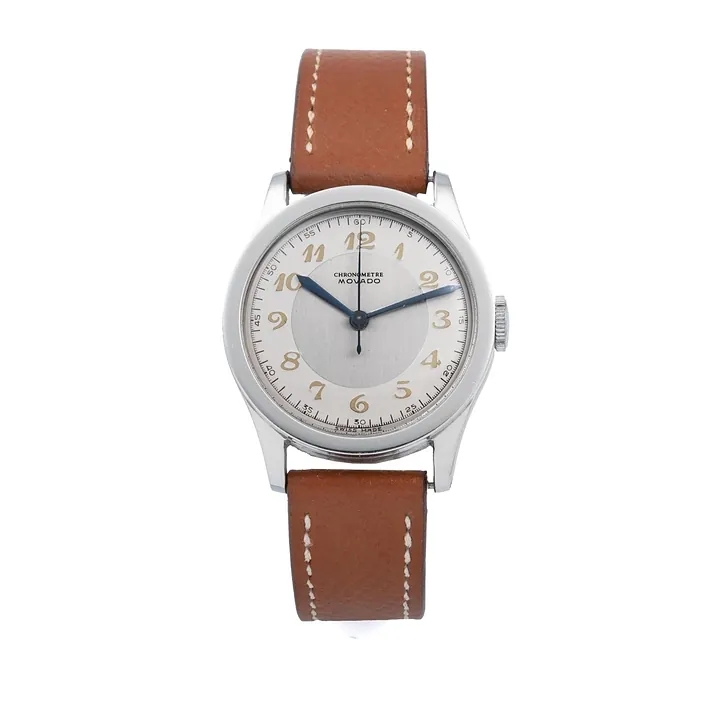
Movado "calatrava", ref. 17726, c. 1930s
Antiquorum auction archive, Geneva
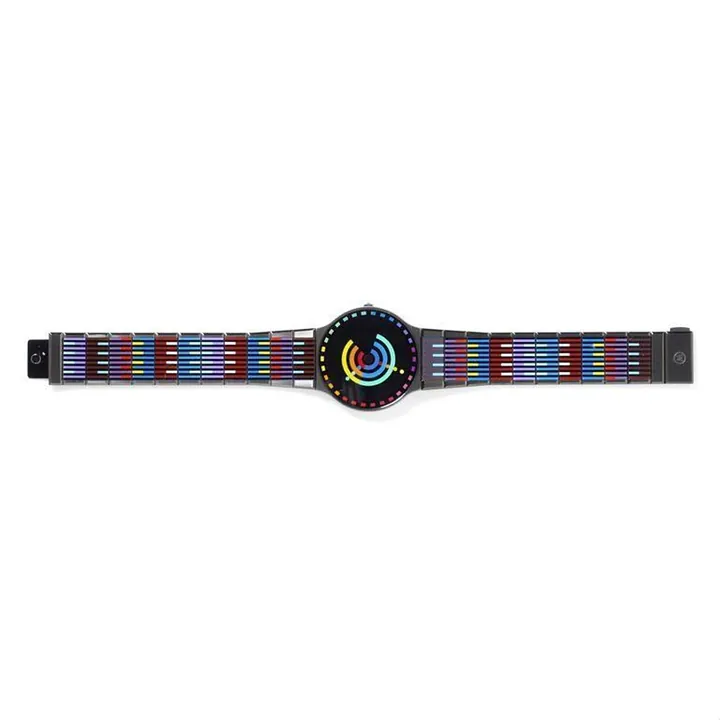
Wristwatches · c.1989
Steel, France and Switzerland, 1989; designed by Yaacov Agam (born 1928) for a limited edition by Movado
Victoria and Albert Museum, London

Wristwatches · 1945
Wristwatch by Eterna, 1945
Museum Rotterdam

Wristwatches · c. 1945
Breitling Premier, ref. 790, c. 1945
Antiquorum auction archive, Geneva

Wristwatches · c. 1945
Universal Genève Uni-Compax, ref. 22492, c. 1945
Antiquorum auction archive, Geneva

Wristwatches · c. 1950s
Baume & Mercier wristwatch, c. 1950s
Antiquorum auction archive, Geneva