
Instruments · Metronome
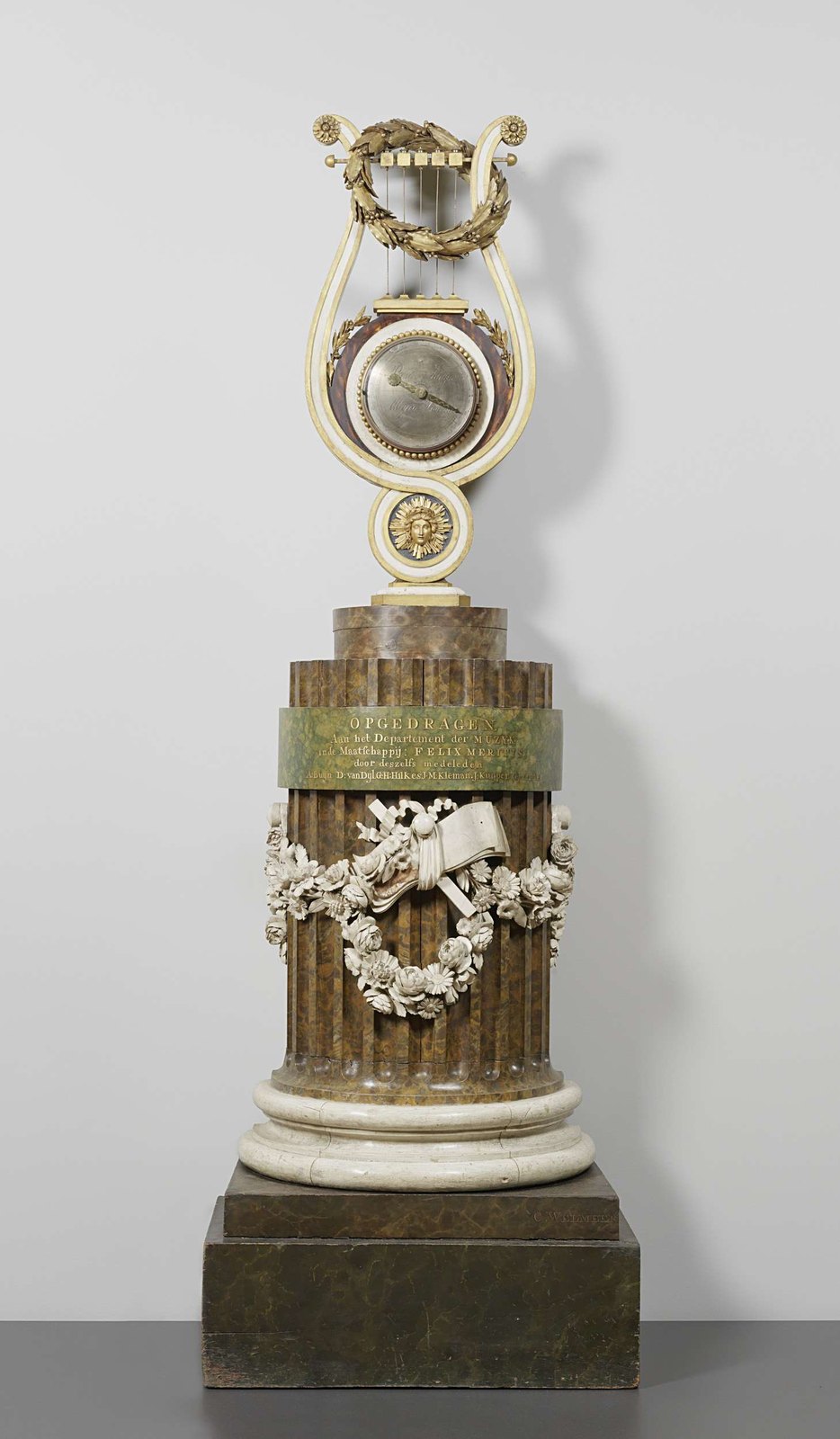
Metronome, Netherlands, 1803
- Maker / attribution
- Unrecorded in source
- Date
- 1803
- Historical period
- Precision & Scientific Horology (1750 – 1850)
- Country of origin
- Netherlands
- Place
- Amsterdam Amsterdam urn:rijksmuseum:thesaurus:RM0001.THESAU.41
- Object type
- Metronome
- Materials / technique
- Gift of the Maatschappij Felix Meritis
- Dimensions
- height 229.5 cm height 196 cm width 76.3 cm width 69.5 cm depth 42 cm depth 39 cm
- Holding institution
- Rijksmuseum
- Accession / object no.
- BK-NM-8936
- Credit line
- Rijksmuseum
- Catalogue title (original)
- Metronome (English)
View the source record ↗ (opens another website in a new tab)Suggest a correction
Record summary
Held and catalogued by Rijksmuseum (object number BK-NM-8936), this is a metronome, made in Amsterdam Amsterdam urn:rijksmuseum:thesaurus:RM0001.THESAU.41, Netherlands, dated 1803. The Atlas places it in the Precision & Scientific Horology period (1750 – 1850) of its Instruments collection. Materials and techniques recorded by the source: Gift of the Maatschappij Felix Meritis. Recorded dimensions: height 229.5 cm height 196 cm width 76.3 cm width 69.5 cm depth 42 cm depth 39 cm. The record is illustrated with 1 photograph.
Assembled from the source record's structured fields. Dates and attributions are given as the source states them; where a field is missing the Atlas leaves it blank rather than estimating.
Catalogue description
Catalogue description from Rijksmuseum
A metronome is a device for keeping time (a steady beat) while playing music. This example was given by several members of the Felix Meritis Society to its music department. It is shaped like a lyre surmounted by a laurel wreath, symbolizing the Triumph of Music.
Historical context
Precision & Scientific Horology (1750 – 1850)
Harrison solves longitude; Mudge invents the lever; Breguet's Paris workshop defines the modern watch.
The longitude problem was solved by the marine chronometer and lunar distance methods; dividing engines made precision scales possible, and observatories set time by transit instruments.
Read the period in the timelineMore instruments from this periodEarlier: Early Modern Horology
Atlas type guide
Timers, stopwatches, chronoscopes and time recorders
Instruments for measuring short intervals or recording when something happened form a large and practical branch of horology. Sports stopwatches and split-seconds timers, laboratory chronoscopes (such as Hipp's, which measured thousandths of a second for psychology and ballistics experiments), metronomes for music, watchmen's clocks that recorded patrol rounds, and the time recorders that clocked factory workers in and out all derive from clock and watch technology.
These objects matter historically because they show timekeeping leaving the observatory and the drawing room and entering industry, science and sport. Many were mass-produced, and their dials, scales and patents chart the rise of electrification and industrial management.
What to look for
- Scales graduated in fifths, tenths or hundredths of a second, or decimal minutes for industrial use.
- Start, stop and reset push-pieces; a second hand that can be stopped independently (split seconds).
- Recording devices: paper discs or tapes, printing mechanisms, keys or punches.
- Patent numbers and dates on the dial or case, which give a terminus post quem.
Dating clues
- Hipp chronoscopes were made from the 1840s into the twentieth century.
- Employee time recorders spread from the 1890s (Bundy, IBM, International Time Recording Co.).
- Quartz and electronic timers replaced mechanical stopwatches in sport from the 1970s.
General guidance written by the Atlas editors about this kind of object. It is not a statement about this particular piece; for that, rely on the source record above and on physical examination.
Read next:ChronographFlyback chronograph
Related records
Instruments · c.1775
Marine chronometer
Royal Museums Greenwich
Instruments · c. 1750
Magnetic sundial-MHS 1818
Musée d'histoire des sciences de la Ville de Genève
Instruments · 1726–1775
Universal equinoctial sundial of the Augsburg type, signed on the base "L T M" (Ludwig Theodatus Muller). In original case. German, mid 18th century. (B1670)
Science Museum Group, London
Instruments · 1731–1776
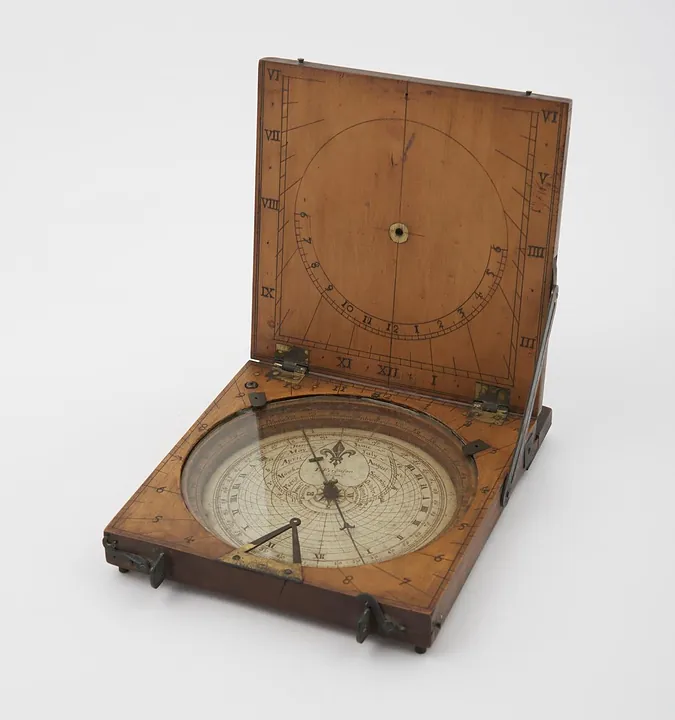
Azimuth compass sundial by James Ferguson, London, England, 1731–1776. Could also be used as a tablet sundial - string gnomon is missing (see note).
Science Museum Group, London
Instruments · 1734–1770
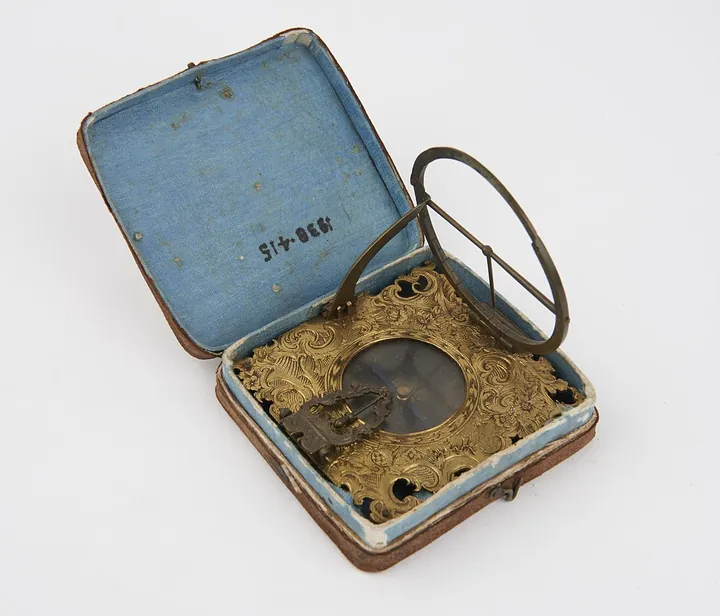
Sundial by Ludwig Theodatus Muller, Germany, 1734–1770 (no. 1938-415)
Science Museum Group, London
Instruments · 1734–1770
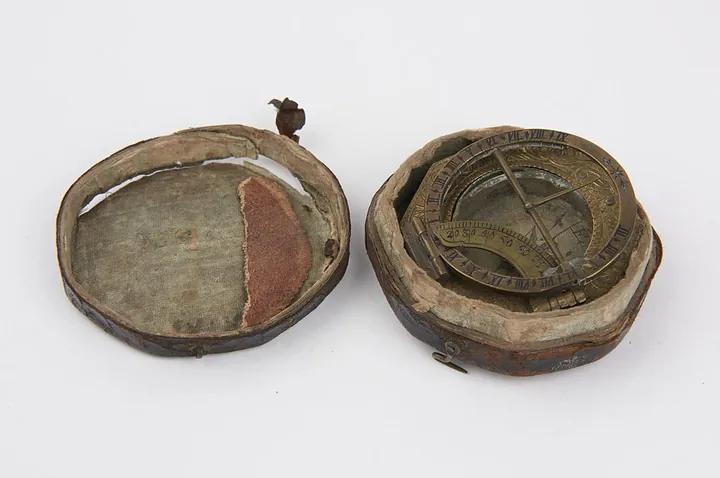
Sundial by Ludwig Theodatus Muller, Germany, 1734–1770 (no. 1991-138)
Science Museum Group, London
Instruments · 1734–1770
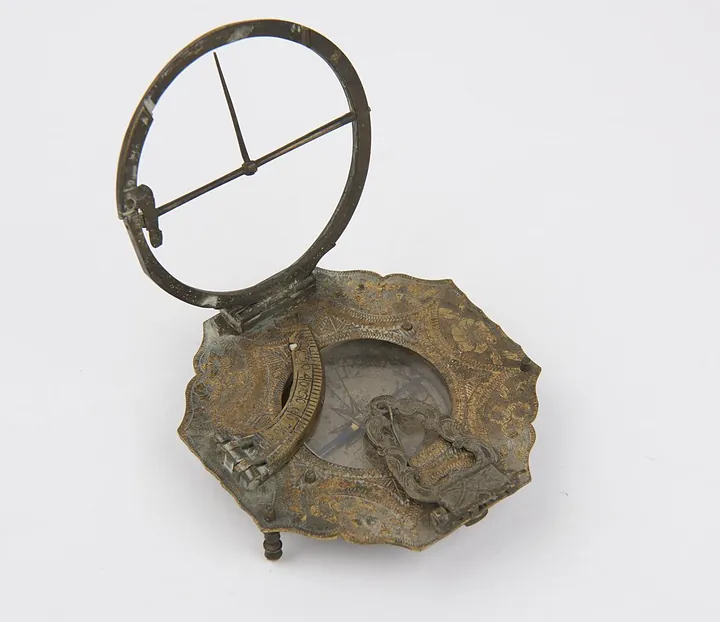
Sundial by Ludwig Theodatus Muller, Germany, 1734–1770 (no. 1991-192)
Science Museum Group, London
Instruments · 1738–1777
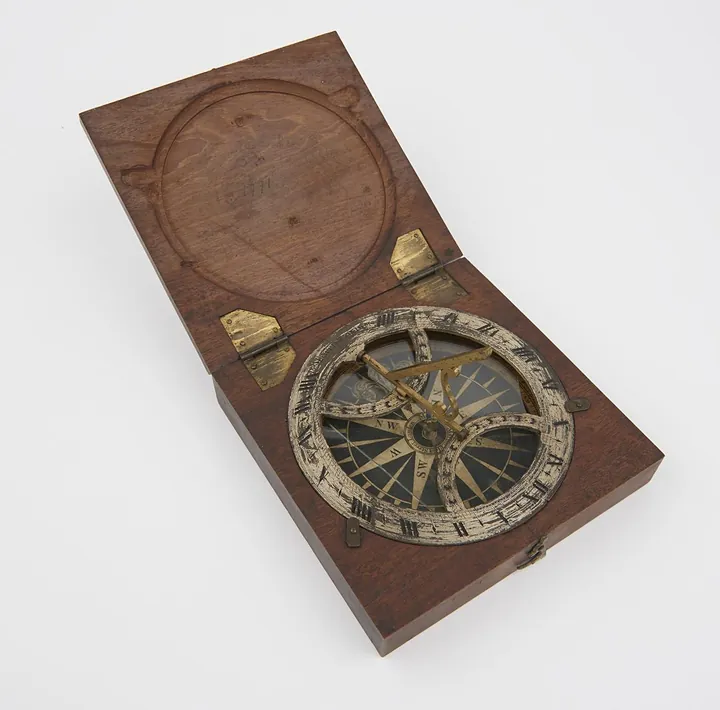
Azimuth sundial 4 3/8" diam, with folding gnomon fitted in mahogany case, made by B. Martin
Science Museum Group, London