
Pocket Watches · Pocket watch
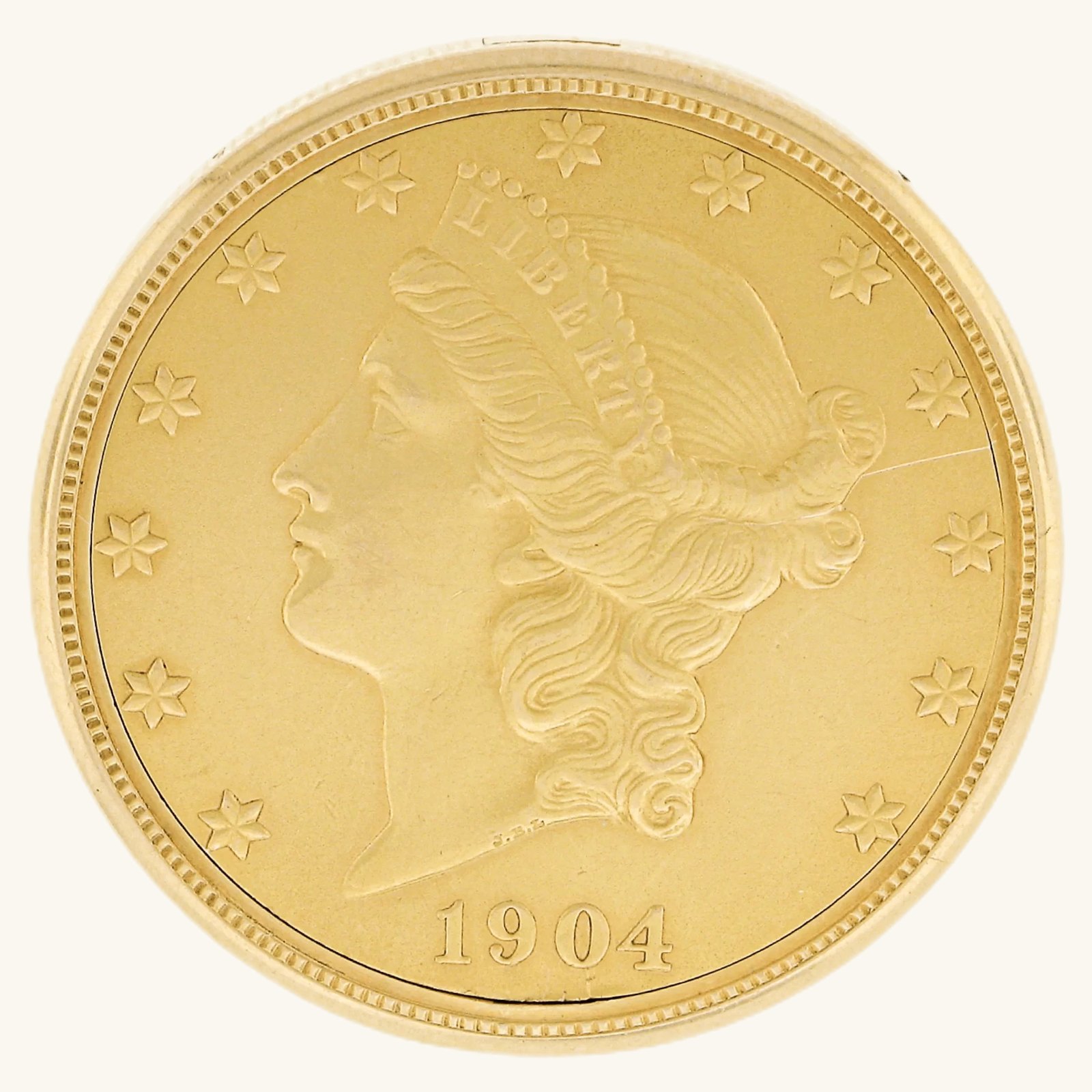
Mauboussin 18k Gold Hidden Pocket Watch in Double Eagle 20 Dollar Liberty Coin, 1950
- Maker / attribution
- Unrecorded in source
- Date
- 1950
- Historical period
- Modern Mechanical Horology (1945 – 1969)
- Country of origin
- Unrecorded in source
- Object type
- Pocket watch
- Materials / technique
- gold
- Dealer
- WatchMuseum.org shop
- Stock no.
- Product 2833
- Credit line
- Dealer listing, WatchMuseum.org shop (product 2833)
- Catalogue title (original)
- Mauboussin 18k Gold Hidden Pocket Watch in Double Eagle 20 Dollar Liberty Coin (English)
View the source record (dealer listing) ↗ (opens another website in a new tab)Suggest a correction
Record summary
Catalogued by WatchMuseum.org shop (stock number Product 2833), this is a pocket watch, dated 1950. The Atlas places it in the Modern Mechanical Horology period (1945 – 1969) of its Pocket Watches collection. Materials and techniques recorded by the source: gold. The record is illustrated with 6 photographs.
Assembled from the source record's structured fields. Dates and attributions are given as the source states them; where a field is missing the Atlas leaves it blank rather than estimating.
Catalogue description
Dealer description — WatchMuseum.org shop
The Mauboussin 18k Gold Hidden Pocket Watch in Double Eagle 20 Dollar Liberty Coin – 1950 is a captivating blend of artistry and precision, encapsulated within a solid 18k yellow gold 1904 Liberty coin case. Crafted in France by the renowned Mauboussin in collaboration with Trabert & Hoeffer, this vintage piece is a testament to exceptional craftsmanship and engineering. The French-made movement is meticulously designed to wind, set, and run with impeccable accuracy, making it not only a beautiful piece but also a functional timekeeper. Despite its age, the watch remains in excellent condition, showcasing only minor wear that adds to its historical charm. The ingenious design of the case, which is remarkably thin and opens seamlessly, conceals the hidden watch in a manner that is virtually undetectable. This exquisite timepiece is a rare and valuable find, highly coveted by collectors and enthusiasts alike for its unparalleled craftsmanship and timeless elegance. With a diameter of 34.3 mm and a weight of 40.4 grams, this 1950s-era watch is more than just a timepiece; it is a work of art that promises to be cherished for generations. This stunning hidden pocket watch is a true masterpiece, featuring a solid 18k yellow gold 1904 Liberty coin case crafted in France by Mauboussin in collaboration with Trabert & Hoeffer. The exceptional quality French-made movement winds, sets, and runs smoothly, keeping accurate time. Despite being a vintage piece, it remains in excellent physical condition, with only minor wear to the case that is consistent with its age and light use. The case is incredibly thin, and the way it opens and closes is simply brilliant, making it virtually impossible to tell that there is a hidden watch concealed within the coin. This watch is a true work of art, with exceptional craftsmanship and attention to detail evident in every aspect of its design. The case is a beautiful example of the artistry of the time, and the movement is a stunning work of engineering that is both beautiful and functional. The watch is truly a one-of-a-kind piece that is sure to impress anyone who sees it. It is a rare and valuable item that is sure to be coveted by collectors, watch enthusiasts, and anyone who appreciates the beauty of fine craftsmanship. Overall, this hidden pocket watch is a truly remarkable piece, and one that is sure to be treasured for generations to come. Creator: Mauboussin Case Material: 18k Gold,Yellow Gold Weight: 40.4 g Case Shape: Round Case Dimensions: Diameter: 34.3 mm (1.36 in) Place of Origin: France Period: 1950-1959 Date of Manufacture: 1950 Condition: Excellent
Historical context
Modern Mechanical Horology (1945 – 1969)
Tool watches for divers, pilots and astronauts; electric watches anticipate the electronic age.
After 1945 the pocket watch became a niche product — presentation and railway watches, inexpensive pin-lever watches, and commemorative pieces — while most innovation moved to the wrist.
Read the period in the timelineMore pocket watches from this periodEarlier: Golden Age of Mechanical Watchmaking
Atlas type guide
Pocket watches
The pocket watch was the dominant personal timekeeper from the late seventeenth century until the First World War. Its development tracks the history of the escapement: verge watches with fusees until the late eighteenth century; Thomas Mudge's lever escapement (c. 1755) and the cylinder escapement popularised by George Graham and later by Swiss makers; and the Swiss and English lever watches of the nineteenth century. Lépine's bar-bridge calibre and keyless winding made watches thinner and easier to use.
Industrialisation transformed the trade: American factories such as Waltham (from 1850) and Elgin produced interchangeable parts by machine, and Swiss makers responded with their own mechanisation after the 1876 Philadelphia Exhibition. By 1900 a reliable watch was affordable to millions; the finest makers continued to produce complications and precision watches.
What to look for
- The escapement: verge (crown wheel), cylinder, duplex, English or Swiss lever.
- Key winding (a square arbor in dial or back) or keyless crown winding.
- Signatures and serial numbers on the movement, dial and inside case back.
- Hallmarks, case maker's marks and gold or silver standards stamped in the case.
- Dial material: enamel, silver, gold, later printed metal.
Dating clues
- Verge watches dominate before c. 1800; cylinder watches c. 1770–1900; lever watches after c. 1820.
- Keyless winding: increasingly common after c. 1860.
- Manufacturer serial number lists exist for Waltham, Elgin, Longines, Omega, Patek Philippe and others.
General guidance written by the Atlas editors about this kind of object. It is not a statement about this particular piece; for that, rely on the source record above and on physical examination.
Read next:Verge escapementDetached lever escapementFuseeIdentification Centre
Related records
Pocket Watches · 1934–1962
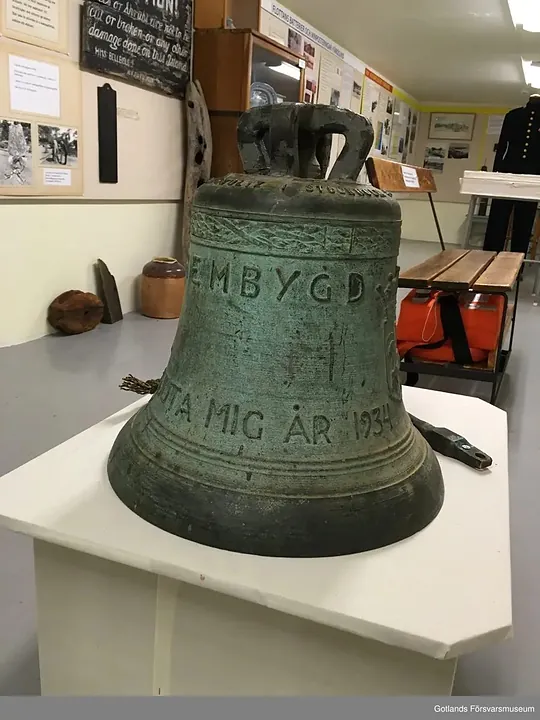
Pocket watch, Sweden, 1934–1962
Gotland Defense Museum
Pocket Watches · c. 1945
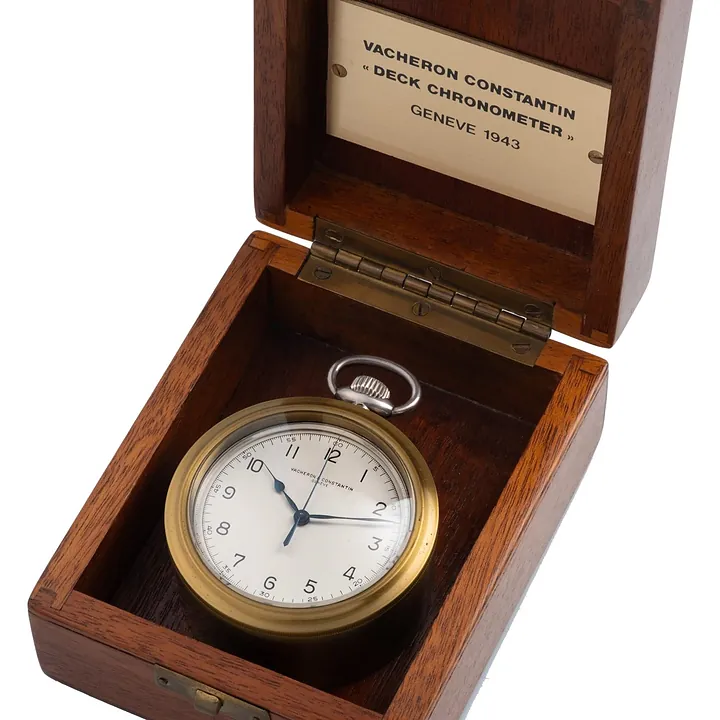
Vacheron Constantin pocket chronometer, c. 1945
Antiquorum auction archive, Geneva
Pocket Watches · c. 1945
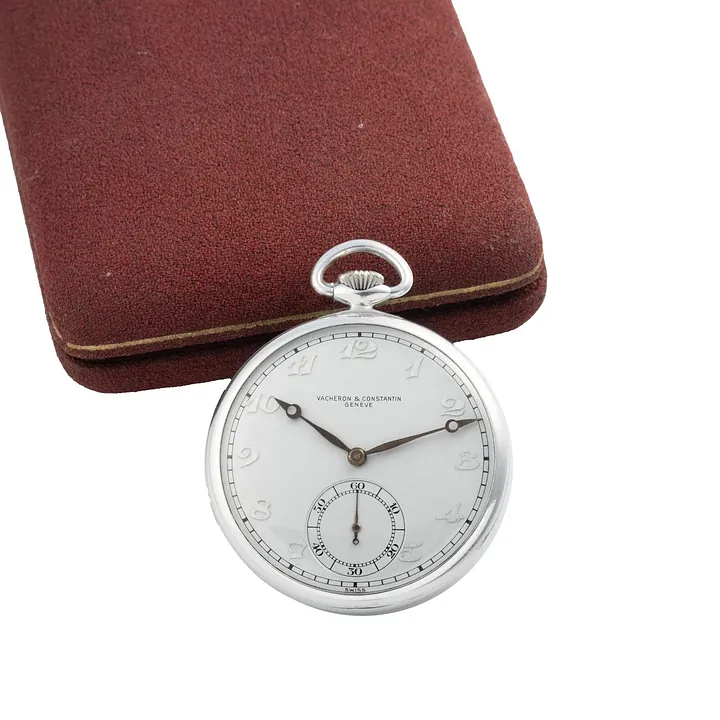
Vacheron Constantin watch, c. 1945
Antiquorum auction archive, Geneva
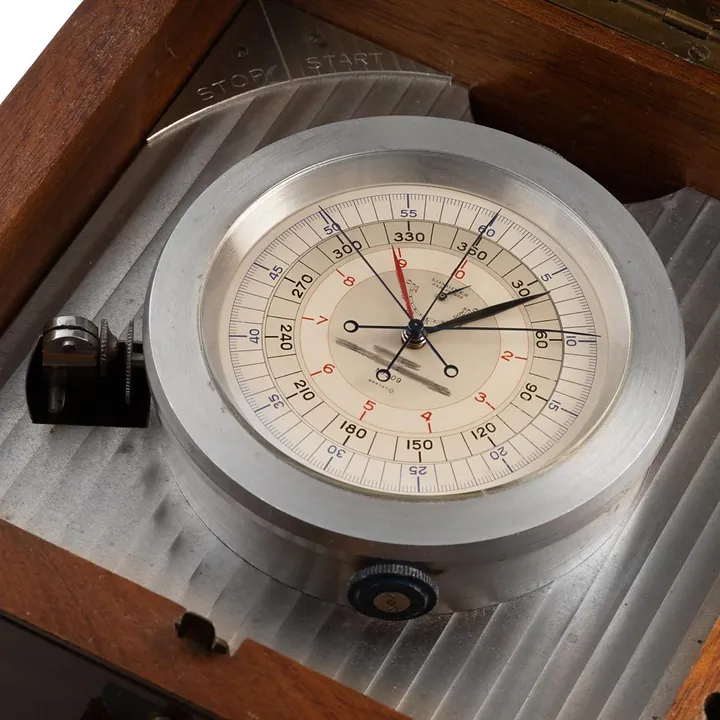
Pocket Watches · Sold to Longines France in January 1946
Longines Siderograph, ref. 5397, Sold to Longines France in January 1946
Antiquorum auction archive, Geneva
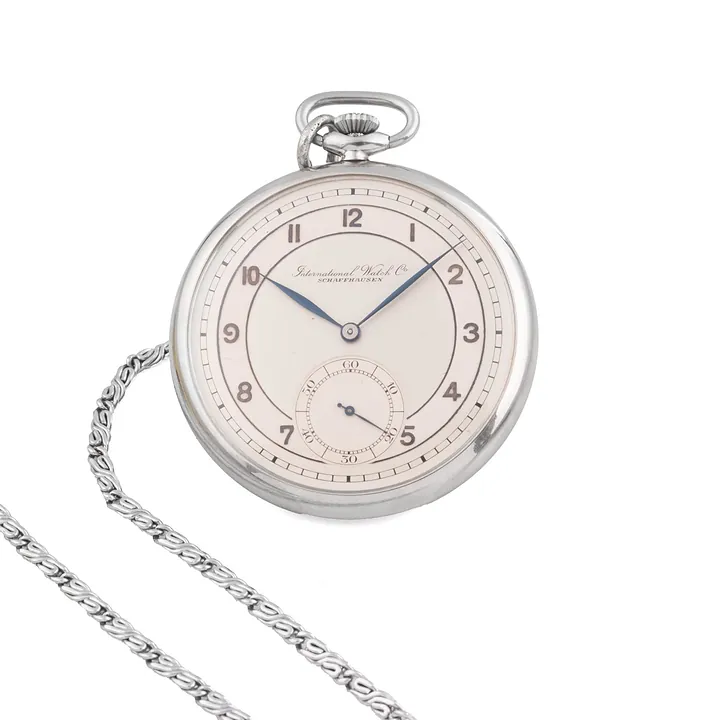
Pocket Watches · c. 1950
IWC Pocket Watch, c. 1950
Antiquorum auction archive, Geneva
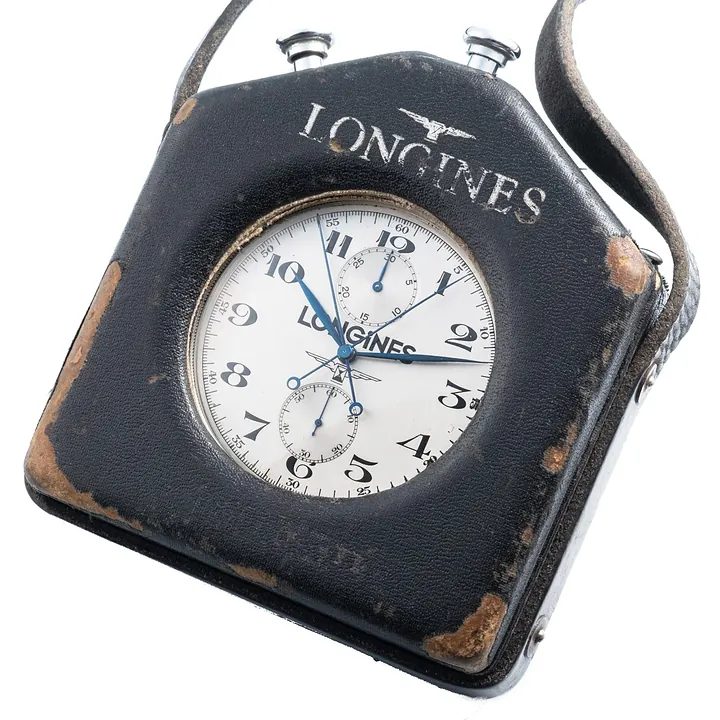
Pocket Watches · c. 1950
Longines pocket watch, ref. 4507, c. 1950
Antiquorum auction archive, Geneva
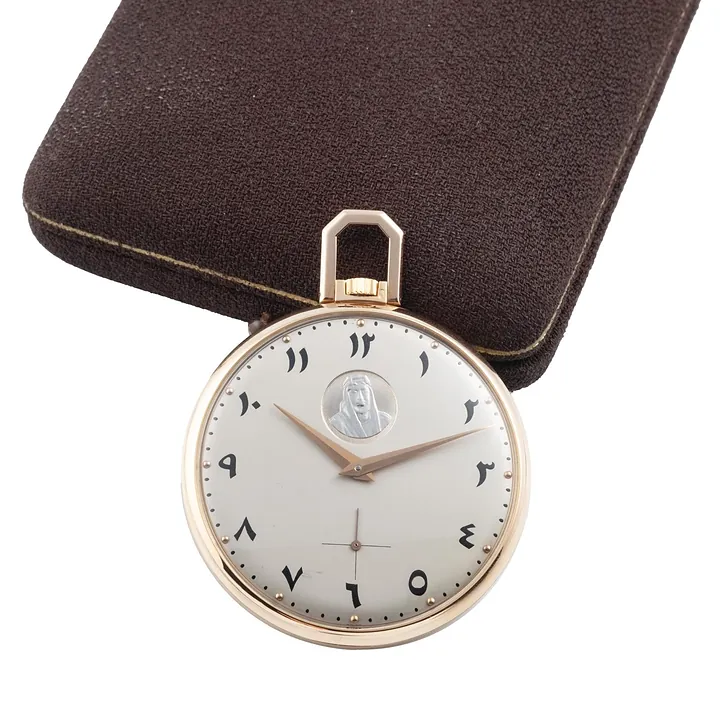
Pocket Watches · c. 1950s
Universal Genève pocket watch, ref. 11746 3/ 11746 1, c. 1950s
Antiquorum auction archive, Geneva
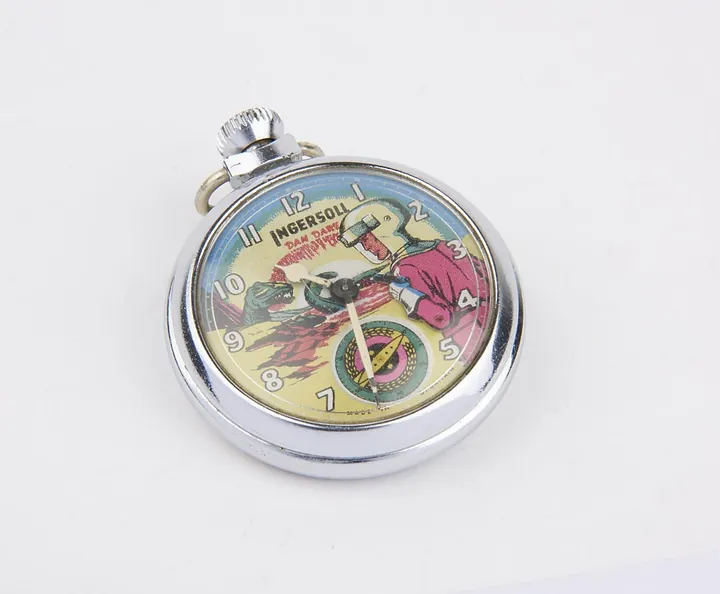
Pocket Watches · 1953
Pocket watch by Ingersoll Limited, England, 1953
Science Museum Group, London