Clocks · Clock
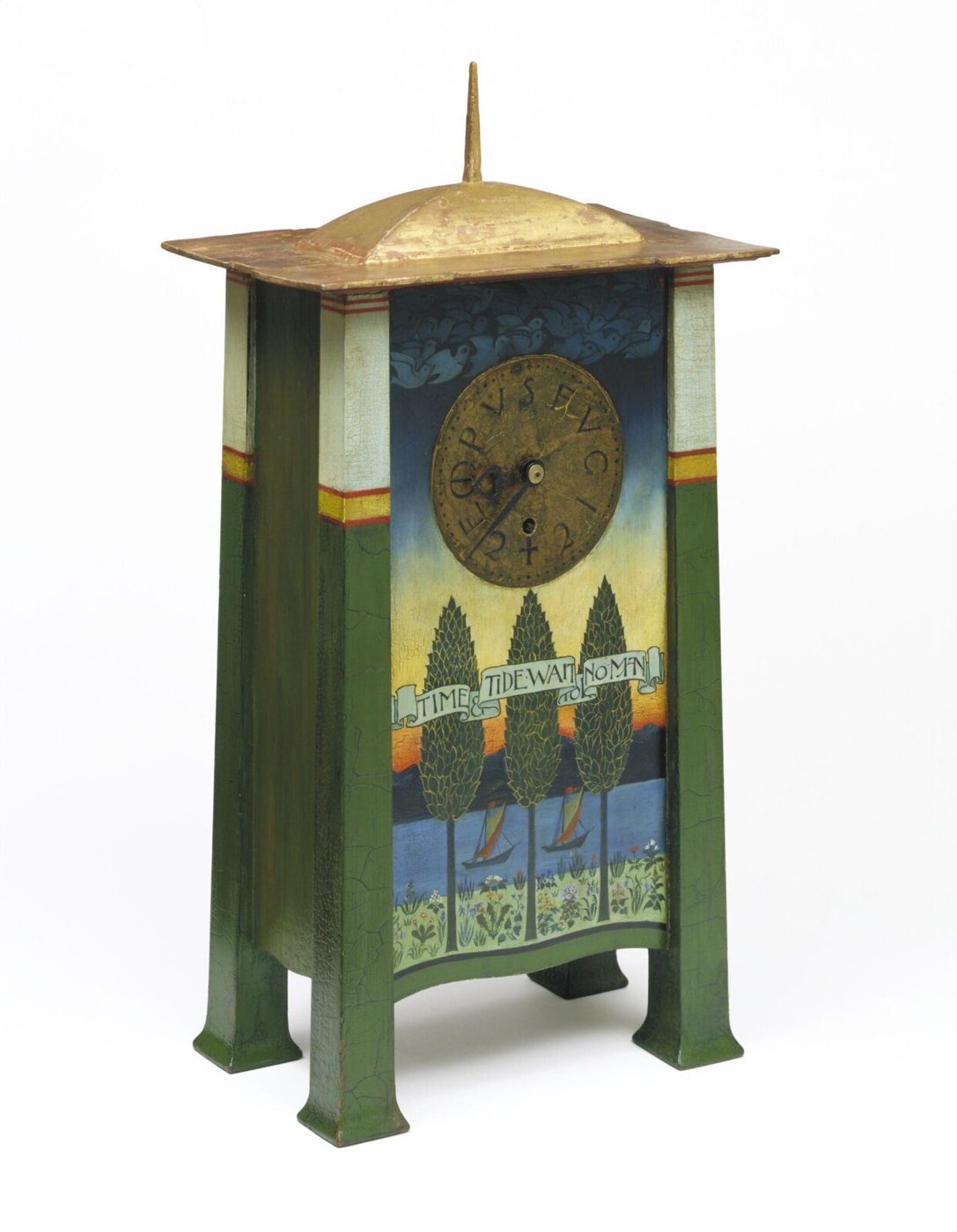
Mahogany clock case with painted and gilded decoration, English, 1896. Designed and painted by Charles Annesley Voysey.
- Maker / attribution
- C. F. A. Voysey (designer)
- Date
- 1895
- Historical period
- Industrial Revolution (1850 – 1900)
- Country of origin
- England
- Place
- England
- Object type
- Clock
- Materials / technique
- mahogany, oil colour, gold leaf, brass, steel
- Dimensions
- Height: 50.8 cm; Width: 27.1 cm; Depth: 17.2 cm
- Holding institution
- Victoria and Albert Museum, London
- Accession / object no.
- W.5:1-1998
- Credit line
- Purchased with Art Fund support and the Friends of the V&A
Record summary
Held and catalogued by Victoria and Albert Museum, London (object number W.5:1-1998), this is a clock by C. F. A. Voysey, made in England, dated 1895. The Atlas places it in the Industrial Revolution period (1850 – 1900) of its Clocks collection. Materials and techniques recorded by the source: mahogany, oil colour, gold leaf, brass, steel. Recorded dimensions: Height: 50.8 cm; Width: 27.1 cm; Depth: 17.2 cm. The record is illustrated with 4 photographs.
Assembled from the source record's structured fields. Dates and attributions are given as the source states them; where a field is missing the Atlas leaves it blank rather than estimating.
Catalogue description
V&A — Summary
Object Type Although this clock has an architectural shape and unusual decoration, it is fitted with a conventional movement. It is decorated with the childlike, flat patterns that its designer, C.F.A. Voysey (1857-1941), used for his textiles and wallpapers. There is another example of the same clock in the Museum of Fine Arts, Richmond, Virginia, USA. People C.F.A. Voysey, an architect and designer, was fascinated by clocks and designed many different types, ranging from domestic clocks, like this one, to large examples intended for offices and public buildings. He owned a clock like this which was photographed in his home, The Orchard, Chorley Wood, Hertfordshire, in 1901. An almost identical clock belonged to Mary, Countess of Lovelace (1848-1941), an Arts and Crafts enthusiast. She and her husband commissioned designs from Voysey for a new house at Ockham Park, Surrey, in 1894. Time Voysey's original design for this clock, dated 1895, shows conventional roman numerals on the face. In 1896 he exhibited a clock with that type of face at the Arts and Crafts Exhibition Society in London. By 1901 he had exchanged the numerals for the Latin phrase tempus fugit ('time flies'), a characteristically neat reminder of the clock's function.
V&A — Physical description
Mahogany case made by F. Coote and painted and gilded by C.F.A. Voysey. Movement made of brass and steel, by Camerer, Kuss & Co.
V&A — Historical context
Voysey's original design (RIBA Drawings Collection) dated 1895, shows a clock face with Roman numerals, and a clock with Roman numerals on the face was illustrated in The Studio , vol. vii, 1896, p. 217. A photograph of a display at the Arts and Crafts Exhibition Society exhibition in 1896 (illustrated C.F.A. Voysey by Wendy Hitchmough, Phaidon Press 1997, page 59) shows the clock with the numerals replaced by the letters TEMPUS FUGIT. Voysey owned a clock with this new face, shown in a photograph dated 1901 of the hall at his home, The Orchard. There are other examples of the Tempus Fugit clock. One is inscribed with the name of Mary, Countess Lovelace, an early and faithful patron of Voysey for whom he designed furniture. John Jesse also owned this clock and it is now in the Virginia Museum of Fine Arts, Richmond, Virginia, USA. Another example of the Tempus Fugit clock is in a private collection in London. A clock, of the same form with the Tempus Fugit face, stamped with the registration mark No.308824 for 1897, but undecorated and made of ebony, was sold by John Jesse in 2005. The design of the case proved popular and versions with Roman numerals include a plain white one (private collection, London) and one decorated by Robert Anning Bell (Walker Art Gallery, Liverpool) as well as an aluminium version made by W H Tingey (one of these was exhibited at the Arts & Crafts exhibition of 1903, No.394c, and was illustrated in House & Garden, III, 1903, p.211).
V&A — Object history
Designed by C.F.A. Voysey (born in Hessle, near Hull, East Yorkshire, 1857, died in Winchester, Hampshire, 1941); probably made by Frederick Coote in London. Voysey owned a clock of the same design which was in the hall at his own house, The Orchard, Chorleywood, Herts, in 1901. This design for a clock was illustrated in The Cabinet Maker, 1896/7, p. 143, reprinted in Bennett, Daryl, LIberty's Furiture 1875-1915. The Birth of Modern Interior Design . Woodbridge, Antique Collectors' Club, 2012 (ISBN 978-1-85149-689-1), p. 160, fig. 5.9. John Jesse purchased this clock without a provenance at Portobello Market in 1970. He then placed the object on loan to the Museum in December 1970.
V&A gallery label
CLOCK ENGLISH: 1895-1896 Designed and probably painted by C.F.A. Voysey Made by Mr Cootes [sic] Movement by Camerer, Cuss [sic] & Co., London Painted and gilded wood. An identical clock can be seen in photographs of Voysey's own dining room in about 1900. A drawing by him dated January 1895 depicts such a clock with a different dial. An identical clock is in the Museum of Fine Arts, Richmond, Virginia. Which, if either of them, was Voysey's own is not known. Purchased with the assistance of the National Art Collections Fund and the Friends of the V&A. Museum No. W.5-1998
V&A gallery label
access all areas Charles Francis Annesley Voysey (1857-1941) Clock Body of painted and gilded wood It would appear that Voysey created this very clock for himself, as the design almost matches the drawing in the possession of the RIBA displayed in this exhibition. Also, a near-identical clock can be seen in photographs of Voysey's own dining room, from about 1900. However, there is another similar clock in the Museum of Fine Art, Richmond, Virginia. The body of this clock would have been painted by Voysey himself.
V&A gallery label
CLOCK 1896 - 1901 C.F.A. Voysey originally designed this clock with roman numerals but substituted these for a Latin inscription denoting the passing of time. The British countryside fascinated Arts and Crafts designers and its depiction throughout the seasons became a characteristic of this style. At least two versions of the clock are known, one of which was owned by the designer. Painted and gilded mahogany; movement of brass and steel Designed by C. F. A. Voysey (born in Hessle, North Humberside, 1857, died in Winchester, Huntingtonshire, 1951); probably made by Frederick Coote in London Movement stamped by Camerer, Kuss & Co.; inscribed TIME AND TIDE WAIT FOR NO MAN and, on the clock face, TEMPUS FUGIT Purchased with contributions from the Friends of the V&A and the National Art Collections Fund, an independent charity Museum no. W.5-1998
V&A gallery label
British Galleries: C.F.A. Voysey originally designed this clock with roman numerals but replaced them with a Latin inscription meaning 'time flies'. The British countryside fascinated Arts and Crafts designers and its depiction throughout the seasons became a characteristic of this style. At least two versions of the clock are known, one of which was owned by the designer.
V&A gallery label
International Arts & Crafts: Clock 1895 English; designed by C.F.A. Voysey Painted and gilded mahogany V&A:W.5-1998
Historical context
Industrial Revolution (1850 – 1900)
American interchangeable-parts manufacture; railroad time standards; Swiss and German factory systems.
Factory production transformed the clock into an everyday object. American makers (Seth Thomas, Ansonia, Waterbury) and German factories (Junghans, Gustav Becker, Lenzkirch) sold millions of shelf, wall and alarm clocks worldwide; France produced standardised Paris movements and carriage clocks; electric time distribution began.
Read the period in the timelineMore clocks from this periodEarlier: Precision & Scientific Horology
Atlas type guide
Domestic clocks
A clock combines four systems: a source of power (falling weight, coiled spring, or later electricity), a gear train that divides time, an escapement and oscillator that regulate it (foliot, pendulum or balance), and an indicating system of dial and hands or a bell. Its history runs from the large iron weight-driven clocks of the late thirteenth century to Renaissance spring-driven table clocks, the pendulum revolution of 1656, the factory clocks of the nineteenth century and electric and quartz clocks of the twentieth.
Domestic clocks also reflect regional furniture and decorative traditions — English longcase and bracket clocks, French pendules, Viennese regulators, Black Forest and American shelf clocks — and therefore record changing tastes as much as technical progress.
What to look for
- How the clock is powered: weights, spring barrel, fusee, electric coil.
- The oscillator: foliot, short pendulum, long seconds pendulum or balance.
- Whether it strikes: hour only (count wheel) or hours and quarters (rack striking).
- The maker or retailer's name on dial and movement, and any factory trademarks.
- Signs of alteration — replaced dials, converted escapements, 'married' cases.
Dating clues
- Before 1656 clocks used foliots or balances; after, most domestic clocks have pendulums.
- Anchor escapements spread after c. 1670; minute hands became common at the same time.
- Factory production in America and Germany transformed prices after c. 1840.
General guidance written by the Atlas editors about this kind of object. It is not a statement about this particular piece; for that, rely on the source record above and on physical examination.
Related records
Clocks · 1903
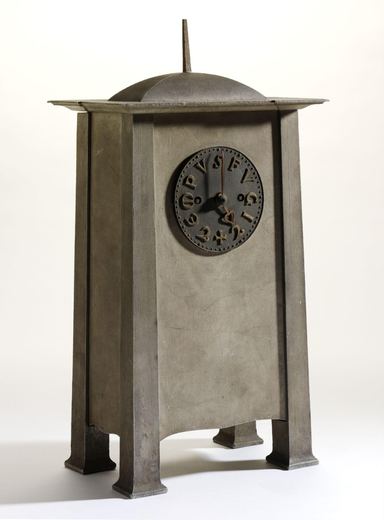
Clock by C. F. A. Voysey, England, 1903
Victoria and Albert Museum, London
Clocks · 1830-1870
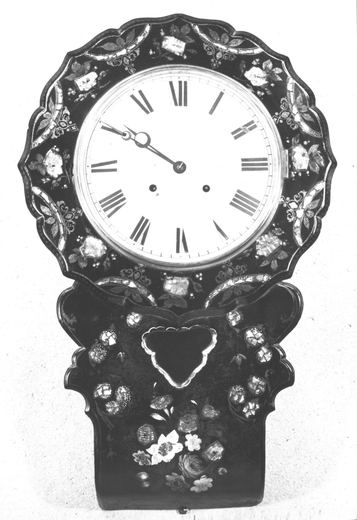
Wall clock in a papier mâché case with painted decoration. English, mid 19th century.
Victoria and Albert Museum, London
Clocks · 1840-1900
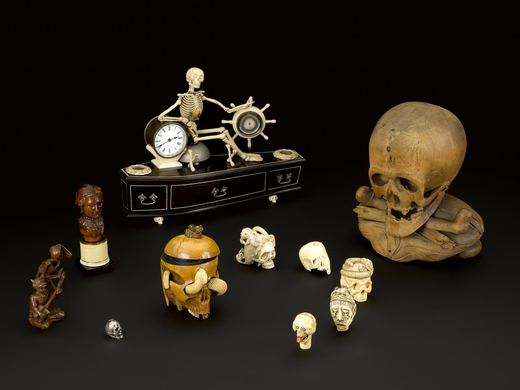
Alarm clock, mounted on model of coffin with skeleton, probably English, 1840-1900
Science Museum Group, London
Clocks · 1840-1880
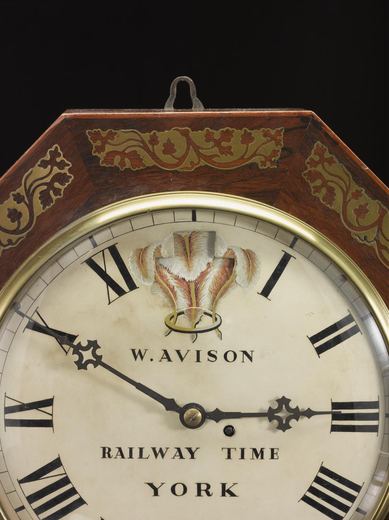
Wall Clock in octagonal case with Prince of Wales Feathers above makers name "W. Avison, Railway Time, York", made by William Avison, England, 1840-1880.
Science Museum Group, London
Clocks · 1843-1884
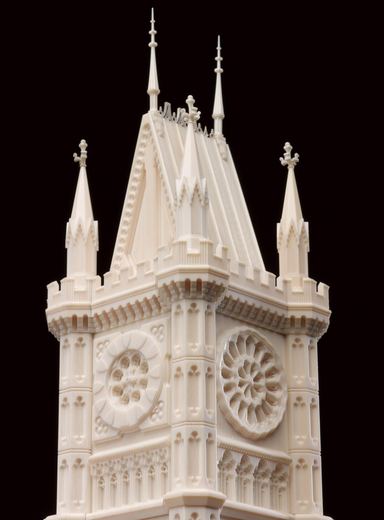
One ivory gothic clock tower & travelling case, by Holtzapffel and Company, London, England, 1843-1884
Science Museum Group, London
Clocks · 1845-1855
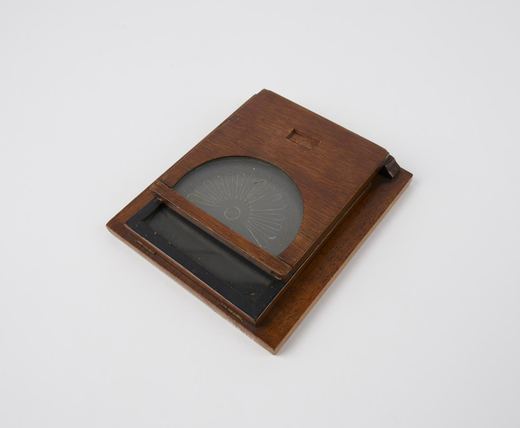
Clock by Darker, W. H., England, 1845-1855
Science Museum Group, London
Clocks · 1845-1855
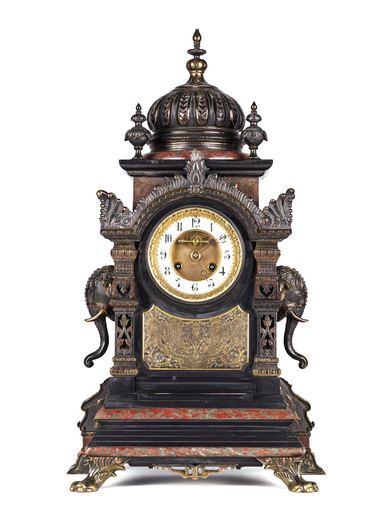
Clock, England, 1845-1855
Science Museum Group, London
Clocks · 1845-1855
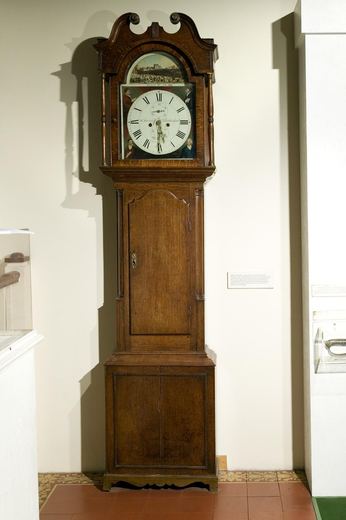
Longcase clock commemorating the Peterloo Massacre of 1819, made by W. Stancliffe, Barkisland.
Science Museum Group, London