
Pocket Watches · Pocket watch
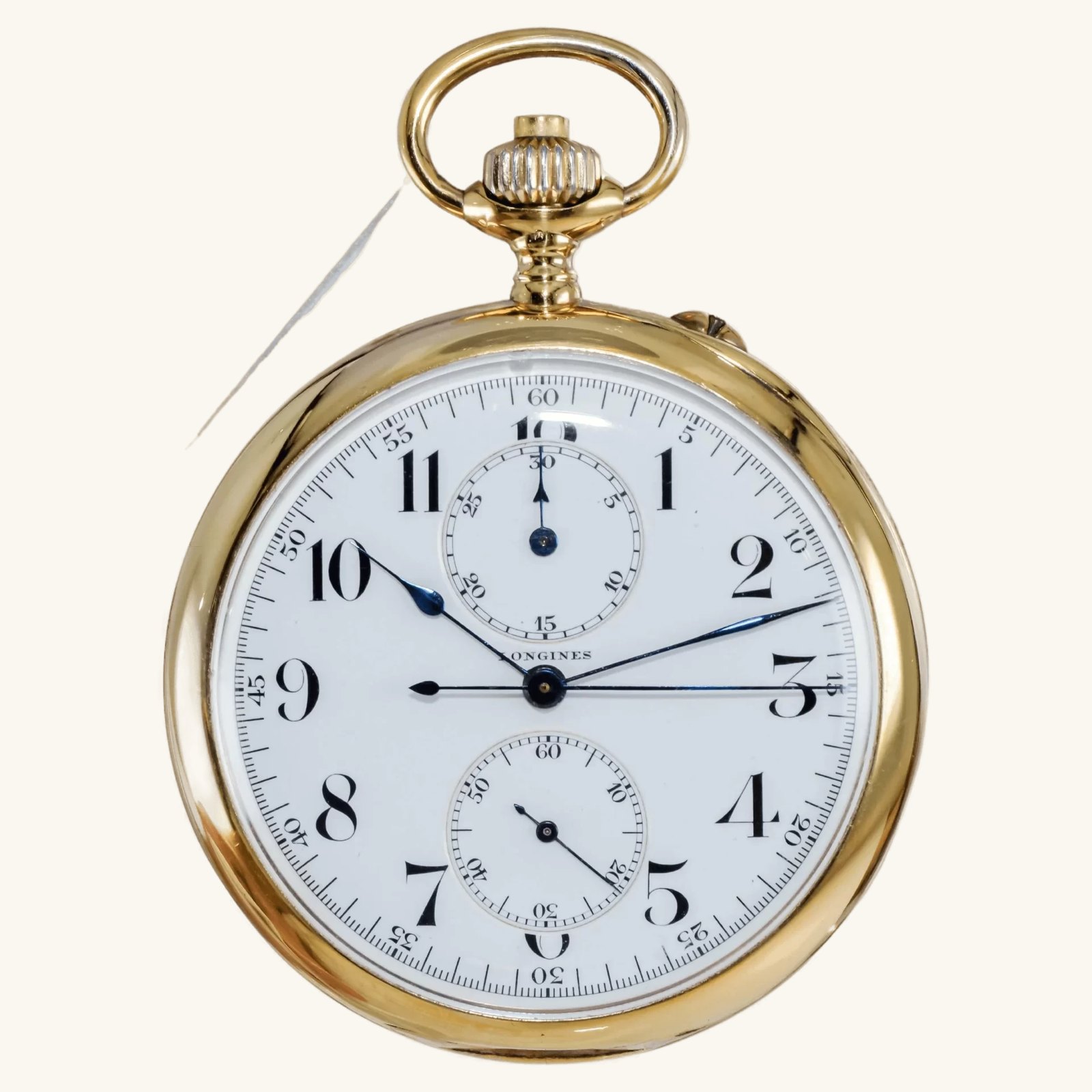
Longines 14kt Yellow Gold Chronograph Pocket Watch – 1920’s
- Maker / attribution
- Longines (maker)
- Date
- 20th century
- Historical period
- Golden Age of Mechanical Watchmaking (1900 – 1945)
- Country of origin
- Switzerland
- Object type
- Pocket watch
- Materials / technique
- gold
- Dealer
- WatchMuseum.org shop
- Stock no.
- Product 4252
- Credit line
- Dealer listing, WatchMuseum.org shop (product 4252)
- Catalogue title (original)
- Longines 14kt Yellow Gold Chronograph Pocket Watch – 1920’s (English)
View the source record (dealer listing) ↗ (opens another website in a new tab)Suggest a correction
Record summary
Catalogued by WatchMuseum.org shop (stock number Product 4252), this is a pocket watch by Longines, made in Switzerland, dated 20th century. The Atlas places it in the Golden Age of Mechanical Watchmaking period (1900 – 1945) of its Pocket Watches collection. Materials and techniques recorded by the source: gold. The record is illustrated with 6 photographs.
Assembled from the source record's structured fields. Dates and attributions are given as the source states them; where a field is missing the Atlas leaves it blank rather than estimating.
Catalogue description
Dealer description — WatchMuseum.org shop
The Longines 14kt Yellow Gold Chronograph Pocket Watch from the 1920s is a stunning representation of the Swiss watchmaker’s rich heritage and dedication to precision. Founded in 1832 by Auguste Agassiz and later trademarked by his nephew Ernest Francillon, Longines has become synonymous with quality and innovation, symbolized by its iconic winged hourglass logo. This exquisite timepiece, crafted in the Art Deco style, features a 52 mm diameter case made of luxurious yellow gold and is powered by a manual wind movement. Known for its role as the official timekeeper of the Olympics since 1912 and its involvement in other prestigious events like the World Championships in Athletics and the America’s Cup, Longines has a storied history of excellence in timekeeping. The company’s legacy includes pioneering inventions such as the Lindbergh Hour Angle watch and the Longines Calibre 13 ZN Chronograph, used by notable explorers like Commander Richard Byrd. This particular pocket watch, manufactured in 1920 and in excellent condition, embodies the timeless elegance and craftsmanship that Longines continues to uphold. Longines Watch Co. was founded in 1832 by Auguste Agassiz, a Swiss watchmaker, and company initially named as Raiguel Jeune & Cie. After his partners retired, Agassiz’s enterprising nephew, Ernest Francillon, came on board and trademarked the Longines name and its winged hourglass logo in 1880. This logo is now one of the most recognisable in the industry as it symbolizes precision and timekeeping. Longines became the official timekeeper of the Olympics in 1912, a title it still holds, and has been involved in other major sporting events such as the World Championships in Athletics, the Formula One World Championship, and the America’s Cup. The company invented the Lindbergh Hour Angle watch in 1931 for Charles Lindbergh, featuring a unique bezel to calculate longitude. In my personal collection, I own the Longines Calibre 13 ZN Chronograph used by Commander Richard Byrd on his 1928 expedition to Antarctica, which was purchased from Abercrombie and Fitch in New York and still runs well after 100 years. Longines continues to be a symbol of craftsmanship, innovation, and timeless elegance. Creator: Longines Case Material: Yellow Gold Movement: Manual Wind Case Dimensions: Diameter: 52 mm (2.05 in) Style: Art Deco Place of Origin: Switzerland Period: 1920-1929 Date of Manufacture: 1920 Condition: Excellent
Historical context
Golden Age of Mechanical Watchmaking (1900 – 1945)
The wristwatch displaces the pocket watch; waterproof cases, self-winding and grand complications.
The pocket watch reached technical maturity and then began to give way to the wristwatch after the First World War. Complicated watches for collectors such as Henry Graves Jr. and James Ward Packard, railroad watches, and slim Art Deco dress watches are characteristic.
Read the period in the timelineMore pocket watches from this periodEarlier: Industrial Revolution
Atlas type guide
Chronographs and split-seconds watches
A chronograph is a watch with an additional seconds hand that can be started, stopped and returned to zero independently of the timekeeping. Louis Moinet built an early example in 1816 and Nicolas Rieussec a recording 'chronographe' in 1821; Adolphe Nicole's heart-shaped reset cam (patented 1862) made the modern return-to-zero possible. Split-seconds (rattrapante) chronographs add a second hand that can be stopped for intermediate times; flyback chronographs restart instantly.
Chronographs were essential tools for doctors (pulsometer scales), artillery (telemeter), engineers and sport. In wristwatches, Valjoux, Venus, Lemania and later the automatic chronographs of 1969 (Zenith El Primero, the Chronomatic Calibre 11 group and Seiko 6139) are milestones.
What to look for
- Push-pieces on the case band or a single button in the crown (monopusher).
- Subsidiary registers for minutes and hours; tachymeter, telemeter or pulsometer scales.
- Column wheel versus cam control visible in the movement.
- Calibre markings of specialist makers (Valjoux, Lemania, Venus, Landeron).
Dating clues
- Pocket chronographs with heart cam reset: after 1862.
- Wrist chronographs: from c. 1910; two-button designs from the 1930s.
- Automatic chronographs: from 1969.
General guidance written by the Atlas editors about this kind of object. It is not a statement about this particular piece; for that, rely on the source record above and on physical examination.
Read next:Flyback chronographChronograph
Related records
Instruments · c. 1940
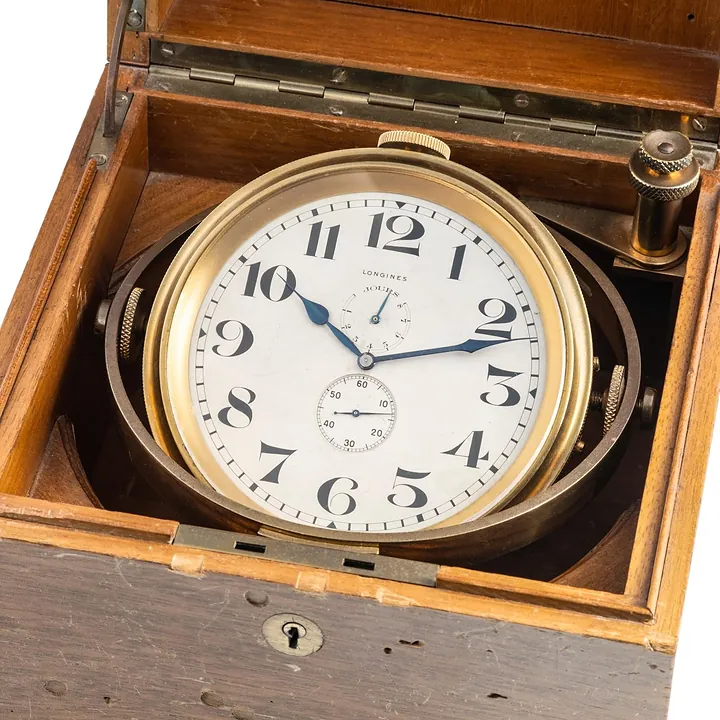
Longines marine chronometer, c. 1940
Antiquorum auction archive, Geneva
Pocket Watches · c. 1910-1920s
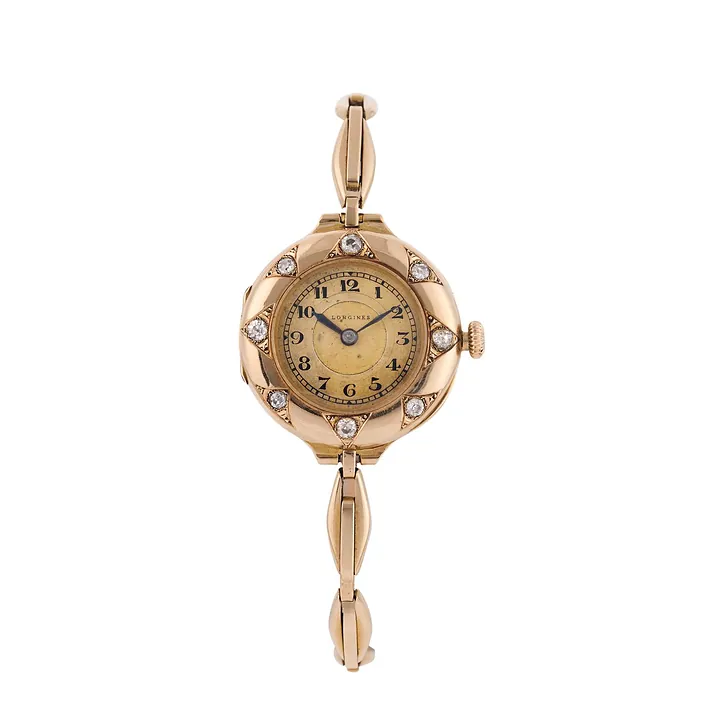
Longines watch, c. 1910-1920s
Antiquorum auction archive, Geneva
Pocket Watches · c. 1915
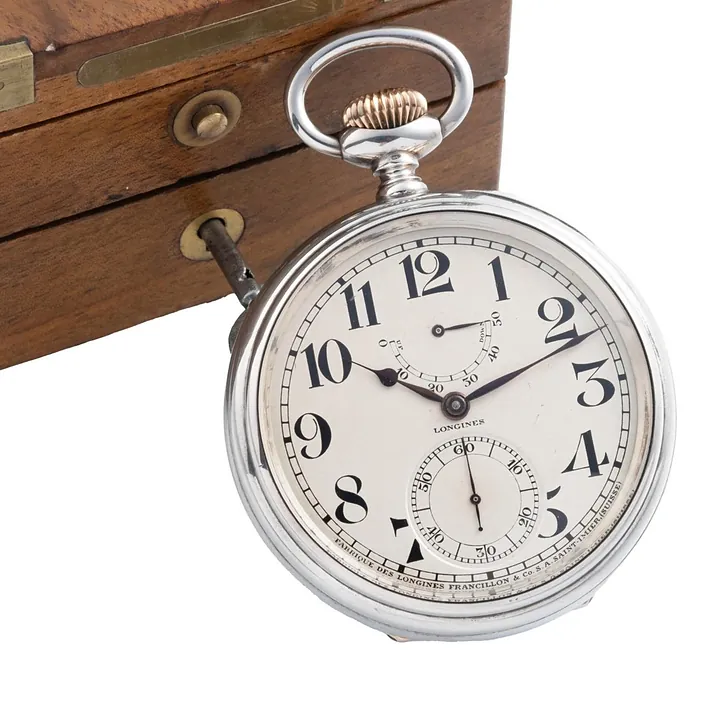
Longines ''torpedo-Boat Watch'', c. 1915
Antiquorum auction archive, Geneva
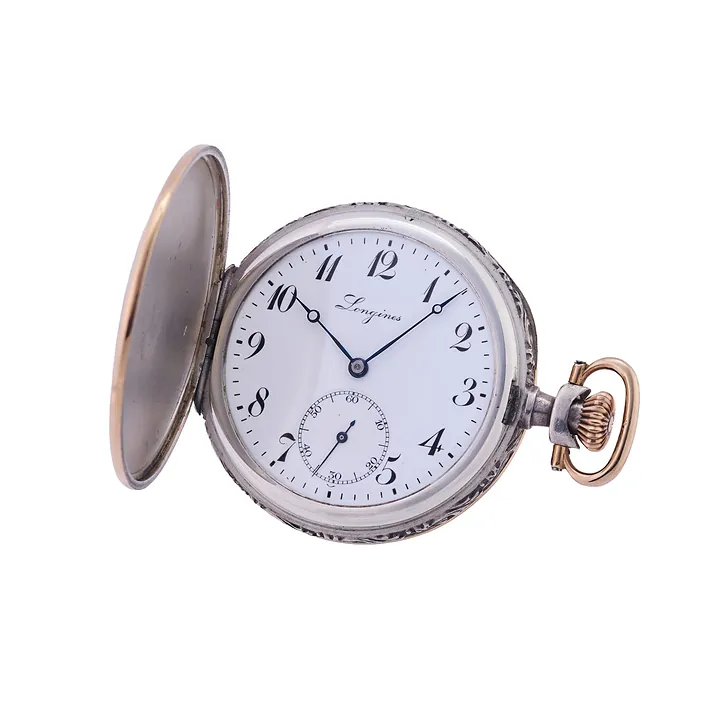
Pocket Watches · c. 1920s
Longines pocket watch, c. 1920s (Antiquorum Lot 389-59)
Antiquorum auction archive, Geneva

Pocket Watches · c. 1900
Patek Philippe Chronometro Gondolo, c. 1900
Antiquorum auction archive, Geneva
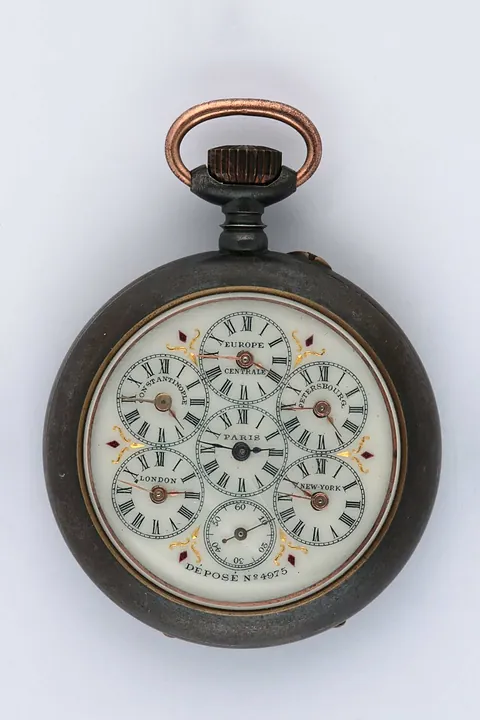
Pocket Watches · c. 1900
Pocket watch by A. Sandoz-Boucherin, Switzerland, c. 1900
German Clock Museum
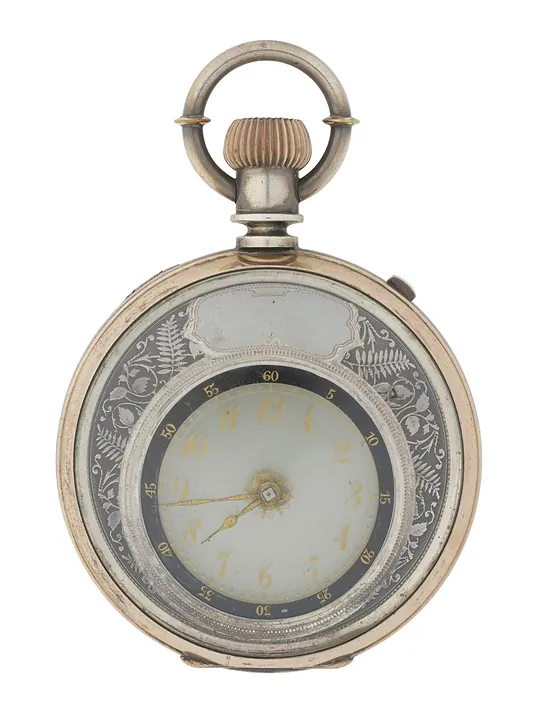
Pocket Watches · 1900
Pocket watch by Armand Schwob & Frère, Switzerland, 1900
Science Museum Group, London
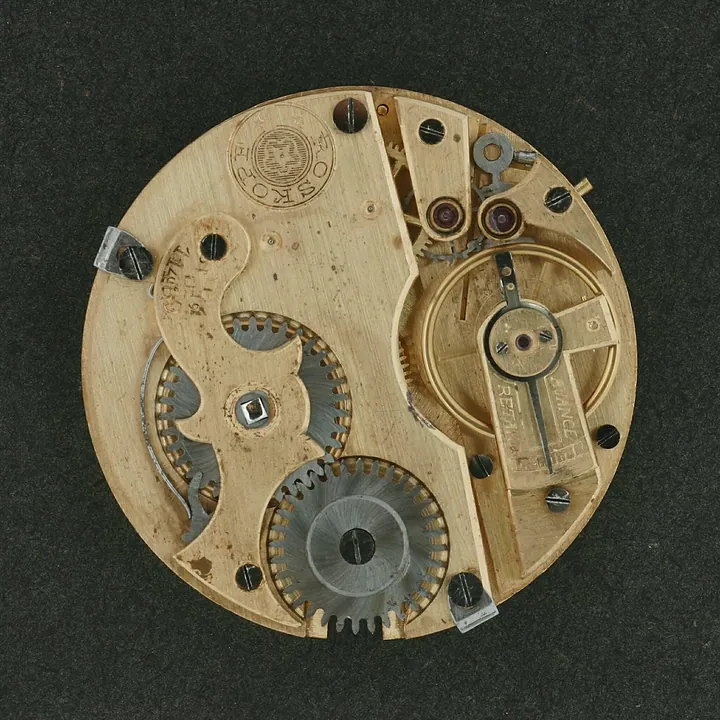
Pocket Watches · c. 1900
Pocket watch by Vve. Chs. Léon Schmid und Cie, Switzerland, c. 1900
German Clock Museum