
Wristwatches · Wristwatch
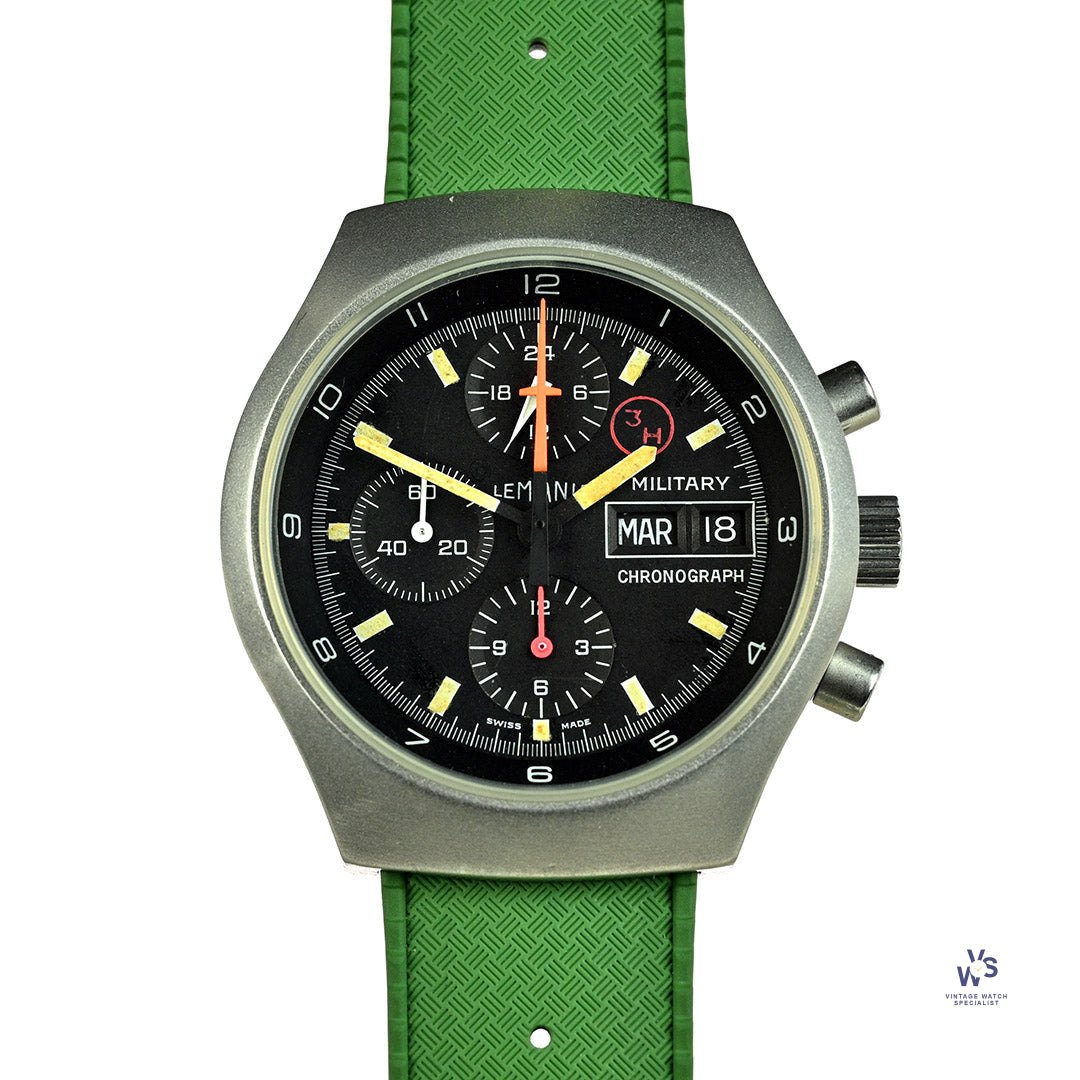
Lemania Italian Military Issued Chronograph, circa 1980s
- Maker / attribution
- Lemania (maker)
- Date
- c. 1980s
- Historical period
- Quartz Revolution (1969 – 1990)
- Country of origin
- Italy
- Object type
- Wristwatch
- Stock no.
- vws3902
- Credit line
- Dealer listing, Vintage Watch Specialist (vws3902)
- Catalogue title (original)
- Lemania Italian Military Issued Chronograph - c.1980s (English)
View the source record (dealer listing) ↗ (opens another website in a new tab)Suggest a correction
Record summary
Catalogued by Vintage Watch Specialist (dealer), United Kingdom (stock number vws3902), this is a wristwatch by Lemania, made in Italy, dated c. 1980s. The Atlas places it in the Quartz Revolution period (1969 – 1990) of its Wristwatches collection. The record is illustrated with 6 photographs.
Assembled from the source record's structured fields. Dates and attributions are given as the source states them; where a field is missing the Atlas leaves it blank rather than estimating.
Catalogue description
Dealer description — Vintage Watch Specialist
Rare 1980s Lemania Italian Military Chronograph issued to the Aeronautica Militare Italiana, in superb condition with original military markings and 3H Dial. Lemania has a rich heritage of producing robust and precise chronographs, supplying military forces across the world throughout the 20th century. Known for their dependable Lemania 5100 movement, these watches were built to withstand the rigours of professional use and became trusted tools for pilots and servicemen alike. This particular example was issued to the Aeronautica Militare Italiana (Italian Air Force) in the 1980s and remains a sought-after piece for military watch collectors today. What's on Offer We are delighted to bring you this rare Lemania Military Automatic Chronograph, issued to the Italian Air Force in the 1980s, in such wonderful pre-owned condition. Powered by the renowned Lemania 5100 automatic movement, this tool watch was built for serious use in demanding environments. The matte black dial features bold luminous markers and hands, a day-date display at 3 o’clock, and a bright orange chronograph seconds hand with the classic 3H marking (denoting tritium lume). The brushed stainless steel case has a purposeful, no-nonsense aesthetic, and the military engravings to the caseback, including the A.M.I. (Aeronautica Militare Italiana) designation and unique service number, further underline its authenticity. Fitted to a green rubber strap for a fresh, modern touch, this Lemania wears with real presence on the wrist and is sure to pique the interest of our military enthusiasts.
Historical context
Quartz Revolution (1969 – 1990)
Seiko's Astron begins mass quartz timekeeping; traditional industries contract sharply.
Quartz and digital watches transformed the market after 1969. Swiss employment collapsed, Japanese and Hong Kong production soared, and the Swatch (1983) helped the Swiss industry recover; mechanical watches survived as luxury goods.
Read the period in the timelineMore wristwatches from this periodEarlier: Modern Mechanical Horology
Atlas type guide
Chronographs and split-seconds watches
A chronograph is a watch with an additional seconds hand that can be started, stopped and returned to zero independently of the timekeeping. Louis Moinet built an early example in 1816 and Nicolas Rieussec a recording 'chronographe' in 1821; Adolphe Nicole's heart-shaped reset cam (patented 1862) made the modern return-to-zero possible. Split-seconds (rattrapante) chronographs add a second hand that can be stopped for intermediate times; flyback chronographs restart instantly.
Chronographs were essential tools for doctors (pulsometer scales), artillery (telemeter), engineers and sport. In wristwatches, Valjoux, Venus, Lemania and later the automatic chronographs of 1969 (Zenith El Primero, the Chronomatic Calibre 11 group and Seiko 6139) are milestones.
What to look for
- Push-pieces on the case band or a single button in the crown (monopusher).
- Subsidiary registers for minutes and hours; tachymeter, telemeter or pulsometer scales.
- Column wheel versus cam control visible in the movement.
- Calibre markings of specialist makers (Valjoux, Lemania, Venus, Landeron).
Dating clues
- Pocket chronographs with heart cam reset: after 1862.
- Wrist chronographs: from c. 1910; two-button designs from the 1930s.
- Automatic chronographs: from 1969.
General guidance written by the Atlas editors about this kind of object. It is not a statement about this particular piece; for that, rely on the source record above and on physical examination.
Read next:Flyback chronographChronograph
Related records
Instruments · 1950–1970
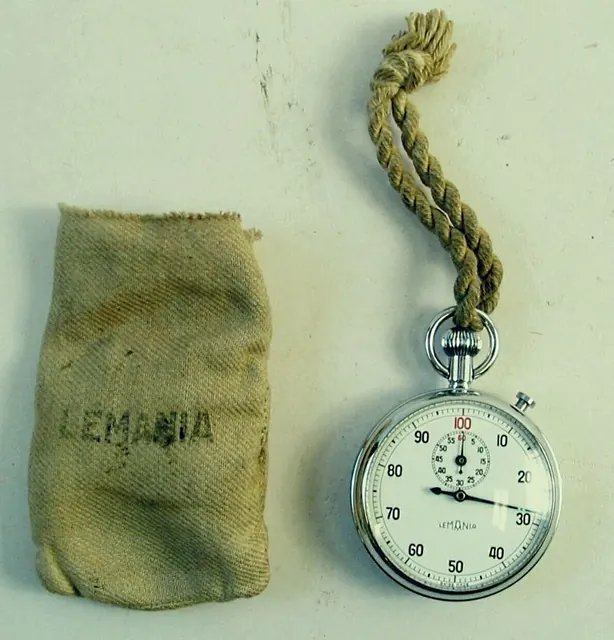
Stopwatch by Lemania, Switzerland, 1950–1970
Museokeskus Vapriikki
Wristwatches · c. 1970s
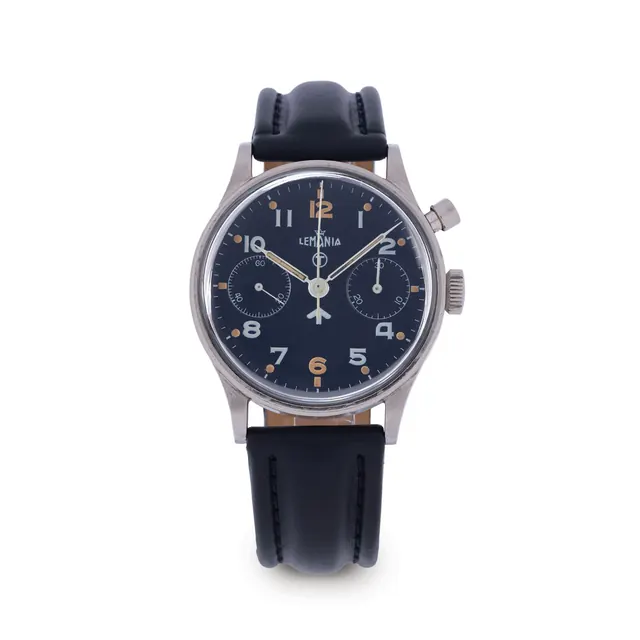
Lemania wristwatch, Series 2 Monopusher Chronograph, circa 1970s
Antiquorum auction archive, Geneva
Wristwatches · c. 1960s-1980s
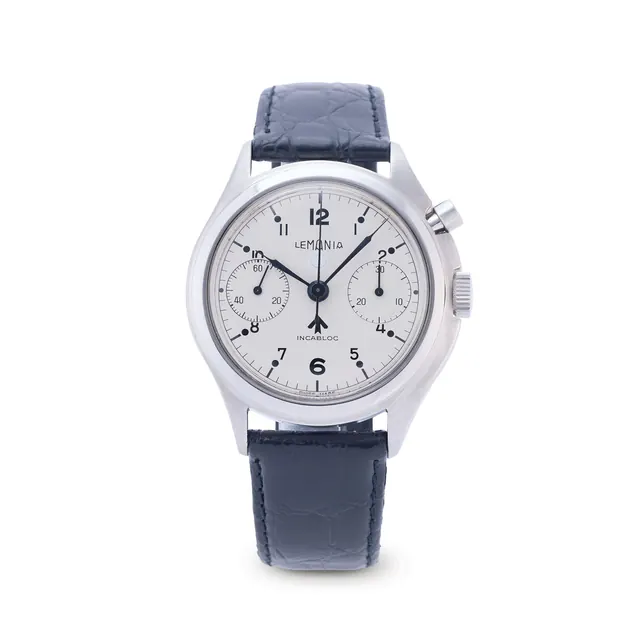
Lemania wristwatch, ref. 35-64, Series 3 Monopusher Chronograph, circa 1960s-1980s
Antiquorum auction archive, Geneva
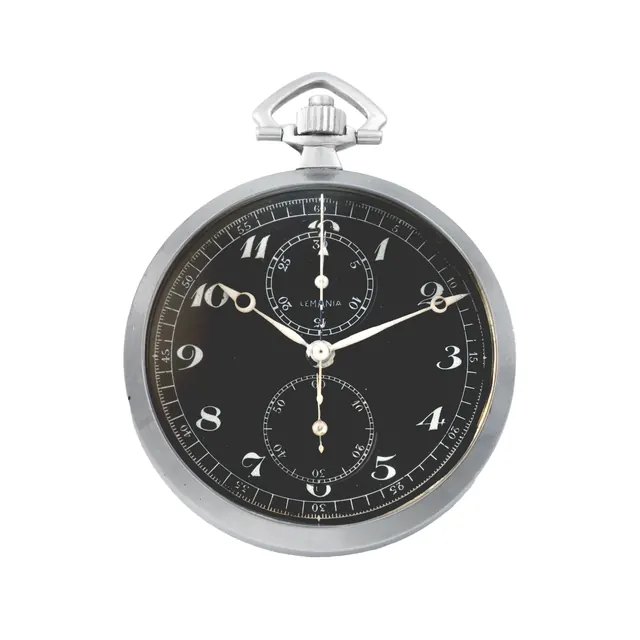
Pocket Watches · c. 1940
Lemania pocket watch, Single Button Chronograph, circa 1940
Antiquorum auction archive, Geneva
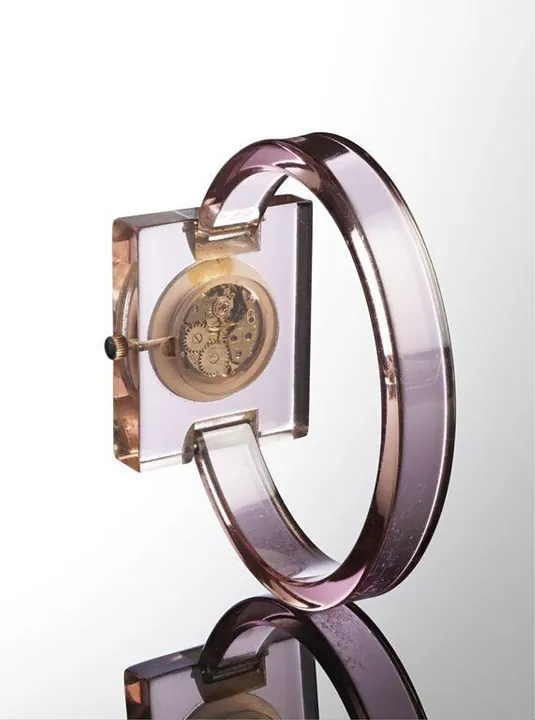
Wristwatches · 1970s
Wristwatch, plastic, by Gucci; Italy, 1970s.
Victoria and Albert Museum, London
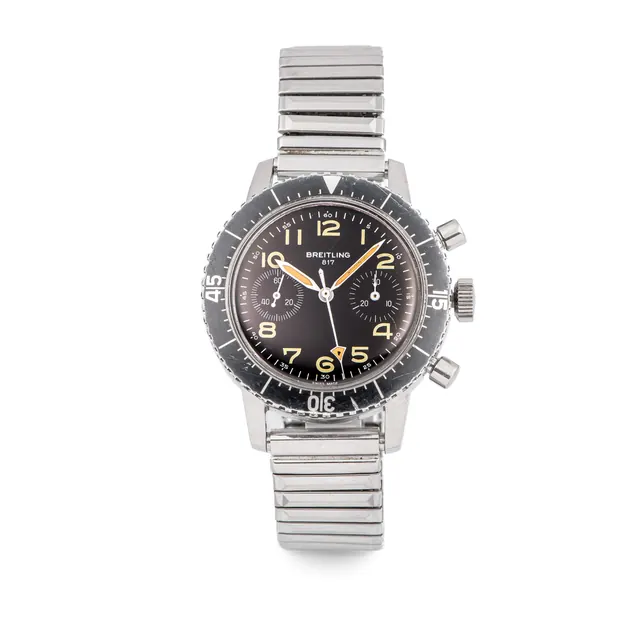
Wristwatches · c. 1975
Breitling wristwatch, ref. 817, Italian Military Chronograph, circa 1975
Antiquorum auction archive, Geneva
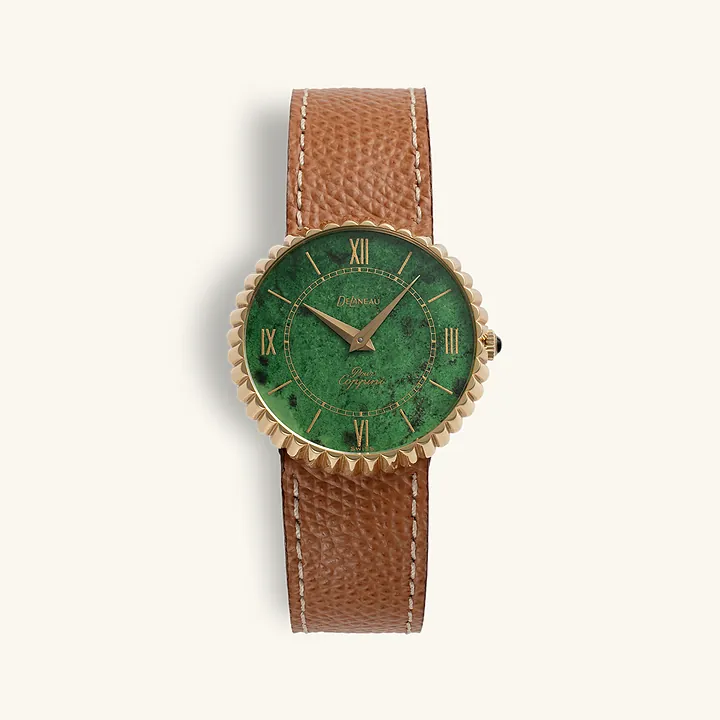
Wristwatches · 1970s
DeLaneau “Tortiera” Pour Coppini Florence, 1970s
Watches of Knightsbridge (dealer), London
Wristwatches · 1970s
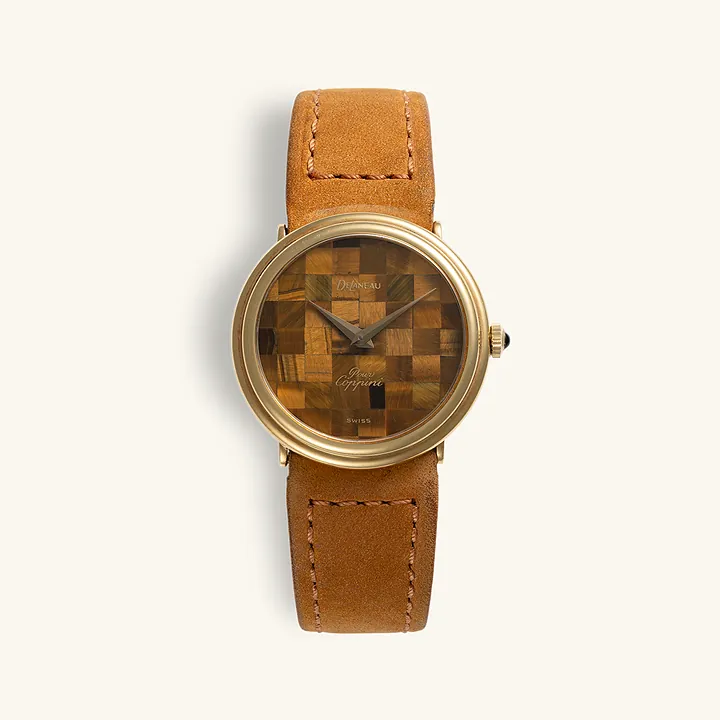
DeLaneau Tiger’s Eye Marquetry Pour Coppini Florence, 1970s
Watches of Knightsbridge (dealer), London