
Wristwatches · Wristwatch
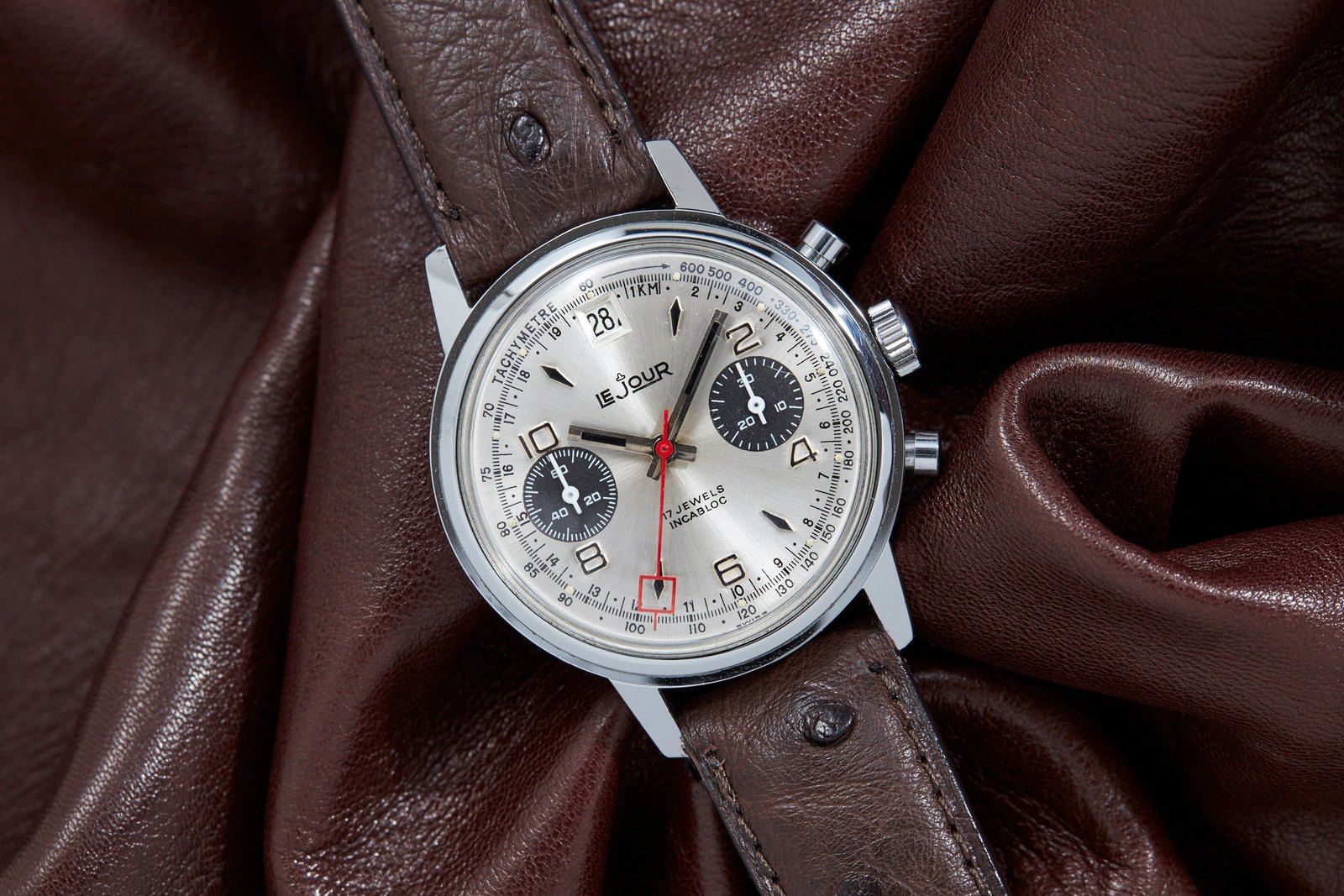
LeJour Chronograph, 1970s
- Maker / attribution
- LeJour (maker)
- Date
- 1970s
- Historical period
- Quartz Revolution (1969 – 1990)
- Country of origin
- Unrecorded in source
- Object type
- Wristwatch
- Stock no.
- Product 10093593025
- Credit line
- Dealer listing, Analog/Shift (product 10093593025)
- Catalogue title (original)
- LeJour Chronograph (English)
View the source record (dealer listing) ↗ (opens another website in a new tab)Suggest a correction
Record summary
Catalogued by Analog/Shift (dealer), New York (stock number Product 10093593025), this is a wristwatch by LeJour, dated 1970s. The Atlas places it in the Quartz Revolution period (1969 – 1990) of its Wristwatches collection. The record is illustrated with 6 photographs.
Assembled from the source record's structured fields. Dates and attributions are given as the source states them; where a field is missing the Atlas leaves it blank rather than estimating.
Catalogue description
Dealer description — Analog/Shift
The 1970s were a time of great change in the watch industry. They were a decade marked not only by advances in technology, but by innovation in design as well. Avant-garde designs like Gerald Genta’s creations for Audemars Piguet and Patek Philippe, the Royal Oak and Nautilus, were blueprints for the funky styles that would follow. And in the world of chronographs, Heuer was experimenting as well. The svelte cases of the 1960s, typified by the long-lugged Carrera, gave way to the cushion case of the Autavia, or the stocky square case of the Monaco. Throughout the 70s, as Heuer populated its collection with watches powered by the Calibre 11 or Chronomatic movement, almost all of its chronographs would be equipped with the new cushion cases. As for the thousands of cases that Heuer churned out for manual-wind chronographs, they didn’t lay disused—many were sold to private labels or distribution companies for export. One of those companies was LeJour. Though best known for being a distributor of French brand Yema, known for their popular regatta timers, LeJour also distributed watches made by other brands. In the late 1970s, LeJour entered into such a relationship with Heuer. Many of the watches LeJour sold for Heuer had the distinctive profile of the Carrera, leading to their being called “poor man’s Carreras.” It’s uncertain how this arrangement began, but some speculate that as Heuer rolled out chronographs powered by automatic movements, companies like LeJour were able to snatch up the cases for manual-wind chronographs for pennies on the dollar. By the 1980s this relationship between LeJour and Heuer was formalized. Heuer produced versions of their chronographs, like the PVD-coated Pasadena, which LeJour then sold under its own name. This particular chronograph, dating from the 1970s, has a lot going for it that would make any collector of vintage chronographs happy. Starting from the outside and working our way in, the sharp-lugged chrome-plated case was made by Gigandet, best known for making cases used by Breitling and Wakmann. The dial is a fun play on the classic “panda” color-way, with black registers on a silver sunburst background, and a splash of red on the chronograph seconds hand. The chronograph second hand may very well be the most interesting design element on the watch as it's square tipped- perfect for framing the date aperture at 12:00 when in its resting position. Inside beats a Valjoux 7734 with the bridge stamped “J.P. Penguoin”—the company responsible for importing LeJour watches into the U.S. As a child of the 70s, this LeJour is fun and funky, but in an overall style that well suits the tastes of today.
Historical context
Quartz Revolution (1969 – 1990)
Seiko's Astron begins mass quartz timekeeping; traditional industries contract sharply.
Quartz and digital watches transformed the market after 1969. Swiss employment collapsed, Japanese and Hong Kong production soared, and the Swatch (1983) helped the Swiss industry recover; mechanical watches survived as luxury goods.
Read the period in the timelineMore wristwatches from this periodEarlier: Modern Mechanical Horology
Atlas type guide
Chronographs and split-seconds watches
A chronograph is a watch with an additional seconds hand that can be started, stopped and returned to zero independently of the timekeeping. Louis Moinet built an early example in 1816 and Nicolas Rieussec a recording 'chronographe' in 1821; Adolphe Nicole's heart-shaped reset cam (patented 1862) made the modern return-to-zero possible. Split-seconds (rattrapante) chronographs add a second hand that can be stopped for intermediate times; flyback chronographs restart instantly.
Chronographs were essential tools for doctors (pulsometer scales), artillery (telemeter), engineers and sport. In wristwatches, Valjoux, Venus, Lemania and later the automatic chronographs of 1969 (Zenith El Primero, the Chronomatic Calibre 11 group and Seiko 6139) are milestones.
What to look for
- Push-pieces on the case band or a single button in the crown (monopusher).
- Subsidiary registers for minutes and hours; tachymeter, telemeter or pulsometer scales.
- Column wheel versus cam control visible in the movement.
- Calibre markings of specialist makers (Valjoux, Lemania, Venus, Landeron).
Dating clues
- Pocket chronographs with heart cam reset: after 1862.
- Wrist chronographs: from c. 1910; two-button designs from the 1930s.
- Automatic chronographs: from 1969.
General guidance written by the Atlas editors about this kind of object. It is not a statement about this particular piece; for that, rely on the source record above and on physical examination.
Read next:Flyback chronographChronograph
Related records
Wristwatches · late 1970
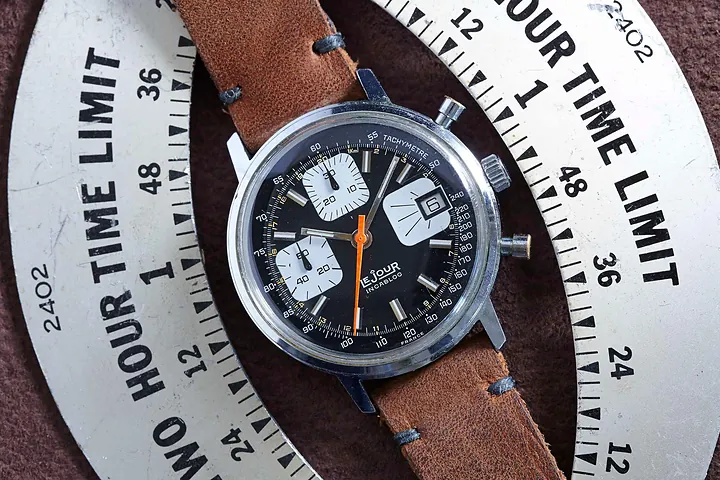
Le Jour Chronograph, late 1970
Analog/Shift (dealer), New York
Wristwatches · 1980s
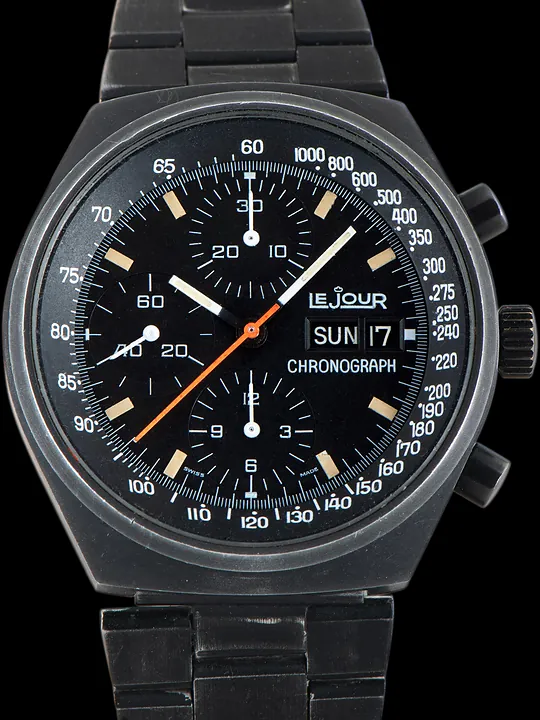
LeJour Chronograph 'Factory PVD' (Ref. 7750) "Top Gun", 1980s
Craft & Tailored (dealer), Los Angeles
Wristwatches · 1980s
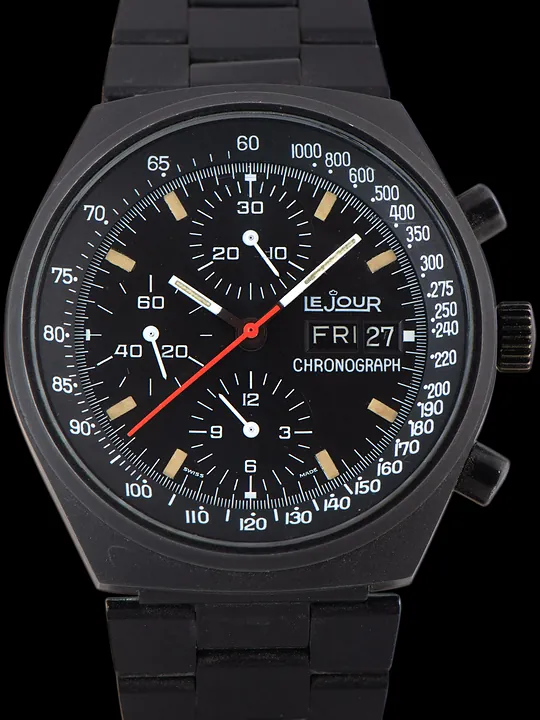
LeJour Chronograph (Ref. 7750) Original PVD "Top Gun", 1980s
Craft & Tailored (dealer), Los Angeles

Wristwatches · 1970
Wristwatch by Heno, Switzerland, 1970
Museum Rotterdam
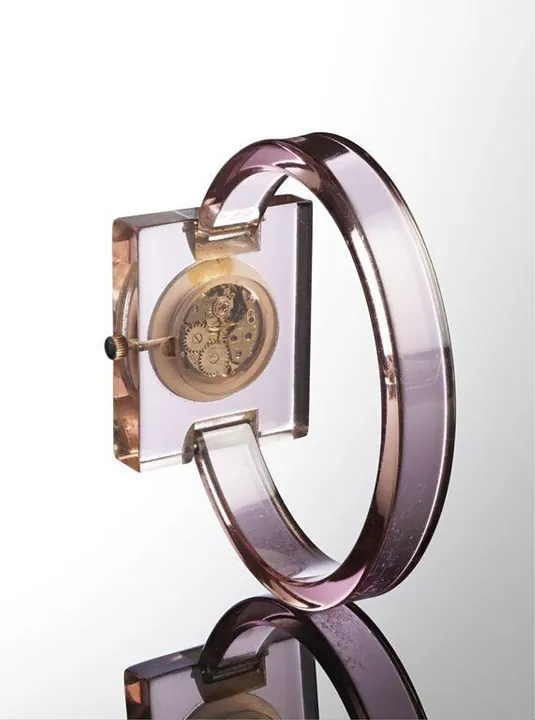
Wristwatches · 1970s
Wristwatch, plastic, by Gucci; Italy, 1970s.
Victoria and Albert Museum, London
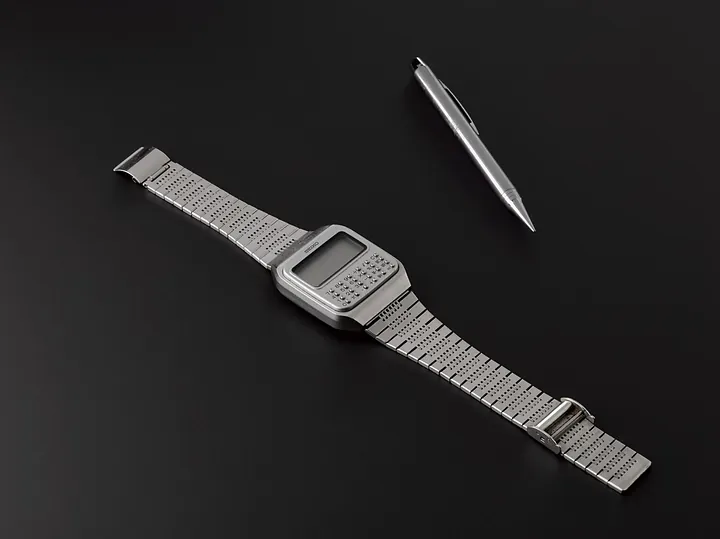
Wristwatches · 1978
Calculator wristwatch by Suwa Seikosha Co. Limited, Japan, 1978
Science Museum Group, London
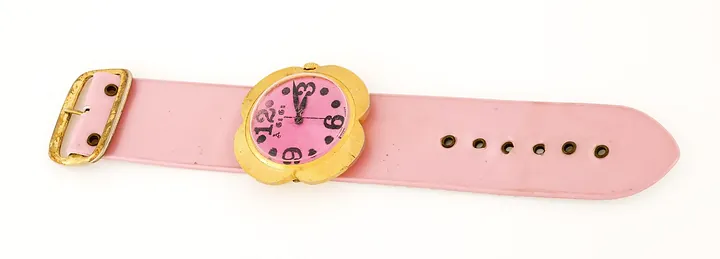
Wristwatches · 1980
Wristwatch, 1980 (no. 71413)
Museum Rotterdam
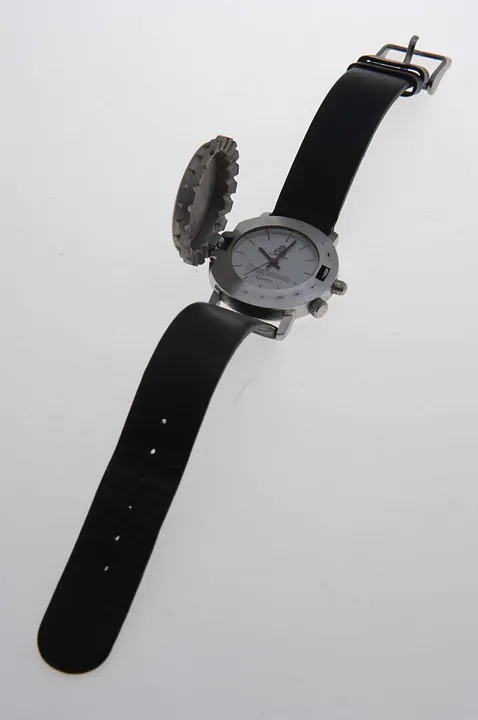
Wristwatches · 1980
Wristwatch, 1980 (no. 91477)
Museum Rotterdam