
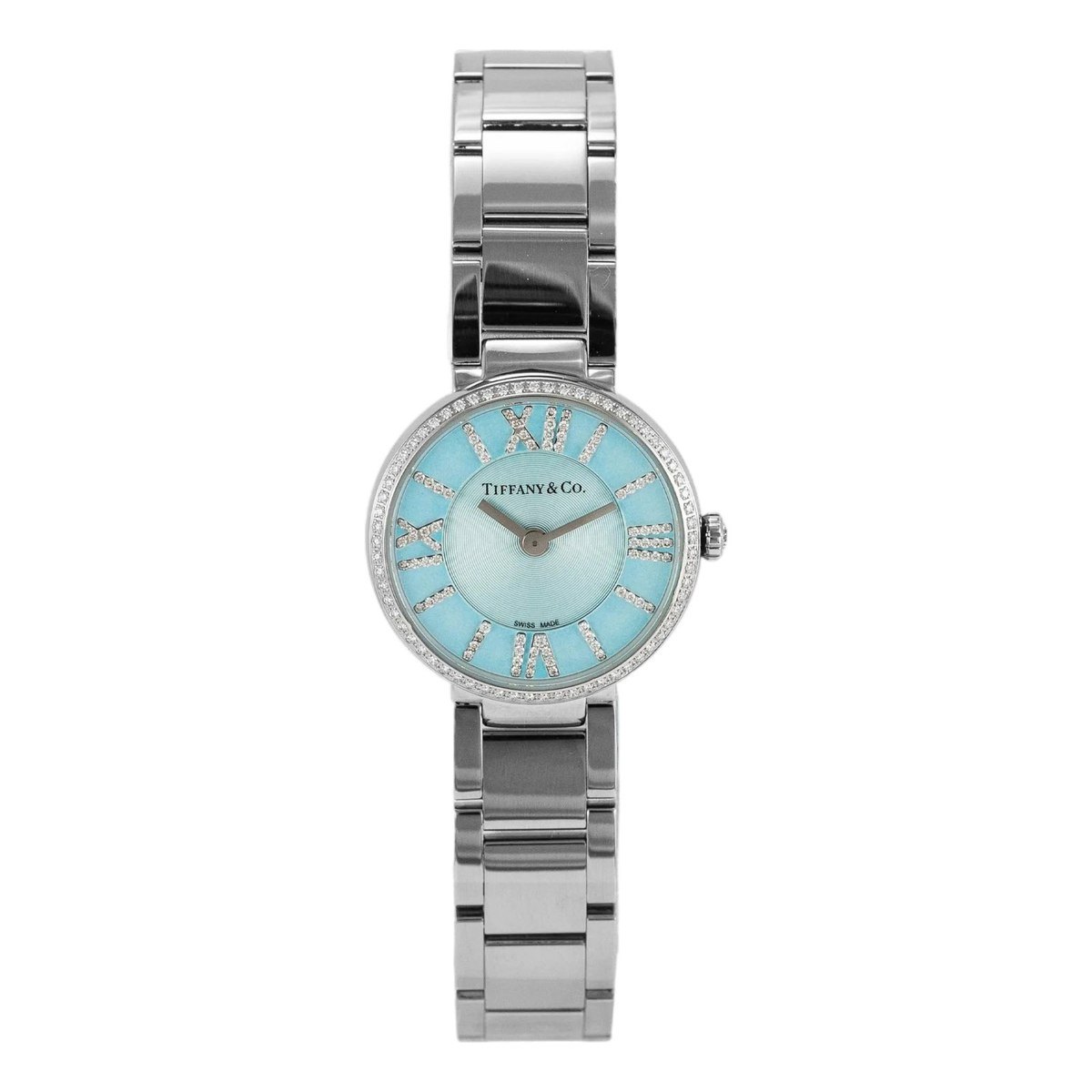
Wristwatches · Quartz wristwatch
Ladies Tiffany & Co. Atlas 2-Hand 24mm Diamond Steel Quartz Wristwatch
- Maker / attribution
- Tiffany & Co. (source attribution)
- Date
- 2023
- Historical period
- Contemporary Horology (2010 – Present)
- Country of origin
- Switzerland
- Object type
- Quartz wristwatch
- Dimensions
- 24.00 mm
- Holding institution
- Chairish
- Accession / object no.
- 456272
- Credit line
- Chairish
- Catalogue title (original)
- Ladies Tiffany & Co. Blue Atlas 2-Hand 24mm 62867485 Diamond Steel Quartz Watch | Chairish (English)
View the source record ↗ (opens another website in a new tab)Suggest a correction
Record summary
Held and catalogued by Chairish (object number 456272), this is a quartz wristwatch attributed to Tiffany & Co., made in Switzerland, dated 2023. The Atlas places it in the Contemporary Horology period (2010 – Present) of its Wristwatches collection. Recorded dimensions: 24.00 mm. The record is illustrated with 1 photograph.
Assembled from the source record's structured fields. Dates and attributions are given as the source states them; where a field is missing the Atlas leaves it blank rather than estimating.
Catalogue description
Original object description
Produced in Switzerland in 2023, this Tiffany & Co. Atlas 2-Hand wristwatch (reference 62867485, serial number 1310XXXXX) is housed in a 24 mm circular stainless steel case with a solid reverse. Outer markings note "St Steel" alongside the maker's signature "TIFFANY & CO." Set beneath a sapphire crystal, the light azure "Tiffany Blue" dial displays central two-hand timekeeping without date, bounded by diamond-set Roman numeral hour indexes and framed by a pavé diamond bezel, with a combined diamond weight stated at 0.28 carats. The case flows into a three-row stainless steel bracelet secured with an invisible deployment clasp. Power is provided by a quartz movement. While reported to retain its original paperwork, the interior of the caseback and the movement have not been directly confirmed from documentation.
Inscriptions & marks
1310XXXXX
Historical context
Contemporary Horology (2010 – Present)
Silicon components, connected watches, optical-lattice research clocks and a thriving independent scene.
Smartwatches became the world's best-selling watches, while mechanical watchmaking focuses on craft, innovation (silicon components, new escapements) and independent makers.
Read the period in the timelineMore wristwatches from this periodEarlier: Mechanical Renaissance
Atlas type guide
Quartz, digital and electronic watches
Electronic watches arrived in three steps. The Hamilton Electric 500 (1957) was the first battery-powered wristwatch, still with a balance; Bulova's Accutron (1960) used a tuning fork. On 25 December 1969 Seiko released the Astron 35SQ, the first quartz wristwatch, closely followed by the Swiss Beta 21 group. In 1972 Hamilton's Pulsar introduced the LED digital watch, and LCD displays soon made digital watches cheap.
The 'Quartz Crisis' that followed devastated the Swiss mechanical industry, which lost two-thirds of its workforce between 1970 and 1984 before recovering with the Swatch (1983) and the luxury mechanical revival. Solar, radio-controlled, kinetic and connected smartwatches continue the electronic line.
What to look for
- Battery hatch in the case back and calibre markings with 'Quartz' or a crystal frequency.
- Display technology: LED (red, push-button) versus LCD (always-on).
- Tuning-fork hum and a smoothly sweeping seconds hand on Accutrons.
- Model and reference numbers, often printed on the back.
Dating clues
- Electric balance watches: from 1957.
- Tuning-fork watches: 1960–c. 1977.
- Quartz analogue: from December 1969; LED digital: 1972–c. 1978; LCD from 1973.
General guidance written by the Atlas editors about this kind of object. It is not a statement about this particular piece; for that, rely on the source record above and on physical examination.
Read next:Seiko calibre 35A (Astron)
Related records
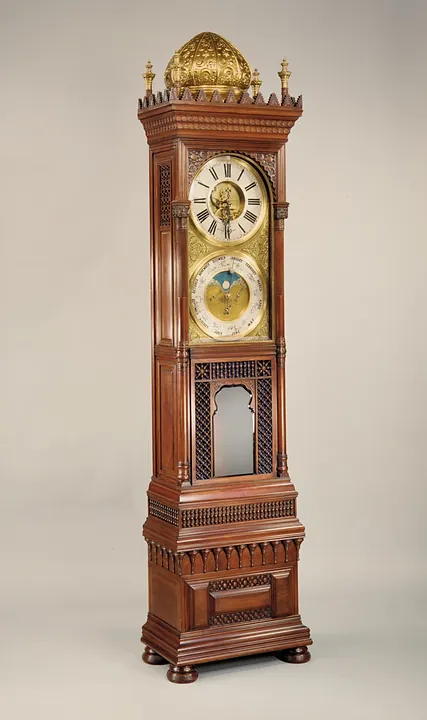
Clocks · c. 1882–85
Tall clock by Tiffany & Co., United States, c. 1882–85
The Metropolitan Museum of Art, New York
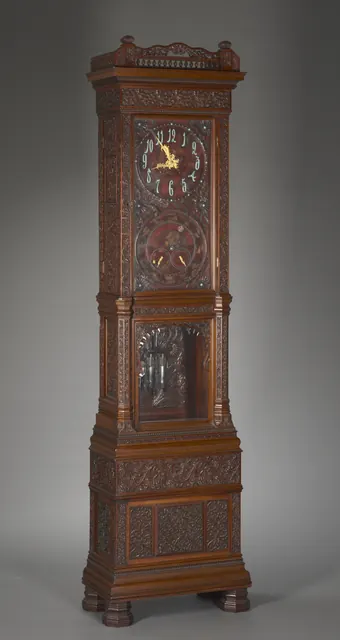
Clocks · c. 1880
Tall clock by Tiffany & Co., United States, c. 1880
Cleveland Museum of Art
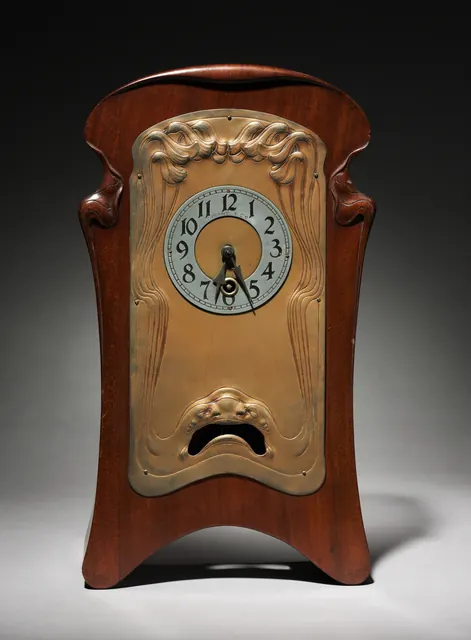
Clocks · 1901
Mantel clock by Lenzkirch Clock Factory, 1901
Cleveland Museum of Art
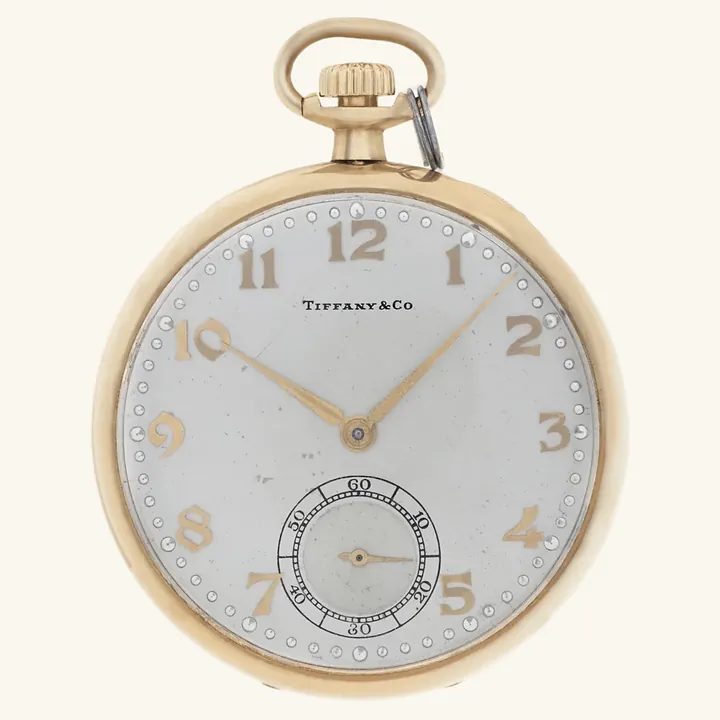
Pocket Watches · 1920
Tiffany & Co. gold pocket watch with Hamilton movement
WatchMuseum.org shop

Wristwatches · c. 2010s
Breguet Type XXI, ref. 3810, c. 2010s (Antiquorum Lot 381-24)
Antiquorum auction archive, Geneva

Wristwatches · c. 2010s
Breguet Type XXI, ref. 3810, c. 2010s (Antiquorum Lot 386-229)
Antiquorum auction archive, Geneva

Wristwatches · Sold in September 2010
Breitling Cosmonaute, ref. A 22322, Sold in September 2010
Antiquorum auction archive, Geneva

Wristwatches · c. 2010
Corum Bubble Chrono, ref. 396.150.20, c. 2010
Antiquorum auction archive, Geneva