
Wristwatches · Wristwatch
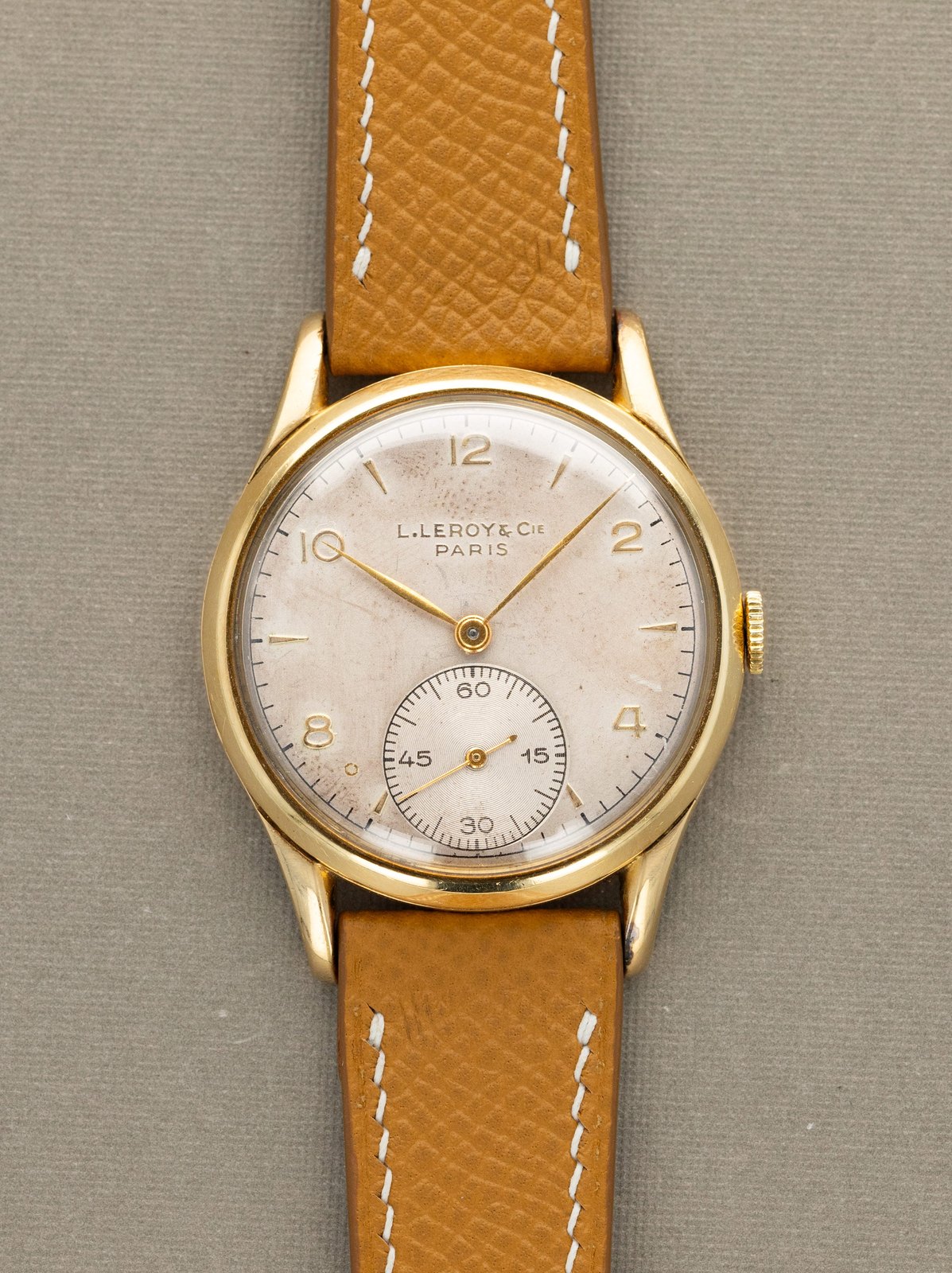
L. Leroy & Cie Yellow Gold Dress Watch, Peseux 260 Movement
- Maker / attribution
- L. Leroy & Cie (maker)
- Date
- c. early 1950s
- Historical period
- Modern Mechanical Horology (1945 – 1969)
- Country of origin
- Unrecorded in source
- Object type
- Wristwatch
- Materials / technique
- yellow gold
- Dimensions
- Case 35 mm
- Stock no.
- OC2633
- Credit line
- Dealer listing, Oliver & Clarke (OC2633)
- Catalogue title (original)
- L. Leroy & Cie Yellow Gold Dress Watch - Peseux 260 Movement (English)
View the source record (dealer listing) ↗ (opens another website in a new tab)Suggest a correction
Record summary
Catalogued by Oliver & Clarke (dealer), United Kingdom (stock number OC2633), this is a wristwatch by L. Leroy & Cie, dated c. early 1950s. The Atlas places it in the Modern Mechanical Horology period (1945 – 1969) of its Wristwatches collection. Materials and techniques recorded by the source: yellow gold. Recorded dimensions: Case 35 mm. The record is illustrated with 6 photographs.
Assembled from the source record's structured fields. Dates and attributions are given as the source states them; where a field is missing the Atlas leaves it blank rather than estimating.
Catalogue description
Dealer description — Oliver & Clarke
L. Leroy & Cie is a French manufacturer with real watchmaking prowess and credibility, but is lesser-known in the greater watch community. Founded in the late 18th Century in an era where another French brand, Breguet, was also conceived, L. Leroy & Cie enjoys a rich history with a number of horological accolades, including the most complicated timepiece in the world until it was dethroned by Patek Philippe's Calibre 89 in 1989. In fact, Breguet and Leroy have also been mildly-intertwined throughout history. Of course, both manufactures are French, and therefore have similar design language and finishing techniques over the course of their existence. The watch that we have here is another example of this intertwined history, but actually because of the movement within: the legendary Peseux 260. Designed specifically for Observatory chronometer competition trials to be as accurate as possible, the Cal. 260 is generally regarded as one of the finest time-only chronometer watch movements of the 20th century. It was produced for about 23 years with approximately 3,300 units made, and allegedly, never sold to the public. Instead, these were distributed to high-end brand such as Leroy, CYMA, and Breguet. The 260 is a rare example of a movement that is truly collectible, so, when you combined with a brand like Leroy, the result is something very, very special indeed. Dating to circa the early 1950s, this Calatrava-style dress watch features a 35mm yellow gold case with lovely semi-twisted lugs. It remains in strong condition overall with no major damage or wear given its age and retains a clear case number engraving on the snapback case. The satin silver dial inside exhibits patina throughout, with no signs of any previous refinishing or tampering. The alternating 'dart' and 'Arabic' indices and the script on the top half of the dial are all both 'raised' and well preserved. On the bottom half, there is an oversized subsidiary seconds register with 'concentric' finishing. All of the black printing is excellent and the dial presents beautifully. Of course, open it up and you'll find the P260 manually-wound movement, which features beautiful finishing and is signed L. Leroy & Cie. This piece, like all L. Leroy & Cie, is flat out rare. Praised by connoisseurs and those that know, this is a very rare opportunity to acquire a piece that simply do not surface on the open market with any regularity.
Historical context
Modern Mechanical Horology (1945 – 1969)
Tool watches for divers, pilots and astronauts; electric watches anticipate the electronic age.
The classic era of the mechanical wristwatch: dive watches, chronographs for motor racing and space flight, GMT watches for jet travel, slim dress watches, automatic calendars, and the rise of Japanese manufacturers alongside Swiss, American, German and Soviet industries.
Read the period in the timelineMore wristwatches from this periodEarlier: Golden Age of Mechanical Watchmaking
Atlas type guide
Wristwatches
Bracelet watches were worn by women from the early nineteenth century — Breguet made one for Caroline Murat, Queen of Naples, in 1810–12 — but the wristwatch only became a man's instrument with military use and aviation in the early twentieth century. Between the World Wars it overtook the pocket watch; the 1920s and 1930s brought rectangular Art Deco cases, water-resistant cases and the first automatic winding systems.
After 1945 the wristwatch became a carrier of identity — dress watches, sports and dive watches, chronographs, calendars — produced by Swiss, American, Japanese, German, Soviet and Chinese industries. The quartz revolution after 1969 and the mechanical renaissance since the 1990s, including the rise of independent watchmakers, complete the story.
What to look for
- The reference number (between the lugs or inside the case back) and serial number, the starting point for dating.
- The calibre: its maker and number are often stamped under the dial or on the bridge.
- Originality of dial, hands and crown — refinished ('redial') dials are common.
- Case material marks: 18K/750, 14K/585, stainless steel, gold-filled, plated.
Dating clues
- Wire-lug cases: before c. 1925.
- Water-resistant screw-down cases: from 1926.
- Quartz movements: from 1969; sapphire crystals widespread after c. 1980.
General guidance written by the Atlas editors about this kind of object. It is not a statement about this particular piece; for that, rely on the source record above and on physical examination.
Related records
Instruments · c. 1915
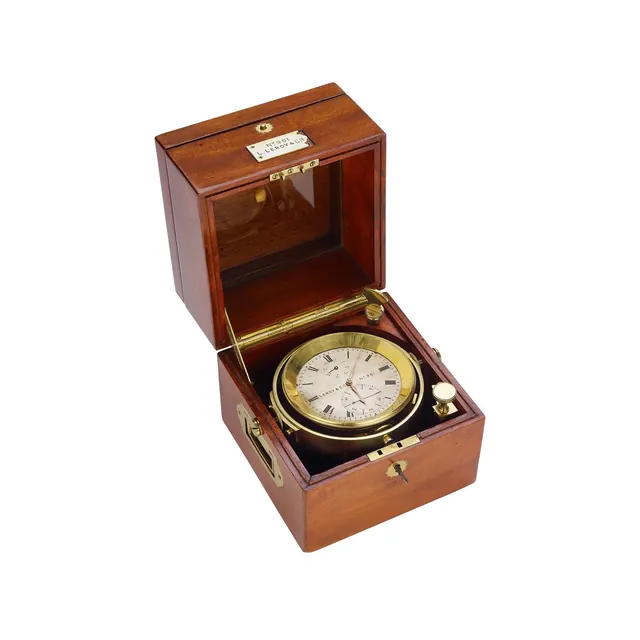
L. Leroy & Cie marine chronometer, France Marine Chronometer, circa 1915
Antiquorum auction archive, Geneva

Wristwatches · 1945
Wristwatch by Eterna, 1945
Museum Rotterdam

Wristwatches · c. 1945
Breitling Premier, ref. 790, c. 1945
Antiquorum auction archive, Geneva

Wristwatches · c. 1945
Universal Genève Uni-Compax, ref. 22492, c. 1945
Antiquorum auction archive, Geneva
Wristwatches · c. 1950s
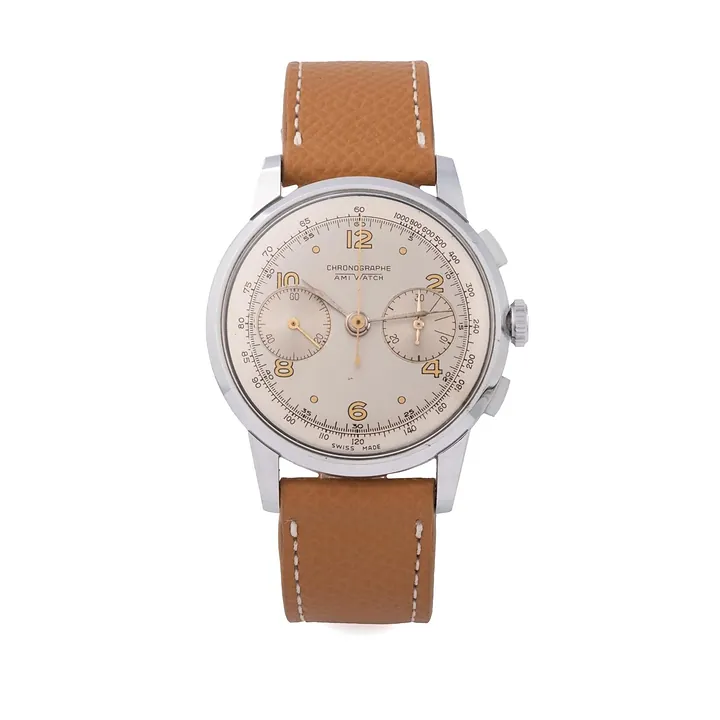
Ami Watch Chronographe, c. 1950s
Antiquorum auction archive, Geneva

Wristwatches · c. 1950s
Baume & Mercier wristwatch, c. 1950s
Antiquorum auction archive, Geneva
Wristwatches · c. 1955
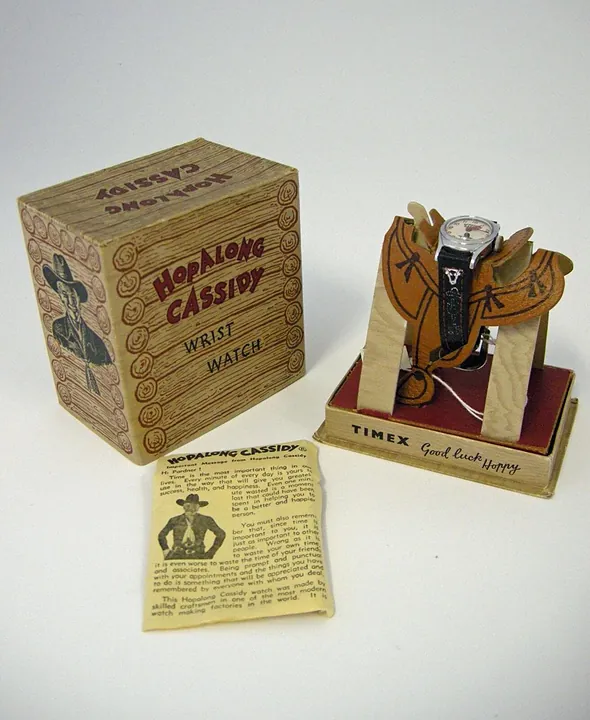
Child's wrist watch by Timex, Dundee, c. 1955
Victoria and Albert Museum, London
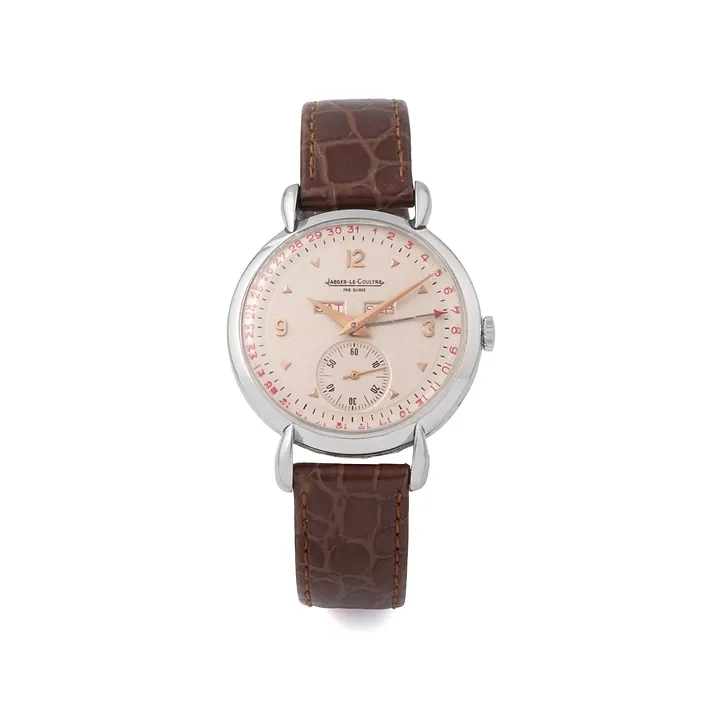
Wristwatches · c. 1950
Jaeger Lecoultre Triple Calendar, c. 1950
Antiquorum auction archive, Geneva