
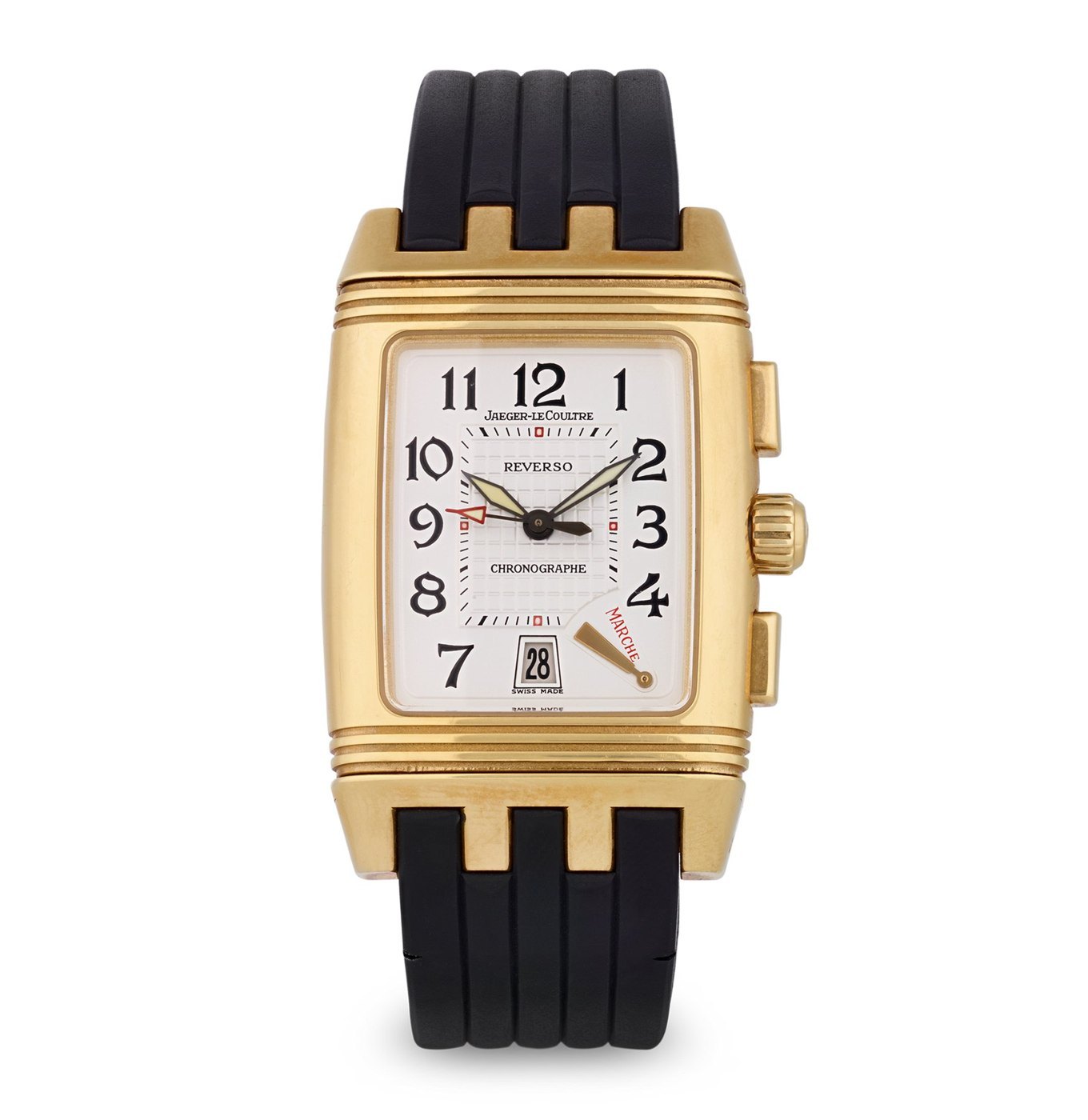
Wristwatches · Reversible chronograph wristwatch
Jaeger-LeCoultre Reverso Gran'Sport Chronograph Wristwatch
- Maker / attribution
- Jaeger-LeCoultre (source attribution)
- Date
- c. 2010
- Historical period
- Contemporary Horology (2010 – Present)
- Country of origin
- Switzerland
- Object type
- Reversible chronograph wristwatch
- Materials / technique
- 18K yellow gold
- Holding institution
- M.S. Rau
- Accession / object no.
- jaeger-lecoultre-reverso-gran-sport-chronograph-wristwatch-8758d99223
- Credit line
- M.S. Rau
- Catalogue title (original)
- ساعت مچی کرنوگراف طلای زرد Jaeger-LeCoultre Reverso Gran'Sport (English)
View the source record ↗ (opens another website in a new tab)Suggest a correction
Record summary
Held and catalogued by M.S. Rau (object number jaeger-lecoultre-reverso-gran-sport-chronograph-wristwatch-8758d99223), this is a reversible chronograph wristwatch attributed to Jaeger-LeCoultre, made in Switzerland, dated c. 2010. The Atlas places it in the Contemporary Horology period (2010 – Present) of its Wristwatches collection. Materials and techniques recorded by the source: 18K yellow gold. The record is illustrated with 1 photograph.
Assembled from the source record's structured fields. Dates and attributions are given as the source states them; where a field is missing the Atlas leaves it blank rather than estimating.
Catalogue description
Original object description
Dating to around 2010, this Reverso Gran'Sport chronograph was produced by Jaeger-LeCoultre in the Vallée de Joux. Its 23 mm-wide 18K yellow gold case features horizontal gadrooned detailing at the lugs and is fitted with a proprietary rubber strap attached via stationary gold hardware to an 18K yellow gold folding clasp. Two distinct silvered guilloché grid dials are alternately revealed by the pivoting case, both read using luminescent leaf hands. The primary face combines Arabic numerals and a 6 o'clock date aperture with an Arrêt/Marche indicator detailing the chronograph's operational state. The reverse face is dedicated to timing functions, presenting a central 60-second counter alongside a 30-minute retrograde display. The multi-dial mechanism is operated by the manually wound Jaeger-LeCoultre Calibre 859.
Historical context
Contemporary Horology (2010 – Present)
Silicon components, connected watches, optical-lattice research clocks and a thriving independent scene.
Smartwatches became the world's best-selling watches, while mechanical watchmaking focuses on craft, innovation (silicon components, new escapements) and independent makers.
Read the period in the timelineMore wristwatches from this periodEarlier: Mechanical Renaissance
Atlas type guide
Chronographs and split-seconds watches
A chronograph is a watch with an additional seconds hand that can be started, stopped and returned to zero independently of the timekeeping. Louis Moinet built an early example in 1816 and Nicolas Rieussec a recording 'chronographe' in 1821; Adolphe Nicole's heart-shaped reset cam (patented 1862) made the modern return-to-zero possible. Split-seconds (rattrapante) chronographs add a second hand that can be stopped for intermediate times; flyback chronographs restart instantly.
Chronographs were essential tools for doctors (pulsometer scales), artillery (telemeter), engineers and sport. In wristwatches, Valjoux, Venus, Lemania and later the automatic chronographs of 1969 (Zenith El Primero, the Chronomatic Calibre 11 group and Seiko 6139) are milestones.
What to look for
- Push-pieces on the case band or a single button in the crown (monopusher).
- Subsidiary registers for minutes and hours; tachymeter, telemeter or pulsometer scales.
- Column wheel versus cam control visible in the movement.
- Calibre markings of specialist makers (Valjoux, Lemania, Venus, Landeron).
Dating clues
- Pocket chronographs with heart cam reset: after 1862.
- Wrist chronographs: from c. 1910; two-button designs from the 1930s.
- Automatic chronographs: from 1969.
General guidance written by the Atlas editors about this kind of object. It is not a statement about this particular piece; for that, rely on the source record above and on physical examination.
Read next:Flyback chronographChronograph
Related records
Clocks · 1937–1938
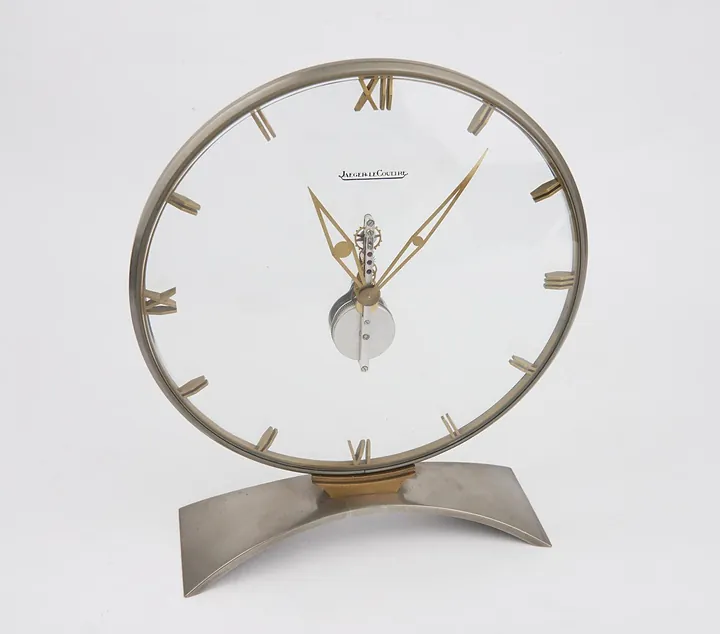
Skeleton clock by Jaeger-LeCoultre, Switzerland, 1937–1938
Science Museum Group, London
Movements & Components · 1953
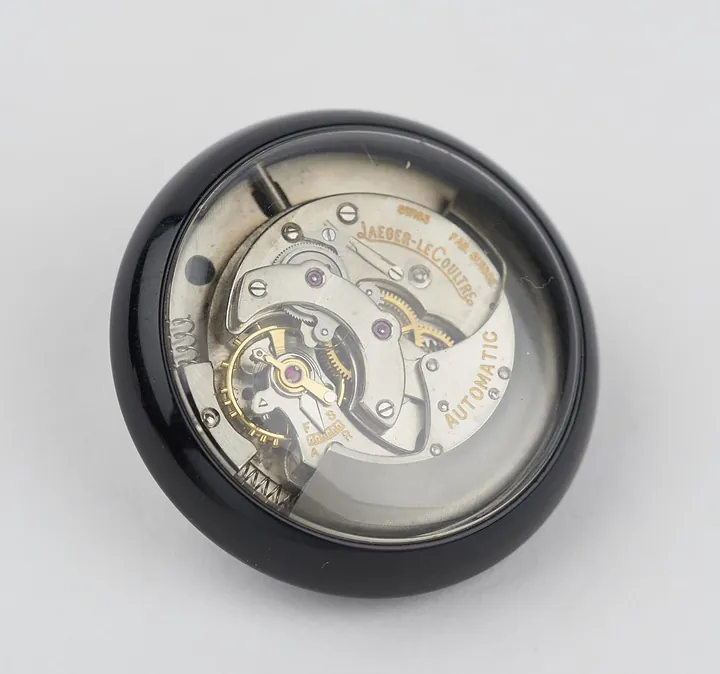
Automatic watch movement, Jaeger-LeCoultre, 1953, Geneva, Switzerland, showing self-winding mechanism
Science Museum Group, London
Wristwatches · 1953
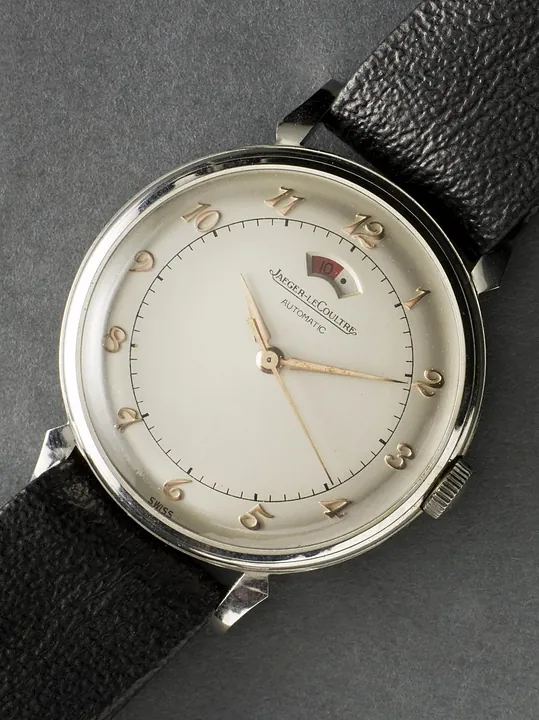
Automatic Wrist-watch, Jaeger-LeCoultre, Geneva, Switzerland, with reserve power indicator complete in steel case, 1953. Back numbered 564556.
Science Museum Group, London
Wristwatches · 1953
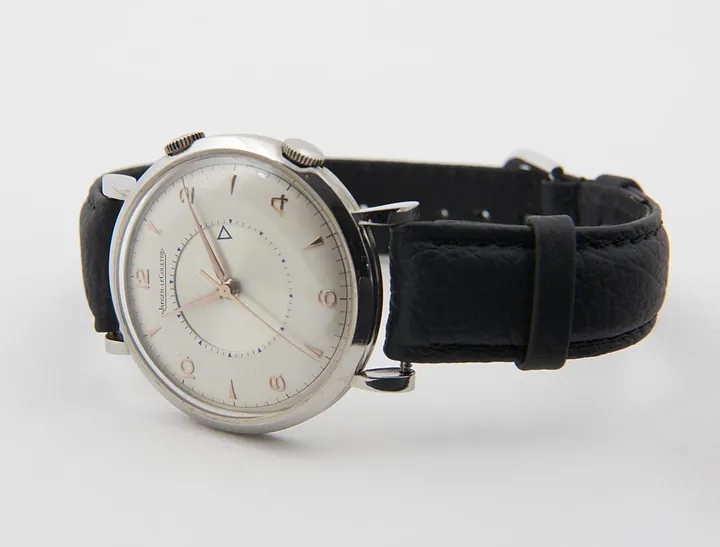
Wrist-watch, 'Memovox' alarm, Jaeger-LeCoultre, Geneva, Switzerland, complete in steel case, 1953.
Science Museum Group, London

Wristwatches · c. 2010s
Breguet Type XXI, ref. 3810, c. 2010s (Antiquorum Lot 381-24)
Antiquorum auction archive, Geneva

Wristwatches · c. 2010s
Breguet Type XXI, ref. 3810, c. 2010s (Antiquorum Lot 386-229)
Antiquorum auction archive, Geneva

Wristwatches · Sold in September 2010
Breitling Cosmonaute, ref. A 22322, Sold in September 2010
Antiquorum auction archive, Geneva

Wristwatches · c. 2010
Corum Bubble Chrono, ref. 396.150.20, c. 2010
Antiquorum auction archive, Geneva