
Wristwatches · Wristwatch
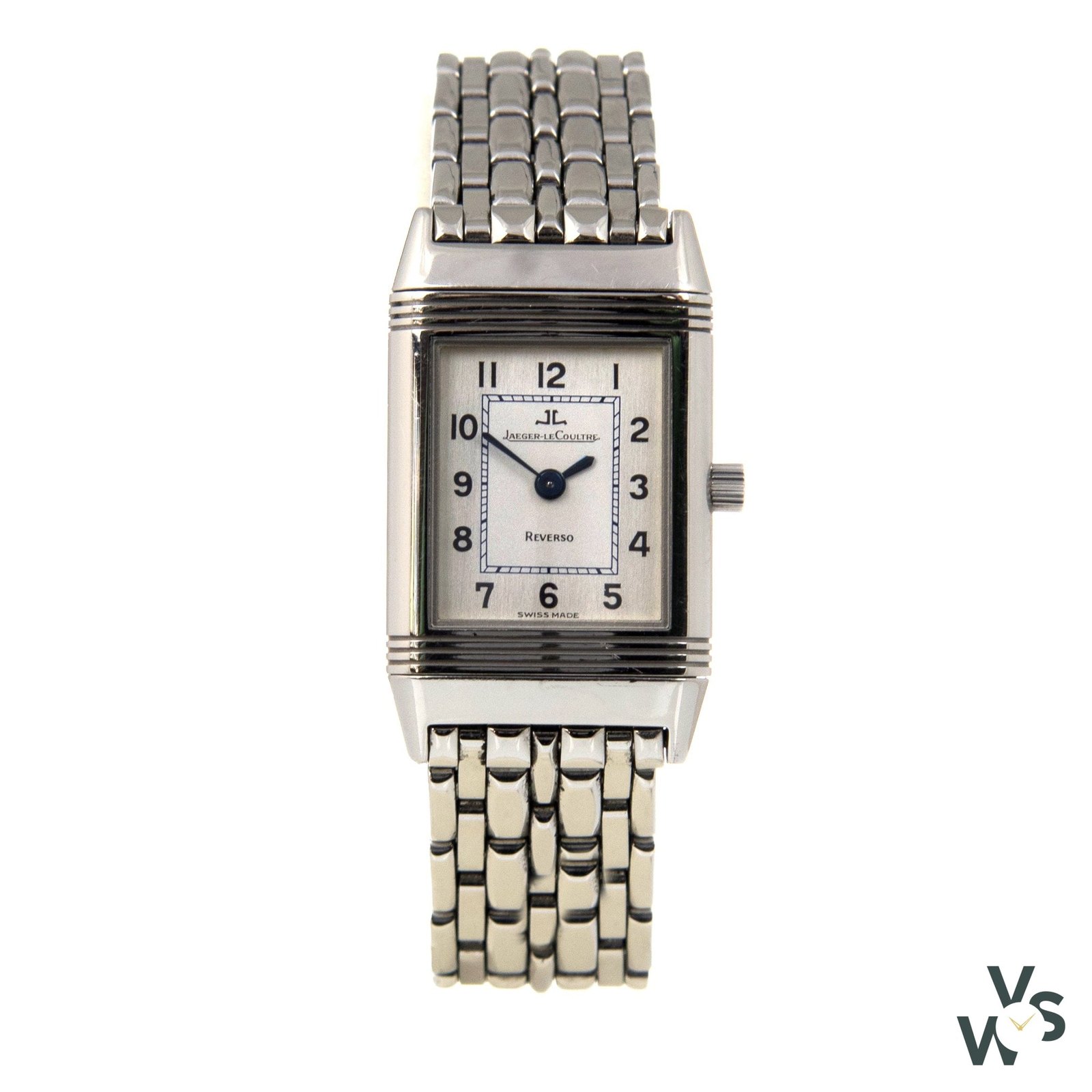
Jaeger LeCoultre Reverso "Dame", A Ladies Model, ref. 260.880.862, circa 1994
- Maker / attribution
- Jaeger-LeCoultre (maker)
- Date
- c. 1994
- Historical period
- Mechanical Renaissance (1990 – 2010)
- Country of origin
- Switzerland
- Object type
- Wristwatch
- Dimensions
- Case 20 mm
- Stock no.
- vws0870cs
- Credit line
- Dealer listing, Vintage Watch Specialist (vws0870cs)
- Catalogue title (original)
- Jaeger LeCoultre Reverso "Dame" - A Ladies Model - Ref: 260.880.862 c.1994 ***SOLD*** (English)
View the source record (dealer listing) ↗ (opens another website in a new tab)Suggest a correction
Record summary
Catalogued by Vintage Watch Specialist (dealer), United Kingdom (stock number vws0870cs), this is a wristwatch by Jaeger-LeCoultre, made in Switzerland, dated c. 1994. The Atlas places it in the Mechanical Renaissance period (1990 – 2010) of its Wristwatches collection. Recorded dimensions: Case 20 mm. The record is illustrated with 4 photographs.
Assembled from the source record's structured fields. Dates and attributions are given as the source states them; where a field is missing the Atlas leaves it blank rather than estimating.
Catalogue description
Dealer description — Vintage Watch Specialist
A classic, Ladies, Jaeger LeCoultre Reverso “Dame” in Steel on its original bracelet; a beautifully presented classic, Art Deco style watch with mechanical movement. The timeless face surrounded by its three emblematic gadroons (The case markings, top and bottom). This is the “Dame” model for ladies, and as such is typically 20mm wide by 33.5mm tall, which is not a very big by modern standards, but even so the white dial with black Arabic numerals is so very easy to read. Presented on a stainless steel bracelet this watch wears as much like a piece of jewellery as it does a timepiece. Because of its “Reverso” design (the case can be turned over revealing a polished steel back) it is actually a solid watch that was originally designed to be worn while playing sports. The case backs on these pre-owned models are usually engraved but as you will see from our images, this one is not, should you wish to have it engraved as a presentation to a loved one or a colleague then this can be arranged! As we can all hopefully agree; both men and women can admire the beauty of this piece that any lady would find this beautiful timepiece fitting for any occasion! As we purchased this watch from the original owners family we know she was so fascinated by this watch when she first came across it at her local AD’s, she began saving up for some time before eventually purchasing the watch, brand new, in 1994. Only warn at very special occasions or holidays, this elegant timepiece has been cherished and very well looked after. Later receiving a full service in November 2013 by Jaeger LeCoultre after which it was returned to the owner at the beginning of February 2014. Full details of this service will also provided to you upon purchase of the watch. Since that day the watch has barely been worn and the watch looks immaculate, really showing the love and appreciation this watch received! The legendary story behind the origins of this reversing case dates back to the 1930’s, when Jaeger sought after a new balance between form and function, created to try withstanding the Polo matches of the British Army officers in India. Reversing the hinged case would protect the dial from damage while playing sports. This idea and design has continued to this day and was also adopted by some other manufacturers. This watch comes with its original box, papers and booklets, also with a full service record from Jaeger LeCoultre. It also comes with spare links for the bracelet and a Jaeger pin tool. All in all a well looked after and cherished watch by the previous owner, it is now for re-sale for the next person to cherish and enjoy. Model ref: 880.862 Year: 1994 Box and papers: Yes Movement type, calibre and jewels: Mechanical, Manual Wind Case: Stainless Steel Dial: White Crystal: Crystal Bracelet: Stainless Steel Width (w/o crown): 20mm Height, lug to lug: 33mm Lug width: 14mm Wrist size: Full ladies bracelet
Historical context
Mechanical Renaissance (1990 – 2010)
Mechanical watches return as cultural objects; independent watchmaking flourishes.
Mechanical watches returned as cultural and luxury objects. Complications, tourbillons and new materials proliferated; independent watchmakers such as George Daniels, F.P. Journe and Philippe Dufour revived artisanal watchmaking; collecting vintage watches became a major field.
Read the period in the timelineMore wristwatches from this periodEarlier: Quartz Revolution
Atlas type guide
Wristwatches
Bracelet watches were worn by women from the early nineteenth century — Breguet made one for Caroline Murat, Queen of Naples, in 1810–12 — but the wristwatch only became a man's instrument with military use and aviation in the early twentieth century. Between the World Wars it overtook the pocket watch; the 1920s and 1930s brought rectangular Art Deco cases, water-resistant cases and the first automatic winding systems.
After 1945 the wristwatch became a carrier of identity — dress watches, sports and dive watches, chronographs, calendars — produced by Swiss, American, Japanese, German, Soviet and Chinese industries. The quartz revolution after 1969 and the mechanical renaissance since the 1990s, including the rise of independent watchmakers, complete the story.
What to look for
- The reference number (between the lugs or inside the case back) and serial number, the starting point for dating.
- The calibre: its maker and number are often stamped under the dial or on the bridge.
- Originality of dial, hands and crown — refinished ('redial') dials are common.
- Case material marks: 18K/750, 14K/585, stainless steel, gold-filled, plated.
Dating clues
- Wire-lug cases: before c. 1925.
- Water-resistant screw-down cases: from 1926.
- Quartz movements: from 1969; sapphire crystals widespread after c. 1980.
General guidance written by the Atlas editors about this kind of object. It is not a statement about this particular piece; for that, rely on the source record above and on physical examination.
Related records
Clocks · 1937–1938
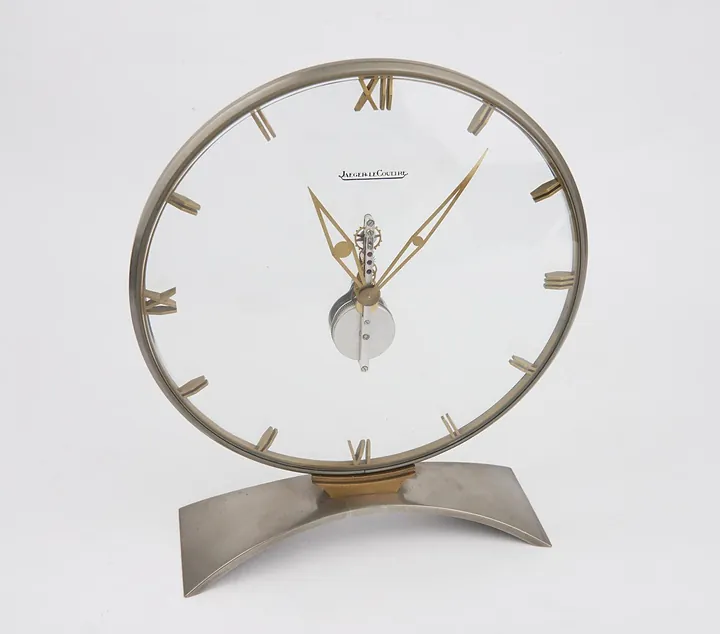
Skeleton clock by Jaeger-LeCoultre, Switzerland, 1937–1938
Science Museum Group, London
Movements & Components · 1953
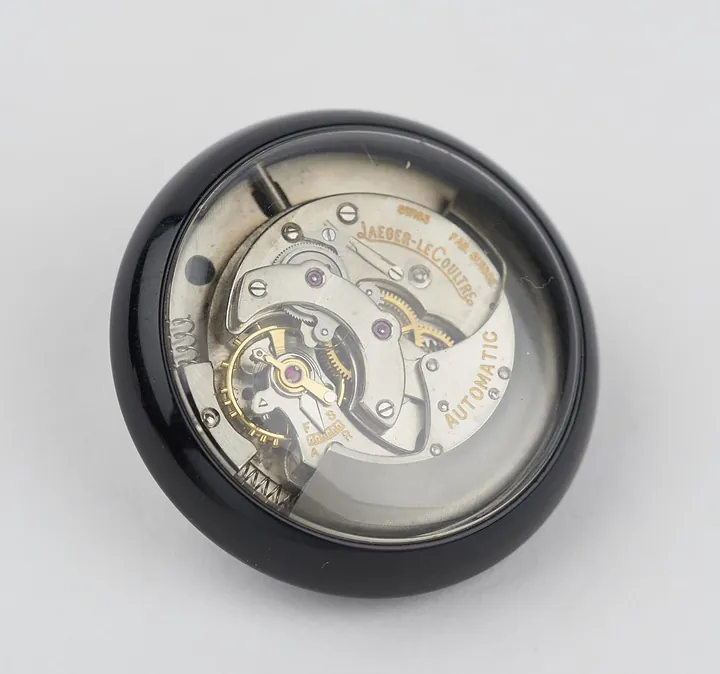
Automatic watch movement, Jaeger-LeCoultre, 1953, Geneva, Switzerland, showing self-winding mechanism
Science Museum Group, London
Wristwatches · 1953
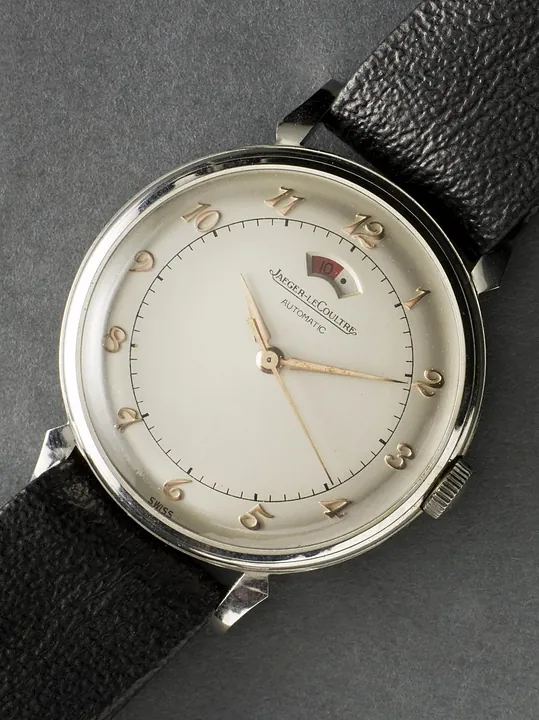
Automatic Wrist-watch, Jaeger-LeCoultre, Geneva, Switzerland, with reserve power indicator complete in steel case, 1953. Back numbered 564556.
Science Museum Group, London
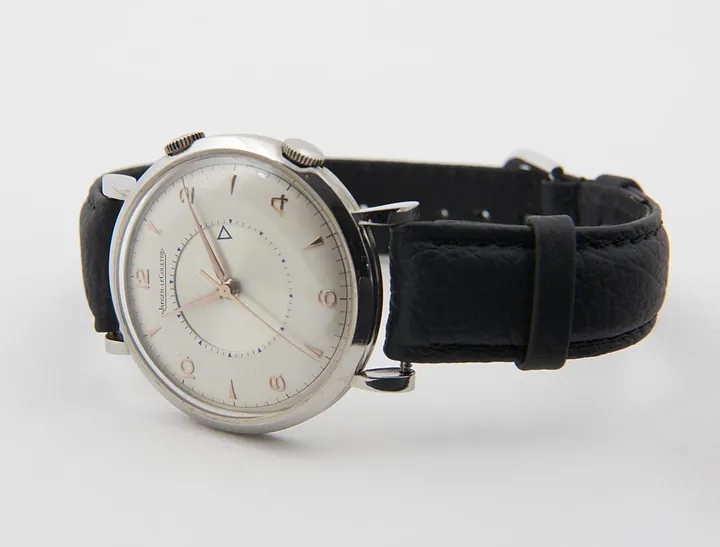
Wristwatches · 1953
Wrist-watch, 'Memovox' alarm, Jaeger-LeCoultre, Geneva, Switzerland, complete in steel case, 1953.
Science Museum Group, London

Wristwatches · 2008
Wristwatch by Breitling?, 2008
Museum Rotterdam

Wristwatches · c. 1990s
Audemars Piguet Bamboo, c. 1990s
Antiquorum auction archive, Geneva

Wristwatches · c. 1990
Audemars Piguet Huitieme Perpetual Calendar, ref. 25696PT, c. 1990
Antiquorum auction archive, Geneva

Wristwatches · c. 1990
Breitling Chronomat, ref. b13050.1, c. 1990
Antiquorum auction archive, Geneva