
Wristwatches · Wristwatch
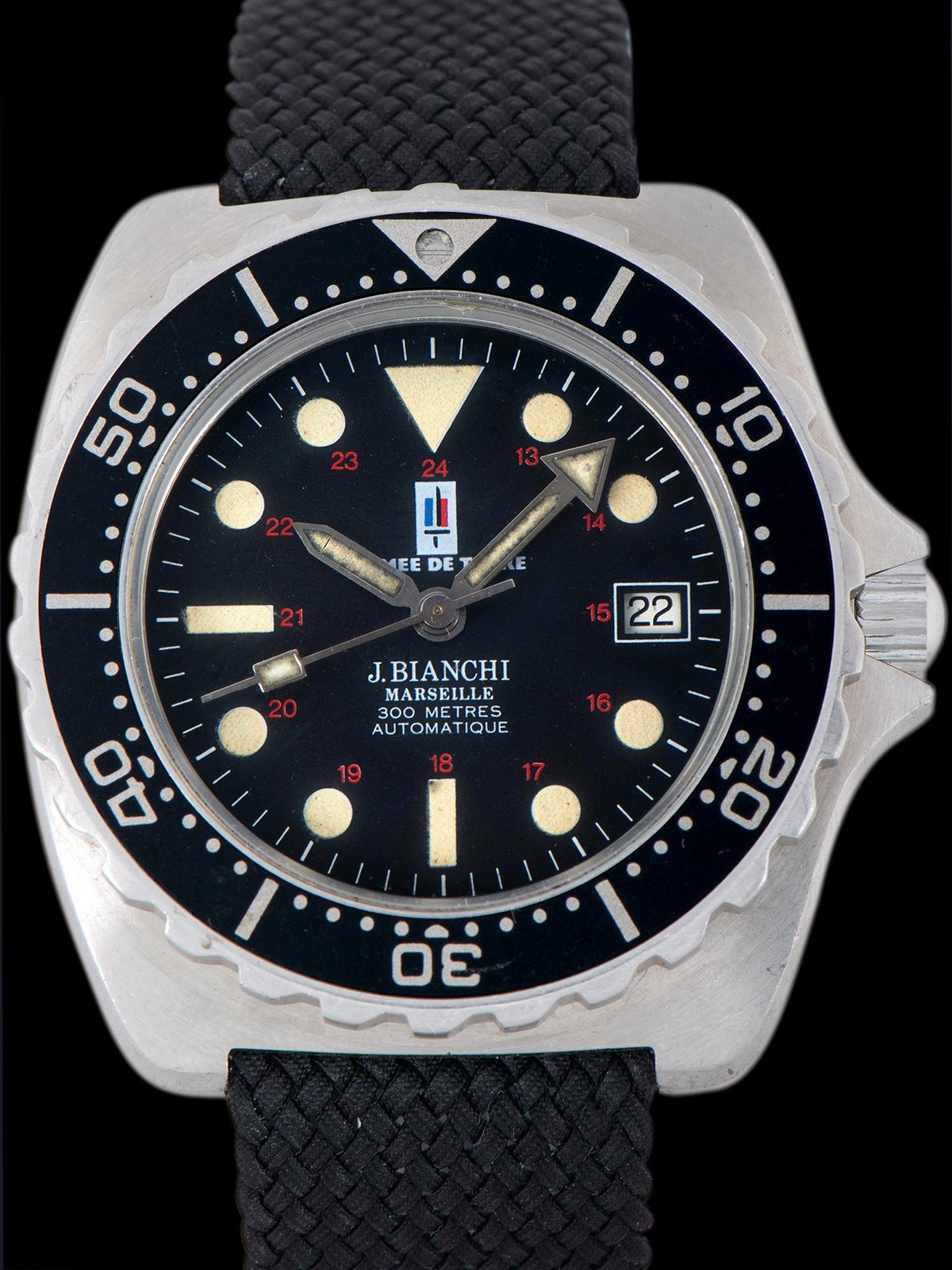
J. Bianchi “Armée de Terre” French Military Recon Dive Watch, 1994
- Maker / attribution
- Unrecorded in source
- Date
- 1994
- Historical period
- Mechanical Renaissance (1990 – 2010)
- Country of origin
- France
- Object type
- Wristwatch
- Dimensions
- Case 42 mm
- Stock no.
- JBATFNDW
- Credit line
- Dealer listing, Craft & Tailored (JBATFNDW)
- Catalogue title (original)
- 1994 J. Bianchi “Armée de Terre” French Military Recon Dive Watch (English)
View the source record (dealer listing) ↗ (opens another website in a new tab)Suggest a correction
Record summary
Catalogued by Craft & Tailored (dealer), Los Angeles (stock number JBATFNDW), this is a wristwatch, made in France, dated 1994. The Atlas places it in the Mechanical Renaissance period (1990 – 2010) of its Wristwatches collection. Recorded dimensions: Case 42 mm. The record is illustrated with 6 photographs.
Assembled from the source record's structured fields. Dates and attributions are given as the source states them; where a field is missing the Atlas leaves it blank rather than estimating.
Catalogue description
Dealer description — Craft & Tailored
The art of collecting military-issued timepieces has never been more interesting or captivating than in today’s day and age. These alluring timepieces have been sought after for as long as collectors have been rummaging through estate sales and flipping through catalogs, however, due to the availability of archived information we now possess, the community has never been more interconnected or informed. The “Armée de Terre” dive watch created by J. Bianchi for the French Armies Recon Dive Units is an embodiment of the uncompromising spirit of France’s elite reconnaissance units. Born from the legacy of military tool watches issued throughout the 20th century, the Armée de Terre was designed to meet the rigorous demands of field operatives—both past and present. Originally commissioned by the French Army in the early 1990s for its combat diving units. Developed in collaboration with the Centre École de Plongée de l’Armée de Terre (CEPAT), this watch was designed to meet the rigorous demands of specialized units such as the SAF (spécialistes d'aide au franchissement) and TSIO (travaux subaquatiques/intervention offensive), who operated in challenging environments like rivers, lakes, and urban waterways. Jacques Bianchi, a renowned Marseille-based watchmaker, was awarded the contract after his prototypes outperformed competitors in field tests. The watch's design emphasizes functionality: a 42mm stainless steel case with a satin finish to reduce reflections, an oversized, serrated bezel for ease of use with gloves, and a dial featuring large tritium-lumed markers for optimal visibility. Powered by the reliable ETA 2824 automatic movement, the watch also includes a unidirectional 60-click bezel and a flat mineral glass crystal for enhanced durability. Between 1993 and 1994, approximately 1,000 units were produced and issued exclusively to army divers. These watches were not sold to the public and were intended to be returned and reissued within the military upon personnel transfers, making them exceedingly rare in civilian hands today. Each watch was registered within its respective diving unit, and due to decentralized record-keeping, tracing individual histories is basically impossible. Notably, these timepieces were also designed to be mounted on underwater navigation boards, underscoring their role as essential tools for military operations. The J. Bianchi “Armée de Terre” diver watch stands as a testament to military engineering and horological craftsmanship, with the few models that surface offering a genuine piece of French military history. SPECS Stock # JBATFNDW Brand J. Bianchi Style “Armée de Terre” Model French Military Recon Dive Watch Serial 02X Size Men's Material Stainless Steel Dial Matte Black Millimeters 42 Bracelet Black Single-Pass Perlon Strap CASE & BRACELET The impressive and robust cushion-shaped dive watch case retains crisp original details and honest signs of use. The wrapping case chamfer remains fully present around the case with some softening present from wear. The original unidirectional ratcheting bezel and bezel insert remain in excellent condition, with the bezel insert showing minor signs of use and missing its tritium pearl. The mineral glass crystal exhibits some subtle spots or previous use. The case retains its original unsigned screw-down crown. The case back also remains in excellent condition, with the factory engravings remaining fully present and deep. The watch comes supplied on a vintage single-pass perlon diving strap. DIAL & HANDS The matte black dial is virtually flawless, showing no age or damage. The tritium lume markers have achieved a handsome golden-yellow patina and exhibit no degradation under UV light inspection. The original tritium hands have aged to match the dial almost perfectly, though, the hands all exhibit a darker patina at the edges. Under UV light inspection, the minute hand exhibits some minor cracking, though it remains stable, and the other hands exhibit no degradation. ACCESSORIES None. The watch is keeping time, but the service history is unknown. A movement service can be purchased upon request.
Historical context
Mechanical Renaissance (1990 – 2010)
Mechanical watches return as cultural objects; independent watchmaking flourishes.
Mechanical watches returned as cultural and luxury objects. Complications, tourbillons and new materials proliferated; independent watchmakers such as George Daniels, F.P. Journe and Philippe Dufour revived artisanal watchmaking; collecting vintage watches became a major field.
Read the period in the timelineMore wristwatches from this periodEarlier: Quartz Revolution
Atlas type guide
Dive and water-resistant watches
Keeping water and dust out of a wristwatch was a long-standing challenge. Rolex's screw-down Oyster case (1926) and Omega's Marine (1932) were landmarks; in the early 1950s Blancpain's Fifty Fathoms and Rolex's Submariner defined the professional dive watch with rotating bezels for timing dives, luminous dials and high water resistance. The ISO 6425 standard (1982) later codified what a 'diver's watch' must do.
Dive watches became icons of post-war design and exploration, and their evolution — helium escape valves, ceramic bezels, saturation-diving depth ratings — records the history of underwater work.
What to look for
- Unidirectional or bidirectional rotating bezel with minute markings.
- Screw-down crown and case back; depth rating printed on the dial.
- Luminous hands and markers (radium before c. 1960, tritium c. 1960–1998, then Super-LumiNova).
- Reference numbers on the case between the lugs or inside the back.
Dating clues
- Screw-down Oyster cases: from 1926.
- Professional dive watches: from 1953.
- Tritium 'T' marks on dials: c. 1960–1998.
General guidance written by the Atlas editors about this kind of object. It is not a statement about this particular piece; for that, rely on the source record above and on physical examination.
Related records
Wristwatches · c. 1990
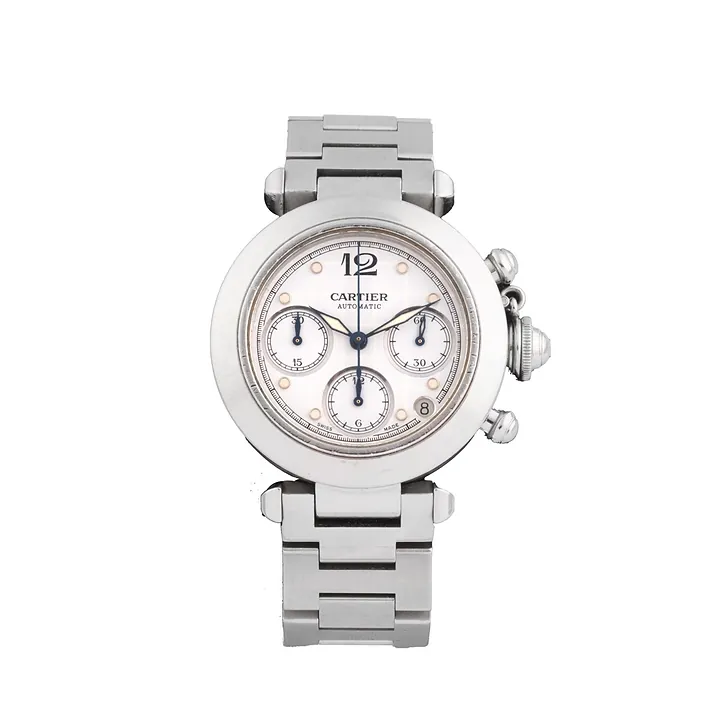
Cartier Pasha, ref. 2412, c. 1990
Antiquorum auction archive, Geneva
Wristwatches · c. 1990
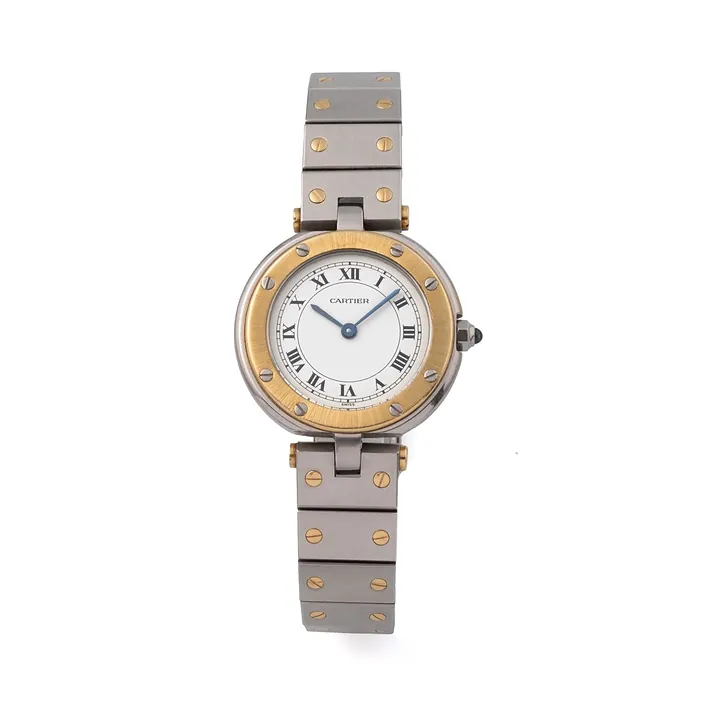
Cartier Santos Ronde Vendome, c. 1990
Antiquorum auction archive, Geneva
Wristwatches · c. 1990s
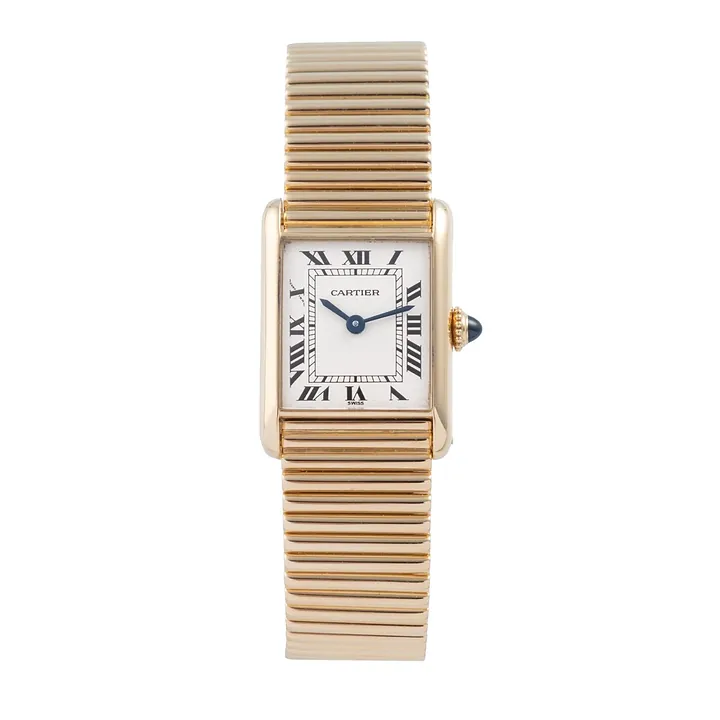
Cartier Tank Louis Cartier, ref. 6711, c. 1990s
Antiquorum auction archive, Geneva
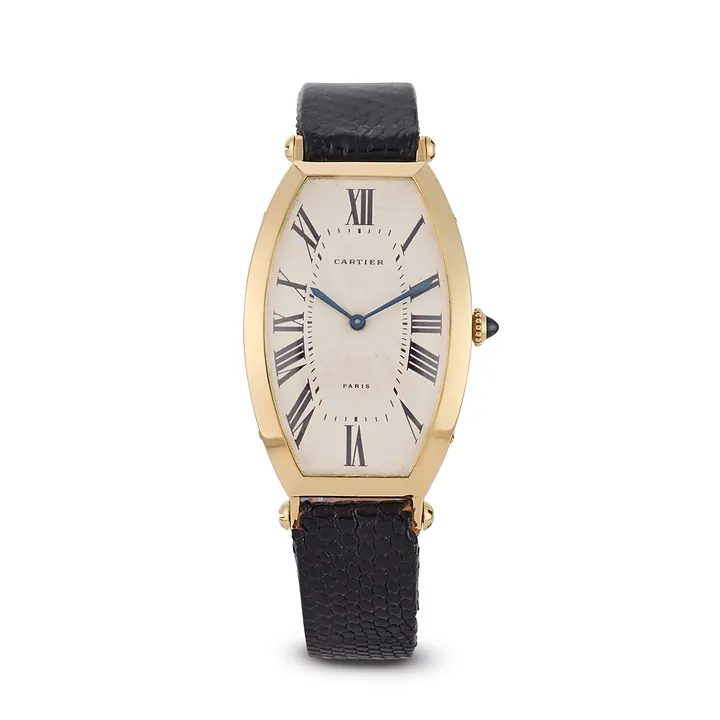
Wristwatches · c. 1991
Cartier Tonneau Paris 1991, c. 1991
Antiquorum auction archive, Geneva
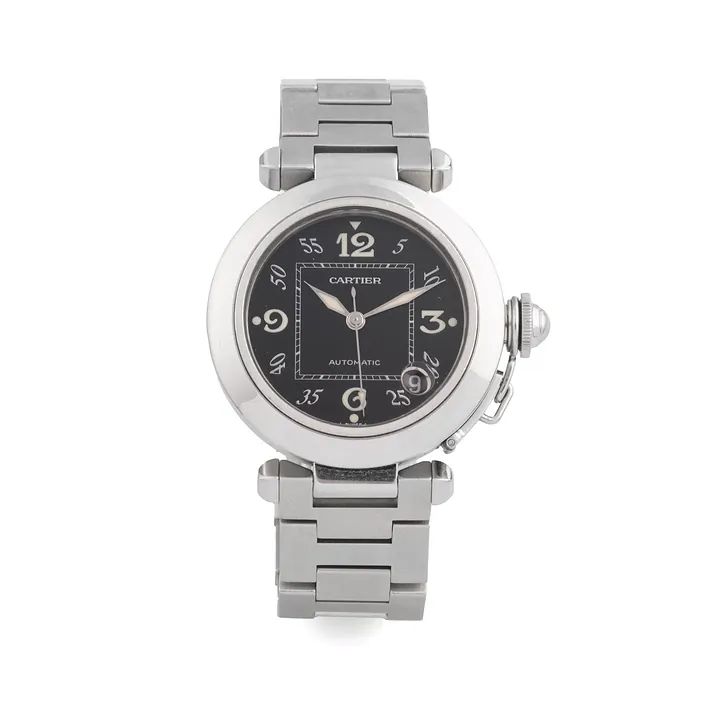
Wristwatches · c. 2005
Cartier Pasha, ref. 2324, c. 2005
Antiquorum auction archive, Geneva
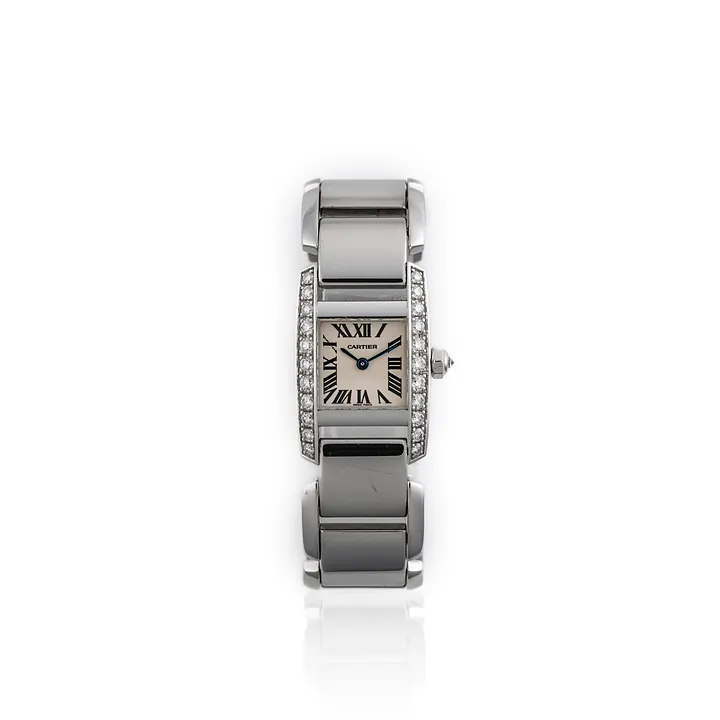
Wristwatches · c. 2006
Cartier Tankissime, ref. 2825, c. 2006
Antiquorum auction archive, Geneva
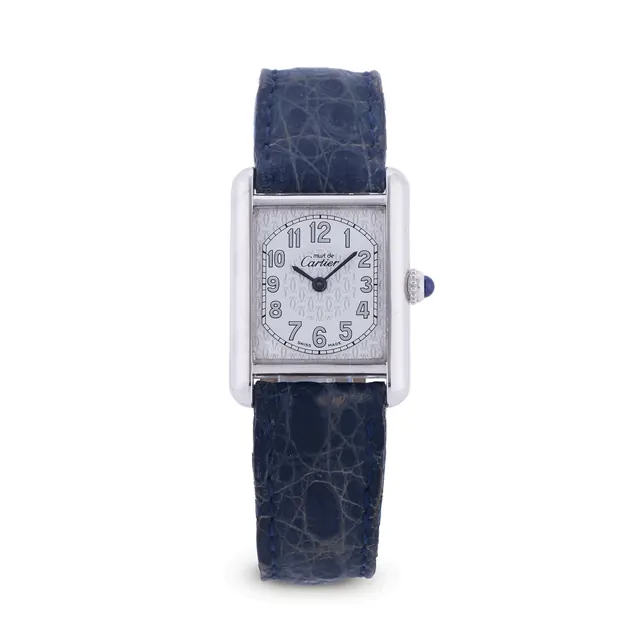
Wristwatches · c. 2000s
Cartier wristwatch, ref. W1014254, Tank Must, circa 2000s
Antiquorum auction archive, Geneva
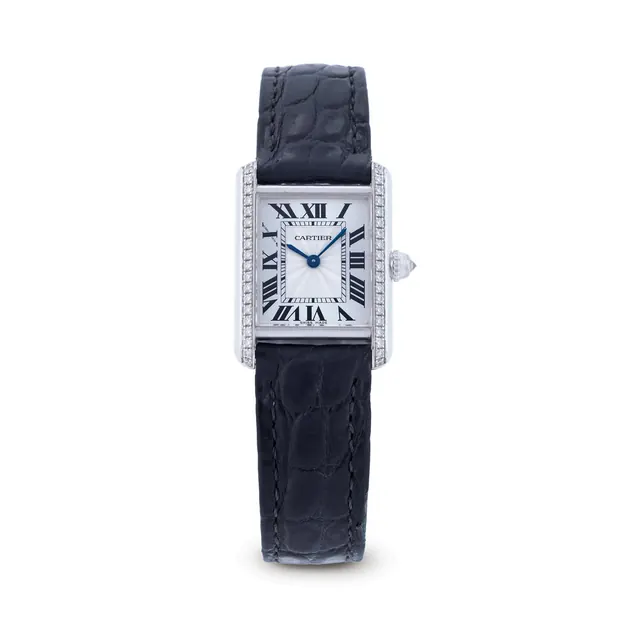
Wristwatches · c. 2000s
Cartier wristwatch, ref. 3815, Tank Diamond, circa 2000s
Antiquorum auction archive, Geneva