
Wristwatches · Wristwatch
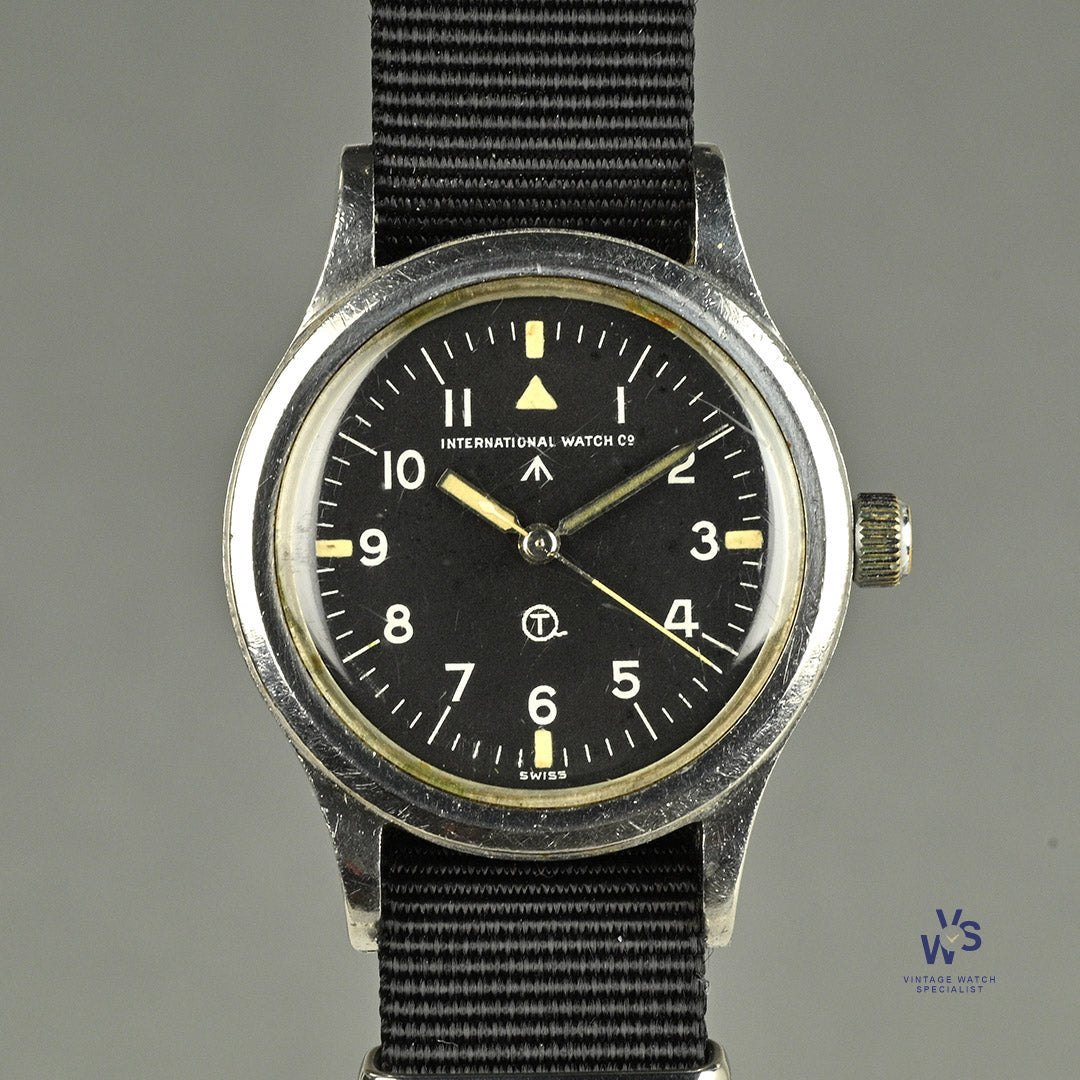
IWC Mark 11 RAF-Issued 6B/346, Calibre 89, 1948
- Maker / attribution
- IWC (maker)
- Date
- 1948
- Historical period
- Modern Mechanical Horology (1945 – 1969)
- Country of origin
- Switzerland
- Object type
- Wristwatch
- Dimensions
- Case 36 mm
- Stock no.
- vws4477cs
- Credit line
- Dealer listing, Vintage Watch Specialist (vws4477cs)
- Catalogue title (original)
- 1948 IWC Mark 11 RAF-Issued 6B/346 – Calibre 89 - Original Condition (English)
View the source record (dealer listing) ↗ (opens another website in a new tab)Suggest a correction
Record summary
Catalogued by Vintage Watch Specialist (dealer), United Kingdom (stock number vws4477cs), this is a wristwatch by IWC, made in Switzerland, dated 1948. The Atlas places it in the Modern Mechanical Horology period (1945 – 1969) of its Wristwatches collection. Recorded dimensions: Case 36 mm. The record is illustrated with 6 photographs.
Assembled from the source record's structured fields. Dates and attributions are given as the source states them; where a field is missing the Atlas leaves it blank rather than estimating.
Catalogue description
Dealer description — Vintage Watch Specialist
Few military wristwatches have had quite the lasting influence of the IWC Mark 11. Developed in 1948 following a request from the British Royal Air Force, the Mark 11 was conceived as a serious navigational instrument rather than simply a wristwatch designed to look good in a cockpit. Accurate timekeeping was essential to air navigation, and the increasingly sophisticated equipment carried aboard aircraft created its own problems – not least magnetic fields capable of interfering with a conventional mechanical watch. IWC's answer combined exceptional legibility with substantial protection for the movement. The hand-wound Calibre 89 was surrounded by a soft-iron inner structure designed to shield it from magnetism, while the crystal was secured to cope with sudden changes in cockpit pressure. A stark black dial, luminous indications and simple hands allowed the time to be read quickly in poor visibility. The military designation given to the watch was 6B/346, identifying it as RAF navigational equipment. The Mark 11 went on to have a remarkably long service career, remaining in use with the RAF and other Commonwealth air forces for decades. Its significance extends far beyond military collecting. The simple principle behind the Mark 11 – an uncluttered black dial, exceptional legibility, robust construction and no unnecessary decoration – helped establish a design language that continues to influence IWC Pilot's Watches today. What's on Offer Here we have a genuine IWC Mark 11 RAF-issued navigational wristwatch from 1948, complete with its military markings and powered by the celebrated 17-jewel IWC Calibre 89. The stainless-steel caseback carries the British military Broad Arrow, followed by the stores designation 6B/346 and the individual issue marking 575/48. That final /48 denotes its 1948 issue year, placing this example right at the beginning of Mark 11 production. The watch has a 36mm stainless-steel case, with approximately 46mm from top to bottom and an 18mm lug width. Those dimensions remain extremely wearable today and, as the wrist shot shows, give the Mark 11 considerably more presence than might be expected from a vintage 36mm watch. Its black military dial is superbly functional. Large white Arabic numerals sit against the matt black background, surrounded by a clear minute track, while luminous material is used at the cardinal positions and on the hands. The International Watch Co. signature appears beneath 12 o'clock, with the Broad Arrow immediately below. The dial also carries the encircled T marking associated with tritium luminous material. This is significant because IWC's own historical records state that early Mark 11s originally used radium luminous dials, with the RAF later replacing radium dials with tritium versions marked by the encircled T. The dial should therefore be described as a later RAF service replacement , rather than represented as the dial originally fitted to the watch in 1948. That is an important part of the watch's military history rather than something we would attempt to gloss over. Military watches were working equipment, maintained and updated during their service lives, and this example visibly reflects that history. Inside is the manually wound IWC Calibre 89, a movement that became inextricably linked with the Mark 11 and its reputation for reliability. The watch is fitted to a black NATO-style strap, which suits its RAF origins perfectly.
Historical context
Modern Mechanical Horology (1945 – 1969)
Tool watches for divers, pilots and astronauts; electric watches anticipate the electronic age.
The classic era of the mechanical wristwatch: dive watches, chronographs for motor racing and space flight, GMT watches for jet travel, slim dress watches, automatic calendars, and the rise of Japanese manufacturers alongside Swiss, American, German and Soviet industries.
Read the period in the timelineMore wristwatches from this periodEarlier: Golden Age of Mechanical Watchmaking
Atlas type guide
Military, pilot and travel watches
The wristwatch owes much of its adoption by men to warfare and aviation. Wristlets — small pocket watches soldered with lugs and worn on a strap — were used in colonial campaigns and became standard equipment in the First World War, with protective grilles over the crystal ('shrapnel guards'). Louis Cartier's Santos (1904), designed for the aviator Alberto Santos-Dumont, is often cited as an early purpose-made pilot's watch.
In the Second World War governments specified watches in detail: the German B-Uhr observation watches, the American A-11, and the British 'W.W.W.' (the 'Dirty Dozen' set of 1945). After the war, jet travel brought GMT and world-time watches, which show two or more time zones at once — Louis Cottier's world-time mechanism and the Rolex GMT-Master (1955) are examples.
What to look for
- Military markings on the case back: broad arrow, issue numbers, 'W.W.W.', 'A.T.P.'
- High-legibility black dials with luminous Arabic numerals; oversized crowns for gloved hands.
- 24-hour hands and rotating 24-hour bezels or city rings on GMT/world-time watches.
- Wire lugs on early wristlets converted from pocket watches.
Dating clues
- Wire-lug wristlets: c. 1900–1925.
- Military specifications of the Second World War: 1939–1945.
- GMT and world-time wristwatches: mainly after 1950.
General guidance written by the Atlas editors about this kind of object. It is not a statement about this particular piece; for that, rely on the source record above and on physical examination.
Related records
Pocket Watches · c. 1950
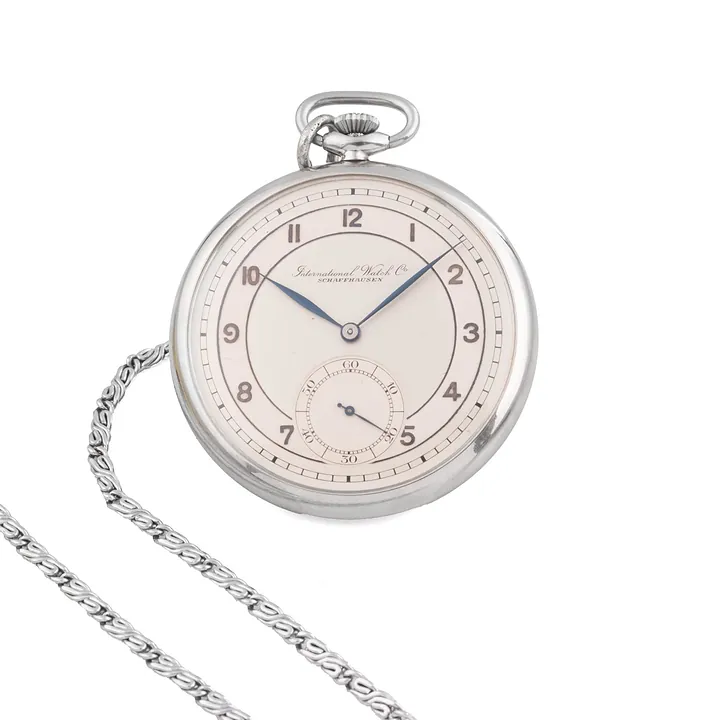
IWC Pocket Watch, c. 1950
Antiquorum auction archive, Geneva
Pocket Watches · c. 1980
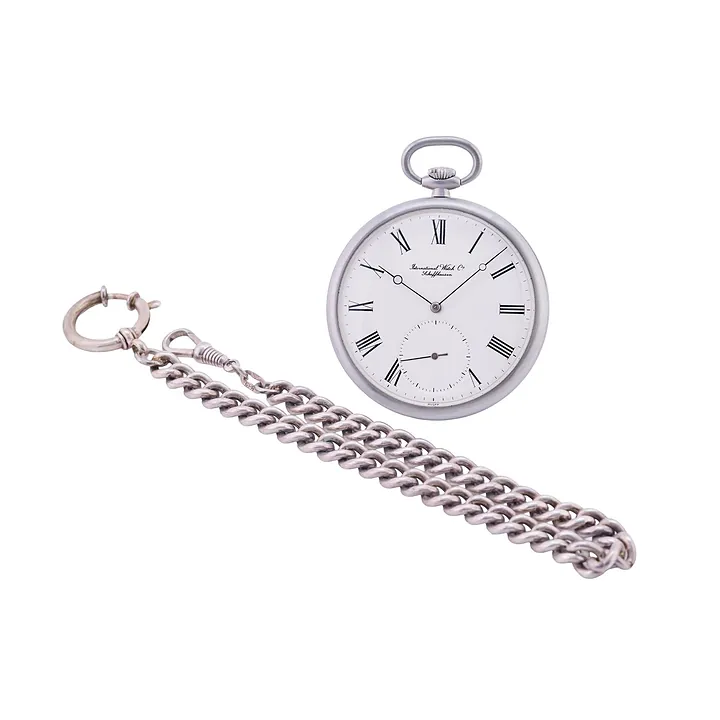
IWC pocket watch, ref. 5301, c. 1980
Antiquorum auction archive, Geneva
Wristwatches · originally sold in April 2016 (per the lot record)
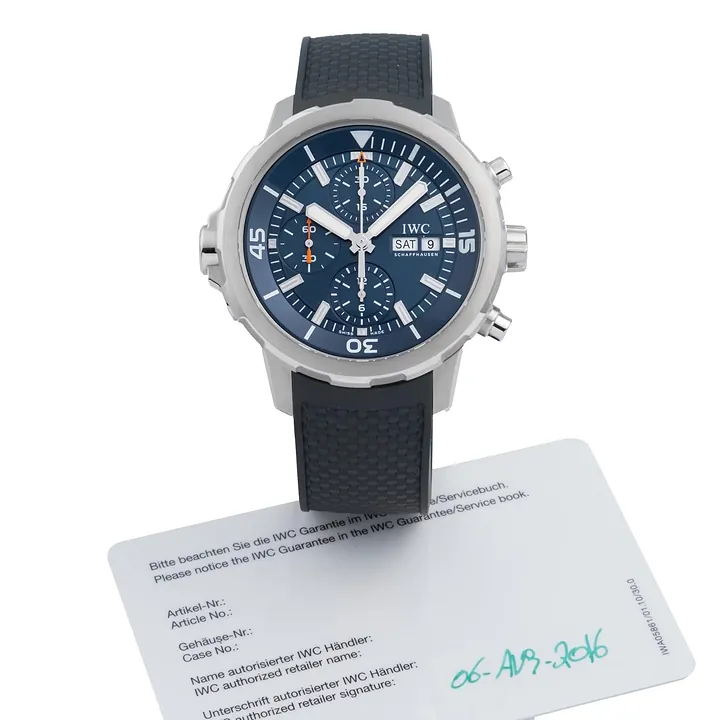
IWC Aquatimer Chronograph Cousteau, ref. IW3768, originally sold in April 2016
Antiquorum auction archive, Geneva
Wristwatches · c. 2010s
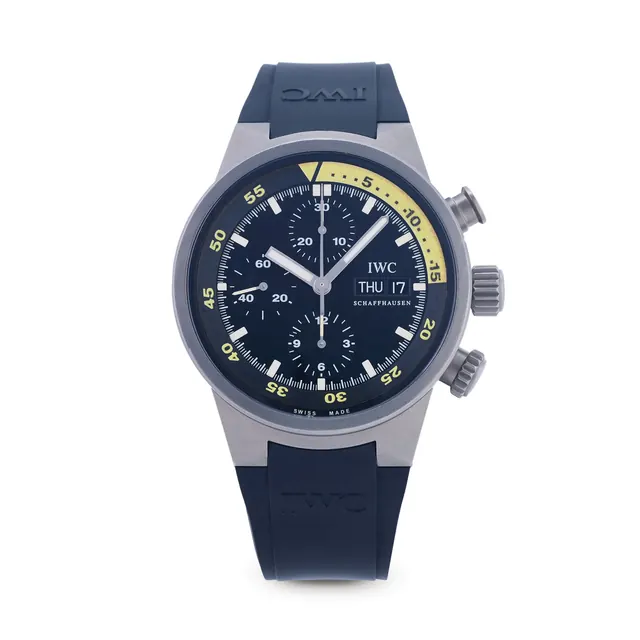
IWC wristwatch, ref. IW371918, Aquatimer, circa 2010s
Antiquorum auction archive, Geneva

Wristwatches · 1945
Wristwatch by Eterna, 1945
Museum Rotterdam

Wristwatches · c. 1945
Breitling Premier, ref. 790, c. 1945
Antiquorum auction archive, Geneva

Wristwatches · c. 1945
Universal Genève Uni-Compax, ref. 22492, c. 1945
Antiquorum auction archive, Geneva

Wristwatches · c. 1950s
Baume & Mercier wristwatch, c. 1950s
Antiquorum auction archive, Geneva