
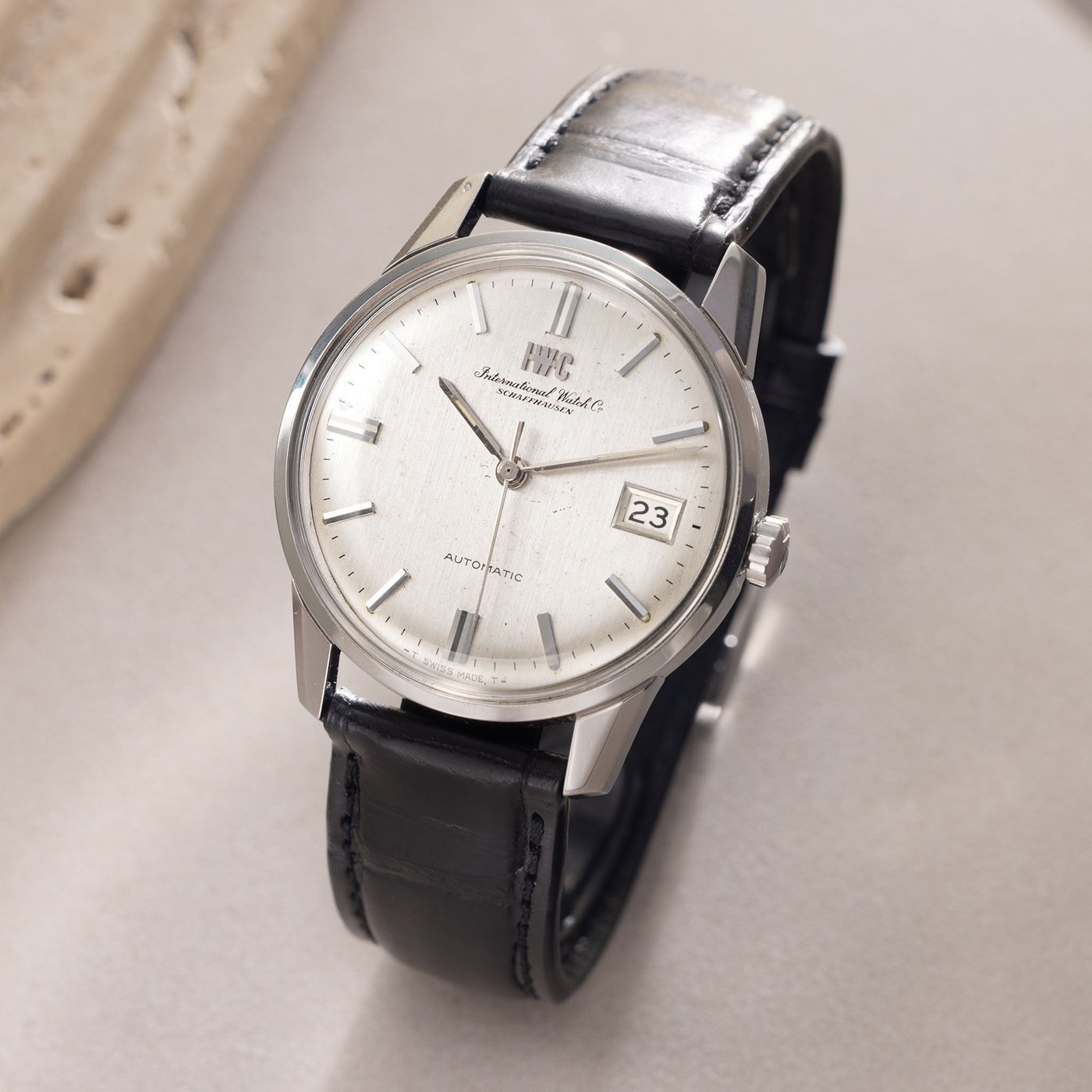
Pocket Watches · Automatic dress watch
IWC Automatic Dresswatch Ref. R810A
- Maker / attribution
- IWC Schaffhausen (source attribution)
- Date
- 1960s
- Historical period
- Modern Mechanical Horology (1945 – 1969)
- Country of origin
- Switzerland
- Object type
- Automatic dress watch
- Materials / technique
- Stainless steel
- Dimensions
- 34 mm
- Holding institution
- Bulang & Sons
- Accession / object no.
- iwc-automatic-dresswatch-ref-r810a-8cd3221e16
- Credit line
- Bulang & Sons
- Catalogue title (original)
- IWC Automatic Dresswatch Silver dial ref R810A (English)
View the source record ↗ (opens another website in a new tab)Suggest a correction
Record summary
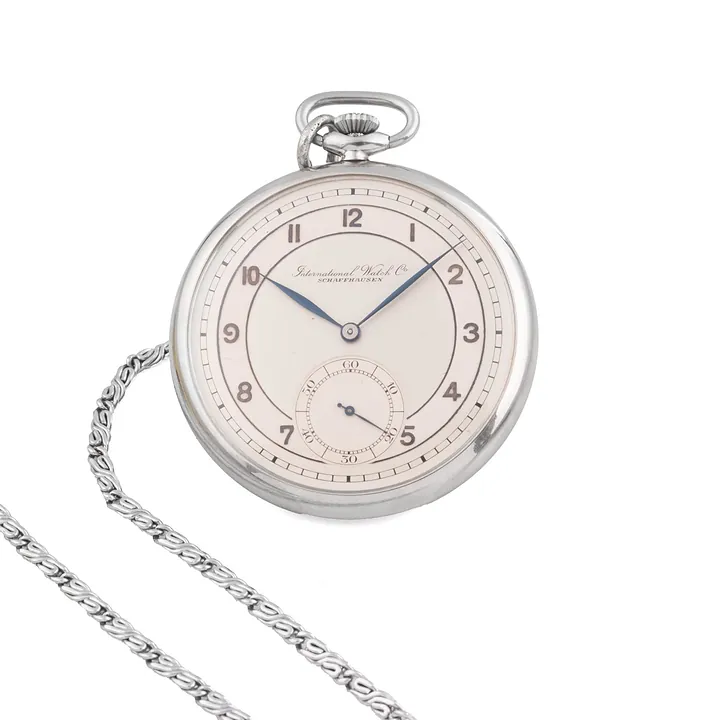
Held and catalogued by Bulang & Sons (object number iwc-automatic-dresswatch-ref-r810a-8cd3221e16), this is an automatic dress watch attributed to IWC Schaffhausen, made in Switzerland, dated 1960s. The Atlas places it in the Modern Mechanical Horology period (1945 – 1969) of its Pocket Watches collection. Materials and techniques recorded by the source: Stainless steel. Recorded dimensions: 34 mm. The record is illustrated with 1 photograph.
Assembled from the source record's structured fields. Dates and attributions are given as the source states them; where a field is missing the Atlas leaves it blank rather than estimating.
Catalogue description
Original object description
Hailing from the late 1960s, this reference R810A automatic dress watch by IWC features a 34 mm stainless steel housing fitted with a snap case back, contoured lugs, and the brand's characteristic fish-decorated winding crown. An assay hallmark applied to the upper left lug denotes its legal entry through Portuguese customs under twentieth-century import statutes for luxury items. The silvered dial exhibits vertical directional brushing, an applied metallic IWC logo, dark-printed lettering, and indices, with a calendar aperture positioned at 3 o'clock; the semi-sword hands retain their original tritium luminescence, now aged to a cream shade. Inside runs the Schaffhausen manufacture's self-winding calibre 854/8541, which auction records document as having received a comprehensive overhaul by the house's watchmaker. The watch is presented on a leather strap fitted with an authentic IWC pin buckle.
Inscriptions & marks
184xxxx / 188xxxx
Historical context
Modern Mechanical Horology (1945 – 1969)
Tool watches for divers, pilots and astronauts; electric watches anticipate the electronic age.
After 1945 the pocket watch became a niche product — presentation and railway watches, inexpensive pin-lever watches, and commemorative pieces — while most innovation moved to the wrist.
Read the period in the timelineMore pocket watches from this periodEarlier: Golden Age of Mechanical Watchmaking
Atlas type guide
Pocket watches
The pocket watch was the dominant personal timekeeper from the late seventeenth century until the First World War. Its development tracks the history of the escapement: verge watches with fusees until the late eighteenth century; Thomas Mudge's lever escapement (c. 1755) and the cylinder escapement popularised by George Graham and later by Swiss makers; and the Swiss and English lever watches of the nineteenth century. Lépine's bar-bridge calibre and keyless winding made watches thinner and easier to use.
Industrialisation transformed the trade: American factories such as Waltham (from 1850) and Elgin produced interchangeable parts by machine, and Swiss makers responded with their own mechanisation after the 1876 Philadelphia Exhibition. By 1900 a reliable watch was affordable to millions; the finest makers continued to produce complications and precision watches.
What to look for
- The escapement: verge (crown wheel), cylinder, duplex, English or Swiss lever.
- Key winding (a square arbor in dial or back) or keyless crown winding.
- Signatures and serial numbers on the movement, dial and inside case back.
- Hallmarks, case maker's marks and gold or silver standards stamped in the case.
- Dial material: enamel, silver, gold, later printed metal.
Dating clues
- Verge watches dominate before c. 1800; cylinder watches c. 1770–1900; lever watches after c. 1820.
- Keyless winding: increasingly common after c. 1860.
- Manufacturer serial number lists exist for Waltham, Elgin, Longines, Omega, Patek Philippe and others.
General guidance written by the Atlas editors about this kind of object. It is not a statement about this particular piece; for that, rely on the source record above and on physical examination.
Read next:Verge escapementDetached lever escapementFuseeIdentification Centre
Related records
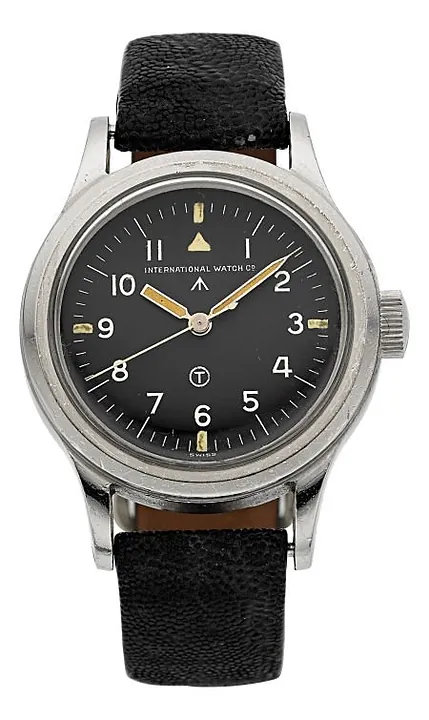
Wristwatches · c. 1948
IWC Rare British Military RAF "Mark XI" Wristwat, c. 1948
LiveAuctioneers auction archive
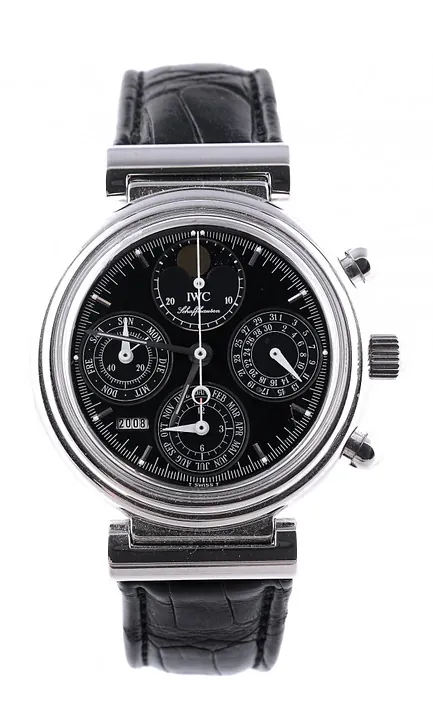
Wristwatches · c. 2000
IWC, Da Vinci Rattrapante, ref. 3751, a stainless steel, c. 2000
LiveAuctioneers auction archive
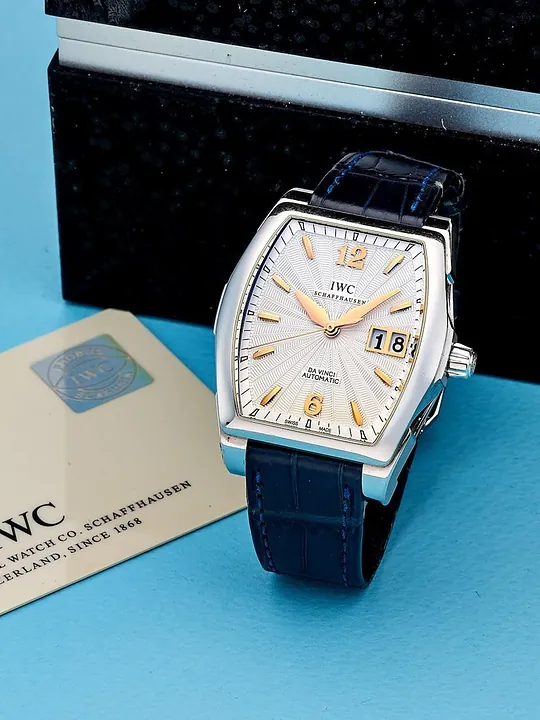
Wristwatches · c. 2010
IWC | Da Vinci, REF.IW452305, a stainless steel wristwatch with Date, circa 2010
LiveAuctioneers auction archive
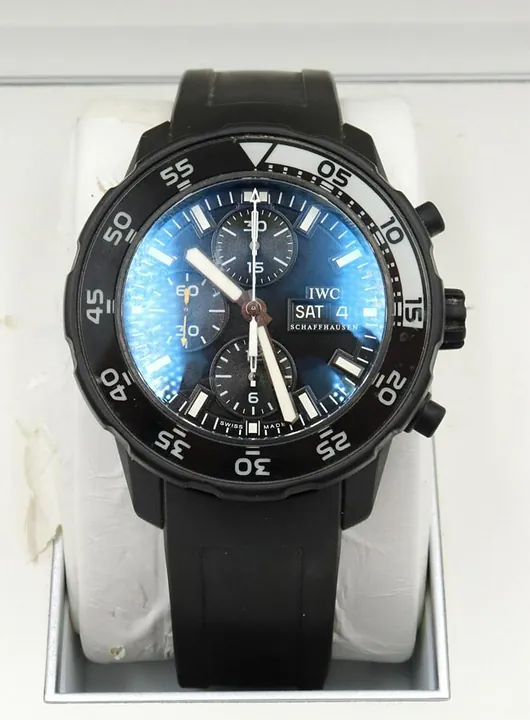
Wristwatches · c. 2011
IWC "Aquatimer Galapagos" Chronograph Wristwatch, c. 2011
LiveAuctioneers auction archive
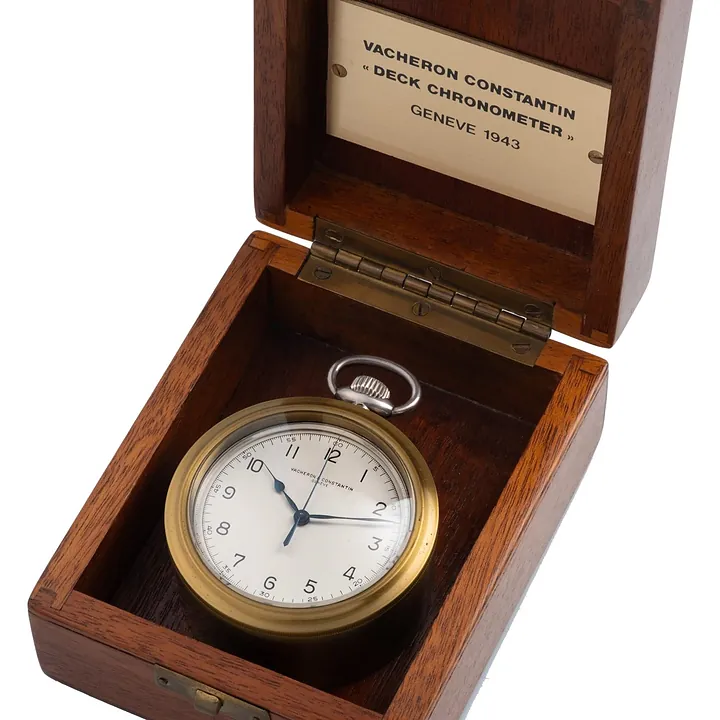
Pocket Watches · c. 1945
Vacheron Constantin pocket chronometer, c. 1945
Antiquorum auction archive, Geneva
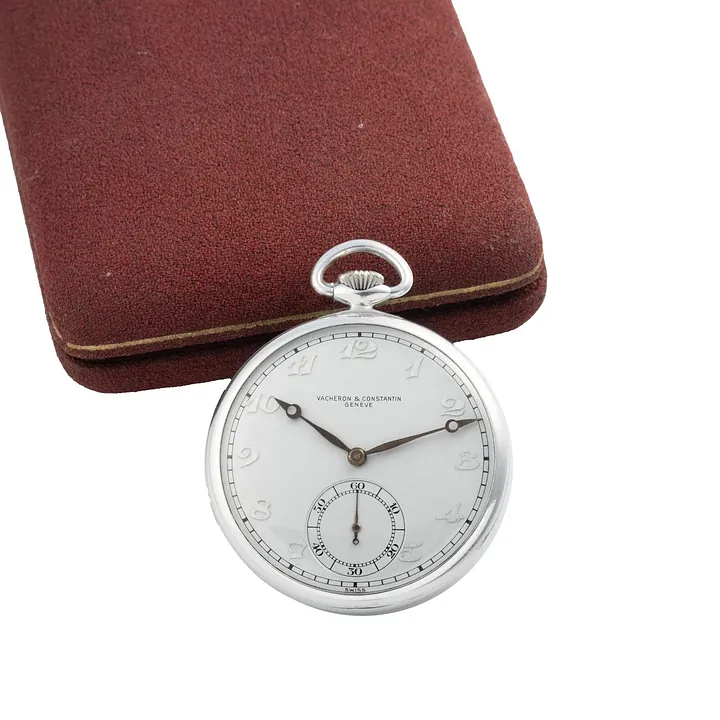
Pocket Watches · c. 1945
Vacheron Constantin watch, c. 1945
Antiquorum auction archive, Geneva
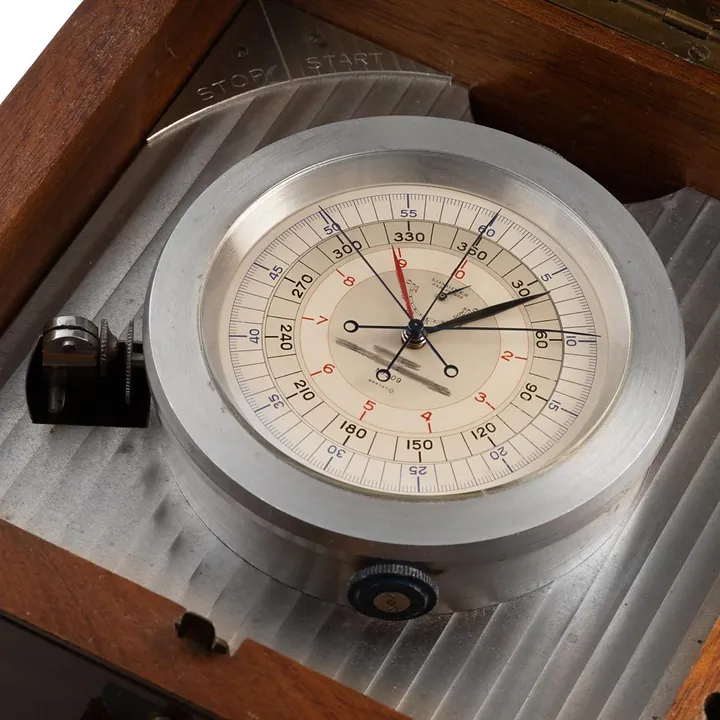
Pocket Watches · Sold to Longines France in January 1946
Longines Siderograph, ref. 5397, Sold to Longines France in January 1946
Antiquorum auction archive, Geneva
Pocket Watches · c. 1950
IWC Pocket Watch, c. 1950
Antiquorum auction archive, Geneva