
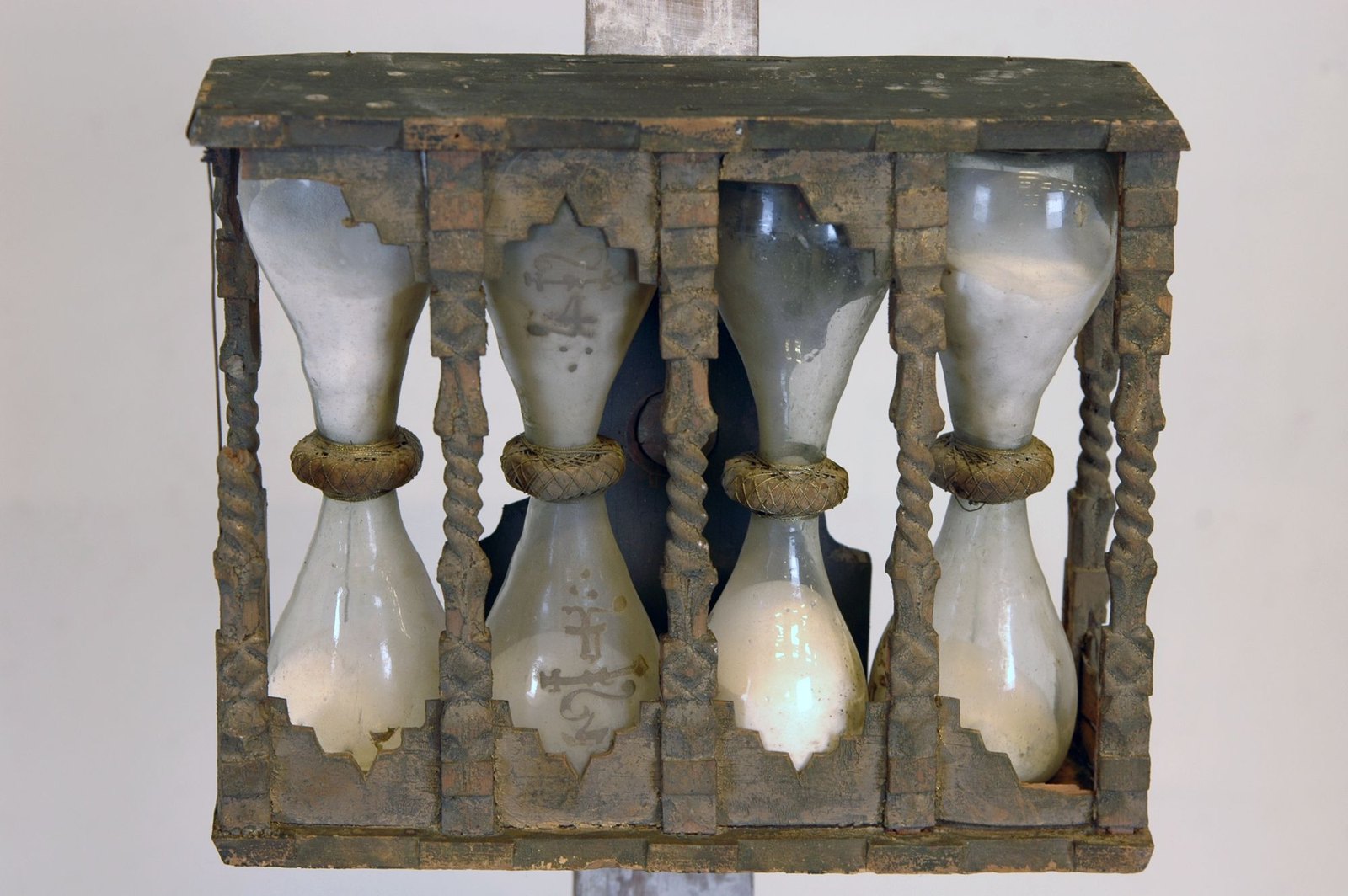
Instruments · Hourglass
Hourglass, Sweden, 1600-tal (1600 AD - 1699 AD) - 1700-tal
- Maker / attribution
- Unrecorded in source
- Date
- 1600-tal (1600 AD - 1699 AD) - 1700-tal (1699 AD - 1799 AD)
- Historical period
- Early Modern Horology (1600 – 1750)
- Country of origin
- Sweden
- Place
- Sverige Östergötland Konungsund
- Object type
- Hourglass
- Materials / technique
- trä, glas
- Dimensions
- Antal 1
- Holding institution
- Swedish History Museum
- Accession / object no.
- 114850
- Credit line
- Swedish History Museum
- Catalogue title (original)
- timglas av trä, glas (Swedish)
View the source record ↗ (opens another website in a new tab)Suggest a correction
Record summary
Held and catalogued by Swedish History Museum (object number 114850), this is a hourglass, made in Sverige Östergötland Konungsund, Sweden, dated 1600-tal (1600 AD - 1699 AD) - 1700-tal (1699 AD - 1799 AD). The Atlas places it in the Early Modern Horology period (1600 – 1750) of its Instruments collection. Materials and techniques recorded by the source: trä, glas. Recorded dimensions: Antal 1. The record is illustrated with 1 photograph.
Assembled from the source record's structured fields. Dates and attributions are given as the source states them; where a field is missing the Atlas leaves it blank rather than estimating.
Catalogue description
The source record does not include a narrative description. The structured fields above are reproduced from it.
Historical context
Early Modern Horology (1600 – 1750)
Huygens' pendulum and balance spring transform accuracy; English makers develop the anchor and deadbeat escapements.
Pocket sundials, Butterfield dials and sandglasses remained essential companions to imperfect clocks; navigators used sandglasses and the log line; observatories began to combine telescopes with pendulum clocks.
Read the period in the timelineMore instruments from this periodEarlier: Renaissance Horology
Atlas type guide
Sandglasses and hourglasses
A sandglass measures an interval rather than telling the time of day: a fixed quantity of fine material runs from one bulb into the other through a narrow neck. Documented in Europe from the fourteenth century, sandglasses were used on board ship to time watches and to measure speed with the log line, in churches to time sermons, in schools, laboratories and kitchens.
Early glasses were made as two separate bulbs bound together at the neck with a diaphragm and wax and thread; one-piece blown glasses only became usual in the nineteenth century. The 'sand' could be powdered marble, eggshell or metal filings, carefully sieved and dried. Sets of graduated glasses in one frame allowed several intervals to be timed.
What to look for
- Whether the two bulbs are separate and bound at the neck, or blown as one piece.
- The frame: turned wood, brass, silver or pewter, sometimes with pillars and decorated end plates.
- Multiple glasses in a single frame, giving quarter, half, three-quarter and full hours.
- Marine glasses of 30 seconds or 28 seconds used with the log line.
Dating clues
- Bound two-piece glasses predate about 1800; one-piece glasses are generally later.
- Sermon glasses on pulpits and multi-glass frames are characteristic of the sixteenth to eighteenth centuries.
General guidance written by the Atlas editors about this kind of object. It is not a statement about this particular piece; for that, rely on the source record above and on physical examination.
Related records
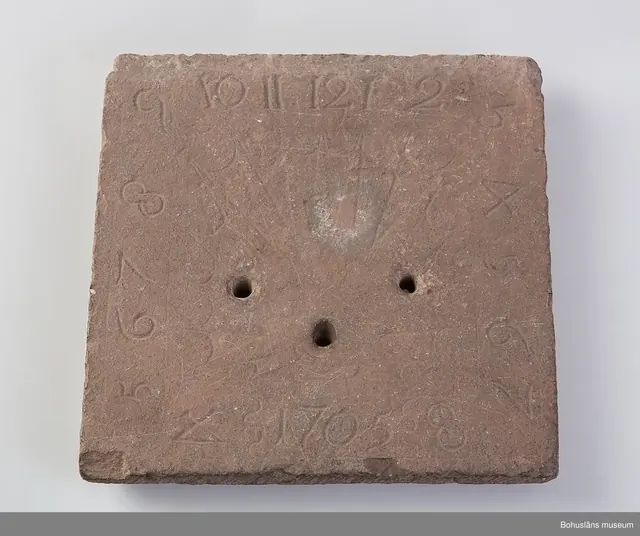
Instruments · 1705
Sundial, Sweden, 1705
Bohuslän Museum
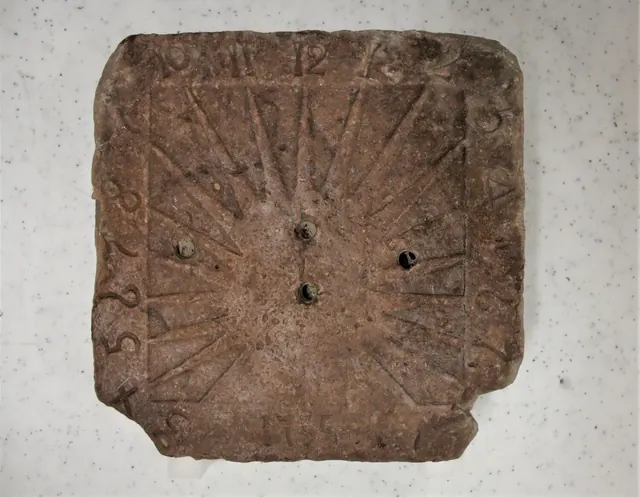
Instruments · 1735
Sundial, Sweden, 1735
Sörmland Museum
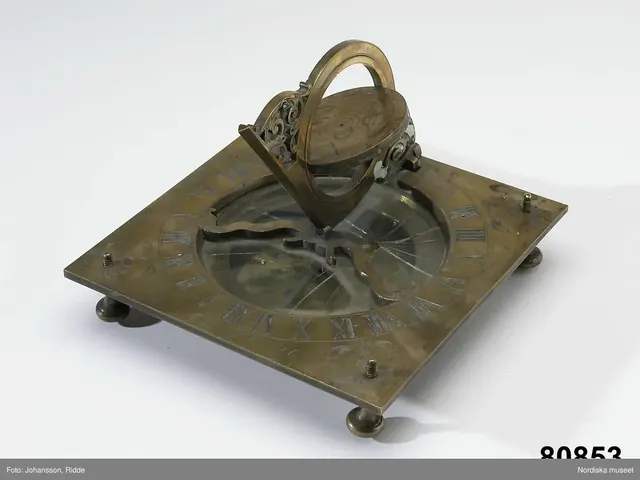
Instruments · 1676
Sundial, Sweden, 1676
Nordic Museum Foundation
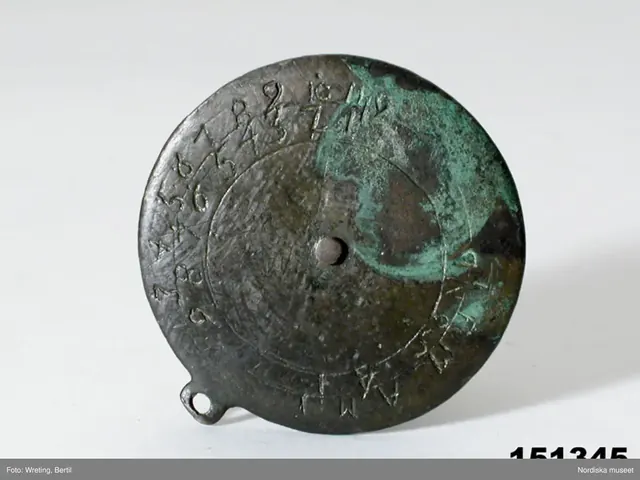
Instruments · 1724
Sundial by Iohanes Ason, Sweden, 1724
Nordic Museum Foundation
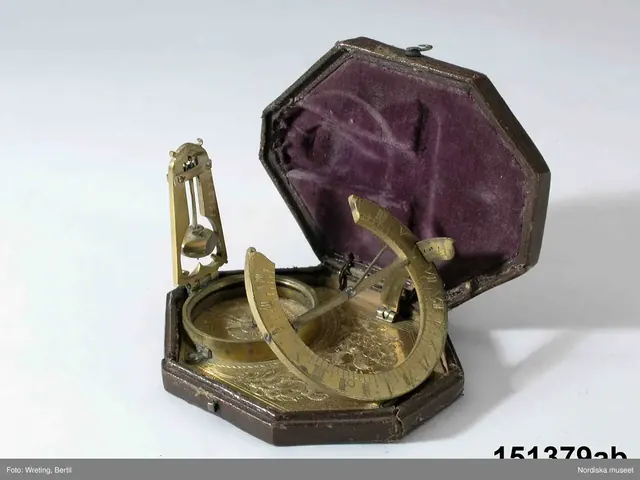
Instruments · 1676
Sundial by Christian Boyling, Sweden, 1676
Nordic Museum Foundation
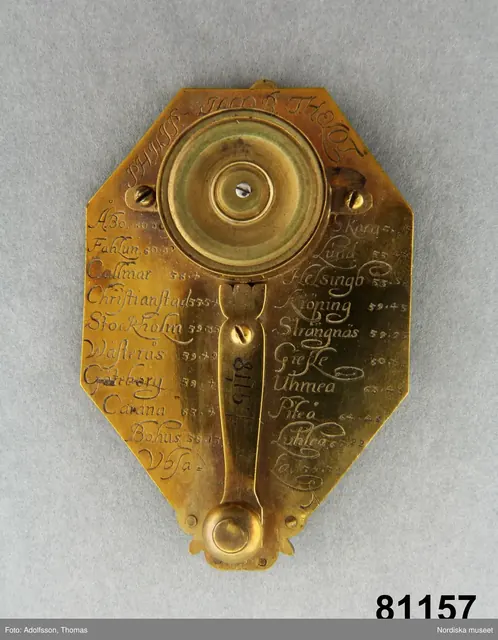
Instruments · 1690
Sundial by Philip Jacob Thelott, Sweden, 1690
Nordic Museum Foundation
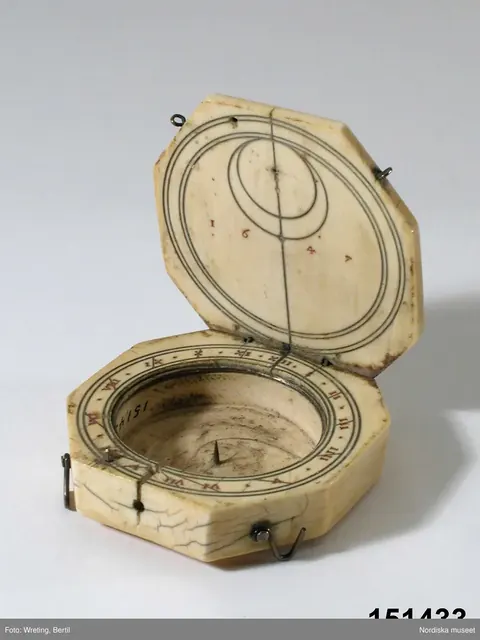
Instruments · 1647
Sundial, Sweden, 1647
Nordic Museum Foundation
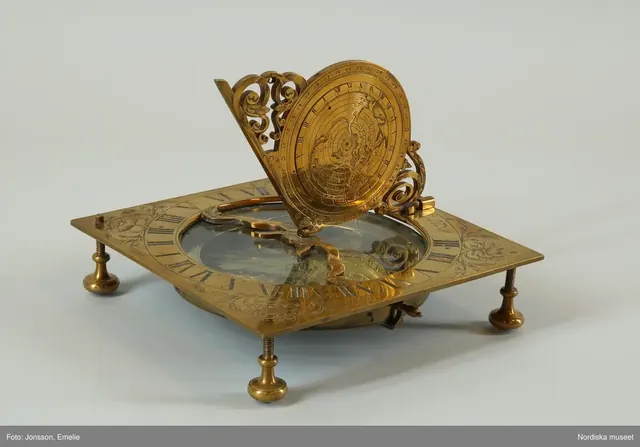
Instruments · 1670–1699
Sundial by Philipp Jacob Thelott, Sweden, 1670–1699
Nordic Museum Foundation