
Instruments · Hourglass
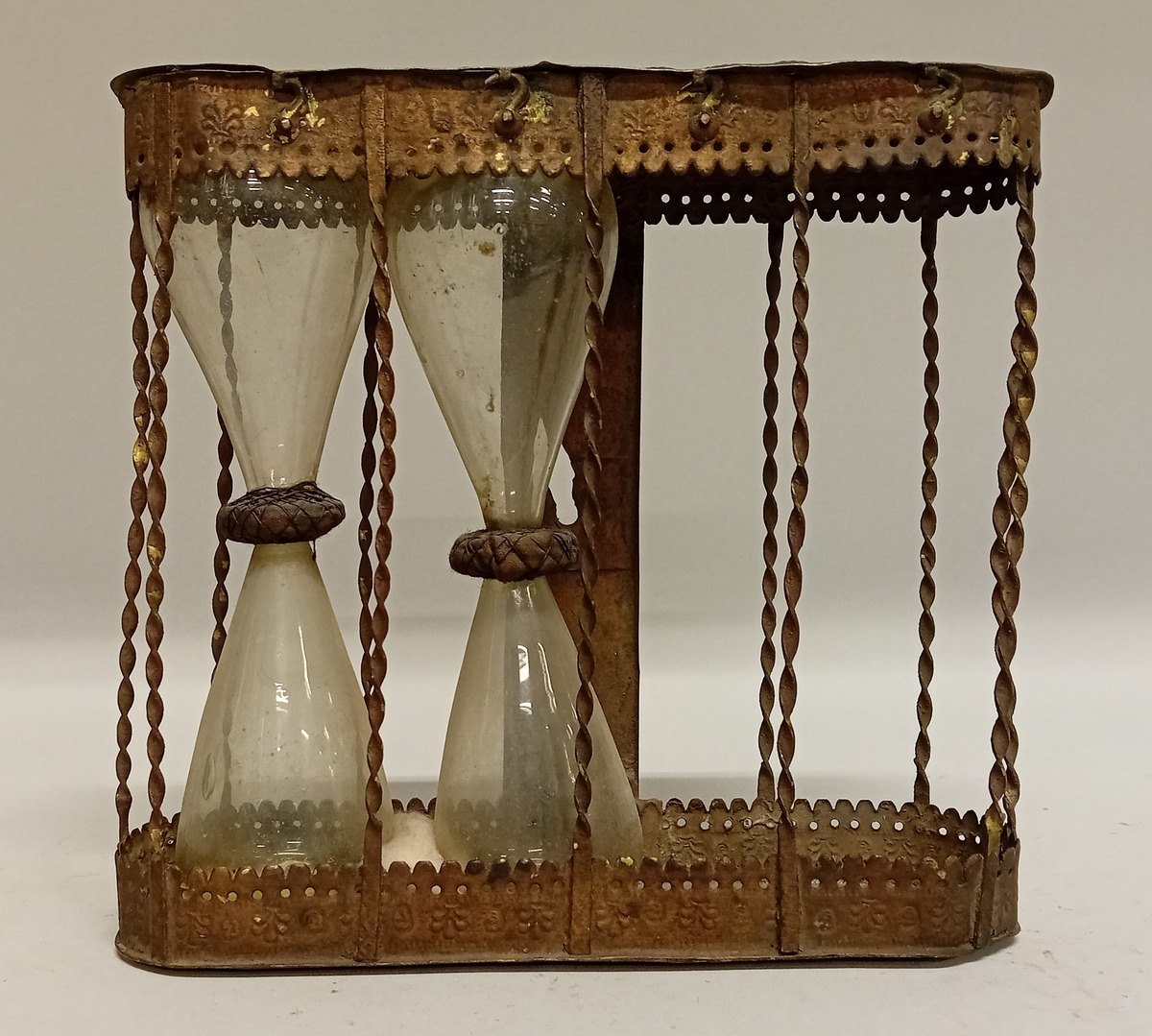
Hourglass, mid-1700s
- Maker / attribution
- Unrecorded in source
- Date
- mid-1700s
- Historical period
- Precision & Scientific Horology (1750 – 1850)
- Country of origin
- Unrecorded in source
- Object type
- Hourglass
- Materials / technique
- glass, messinkipelti
- Dimensions
- 19 x 21 x 5.5 cm
- Holding institution
- Suomen kansallismuseo
- Accession / object no.
- H5399:4x
- Credit line
- Suomen kansallismuseo (via Finna)
- Catalogue title (original)
- tiimalasi (Finnish)
View the source record ↗ (opens another website in a new tab)Suggest a correction
Record summary
Held and catalogued by Suomen kansallismuseo (object number H5399:4x), this is a hourglass, dated mid-1700s. The Atlas places it in the Precision & Scientific Horology period (1750 – 1850) of its Instruments collection. Materials and techniques recorded by the source: glass, messinkipelti. Recorded dimensions: 19 x 21 x 5.5 cm. The record is illustrated with 1 photograph.
Assembled from the source record's structured fields. Dates and attributions are given as the source states them; where a field is missing the Atlas leaves it blank rather than estimating.
Catalogue description
Description — Suomen kansallismuseo
fyysinen kuvaus: Ohuesta messinkipellistä tehdyt pitkänomaiset, päistä pyöristetyt ja matalalla reunuksella varustetut pohja ja yläosa, joita kannattelee 12 ohuesta messinkitangosta kierrettyä vartta. Ylä- ja alaosan reuna koristeltu lyödyillä lehtiaiheilla, kansilevyn reunaa kiertää lyöty kukkamainen koriste. Kansilevy on kiinnitetty reunukseen pienillä hakasilla. Telineen takasivulla on pystysuuntainen suorakaiteinen messinkilista, jonka keskellä on reikä, josta teline on ollut kiinnitettynä jalustaan. Kaksi lasia, jotka kiinnitetty toisiinsa keskeltä ruskealla kangasnauhalla ja ompelemalla. (Vanhan luettelotiedon mukaan tähän tiimalasiin kuuluvaan jalustaan on jo hyvin varhain näytteille laitettaessa vaihdettu toinen, neljä lasia käsittävä tiimalasi, jossa yhteydessä ilmeisesti tämä osittain vajaa on jätetty varastoon.)
Shown in the original language of the source catalogue. An editor-reviewed English translation has not yet been published; we do not publish machine translations as authoritative text.
Historical context
Precision & Scientific Horology (1750 – 1850)
Harrison solves longitude; Mudge invents the lever; Breguet's Paris workshop defines the modern watch.
The longitude problem was solved by the marine chronometer and lunar distance methods; dividing engines made precision scales possible, and observatories set time by transit instruments.
Read the period in the timelineMore instruments from this periodEarlier: Early Modern Horology
Atlas type guide
Sandglasses and hourglasses
A sandglass measures an interval rather than telling the time of day: a fixed quantity of fine material runs from one bulb into the other through a narrow neck. Documented in Europe from the fourteenth century, sandglasses were used on board ship to time watches and to measure speed with the log line, in churches to time sermons, in schools, laboratories and kitchens.
Early glasses were made as two separate bulbs bound together at the neck with a diaphragm and wax and thread; one-piece blown glasses only became usual in the nineteenth century. The 'sand' could be powdered marble, eggshell or metal filings, carefully sieved and dried. Sets of graduated glasses in one frame allowed several intervals to be timed.
What to look for
- Whether the two bulbs are separate and bound at the neck, or blown as one piece.
- The frame: turned wood, brass, silver or pewter, sometimes with pillars and decorated end plates.
- Multiple glasses in a single frame, giving quarter, half, three-quarter and full hours.
- Marine glasses of 30 seconds or 28 seconds used with the log line.
Dating clues
- Bound two-piece glasses predate about 1800; one-piece glasses are generally later.
- Sermon glasses on pulpits and multi-glass frames are characteristic of the sixteenth to eighteenth centuries.
General guidance written by the Atlas editors about this kind of object. It is not a statement about this particular piece; for that, rely on the source record above and on physical examination.
Related records
Instruments · 1726–1775
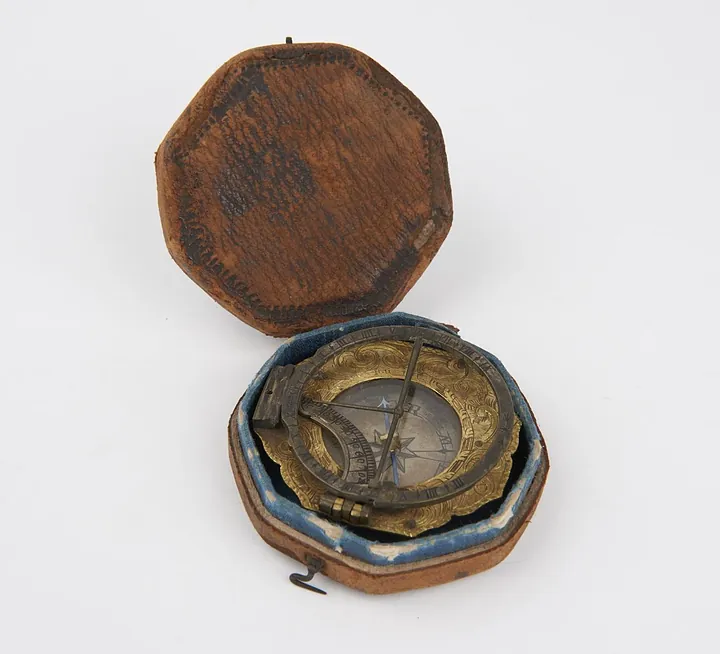
Universal equinoctial sundial of the Augsburg type, signed on the base "L T M" (Ludwig Theodatus Muller). In original case. German, mid 18th century. (B1670)
Science Museum Group, London
Instruments · 1731–1776
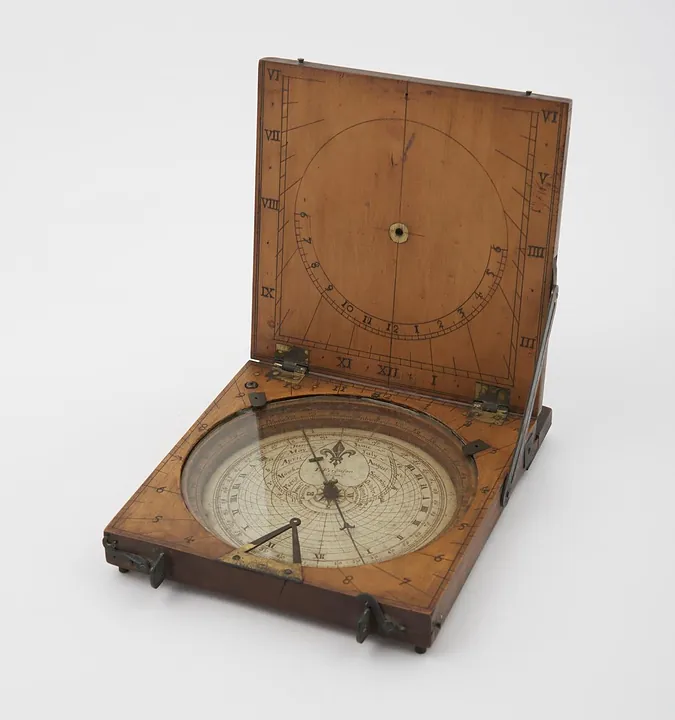
Azimuth compass sundial by James Ferguson, London, England, 1731–1776. Could also be used as a tablet sundial - string gnomon is missing (see note).
Science Museum Group, London
Instruments · 1734–1770
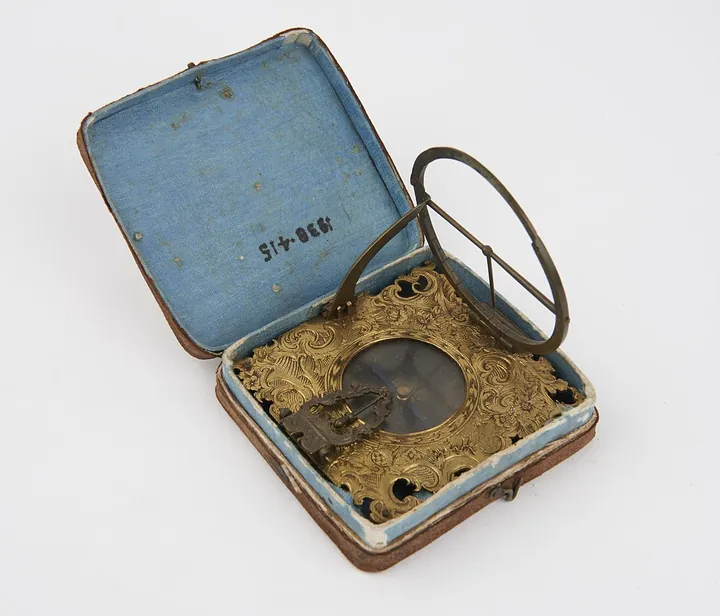
Sundial by Ludwig Theodatus Muller, Germany, 1734–1770 (no. 1938-415)
Science Museum Group, London
Instruments · 1734–1770
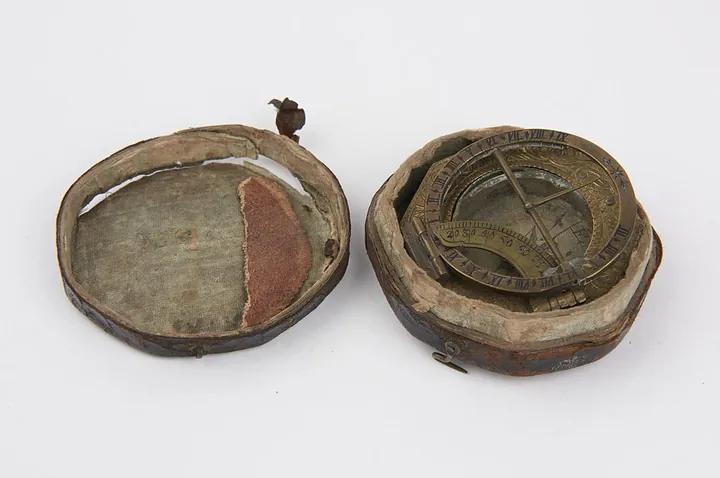
Sundial by Ludwig Theodatus Muller, Germany, 1734–1770 (no. 1991-138)
Science Museum Group, London
Instruments · 1734–1770
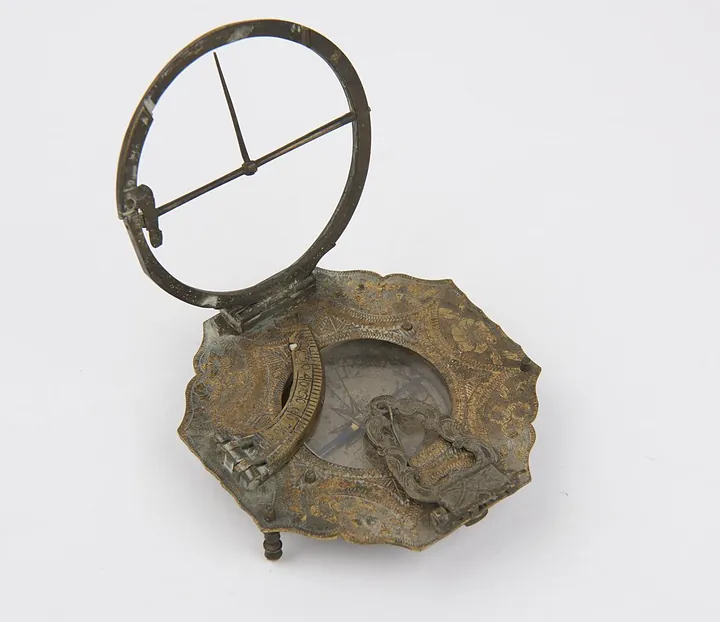
Sundial by Ludwig Theodatus Muller, Germany, 1734–1770 (no. 1991-192)
Science Museum Group, London
Instruments · 1738–1777
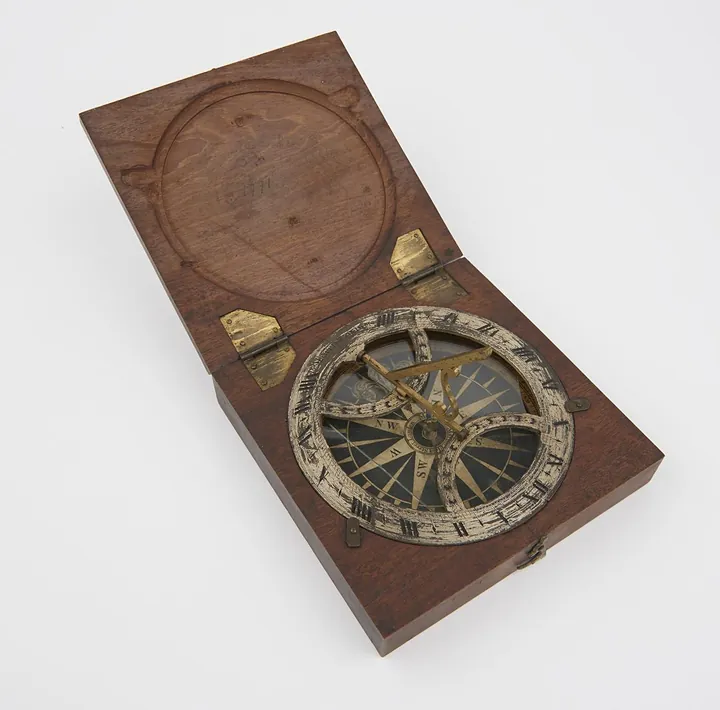
Azimuth sundial 4 3/8" diam, with folding gnomon fitted in mahogany case, made by B. Martin
Science Museum Group, London
Instruments · 1745–1755
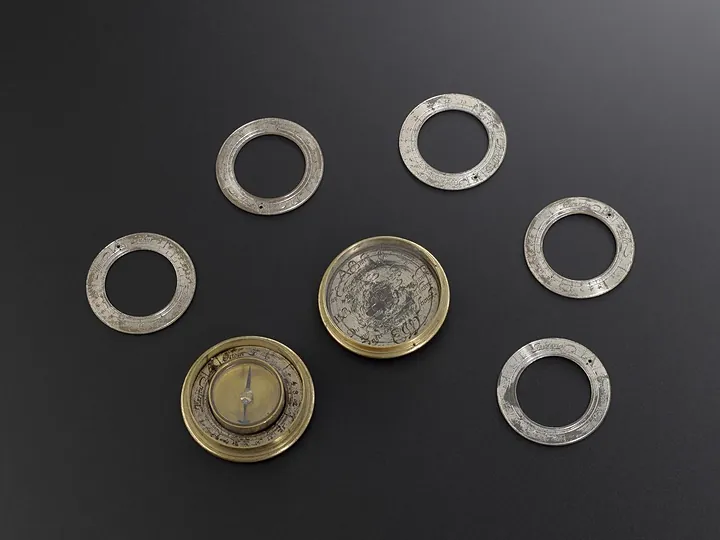
Magnetic Sundial with six loose hour rings
Science Museum Group, London
Instruments · 1745–1755
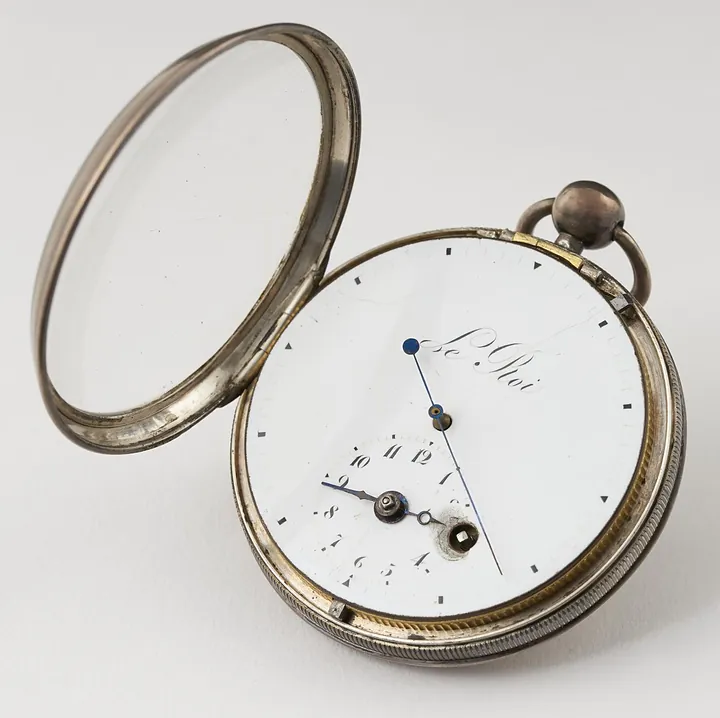
Verge stop-watch with centre seconds hand, by Le Roi, 1745–1755 (see note).
Science Museum Group, London