
Wristwatches · Wristwatch
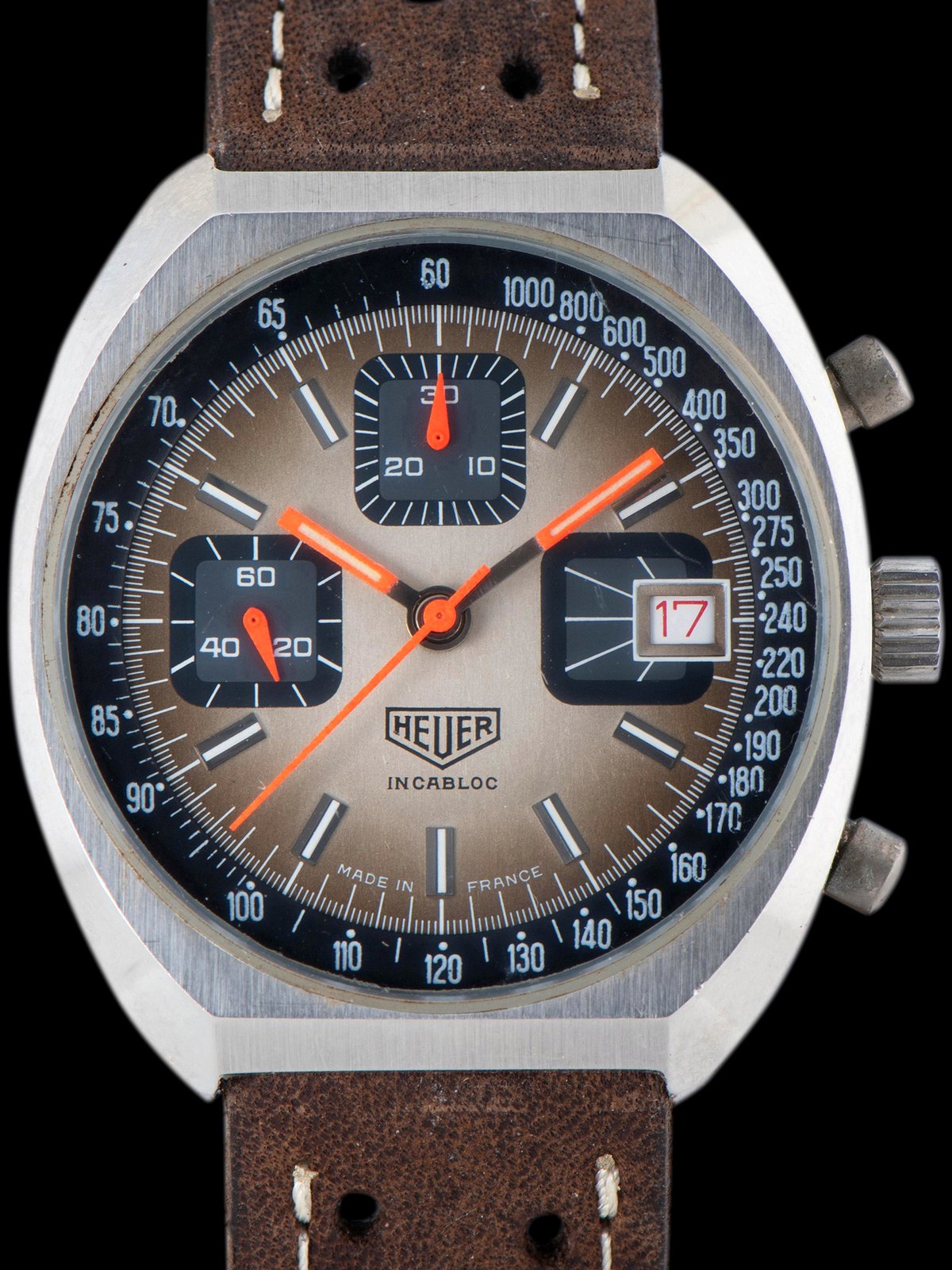
Heuer Chronograph (Ref. 1614) Valjoux Cal. 7765 "Made in France", 1970s
- Maker / attribution
- Heuer (maker)
- Date
- 1970s
- Historical period
- Quartz Revolution (1969 – 1990)
- Country of origin
- France
- Object type
- Wristwatch
- Stock no.
- HURC1614-MW
- Credit line
- Dealer listing, Craft & Tailored (HURC1614-MW)
- Catalogue title (original)
- 1970s Heuer Chronograph (Ref. 1614) Valjoux Cal. 7765 "Made in France" (English)
View the source record (dealer listing) ↗ (opens another website in a new tab)Suggest a correction
Record summary
Catalogued by Craft & Tailored (dealer), Los Angeles (stock number HURC1614-MW), this is a wristwatch by Heuer, made in France, dated 1970s. The Atlas places it in the Quartz Revolution period (1969 – 1990) of its Wristwatches collection. The record is illustrated with 6 photographs.
Assembled from the source record's structured fields. Dates and attributions are given as the source states them; where a field is missing the Atlas leaves it blank rather than estimating.
Catalogue description
Dealer description — Craft & Tailored
Fresh from the personal collection of style icon, automobile enthusiast, and Urban Outlaw himself, Magnus Walker, comes a 1970s Heuer Chronograph in fantastic condition. By the 1970s, the Heuer brand had already amassed a rich pedigree as a watchmaker, with most of the brand's success coming from its innovations within the chronograph sector of watchmaking. During this time, Heuer also developed a very good relationship with French watch designer Gerald Monnin. This collaboration most famously resulted in Heuer's first dive watch, the ref. 844, however, Monnin also designed several other watches under the Heuer name. This beautiful ref. 1614 is one such piece and is heralded as such with the "Made in France" text at 6 o'clock, where we would normally see "Swiss" for Heuer's in-house designs. The ref. 1614 chronograph utilizes a Valjoux cal. 7765 chronograph movement and a Monnin-designed case that features a unique, yet handsome tonneau design with an array of sweeping polished surfaces and brushed sides. SPECS Stock # HURC1614-MW Brand Heuer Style Chronograph "Made in France" Model 1614 Serial 11XXX Size Men's Material Stainless Steel Dial Taupe "Fume" W/ Grey Sub-Dials Millimeters 38 Strap 2pc Handmade Leather Rally Strap CASE & BRACELET The exceptional case exhibits no evidence of previous polishing and boasts extremely crisp brushed finishing and factory dimensions throughout. The case retains its original pump pushers and original unsigned crown. The case back retains all of its original factory markings and finishing with minimal signs of wear. The watch comes supplied on a two-piece handmade leather rally-style strap. DIAL & HANDS The brushed taupe "fume" dial is the perfect mix of elegance and sportiness, calling to mind the color variations of a root beer float. The two-tone grey sub-dials create a unique depth at 12, 3, and 9 o'clock where they're positioned, and the neon orange hands pop off the dial for an ultra-legible contrast. The dial itself is virtually flawless and shows no age or wear. The original tritium hands feature a charming creamy patina with no degradation present under UV light inspection. ACCESSORIES None. The watch is keeping time, but the service history is unknown. A movement service can be provided upon request.
Historical context
Quartz Revolution (1969 – 1990)
Seiko's Astron begins mass quartz timekeeping; traditional industries contract sharply.
Quartz and digital watches transformed the market after 1969. Swiss employment collapsed, Japanese and Hong Kong production soared, and the Swatch (1983) helped the Swiss industry recover; mechanical watches survived as luxury goods.
Read the period in the timelineMore wristwatches from this periodEarlier: Modern Mechanical Horology
Atlas type guide
Chronographs and split-seconds watches
A chronograph is a watch with an additional seconds hand that can be started, stopped and returned to zero independently of the timekeeping. Louis Moinet built an early example in 1816 and Nicolas Rieussec a recording 'chronographe' in 1821; Adolphe Nicole's heart-shaped reset cam (patented 1862) made the modern return-to-zero possible. Split-seconds (rattrapante) chronographs add a second hand that can be stopped for intermediate times; flyback chronographs restart instantly.
Chronographs were essential tools for doctors (pulsometer scales), artillery (telemeter), engineers and sport. In wristwatches, Valjoux, Venus, Lemania and later the automatic chronographs of 1969 (Zenith El Primero, the Chronomatic Calibre 11 group and Seiko 6139) are milestones.
What to look for
- Push-pieces on the case band or a single button in the crown (monopusher).
- Subsidiary registers for minutes and hours; tachymeter, telemeter or pulsometer scales.
- Column wheel versus cam control visible in the movement.
- Calibre markings of specialist makers (Valjoux, Lemania, Venus, Landeron).
Dating clues
- Pocket chronographs with heart cam reset: after 1862.
- Wrist chronographs: from c. 1910; two-button designs from the 1930s.
- Automatic chronographs: from 1969.
General guidance written by the Atlas editors about this kind of object. It is not a statement about this particular piece; for that, rely on the source record above and on physical examination.
Read next:Flyback chronographChronograph
Related records
Pocket Watches · c. 1960
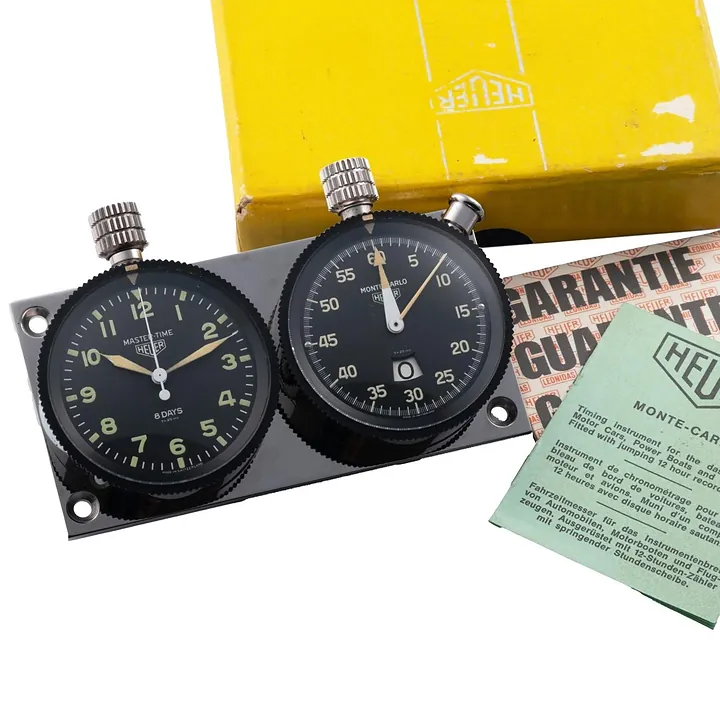
Heuer Racing SET, c. 1960
Antiquorum auction archive, Geneva
Wristwatches · c. 1980
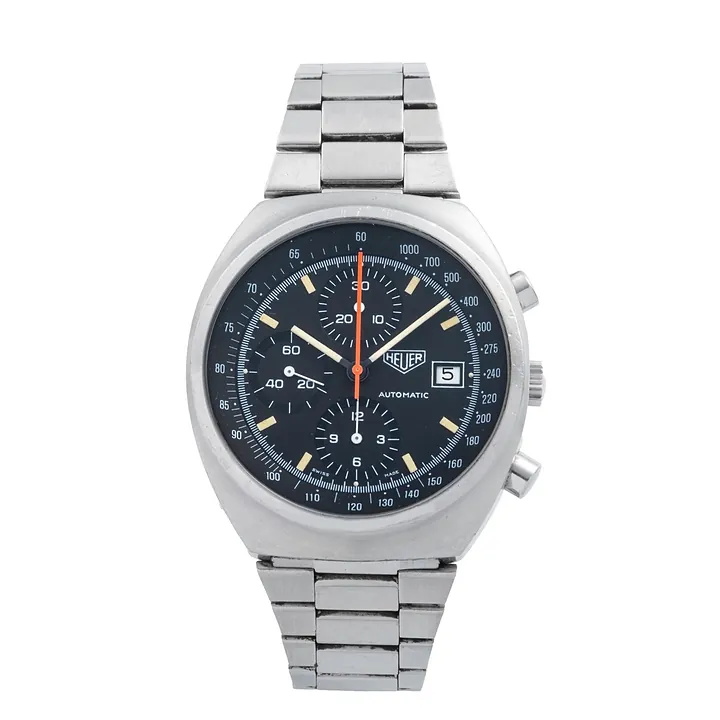
Heuer Pasadena, ref. 750.501-3, c. 1980
Antiquorum auction archive, Geneva
Wristwatches · c. 1970s
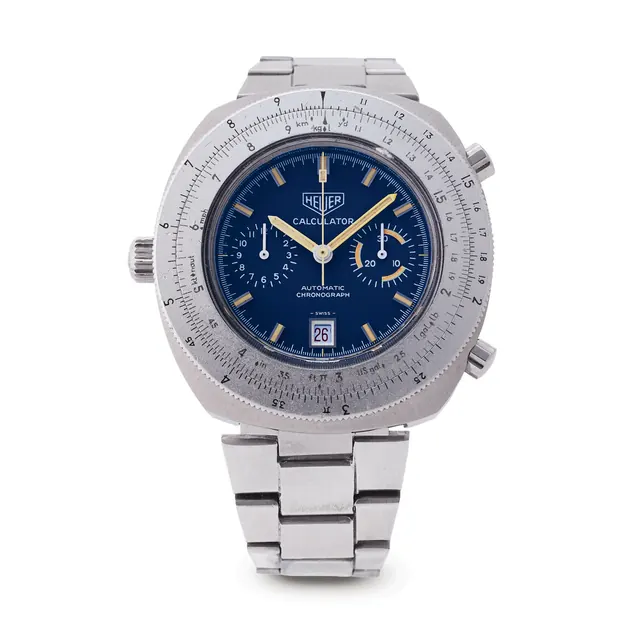
Heuer wristwatch, ref. 110.633, Calculator, circa 1970s
Antiquorum auction archive, Geneva
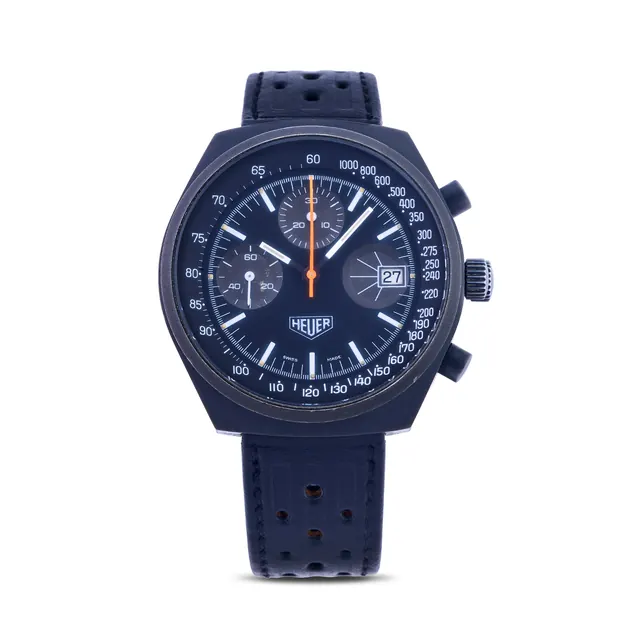
Wristwatches · c. 1975
Heuer wristwatch, ref. 13/1, circa 1975
Antiquorum auction archive, Geneva
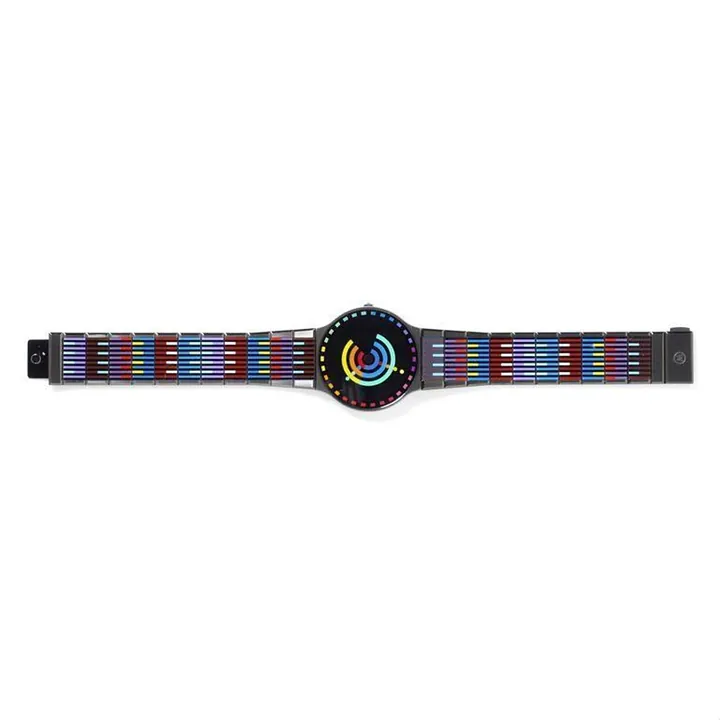
Wristwatches · c.1989
Steel, France and Switzerland, 1989; designed by Yaacov Agam (born 1928) for a limited edition by Movado
Victoria and Albert Museum, London
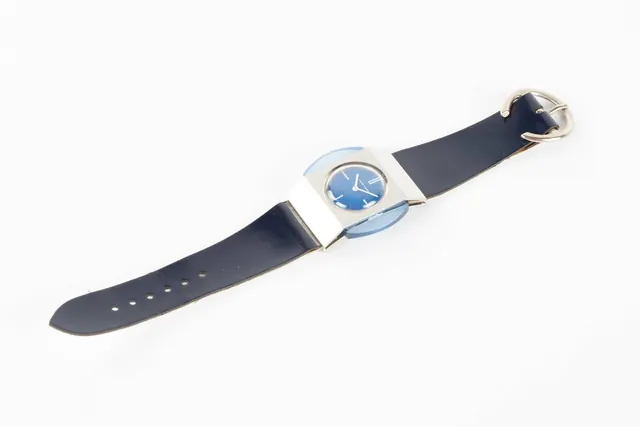
Wristwatches · c. 1972
Wristwatch, France, c. 1972
German Clock Museum
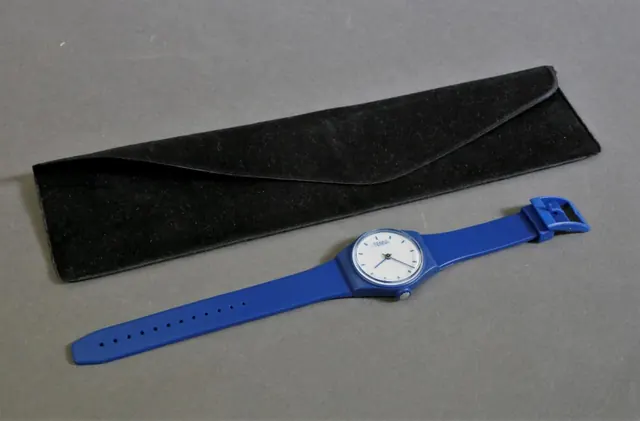
Wristwatches · 1986
Wristwatch, France, 1986
Työväenmuseo Werstas
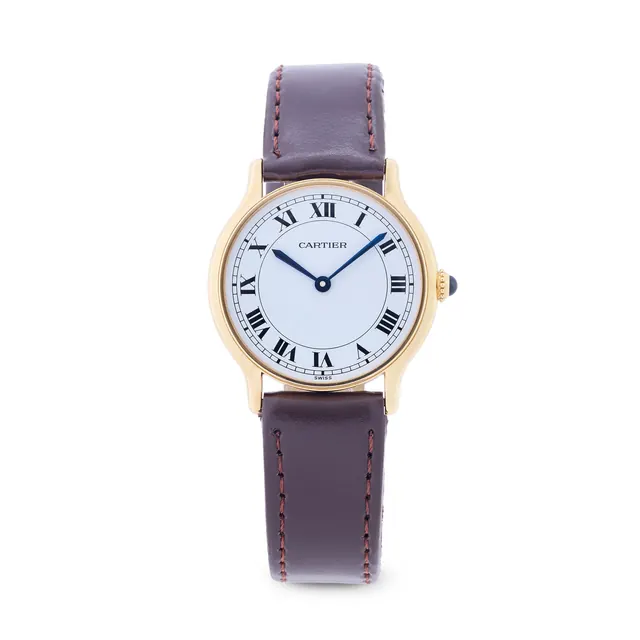
Wristwatches · c. 1970-1980s
Cartier wristwatch, ref. 10713, Riviera, circa 1970-1980s
Antiquorum auction archive, Geneva