
Pocket Watches · Pocket watch
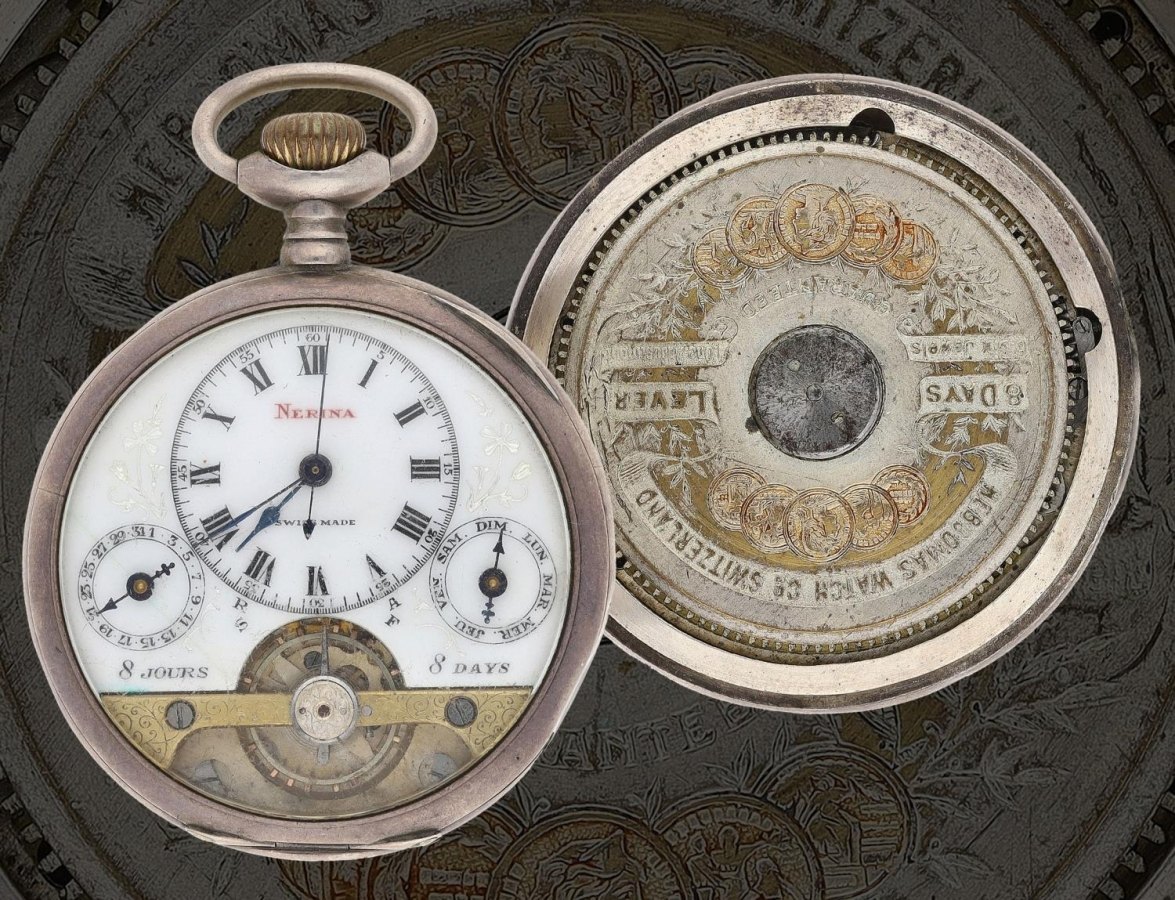
Hebdomas '8 Days' calendar silver pocket watch, hallmarked London 1917
- Maker / attribution
- Unrecorded in source
- Date
- 1917 (hallmarked London)
- Historical period
- Golden Age of Mechanical Watchmaking (1900 – 1945)
- Country of origin
- England
- Object type
- Pocket watch
- Materials / technique
- silver
- Dimensions
- Diameter 48 mm
- Auction house
- Gardiner Houlgate (auction house), Corsham
- Lot
- Sale 71, lot 74
- Credit line
- Auction lot record: lot 74, The Tony Gibbons Watch Collection, Gardiner Houlgate (20th October 2025)
- Catalogue title (original)
- Hebdomas '8 Days' calendar silver pocket watch, import hallmarks for London 1917, the white dial with visible escapement inscribed 'Nevina', with a Roman numeral dial and centre seconds with spade hou (English)
View the source record (auction lot) ↗ (opens another website in a new tab)Suggest a correction
Record summary
Catalogued by Gardiner Houlgate (auction house), Corsham (lot Sale 71, lot 74), this is a pocket watch, made in England, dated 1917 (hallmarked London). The Atlas places it in the Golden Age of Mechanical Watchmaking period (1900 – 1945) of its Pocket Watches collection. Materials and techniques recorded by the source: silver. Recorded dimensions: Diameter 48 mm. The record is illustrated with 1 photograph.
Assembled from the source record's structured fields. Dates and attributions are given as the source states them; where a field is missing the Atlas leaves it blank rather than estimating.
Catalogue description
Lot description — Gardiner Houlgate
Hebdomas '8 Days' calendar silver pocket watch, import hallmarks for London 1917, the white dial with visible escapement inscribed 'Nevina', with a Roman numeral dial and centre seconds with spade hour hand, over French day and date dials, engine turned case, case maker 'G.G.G' (De Pury, Gautschi & Co (George Guillaume Gautschi), 48mm
Historical context
Golden Age of Mechanical Watchmaking (1900 – 1945)
The wristwatch displaces the pocket watch; waterproof cases, self-winding and grand complications.
The pocket watch reached technical maturity and then began to give way to the wristwatch after the First World War. Complicated watches for collectors such as Henry Graves Jr. and James Ward Packard, railroad watches, and slim Art Deco dress watches are characteristic.
Read the period in the timelineMore pocket watches from this periodEarlier: Industrial Revolution
Atlas type guide
Calendar, moon-phase and perpetual calendar watches
Calendar complications range from a simple date to the perpetual calendar, which automatically allows for months of different lengths and leap years until 2100. Pocket watches with perpetual calendars were made in the eighteenth and nineteenth centuries; Patek Philippe made the first perpetual calendar wristwatch in 1925, and series production followed in 1941. The annual calendar (Patek Philippe, 1996) needs correction only once a year.
Moon-phase displays use a disc with two moons and 59 teeth advanced daily, approximating the 29.5-day lunation; more precise trains reduce the error to one day in over a century.
What to look for
- Apertures or subsidiary dials for day, date, month and leap year.
- Moon disc under a 'bosom' shaped aperture.
- Recessed correctors on the case band for setting the calendar.
Dating clues
- Triple-date wristwatches: popular c. 1940–1955.
- Perpetual calendar wristwatches: from 1925 (unique) and 1941 (series).
General guidance written by the Atlas editors about this kind of object. It is not a statement about this particular piece; for that, rely on the source record above and on physical examination.
Related records
Pocket Watches · 1900–1999
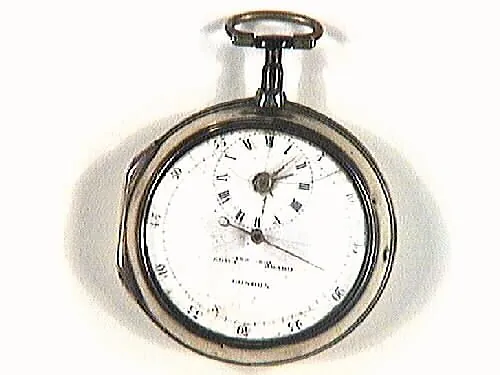
Pocket watch by Edward Howard, England, 1900–1999
Lake Vänern Museum
Pocket Watches · 1900–1999
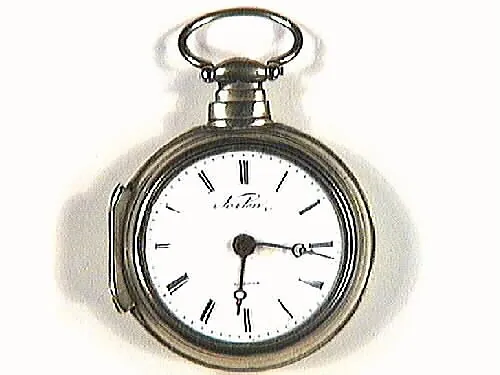
Pocket watch by Norton, England, 1900–1999
Lake Vänern Museum
Pocket Watches · 1900–1999
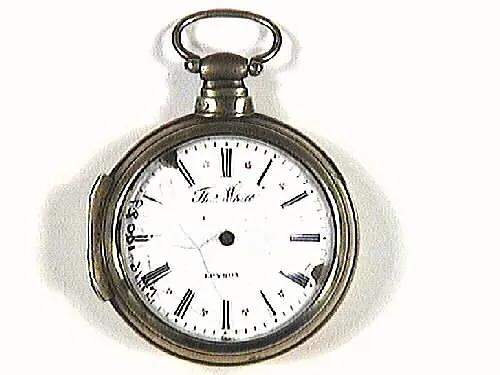
Pocket watch by Ths Whitt, England, 1900–1999
Lake Vänern Museum
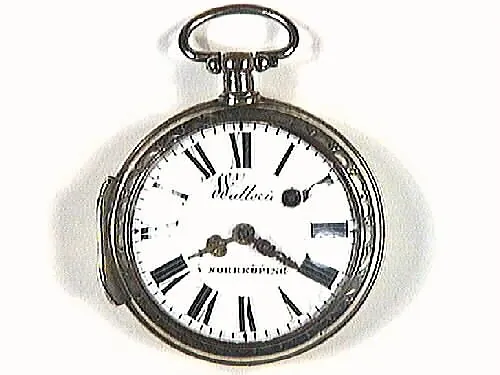
Pocket Watches · 1900–1999
Pocket watch by Wallerius, England, 1900–1999 (no. 60512)
Lake Vänern Museum
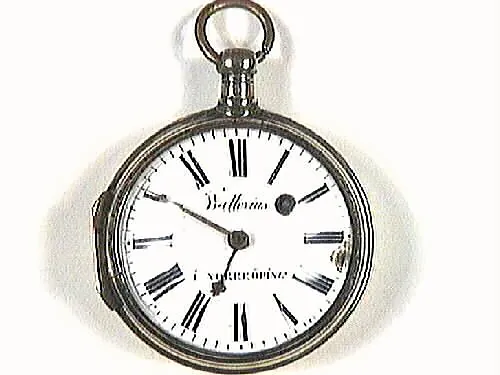
Pocket Watches · 1900–1999
Pocket watch by Wallerius, England, 1900–1999 (no. 60531)
Lake Vänern Museum
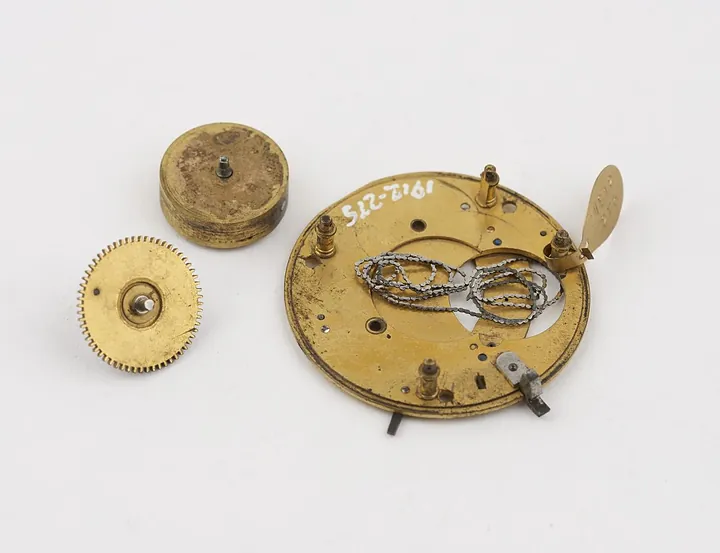
Pocket Watches · 1900–1912
Portion of watch including fusee, barrel and chain, bought from J.C. Stevens, Covent Garden, London, United Kingdom, 1900–1912
Science Museum Group, London
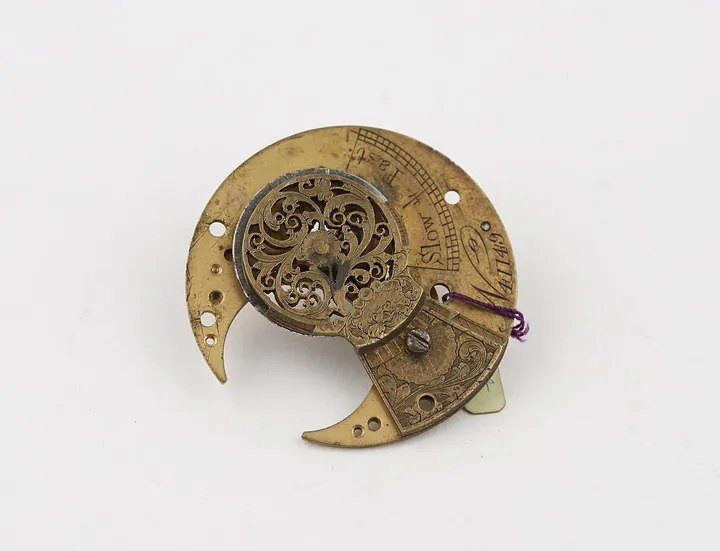
Pocket Watches · 1900–1912
Portion of watch including verge escapement, bought from J.C. Stevens, Convent Garden, London, United Kingdom, 1900–1912
Science Museum Group, London
Pocket Watches · 1900–1912
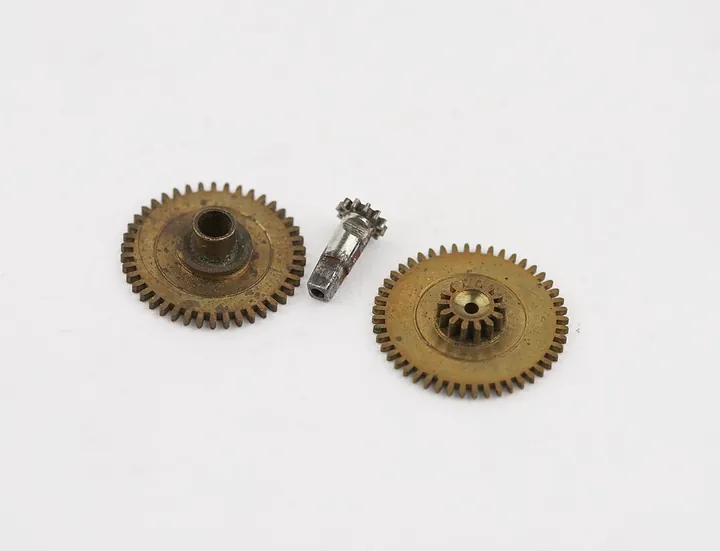
Set of (3) wheels used in motion work of a watch, purchased from J.C. Stevens, Covent Garden, London, United Kingdom, 1900–1912
Science Museum Group, London