Pocket Watches · Pocket watch
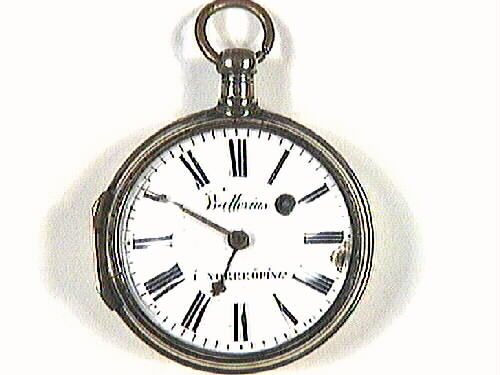
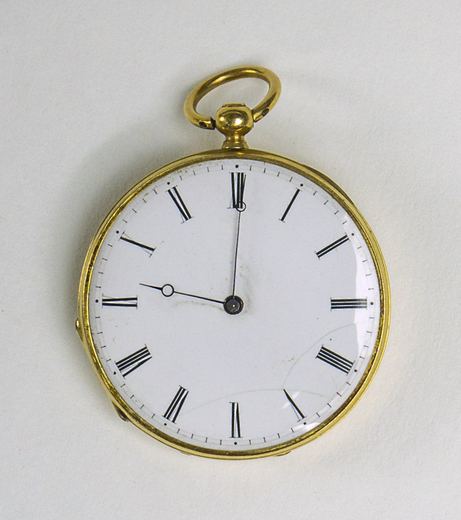
Pocket watch by Wallerius [11:01], England, 1900–1999 (Lake Vänern Museum vm_objekt_60531)
- Maker / attribution
- Wallerius [11:01] (creator)
- Date
- 1900–1999
- Historical period
- Modern Mechanical Horology (1945 – 1969)
- Country of origin
- England
- Object type
- Pocket watch
- Holding institution
- Lake Vänern Museum
- Accession / object no.
- vm_objekt_60531
- Catalogue title (original)
- Fickur
Record summary
Held and catalogued by Lake Vänern Museum (object number vm_objekt_60531), this is a pocket watch by Wallerius [11:01], made in England, dated 1900–1999. The Atlas places it in the Modern Mechanical Horology period (1945 – 1969) of its Pocket Watches collection. The record is illustrated with 1 photograph.
Assembled from the source record's structured fields. Dates and attributions are given as the source states them; where a field is missing the Atlas leaves it blank rather than estimating.
Catalogue description
Catalogue description from Lake Vänern Museum (Swedish)
Fickur med boett av försilvrad metall, med välvd baksida. Vitemaljerad urtavla med romerska siffror och bård med minutmarkeringarna i svart. Visare av mässing. Rund ögla för kedja. Den övre platinan vilar på fyra verkpelare. Spärrhjulet har fransk text: avance, retard. Orokloven med vackert genombrutet mönster. Signerad i verkbotten: "Wallerius i Norrköping". Samma signatur finns på urtavlan. Fickuret liknar ur tillverkade av Londonurmakaren John Ward(mästare 1784-1799). Urtavlan möjligen tillverkad av William Brown i London, verksam omkring 1800. "Wallerius" kan vara en förfalskning av namnet Wellenius. Det är namnet på en urmakare som 1774 fick privilegium att upprätta urmakarverkstad i Norrköping. Man tror att Wallerius (Wallenius) var en kringresande urhandlare, som under någon kort tid haft sin förlagsort i Norrköping. Det handlar då om " falsk ursprungsbeteckning". Skador: mindre skada i emaljen på urtavlan.
Shown in the original language of the source catalogue. An editor-reviewed English translation has not yet been published; we do not publish machine translations as authoritative text.
Historical context
Modern Mechanical Horology (1945 – 1969)
Tool watches for divers, pilots and astronauts; electric watches anticipate the electronic age.
After 1945 the pocket watch became a niche product — presentation and railway watches, inexpensive pin-lever watches, and commemorative pieces — while most innovation moved to the wrist.
Read the period in the timelineMore pocket watches from this periodEarlier: Golden Age of Mechanical Watchmaking
Atlas type guide
Pocket watches
The pocket watch was the dominant personal timekeeper from the late seventeenth century until the First World War. Its development tracks the history of the escapement: verge watches with fusees until the late eighteenth century; Thomas Mudge's lever escapement (c. 1755) and the cylinder escapement popularised by George Graham and later by Swiss makers; and the Swiss and English lever watches of the nineteenth century. Lépine's bar-bridge calibre and keyless winding made watches thinner and easier to use.
Industrialisation transformed the trade: American factories such as Waltham (from 1850) and Elgin produced interchangeable parts by machine, and Swiss makers responded with their own mechanisation after the 1876 Philadelphia Exhibition. By 1900 a reliable watch was affordable to millions; the finest makers continued to produce complications and precision watches.
What to look for
- The escapement: verge (crown wheel), cylinder, duplex, English or Swiss lever.
- Key winding (a square arbor in dial or back) or keyless crown winding.
- Signatures and serial numbers on the movement, dial and inside case back.
- Hallmarks, case maker's marks and gold or silver standards stamped in the case.
- Dial material: enamel, silver, gold, later printed metal.
Dating clues
- Verge watches dominate before c. 1800; cylinder watches c. 1770–1900; lever watches after c. 1820.
- Keyless winding: increasingly common after c. 1860.
- Manufacturer serial number lists exist for Waltham, Elgin, Longines, Omega, Patek Philippe and others.
General guidance written by the Atlas editors about this kind of object. It is not a statement about this particular piece; for that, rely on the source record above and on physical examination.
Read next:Verge escapementDetached lever escapementFuseeIdentification Centre
Related records
Pocket Watches · 1900–1999
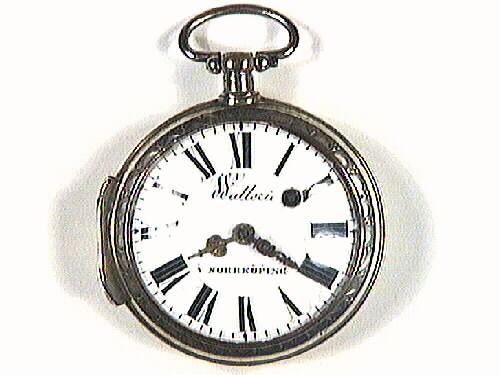
Pocket watch by Wallerius [11:01], England, 1900–1999 (Lake Vänern Museum vm_objekt_60512)
Lake Vänern Museum
Pocket Watches · 1900–1999
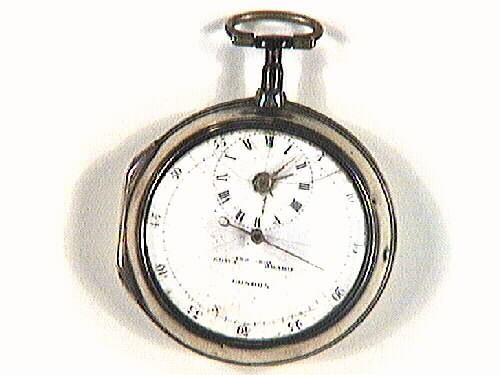
Pocket watch by Edward Howard [11:01], England, 1900–1999
Lake Vänern Museum
Pocket Watches · 1900–1999
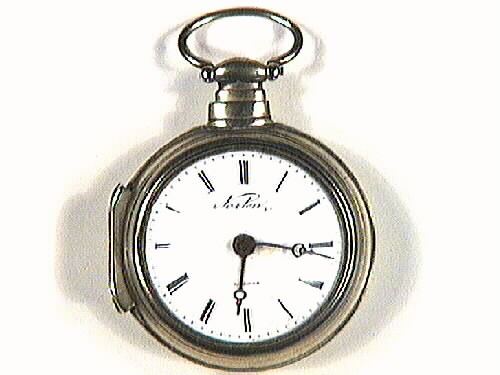
Pocket watch by Norton [11:01], England, 1900–1999
Lake Vänern Museum
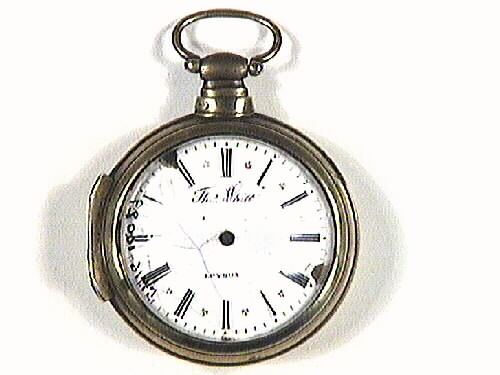
Pocket Watches · 1900–1999
Pocket watch by Ths Whitt [11:01], England, 1900–1999
Lake Vänern Museum
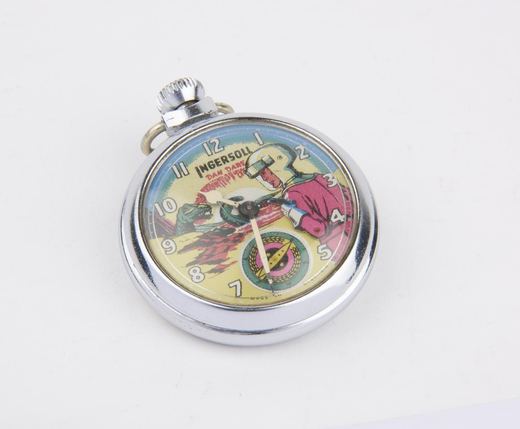
Pocket Watches · 1953
Pocket watch by Ingersoll Limited, England, 1953
Science Museum Group, London
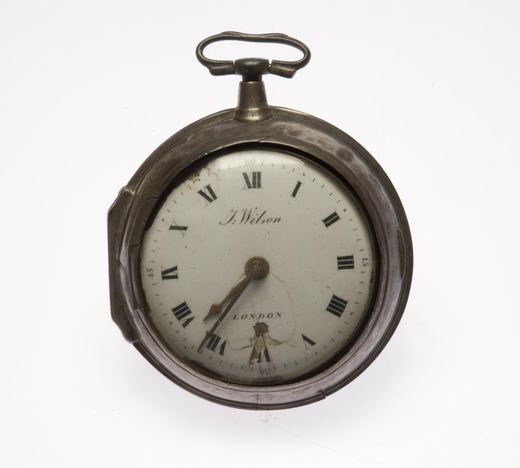
Pocket Watches · 1960
Pocket watch, England, 1960 (Västernorrlands museum S_YLM_object_M14987)
Västernorrlands museum
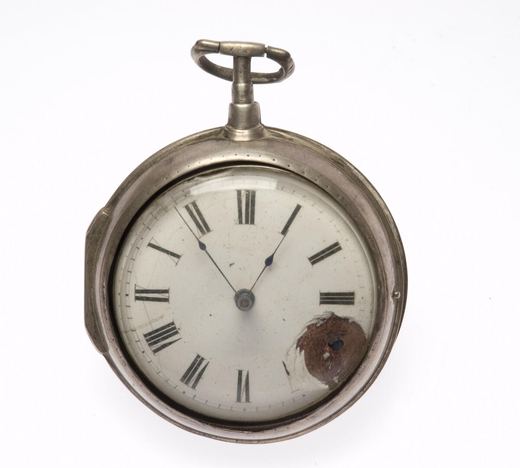
Pocket Watches · 1960
Pocket watch, England, 1960 (Västernorrlands museum S_YLM_object_M14990)
Västernorrlands museum
Pocket Watches · 1873–2017
Pocket watch, Strängnäs, 1873–2017
Sörmland Museum