
Pocket Watches · Pocket watch
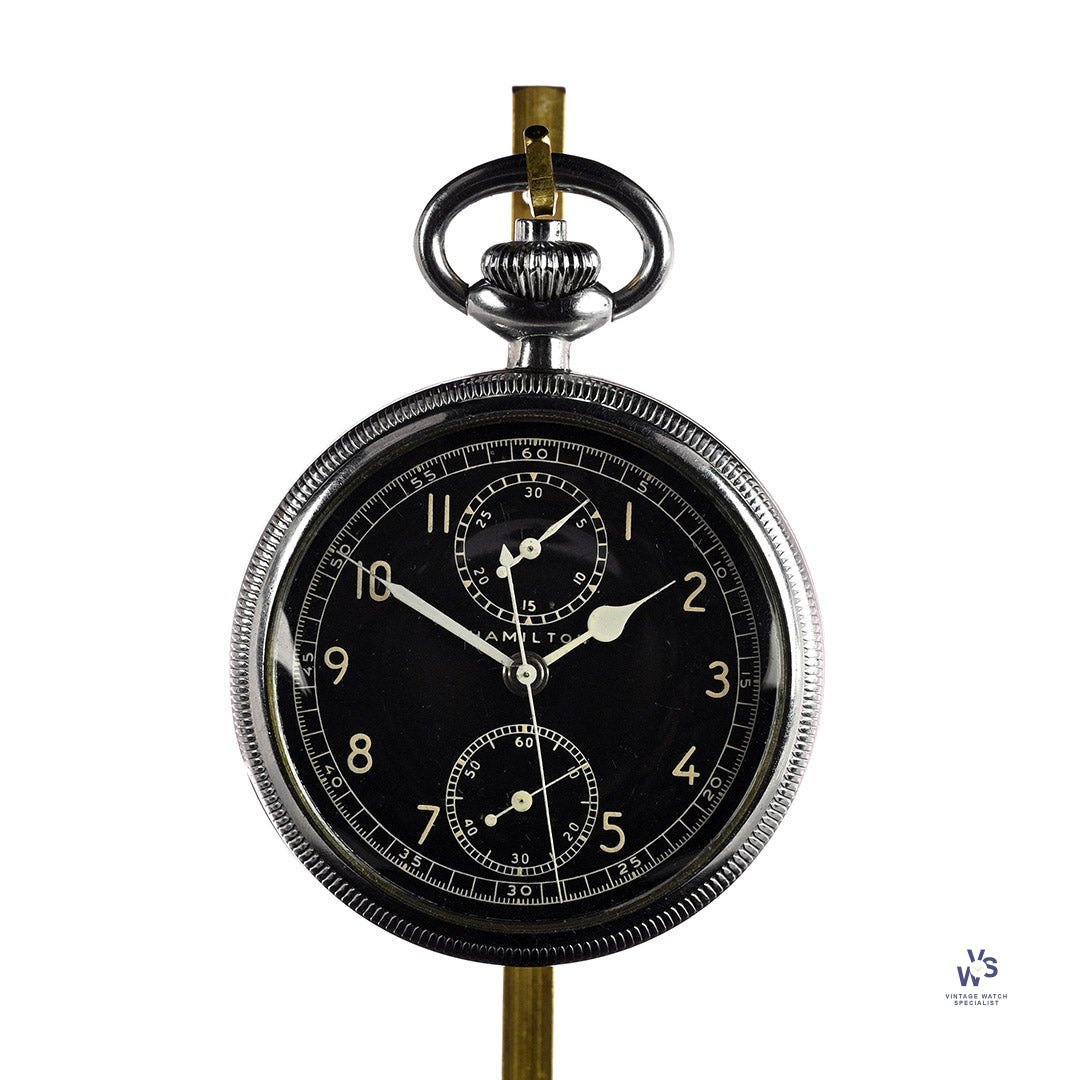
Hamilton Model 23 Pocket Watch, Two Reg Chronograph, circa 1940s
- Maker / attribution
- Hamilton (maker)
- Date
- c. 1940s
- Historical period
- Golden Age of Mechanical Watchmaking (1900 – 1945)
- Country of origin
- Switzerland
- Object type
- Pocket watch
- Stock no.
- vws3363
- Credit line
- Dealer listing, Vintage Watch Specialist (vws3363)
- Catalogue title (original)
- Hamilton Model 23 Pocket Watch - Two Reg Chronograph - c.1940s (English)
View the source record (dealer listing) ↗ (opens another website in a new tab)Suggest a correction
Record summary
Catalogued by Vintage Watch Specialist (dealer), United Kingdom (stock number vws3363), this is a pocket watch by Hamilton, made in Switzerland, dated c. 1940s. The Atlas places it in the Golden Age of Mechanical Watchmaking period (1900 – 1945) of its Pocket Watches collection. The record is illustrated with 6 photographs.
Assembled from the source record's structured fields. Dates and attributions are given as the source states them; where a field is missing the Atlas leaves it blank rather than estimating.
Catalogue description
Dealer description — Vintage Watch Specialist
A Delightful Hamilton Model 23 Pocket Watch in Superb Condition, Running Well and Keeping Good Time, c.1940s Hamilton Watches, founded in Lancaster, Pennsylvania, in 1892, is renowned for its blend of American spirit and Swiss precision. The brand initially gained prominence by producing pocket watches that ensured accurate railroad timekeeping, significantly reducing train accidents. By the early 20th century, Hamilton cemented its reputation for precision and reliability. During World War II, Hamilton ceased commercial production to supply the U.S. military with marine chronometers and wristwatches, becoming a trusted name among servicemen. This commitment to quality transitioned into the post-war era as Hamilton embraced mid-century technological advances. What's on offer This 1940s Hamilton pocket watch has been incredibly well preserved and would make a really beautiful gift this Christmas. A lot of these exact models were military issued during the second World War but alas this watch has no military markings. It is, however, a very beautiful piece. Chrome topped, there is some base metal peeping through on the caseback, but this is really the only sign of its age! The dial is beautifully executed with bold Arabic numerals, two counters and beautiful leaf hands. The case and furniture are also in beautiful condition, just look at the tapered crown and beautiful bow! The Model 23 is based on the reliable 992B, but with a chronograph mechanism added, making it one of Hamilton's most complicated watches. It is a 19-jewel, 16-size watch adjusted to temperature and 3 positions. Very collectable and frankly rather nice to own, this is a beautiful and well crafted piece and we are delighted to offer it for sale.
Historical context
Golden Age of Mechanical Watchmaking (1900 – 1945)
The wristwatch displaces the pocket watch; waterproof cases, self-winding and grand complications.
The pocket watch reached technical maturity and then began to give way to the wristwatch after the First World War. Complicated watches for collectors such as Henry Graves Jr. and James Ward Packard, railroad watches, and slim Art Deco dress watches are characteristic.
Read the period in the timelineMore pocket watches from this periodEarlier: Industrial Revolution
Atlas type guide
Chronographs and split-seconds watches
A chronograph is a watch with an additional seconds hand that can be started, stopped and returned to zero independently of the timekeeping. Louis Moinet built an early example in 1816 and Nicolas Rieussec a recording 'chronographe' in 1821; Adolphe Nicole's heart-shaped reset cam (patented 1862) made the modern return-to-zero possible. Split-seconds (rattrapante) chronographs add a second hand that can be stopped for intermediate times; flyback chronographs restart instantly.
Chronographs were essential tools for doctors (pulsometer scales), artillery (telemeter), engineers and sport. In wristwatches, Valjoux, Venus, Lemania and later the automatic chronographs of 1969 (Zenith El Primero, the Chronomatic Calibre 11 group and Seiko 6139) are milestones.
What to look for
- Push-pieces on the case band or a single button in the crown (monopusher).
- Subsidiary registers for minutes and hours; tachymeter, telemeter or pulsometer scales.
- Column wheel versus cam control visible in the movement.
- Calibre markings of specialist makers (Valjoux, Lemania, Venus, Landeron).
Dating clues
- Pocket chronographs with heart cam reset: after 1862.
- Wrist chronographs: from c. 1910; two-button designs from the 1930s.
- Automatic chronographs: from 1969.
General guidance written by the Atlas editors about this kind of object. It is not a statement about this particular piece; for that, rely on the source record above and on physical examination.
Read next:Flyback chronographChronograph
Related records
Pocket Watches · c. 1943
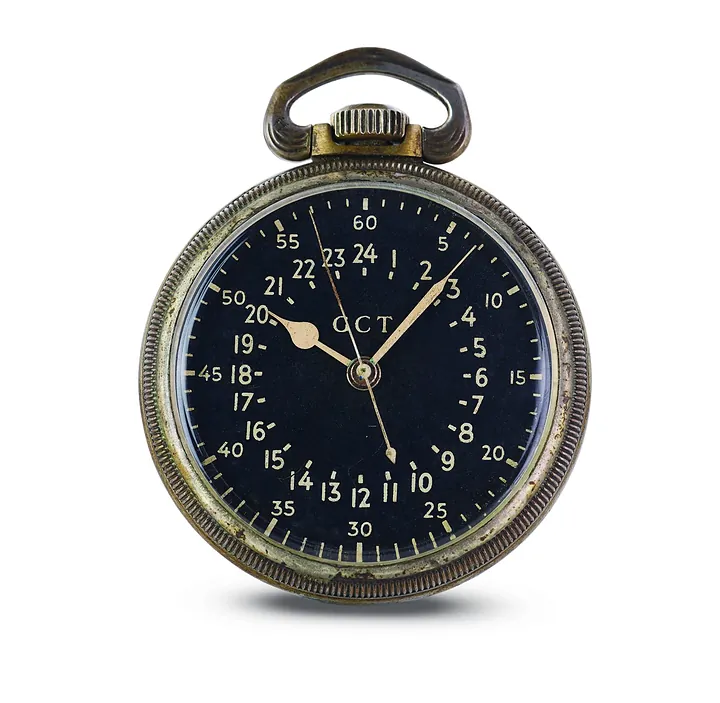
Hamilton 4992B, GCT Navigation U.S Air Force, c. 1943
Antiquorum auction archive, Geneva
Wristwatches · c. 1940s
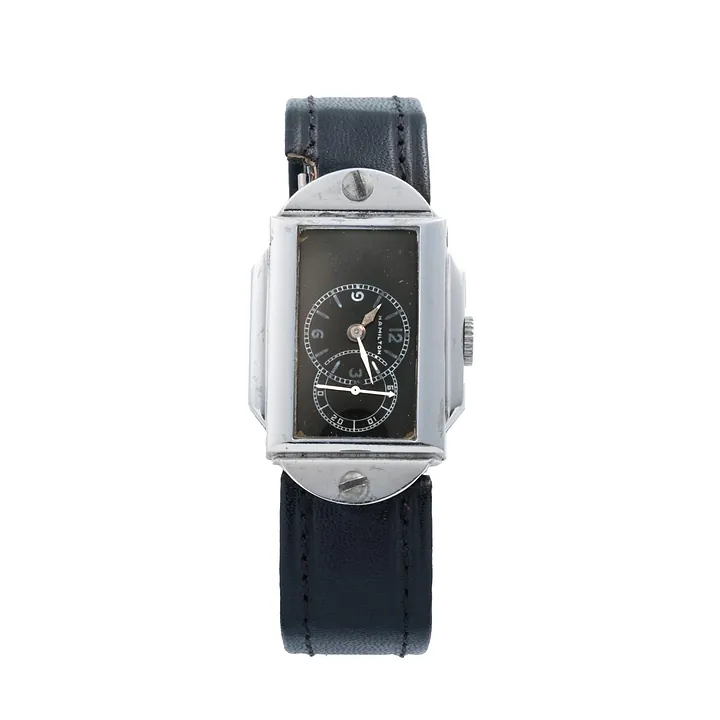
Hamilton Bomb Timer, c. 1940s
Antiquorum auction archive, Geneva
Wristwatches · originally sold in February 2025 (per the lot record)
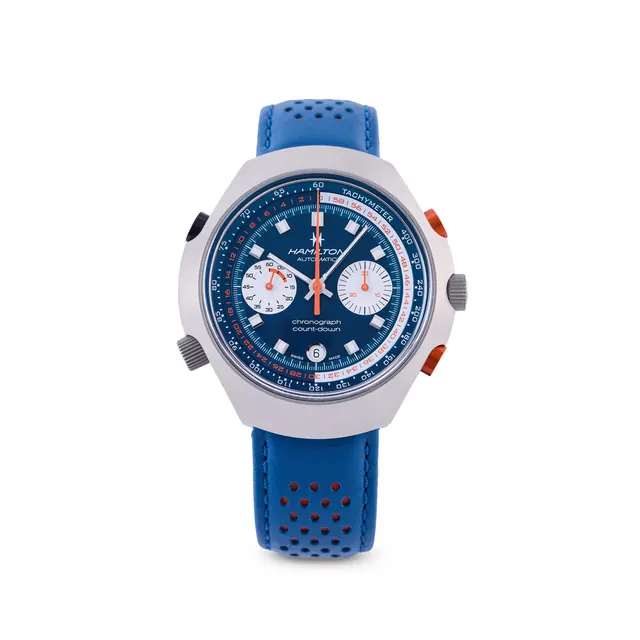
Hamilton wristwatch, ref. H51606640, American Classic Chrono-Matic 50 Limited Edition, originally sold in February 2025 (per the lot record)
Antiquorum auction archive, Geneva
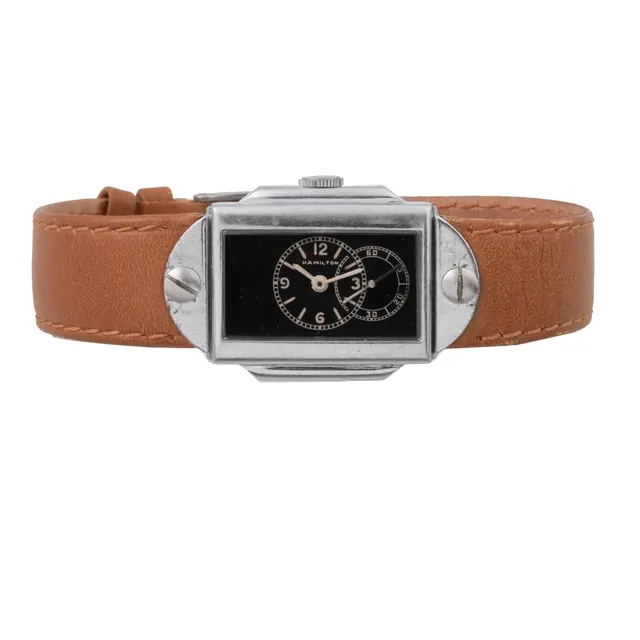
Wristwatches · c. 1940s
Hamilton wristwatch, Bomb Timer Watch, circa 1940's
Antiquorum auction archive, Geneva

Pocket Watches · c. 1900
Patek Philippe Chronometro Gondolo, c. 1900
Antiquorum auction archive, Geneva
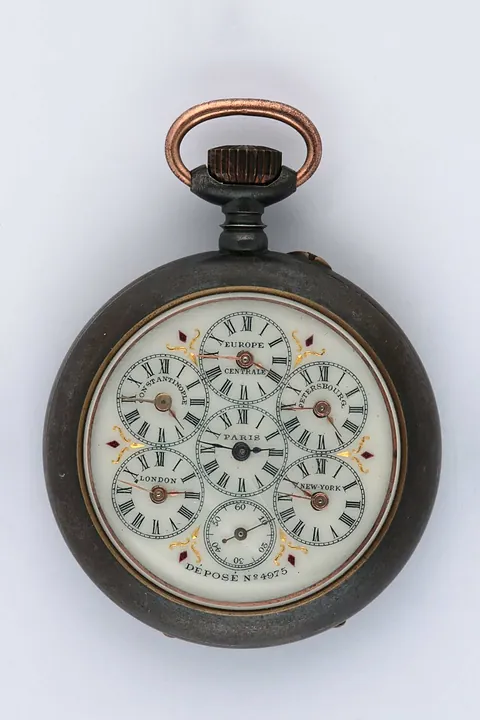
Pocket Watches · c. 1900
Pocket watch by A. Sandoz-Boucherin, Switzerland, c. 1900
German Clock Museum
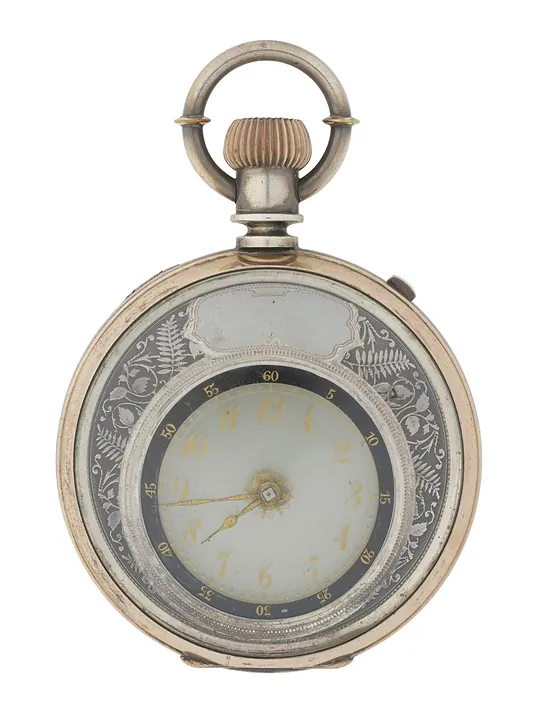
Pocket Watches · 1900
Pocket watch by Armand Schwob & Frère, Switzerland, 1900
Science Museum Group, London
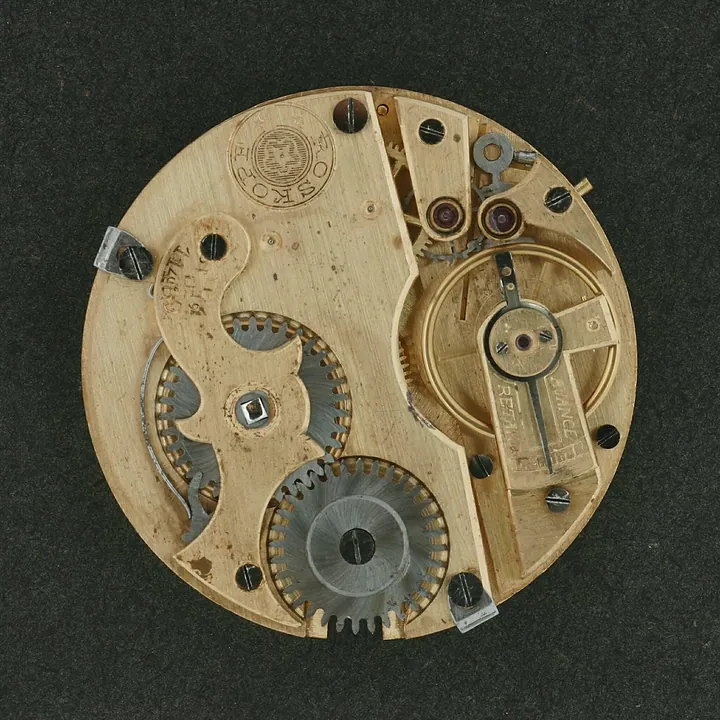
Pocket Watches · c. 1900
Pocket watch by Vve. Chs. Léon Schmid und Cie, Switzerland, c. 1900
German Clock Museum