
Pocket Watches · Pocket watch
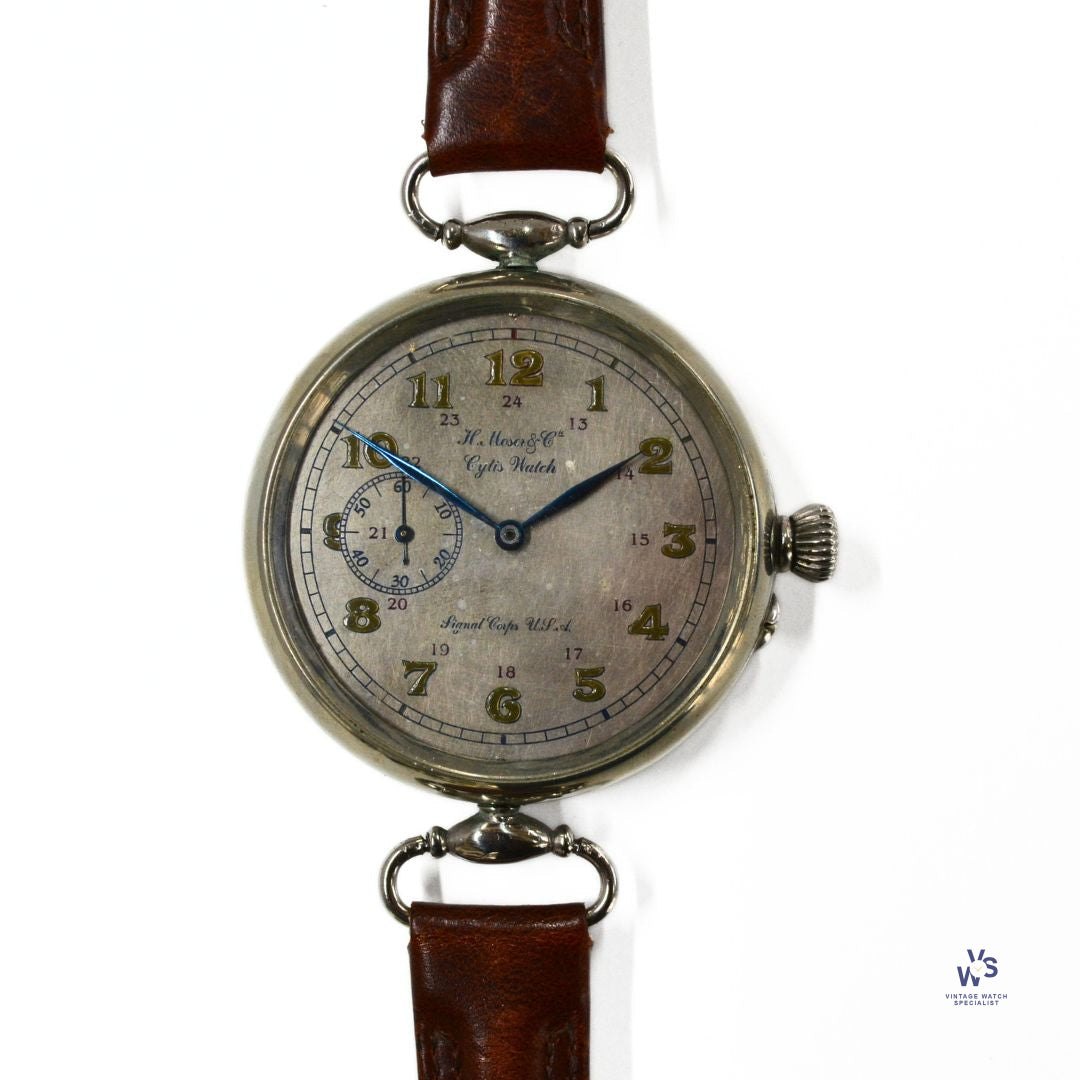
H.Moser & Cie, Cylis Watch, US Signal Corps, Pocket Watch Conversion, circa 1910
- Maker / attribution
- H. Moser & Cie (maker)
- Date
- c. 1910
- Historical period
- Golden Age of Mechanical Watchmaking (1900 – 1945)
- Country of origin
- Switzerland
- Object type
- Pocket watch
- Dimensions
- Case 54 mm
- Stock no.
- vws3317cs
- Credit line
- Dealer listing, Vintage Watch Specialist (vws3317cs)
- Catalogue title (original)
- H.Moser & Cie - Cylis Watch - US Signal Corps - Pocket Watch Conversion - c.1910 (English)
View the source record (dealer listing) ↗ (opens another website in a new tab)Suggest a correction
Record summary
Catalogued by Vintage Watch Specialist (dealer), United Kingdom (stock number vws3317cs), this is a pocket watch by H. Moser & Cie, made in Switzerland, dated c. 1910. The Atlas places it in the Golden Age of Mechanical Watchmaking period (1900 – 1945) of its Pocket Watches collection. Recorded dimensions: Case 54 mm. The record is illustrated with 6 photographs.
Assembled from the source record's structured fields. Dates and attributions are given as the source states them; where a field is missing the Atlas leaves it blank rather than estimating.
Catalogue description
Dealer description — Vintage Watch Specialist
Unique Oversized Pocket Watch Conversion Originally Issued to US Signal Corps The origins of H. Moser & Cie. trace back to 1828 when Heinrich Moser, an independent Swiss watchmaker, established the company in St. Petersburg, Russia. Heinrich Moser's vision was to create timepieces that combined precision engineering with elegant design, a philosophy that quickly garnered the attention of the Russian aristocracy. Among the early clientele were Russian princes and members of the imperial court, solidifying H. Moser & Cie's reputation for exclusivity and quality. Even notable historical figures such as Vladimir Lenin owned a Moser watch, highlighting the brand's widespread acclaim. What's on Offer We believe that this unique-looking timepiece was originally a pocket watch issued to the United States Army Signal Corps around 1910. Founded in 1860, the purpose of the Signal Corps was to manage communications and information systems for the command and control of combined arms forces. Time-keeping devices like this were a vital part of the kit the soldiers of the signal corps would use during day-to-day operations. At some point in its life, it has been converted into a wristwatch, which is baffling, to say the least, due to its gigantic profile at 54mm. The large case is made from solid stainless steel and displays very light wear which is surprising given its age. Blue steel hands contrast nicely against a silver dial and touches of red placed on the inner numerals. Unlike most pocket watches where the sub-seconds dial is placed at 6 o'clock, it can be seen at 9 o'clock giving it another unique touch of character.
Historical context
Golden Age of Mechanical Watchmaking (1900 – 1945)
The wristwatch displaces the pocket watch; waterproof cases, self-winding and grand complications.
The pocket watch reached technical maturity and then began to give way to the wristwatch after the First World War. Complicated watches for collectors such as Henry Graves Jr. and James Ward Packard, railroad watches, and slim Art Deco dress watches are characteristic.
Read the period in the timelineMore pocket watches from this periodEarlier: Industrial Revolution
Atlas type guide
Pocket watches
The pocket watch was the dominant personal timekeeper from the late seventeenth century until the First World War. Its development tracks the history of the escapement: verge watches with fusees until the late eighteenth century; Thomas Mudge's lever escapement (c. 1755) and the cylinder escapement popularised by George Graham and later by Swiss makers; and the Swiss and English lever watches of the nineteenth century. Lépine's bar-bridge calibre and keyless winding made watches thinner and easier to use.
Industrialisation transformed the trade: American factories such as Waltham (from 1850) and Elgin produced interchangeable parts by machine, and Swiss makers responded with their own mechanisation after the 1876 Philadelphia Exhibition. By 1900 a reliable watch was affordable to millions; the finest makers continued to produce complications and precision watches.
What to look for
- The escapement: verge (crown wheel), cylinder, duplex, English or Swiss lever.
- Key winding (a square arbor in dial or back) or keyless crown winding.
- Signatures and serial numbers on the movement, dial and inside case back.
- Hallmarks, case maker's marks and gold or silver standards stamped in the case.
- Dial material: enamel, silver, gold, later printed metal.
Dating clues
- Verge watches dominate before c. 1800; cylinder watches c. 1770–1900; lever watches after c. 1820.
- Keyless winding: increasingly common after c. 1860.
- Manufacturer serial number lists exist for Waltham, Elgin, Longines, Omega, Patek Philippe and others.
General guidance written by the Atlas editors about this kind of object. It is not a statement about this particular piece; for that, rely on the source record above and on physical examination.
Read next:Verge escapementDetached lever escapementFuseeIdentification Centre
Related records
Wristwatches · originally sold in 2021 (per the lot record)
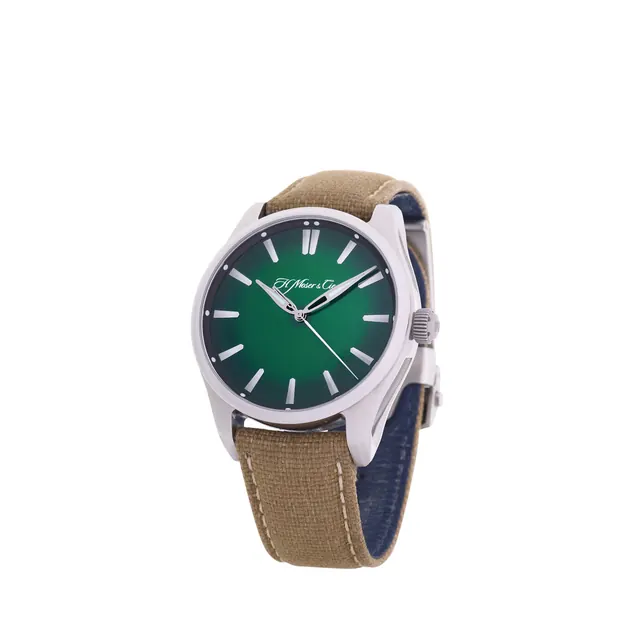
H. Moser & Cie wristwatch, ref. 3200.1202, Pionner, originally sold in 2021
Antiquorum auction archive, Geneva
Wristwatches · c. 2016
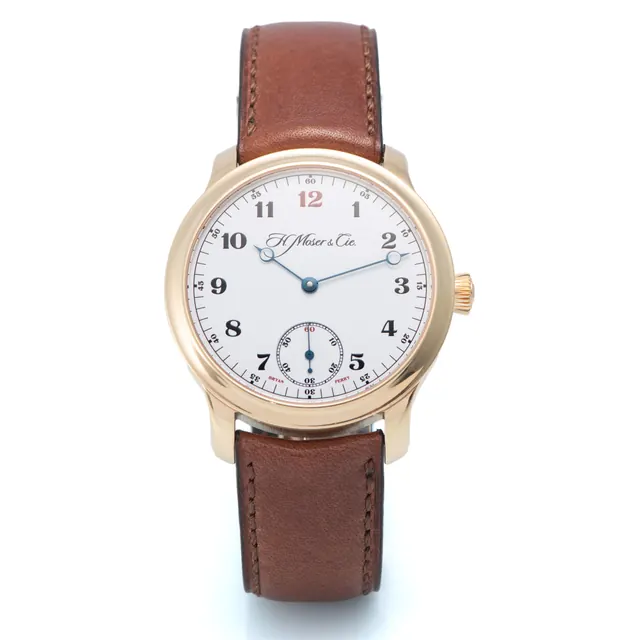
H. Moser & Cie wristwatch, ref. 1321-0116, Endeavour Limited Brian Ferry Edition of 100 Pieces, circa 2016
Antiquorum auction archive, Geneva
Wristwatches · 2025
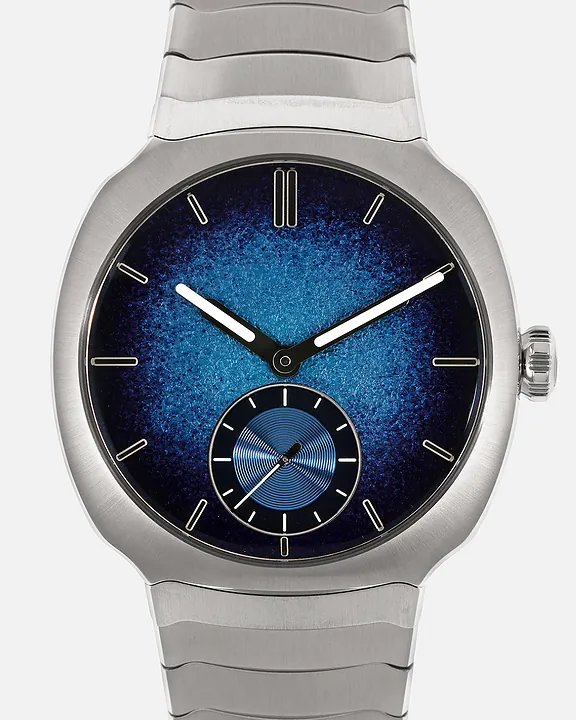
H. Moser & Cie Streamliner Small Seconds Blue Enamel 6500-1200, 2025
S.Song Watches (dealer), Seattle
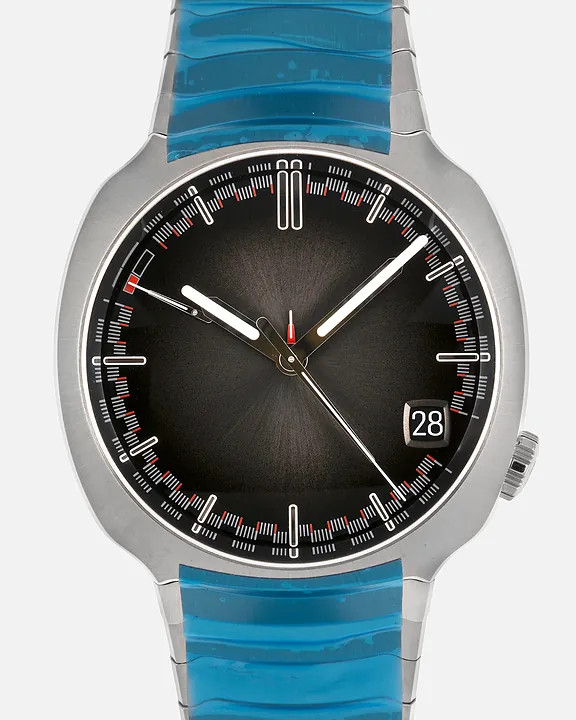
Wristwatches · 2022
H.Moser & Cie Streamliner Perpetual Calendar, 2022
S.Song Watches (dealer), Seattle

Pocket Watches · c. 1900
Patek Philippe Chronometro Gondolo, c. 1900
Antiquorum auction archive, Geneva
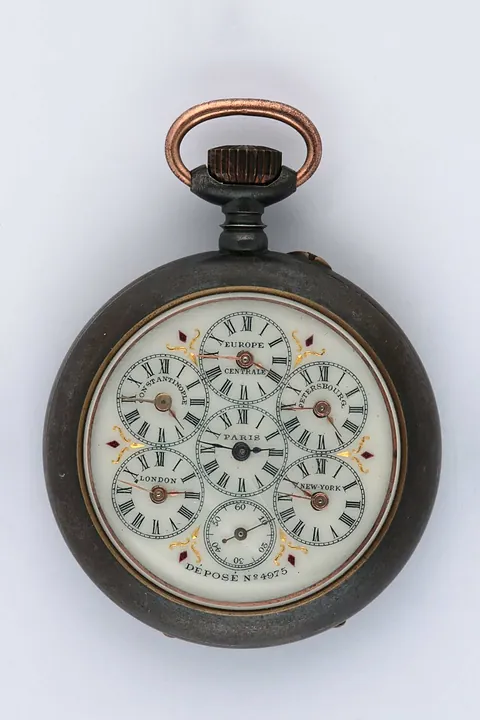
Pocket Watches · c. 1900
Pocket watch by A. Sandoz-Boucherin, Switzerland, c. 1900
German Clock Museum
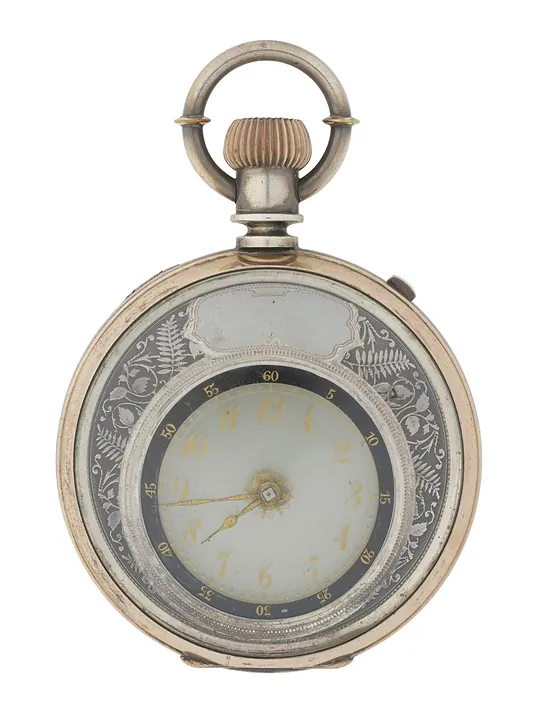
Pocket Watches · 1900
Pocket watch by Armand Schwob & Frère, Switzerland, 1900
Science Museum Group, London
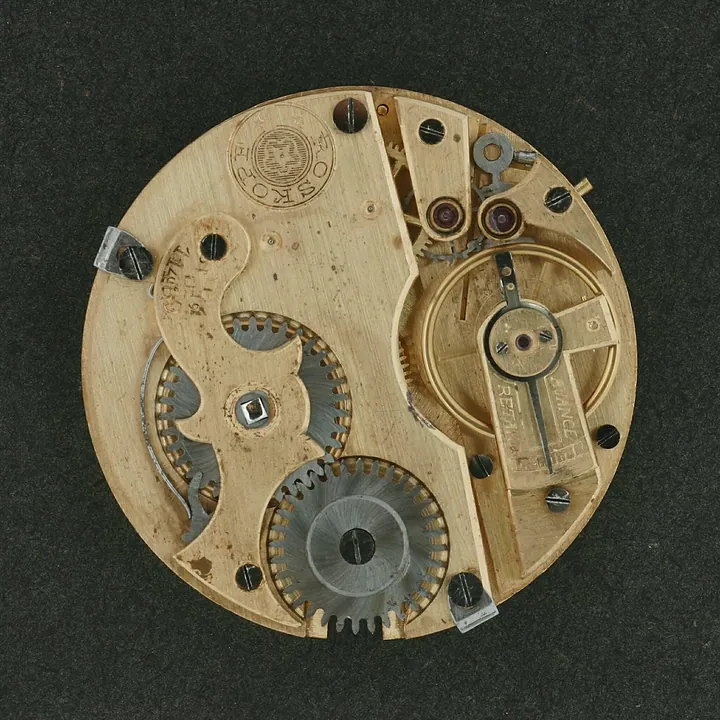
Pocket Watches · c. 1900
Pocket watch by Vve. Chs. Léon Schmid und Cie, Switzerland, c. 1900
German Clock Museum