
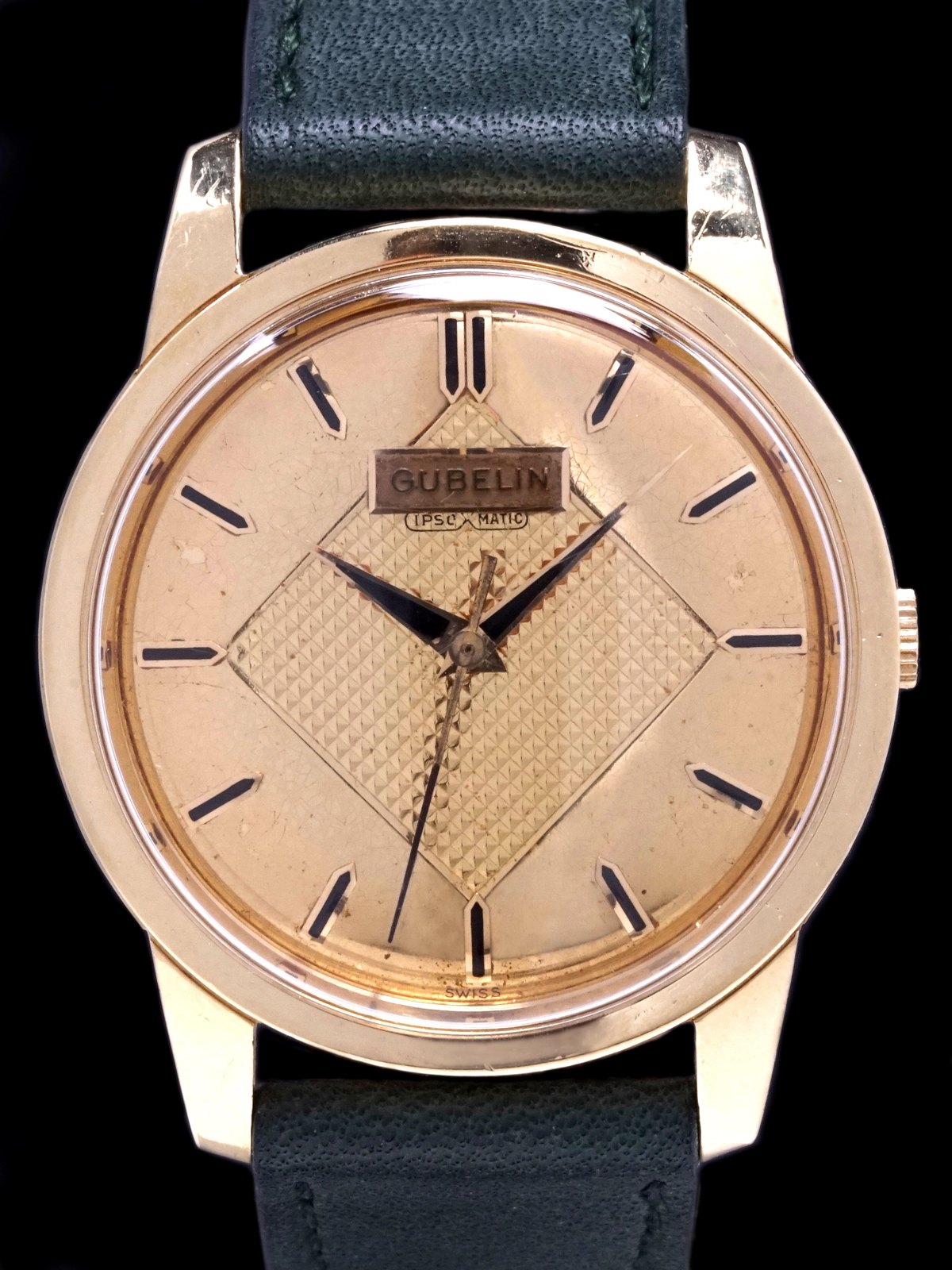
Wristwatches · Wristwatch
Gubelin Ipso-Matic 18K YG, 1960s
- Maker / attribution
- Gubelin (maker)
- Date
- 1960s
- Historical period
- Modern Mechanical Horology (1945 – 1969)
- Country of origin
- Unrecorded in source
- Object type
- Wristwatch
- Stock no.
- GUBIPMT18
- Credit line
- Dealer listing, Craft & Tailored (GUBIPMT18)
- Catalogue title (original)
- 1960s Gubelin Ipso-Matic 18K YG (English)
View the source record (dealer listing) ↗ (opens another website in a new tab)Suggest a correction
Record summary
Catalogued by Craft & Tailored (dealer), Los Angeles (stock number GUBIPMT18), this is a wristwatch by Gubelin, dated 1960s. The Atlas places it in the Modern Mechanical Horology period (1945 – 1969) of its Wristwatches collection. The record is illustrated with 6 photographs.
Assembled from the source record's structured fields. Dates and attributions are given as the source states them; where a field is missing the Atlas leaves it blank rather than estimating.
Catalogue description
Dealer description — Craft & Tailored
The legendary reputation of Gubelin dates all the way back to 1854 and continues on today under the same family. The brand started in Lucerne Switzerland in a small watchmaker's shop and later entered the Jeweler business as a formal atelier. The Gobelin jewelry business grew rapidly reaching throughout Switzerland and to New York. The Gubelin Atelier continued its watch side of the business, primarily offering the premier Swiss brands such as Rolex, Patek Philippe, and Audemars Piguet, normal with cosigned dials bearing the Gubelin name. SPECS Stock # GUBIPMT18 Brand Gubelin Style Ipso-Matic Model N/A Serial 16XXXX Size Men's Material 18K Yellow Gold Dial Gold Millimeters 36 Bracelet 2pc Handmade Leather Strap CASE & BRACELET The 18k yellow gold case is lightly polished and retains excellent dimensions and symmetry with light signs of use. The yellow gold crown is believed to be the original. The 18k yellow gold case back is in great overall condition. The watch comes supplied on a 2pc handmade leather strap. DIAL & HANDS The gold mirrored dial with a textured inner dial is pure art deco perfection. The dial itself does show some age and spider cracking in its top layer of enamel and retains its mirrored aesthetic beautifully. The onyx enamel topped markers create ease in legibility for telling the time and accent the gold backdrop beautifully. The original onyx enameled hands accent the dial markers and remain in excellent original condition. ACCESSORIES None. The watch is keeping time perfectly, previous service history is unknown
Historical context
Modern Mechanical Horology (1945 – 1969)
Tool watches for divers, pilots and astronauts; electric watches anticipate the electronic age.
The classic era of the mechanical wristwatch: dive watches, chronographs for motor racing and space flight, GMT watches for jet travel, slim dress watches, automatic calendars, and the rise of Japanese manufacturers alongside Swiss, American, German and Soviet industries.
Read the period in the timelineMore wristwatches from this periodEarlier: Golden Age of Mechanical Watchmaking
Atlas type guide
Wristwatches
Bracelet watches were worn by women from the early nineteenth century — Breguet made one for Caroline Murat, Queen of Naples, in 1810–12 — but the wristwatch only became a man's instrument with military use and aviation in the early twentieth century. Between the World Wars it overtook the pocket watch; the 1920s and 1930s brought rectangular Art Deco cases, water-resistant cases and the first automatic winding systems.
After 1945 the wristwatch became a carrier of identity — dress watches, sports and dive watches, chronographs, calendars — produced by Swiss, American, Japanese, German, Soviet and Chinese industries. The quartz revolution after 1969 and the mechanical renaissance since the 1990s, including the rise of independent watchmakers, complete the story.
What to look for
- The reference number (between the lugs or inside the case back) and serial number, the starting point for dating.
- The calibre: its maker and number are often stamped under the dial or on the bridge.
- Originality of dial, hands and crown — refinished ('redial') dials are common.
- Case material marks: 18K/750, 14K/585, stainless steel, gold-filled, plated.
Dating clues
- Wire-lug cases: before c. 1925.
- Water-resistant screw-down cases: from 1926.
- Quartz movements: from 1969; sapphire crystals widespread after c. 1980.
General guidance written by the Atlas editors about this kind of object. It is not a statement about this particular piece; for that, rely on the source record above and on physical examination.
Related records
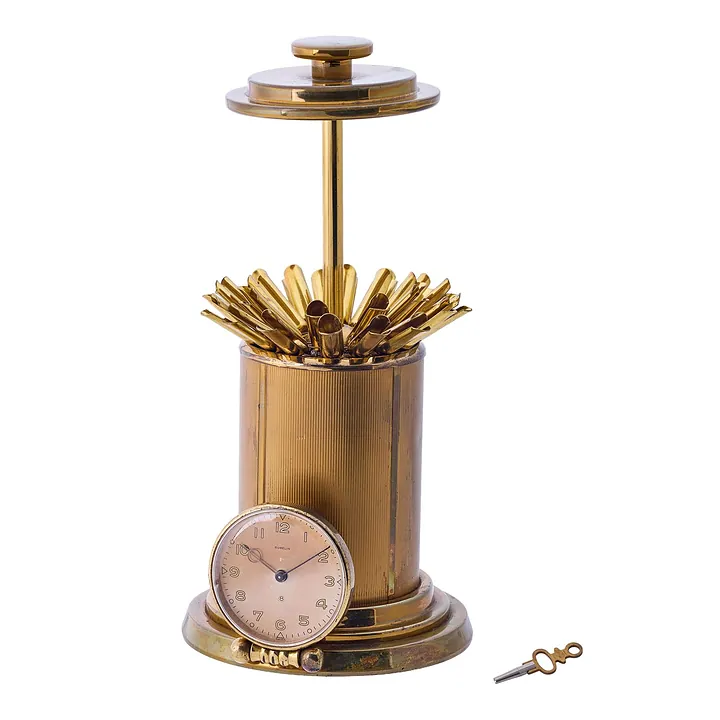
Clocks · c. 1950-1960s
Gubelin clock, c. 1950-1960s
Antiquorum auction archive, Geneva
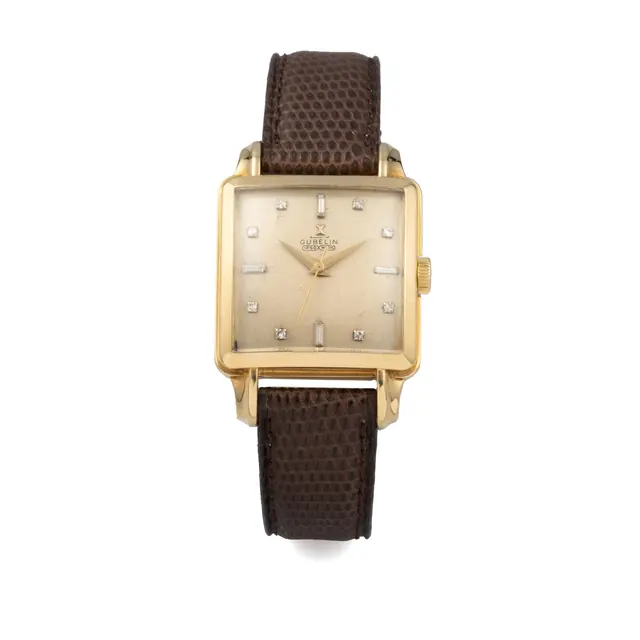
Wristwatches · 1950
Gubelin wristwatch, 1950
Antiquorum auction archive, Geneva
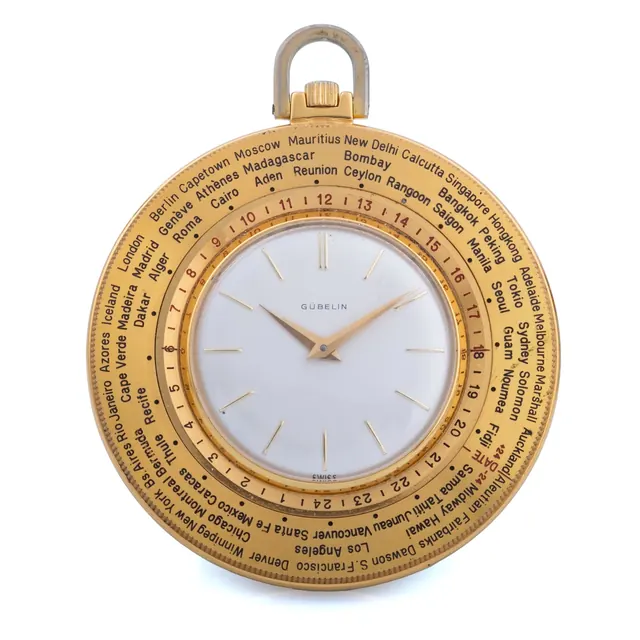
Pocket Watches · c. 1960
Gubelin pocket watch, Swiss World Time, circa 1960
Antiquorum auction archive, Geneva
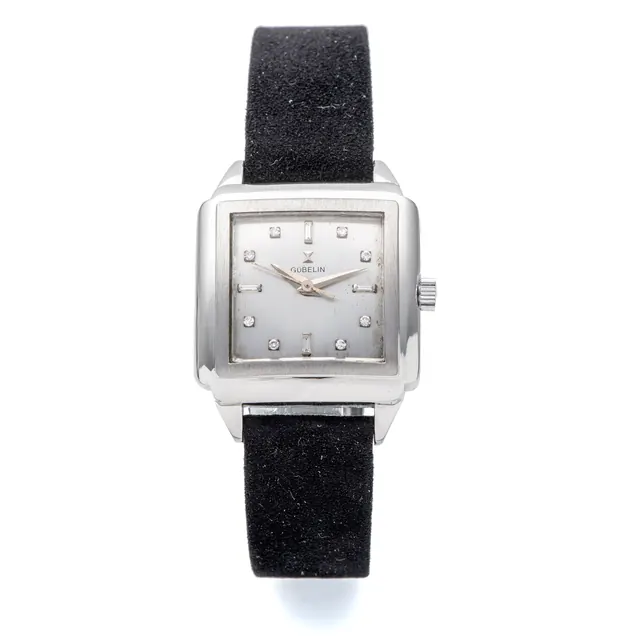
Wristwatches · c. 1955
Gubelin wristwatch, circa 1955
Antiquorum auction archive, Geneva

Wristwatches · 1945
Wristwatch by Eterna, 1945
Museum Rotterdam

Wristwatches · c. 1945
Breitling Premier, ref. 790, c. 1945
Antiquorum auction archive, Geneva

Wristwatches · c. 1945
Universal Genève Uni-Compax, ref. 22492, c. 1945
Antiquorum auction archive, Geneva
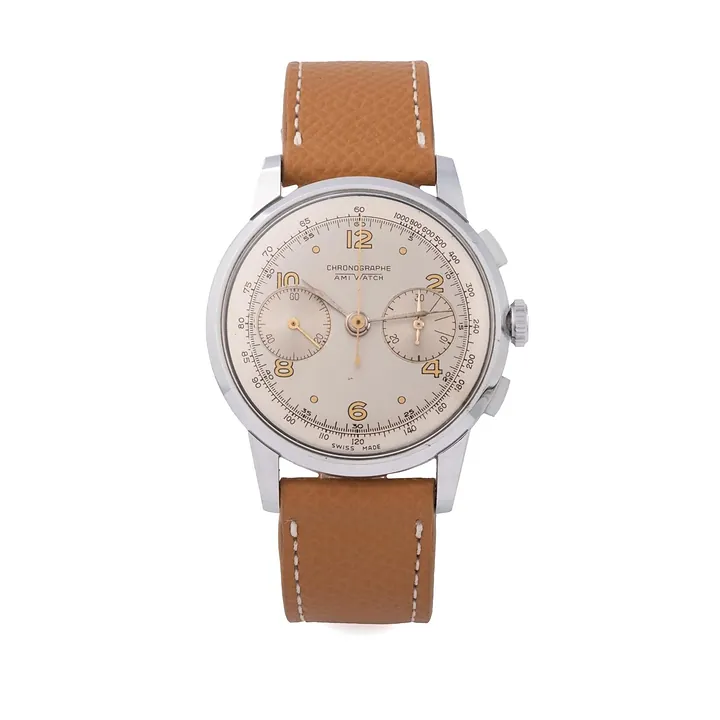
Wristwatches · c. 1950s
Ami Watch Chronographe, c. 1950s
Antiquorum auction archive, Geneva