
Wristwatches · Manual-winding wristwatch
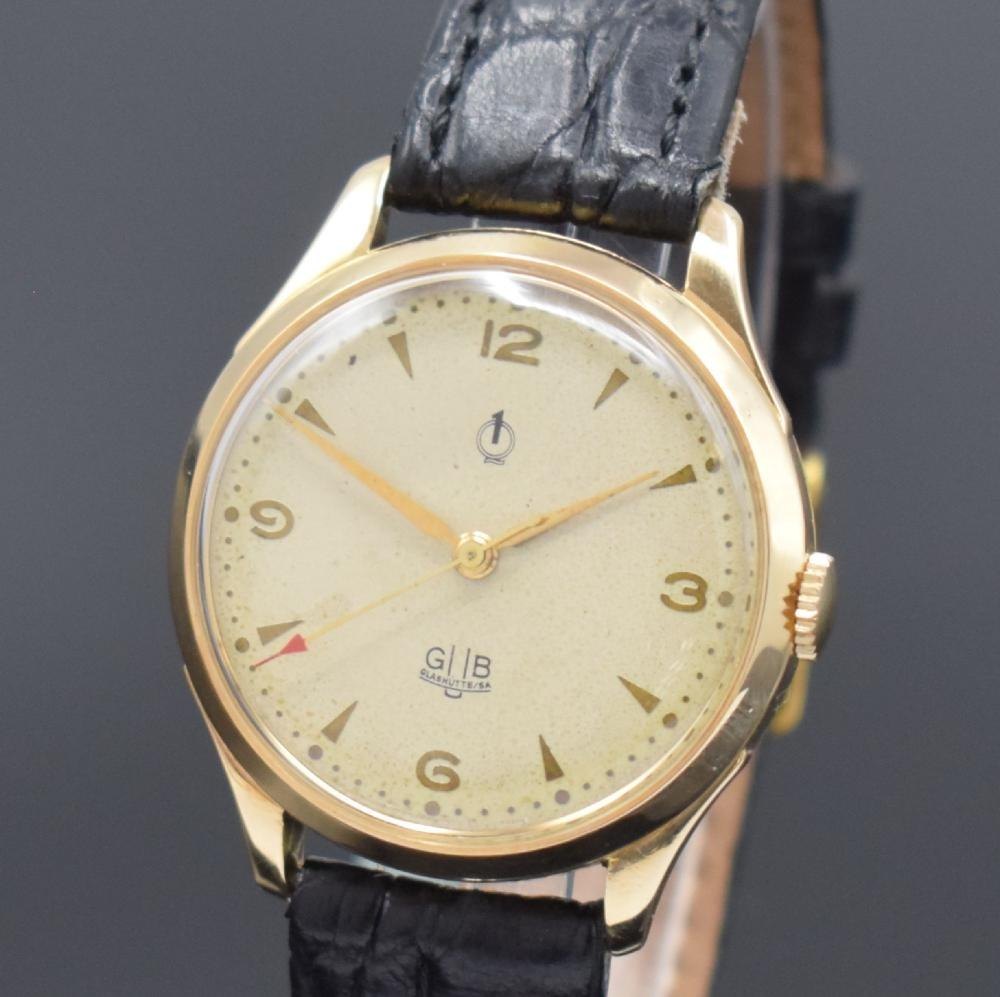
GUB Güteuhr wristwatch with calibre 28/1
- Maker / attribution
- GUB (Glashütter Uhrenbetrieb) (source attribution)
- Date
- 1952–1956
- Historical period
- Modern Mechanical Horology (1945 – 1969)
- Country of origin
- Germany
- Object type
- Manual-winding wristwatch
- Materials / technique
- 14k gold
- Auction house
- Henry's Auktionshaus (via Invaluable)
- Lot
- 3400
- Credit line
- Henry's Auktionshaus (via Invaluable)
- Catalogue title (original)
- GUB Güteuhr with Lange-movement calibre 28/1 (English)
View the source record (auction lot) ↗ (opens another website in a new tab)Suggest a correction
Record summary
Catalogued by Henry's Auktionshaus (via Invaluable) (lot 3400), this is a manual-winding wristwatch attributed to GUB (Glashütter Uhrenbetrieb), made in Germany, dated 1952–1956. The Atlas places it in the Modern Mechanical Horology period (1945 – 1969) of its Wristwatches collection. Materials and techniques recorded by the source: 14k gold. The record is illustrated with 1 photograph.
Assembled from the source record's structured fields. Dates and attributions are given as the source states them; where a field is missing the Atlas leaves it blank rather than estimating.
Catalogue description
Original object description
This GUB Güteuhr wristwatch relies on a hand-wound Lange caliber 28/1 movement. Measuring around 32.5 mm in diameter, the three-piece gold housing utilizes a snap-retained bezel and caseback. The silvered dial carries the marking 'GUB Q1', displays a consistent patina, and is set with gilt alpha hands as well as a central sweep seconds pointer. Finished with a granular silvered texture, the caliber 28/1 mechanism contains 16 jewels. Production registers confirm that between 1952 and 1956, merely 1,437 examples of this caliber were fitted into gold casings. An accompanying archival certificate registers its sale in 1953, while service records show a complete servicing performed in March 2022. The watch is depicted on page 159 of Kurt Herkner's volume 'Glashütter Armbanduhren'.
Case and Dial Construction
Formed from 14k gold in a three-piece design, the case measures approximately 32.5 mm across and utilizes a snap-on caseback and bezel. The exterior exhibits traces of handling, aligning with the condition grade of 2 given in the auction documentation. Showing uniform aging, the silvered dial is inscribed 'GUB Q1' and presents the time using applied triangular markers, quarter-hour Arabic figures, gilded alpha hands, and a central seconds indicator.
Movement and Mechanics
The watch is driven by a 16-jewel manual-wind Lange caliber 28/1, which features a granular, silvered surface finish. Evaluators at auction designated the mechanism with a condition grade of 2-3. Across the 1952–1956 manufacturing window, production of gold-cased models housing caliber 28.1 reached only 1,437 units. A full mechanical restoration of the movement occurred in March 2022.
Provenance and Documentation
Accompanying records feature an official factory extract verifying an initial sale date in 1953, together with a service receipt documenting a mechanical overhaul executed in March 2022. In addition, this specific wristwatch appears on page 159 of the book 'Glashütter Armbanduhren' by Kurt Herkner.
Historical context
Modern Mechanical Horology (1945 – 1969)
Tool watches for divers, pilots and astronauts; electric watches anticipate the electronic age.
The classic era of the mechanical wristwatch: dive watches, chronographs for motor racing and space flight, GMT watches for jet travel, slim dress watches, automatic calendars, and the rise of Japanese manufacturers alongside Swiss, American, German and Soviet industries.
Read the period in the timelineMore wristwatches from this periodEarlier: Golden Age of Mechanical Watchmaking
Atlas type guide
Wristwatches
Bracelet watches were worn by women from the early nineteenth century — Breguet made one for Caroline Murat, Queen of Naples, in 1810–12 — but the wristwatch only became a man's instrument with military use and aviation in the early twentieth century. Between the World Wars it overtook the pocket watch; the 1920s and 1930s brought rectangular Art Deco cases, water-resistant cases and the first automatic winding systems.
After 1945 the wristwatch became a carrier of identity — dress watches, sports and dive watches, chronographs, calendars — produced by Swiss, American, Japanese, German, Soviet and Chinese industries. The quartz revolution after 1969 and the mechanical renaissance since the 1990s, including the rise of independent watchmakers, complete the story.
What to look for
- The reference number (between the lugs or inside the case back) and serial number, the starting point for dating.
- The calibre: its maker and number are often stamped under the dial or on the bridge.
- Originality of dial, hands and crown — refinished ('redial') dials are common.
- Case material marks: 18K/750, 14K/585, stainless steel, gold-filled, plated.
Dating clues
- Wire-lug cases: before c. 1925.
- Water-resistant screw-down cases: from 1926.
- Quartz movements: from 1969; sapphire crystals widespread after c. 1980.
General guidance written by the Atlas editors about this kind of object. It is not a statement about this particular piece; for that, rely on the source record above and on physical examination.
Related records
Wristwatches · c. 1950
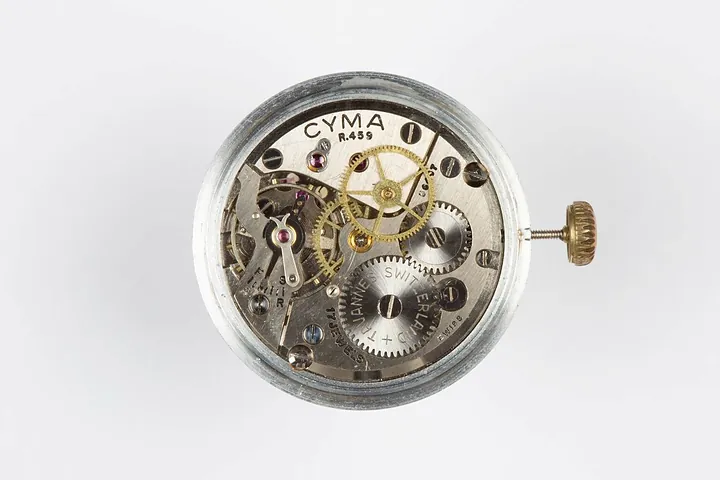
Wristwatch by Tavannes Watch Co., Germany, c. 1950
German Clock Museum
Wristwatches · c. 1958
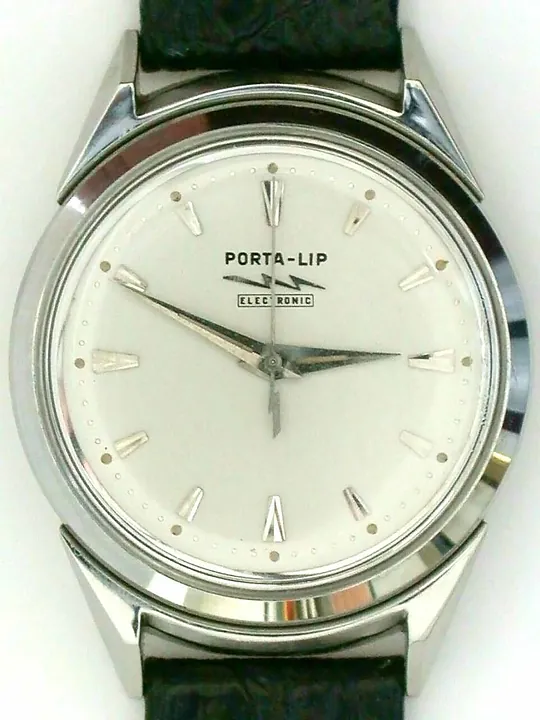
Wristwatch by PUW Pforzheimer Uhrenrohwerke, Germany, c. 1958
German Clock Museum
Wristwatches · c. 1965
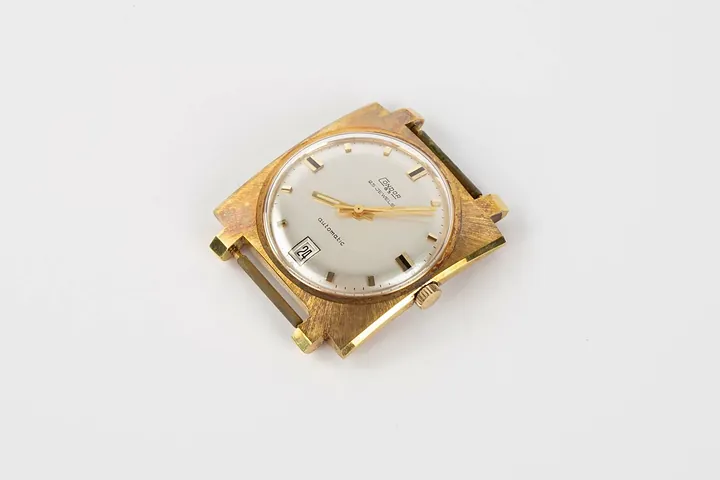
Wristwatch by Condor, Germany, c. 1965
German Clock Museum
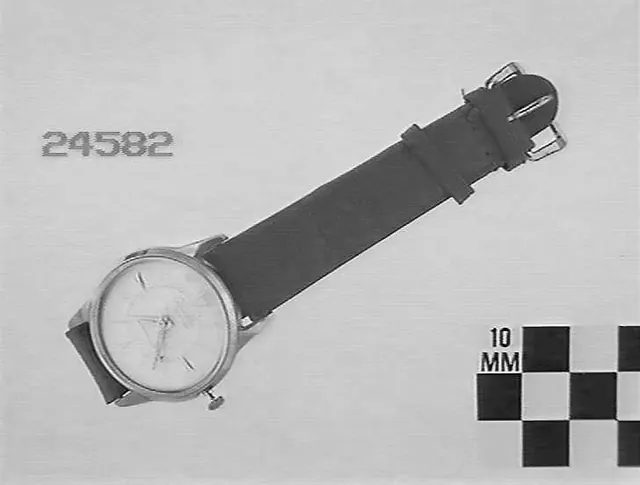
Wristwatches · c. 1959
Wrist Watch - Epperlein Electric, c. 1959
Museums Victoria, Melbourne
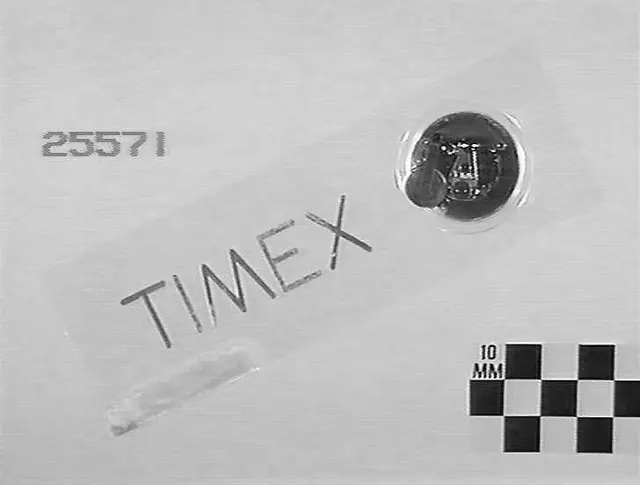
Wristwatches · c. 1964
Wrist Watch Movement - Timex, Electric, Germany, c. 1964
Museums Victoria, Melbourne
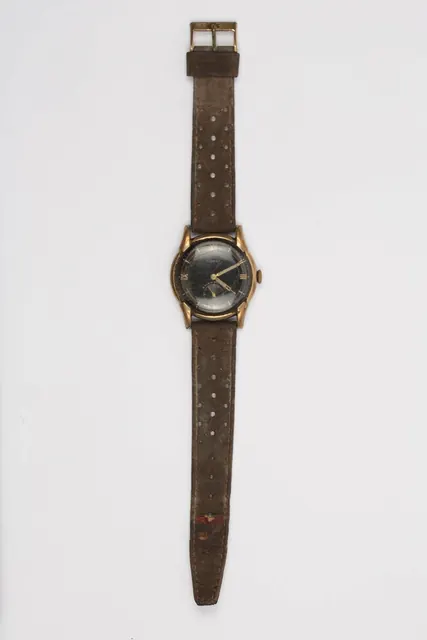
Wristwatches · c. 1960
Wristwatch by Friedrich Mauthe, Germany, c. 1960
German Clock Museum
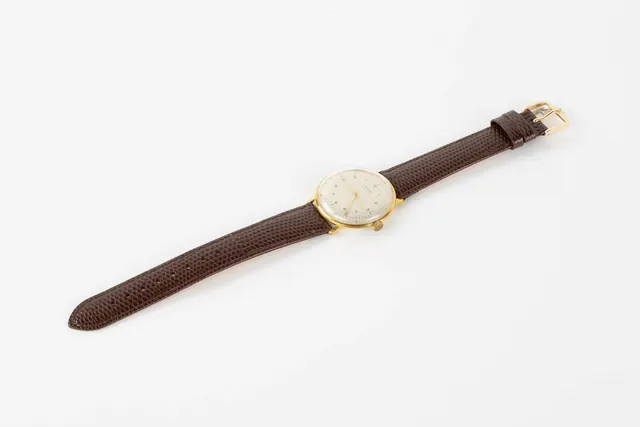
Wristwatches · 1963
Wristwatch by Junghans, Germany, 1963
German Clock Museum
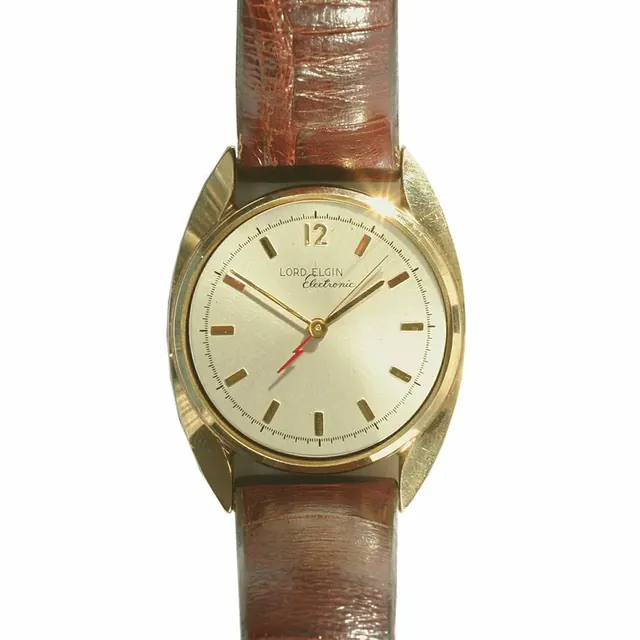
Wristwatches · c. 1962
Wristwatch by Elgin National Watch Company, Germany, c. 1962
German Clock Museum