
Wristwatches · Wristwatch
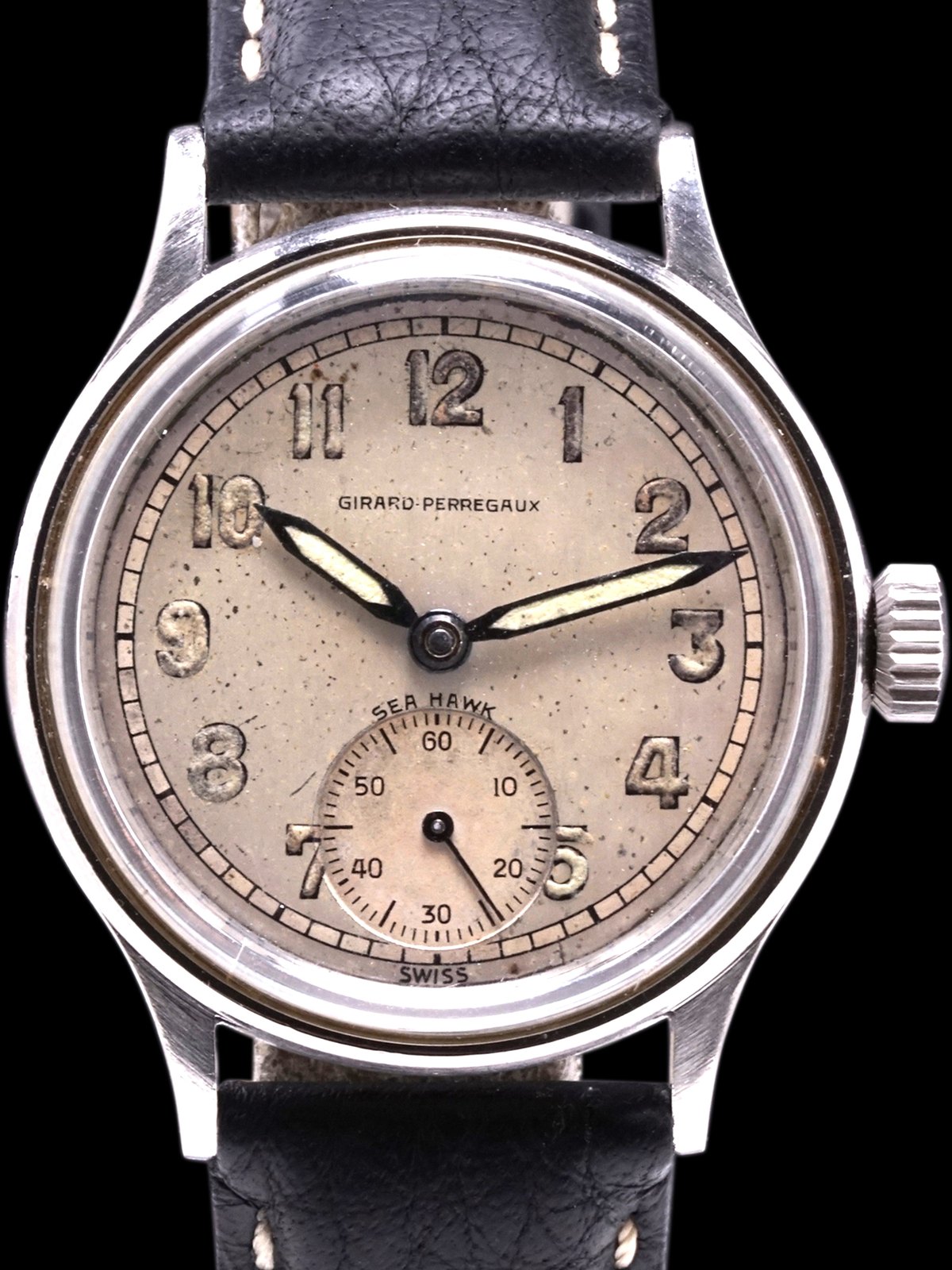
Girard Perregaux Sea-Hawk "Military Style", 1940s
- Maker / attribution
- Girard Perregaux (maker)
- Date
- 1940s
- Historical period
- Golden Age of Mechanical Watchmaking (1900 – 1945)
- Country of origin
- Switzerland
- Object type
- Wristwatch
- Dimensions
- Case 31 mm
- Stock no.
- GRDPRGSH
- Credit line
- Dealer listing, Craft & Tailored (GRDPRGSH)
- Catalogue title (original)
- 1940s Girard Perregaux Sea-Hawk "Military Style" (English)
View the source record (dealer listing) ↗ (opens another website in a new tab)Suggest a correction
Record summary
Catalogued by Craft & Tailored (dealer), Los Angeles (stock number GRDPRGSH), this is a wristwatch by Girard Perregaux, made in Switzerland, dated 1940s. The Atlas places it in the Golden Age of Mechanical Watchmaking period (1900 – 1945) of its Wristwatches collection. Recorded dimensions: Case 31 mm. The record is illustrated with 6 photographs.
Assembled from the source record's structured fields. Dates and attributions are given as the source states them; where a field is missing the Atlas leaves it blank rather than estimating.
Catalogue description
Dealer description — Craft & Tailored
It's no secret Girard Perregaux has a deep lineage within Swiss watchmaking history, unofficially forming at the end of the 17th century and formally being announced as Girard Perregaux & Cie in 1852, and during their time since have created some very worthwhile and interesting watches. The Sea-Hawk has a complicated and long back story, with the range of watches dating back to the 1940s as military issued timepieces and seeing constant change since. At one point the Sea-Hawk was a more formal dress watch for the everyday man to later becoming the premier diving watch for the Girard-Perregaux brand as a whole. SPECS Stock # GRDPRGSH Brand Girard Perregaux Style Sea-Hawk Model Military-Style Manual Wind Watch Serial N/A Size Men's/ Unisex Material SS Dial Tropical Millimeters 31mm Bracelet 2pc Handmade Leather Strap CASE & BRACELET The case consists of two pieces, the inner being the crystal, dial, movement, and case back, the second being the mid-case, bezel, and lugs. The inner portion of the case shows some light corrosion which is common for the watch’s age. The outer portion of the case is in great condition and appears to have been lightly polished in the past, showing symmetrical lugs with almost no signs of use. The case has an unsigned crown which is believed to remain original. The watch will come supplied on a 2pc strap. DIAL & HANDS The warm silver dial with Arabic numeral dial and sub-seconds register has a charming warm coloration and an excellent spotted patina. The radium lume Arabic numerals have taken on a lovely ivory patina which feature some dark spots and show only minimal degradation. The original hands match the dial nicely and exhibit no degradation. ACCESSORIES None. The watch is functioning and keeping time perfectly, previous service history is unknown.
Historical context
Golden Age of Mechanical Watchmaking (1900 – 1945)
The wristwatch displaces the pocket watch; waterproof cases, self-winding and grand complications.
The wristwatch overtook the pocket watch. Military use in the First World War, aviation, water-resistant cases (1926), automatic winding (1923–31), rectangular Art Deco designs and early chronographs and calendars defined the period.
Read the period in the timelineMore wristwatches from this periodEarlier: Industrial Revolution
Atlas type guide
Military, pilot and travel watches
The wristwatch owes much of its adoption by men to warfare and aviation. Wristlets — small pocket watches soldered with lugs and worn on a strap — were used in colonial campaigns and became standard equipment in the First World War, with protective grilles over the crystal ('shrapnel guards'). Louis Cartier's Santos (1904), designed for the aviator Alberto Santos-Dumont, is often cited as an early purpose-made pilot's watch.
In the Second World War governments specified watches in detail: the German B-Uhr observation watches, the American A-11, and the British 'W.W.W.' (the 'Dirty Dozen' set of 1945). After the war, jet travel brought GMT and world-time watches, which show two or more time zones at once — Louis Cottier's world-time mechanism and the Rolex GMT-Master (1955) are examples.
What to look for
- Military markings on the case back: broad arrow, issue numbers, 'W.W.W.', 'A.T.P.'
- High-legibility black dials with luminous Arabic numerals; oversized crowns for gloved hands.
- 24-hour hands and rotating 24-hour bezels or city rings on GMT/world-time watches.
- Wire lugs on early wristlets converted from pocket watches.
Dating clues
- Wire-lug wristlets: c. 1900–1925.
- Military specifications of the Second World War: 1939–1945.
- GMT and world-time wristwatches: mainly after 1950.
General guidance written by the Atlas editors about this kind of object. It is not a statement about this particular piece; for that, rely on the source record above and on physical examination.
Related records
Pocket Watches · c. 1998
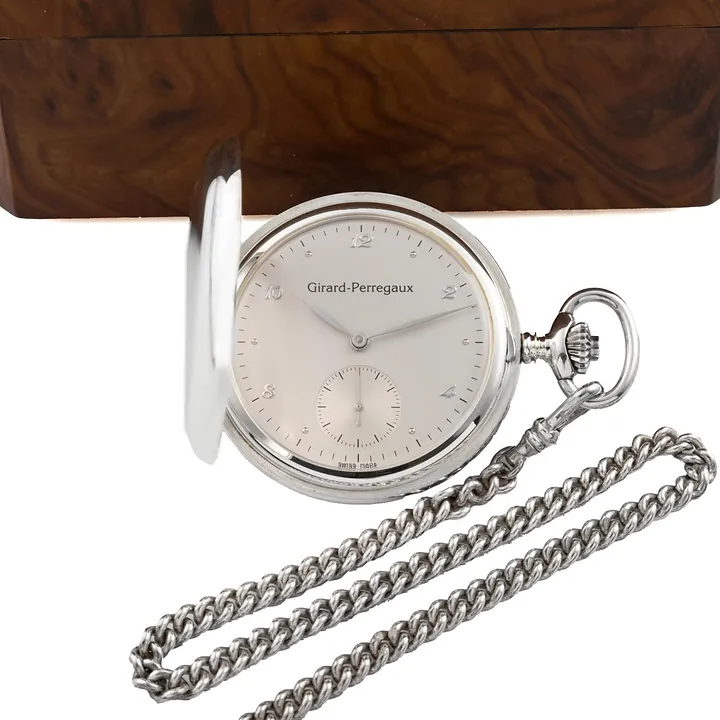
Girard Perregaux pocket watch, c. 1998
Antiquorum auction archive, Geneva
Wristwatches · c. 2000s
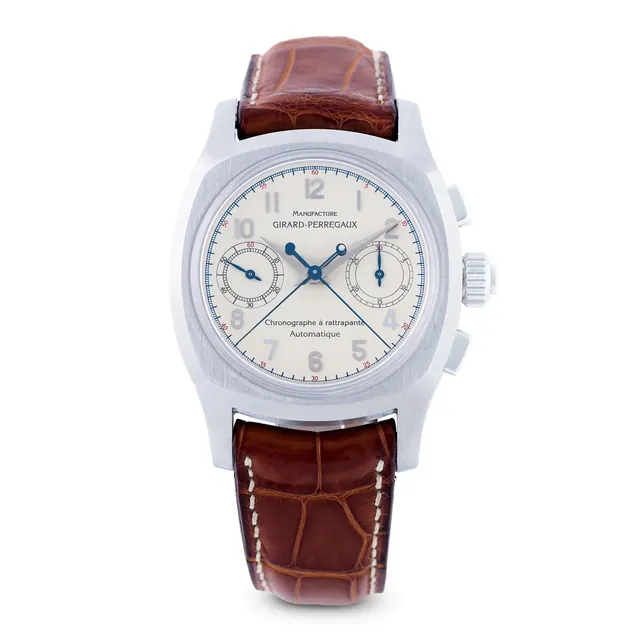
Girard Perregaux wristwatch, ref. 9012, Split-Second Chronograph, circa 2000s
Antiquorum auction archive, Geneva
Wristwatches · c. 1991
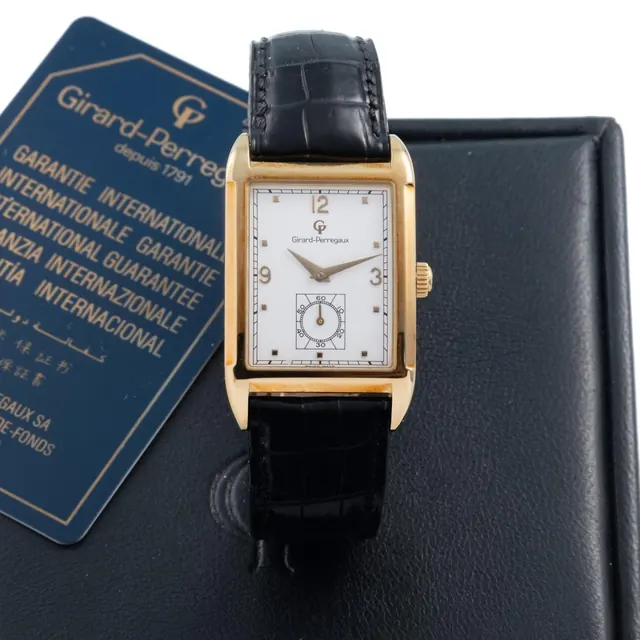
Girard Perregaux wristwatch, ref. 4961, Anno 1991, circa 1991
Antiquorum auction archive, Geneva
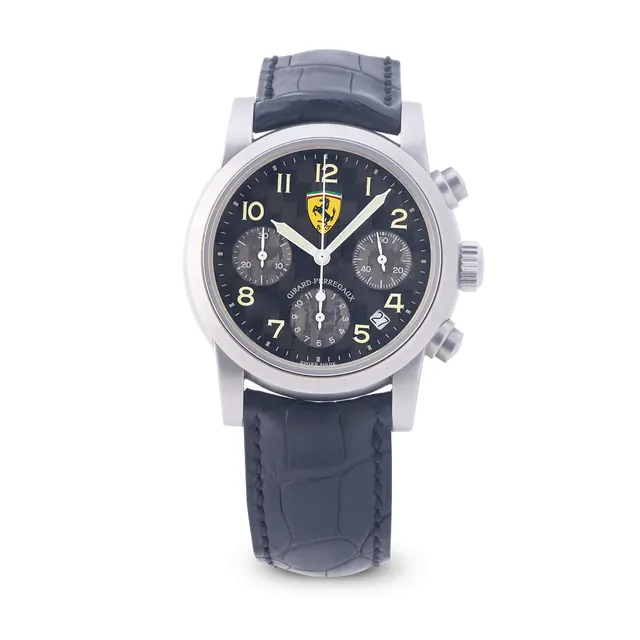
Wristwatches · c. 1990s
Girard Perregaux wristwatch, ref. 8020, Ferrari Chronograph, circa 1990s
Antiquorum auction archive, Geneva

Wristwatches · 1931
Rolex 'Oyster Perpetual' rotor self-winding wrist-watch, lever escapement, in steel case with glass in back, Montres Rolex SA, Geneva, Switzerland, 1931
Science Museum Group, London

Wristwatches · 1900–1999
Wristwatch by Certina, Switzerland, 1900–1999
Nordic Museum Foundation
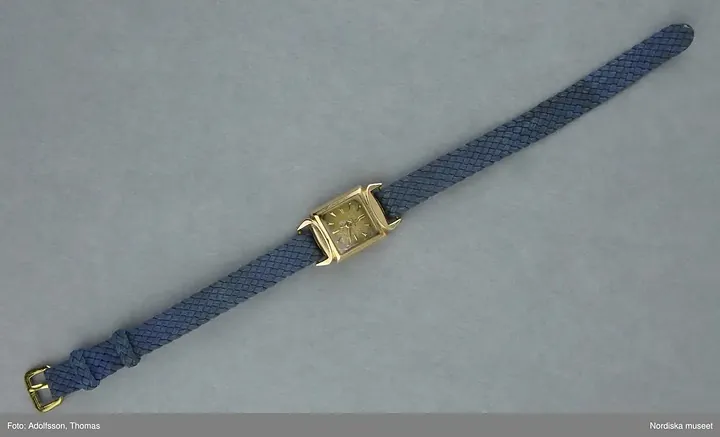
Wristwatches · 1900–1999
Wristwatch by Omega, Västerås, 1900–1999
Nordic Museum Foundation
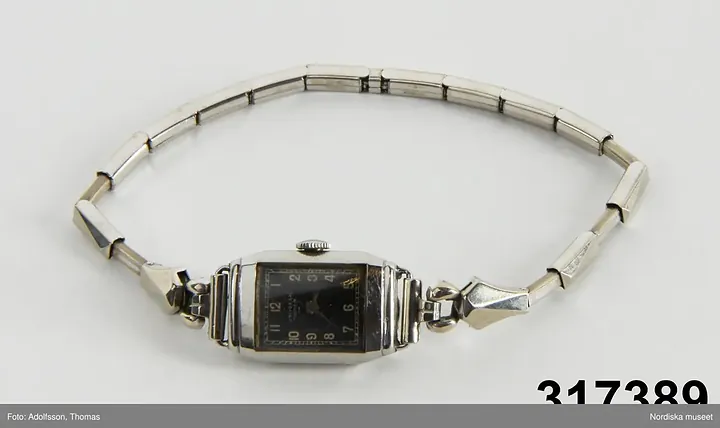
Wristwatches · 1900–1999
Wristwatch by Universal, Switzerland, 1900–1999
Nordic Museum Foundation