
Pocket Watches · Pendant watch
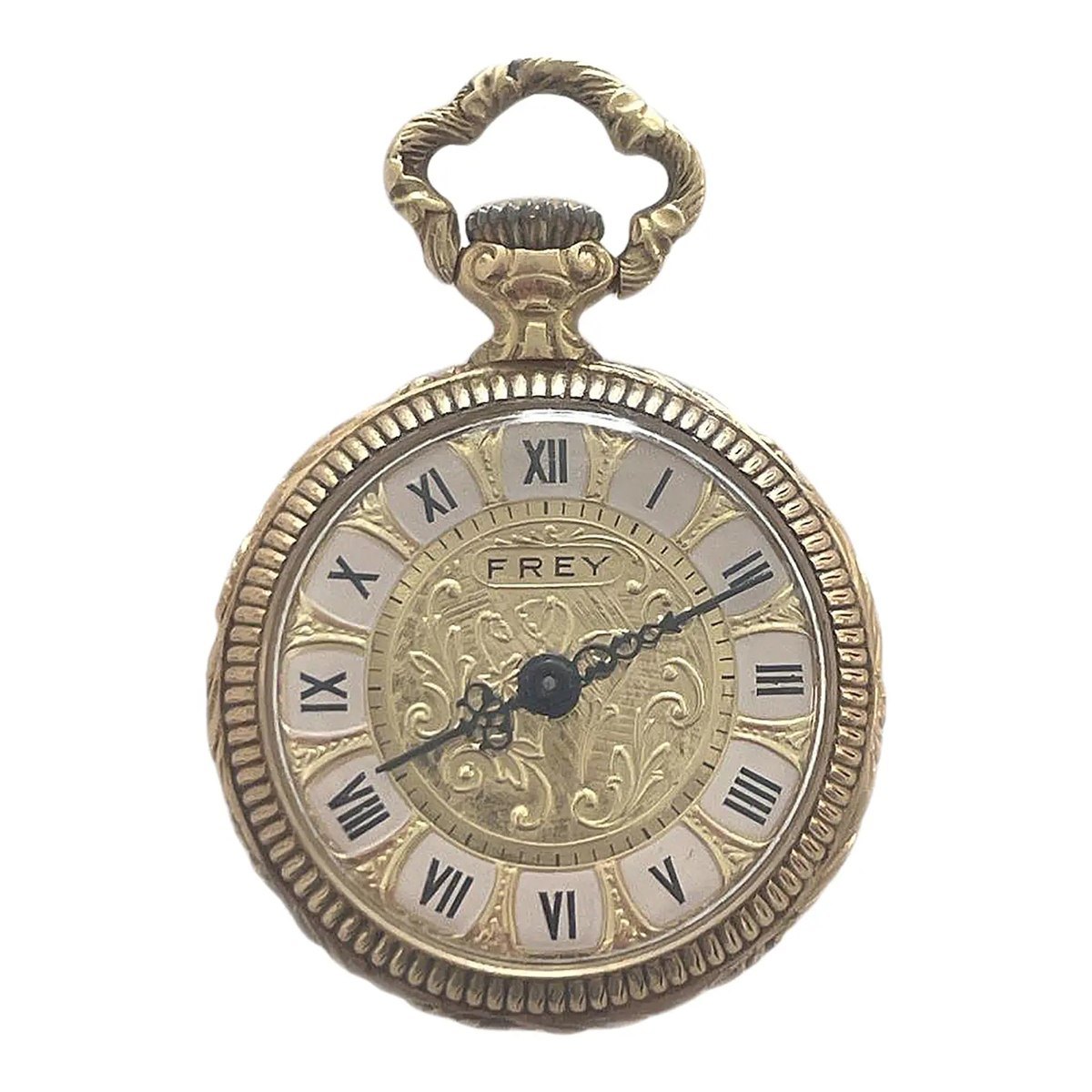
Frey Pendant Pocket Watch
- Maker / attribution
- Frey (source attribution)
- Date
- 1960s
- Historical period
- Modern Mechanical Horology (1945 – 1969)
- Country of origin
- Switzerland
- Object type
- Pendant watch
- Dimensions
- 24 mm
- Holding institution
- Chairish
- Accession / object no.
- 31670768
- Credit line
- Chairish
- Catalogue title (original)
- Vintage Frey Pendant Pocket Watch Repousse Case 18k Yellow Gold | Chairish (English)
View the source record ↗ (opens another website in a new tab)Suggest a correction
Record summary
Held and catalogued by Chairish (object number 31670768), this is a pendant watch attributed to Frey, made in Switzerland, dated 1960s. The Atlas places it in the Modern Mechanical Horology period (1945 – 1969) of its Pocket Watches collection. Recorded dimensions: 24 mm. The record is illustrated with 1 photograph.
Assembled from the source record's structured fields. Dates and attributions are given as the source states them; where a field is missing the Atlas leaves it blank rather than estimating.
Catalogue description
Original object description
Evoking an antique design aesthetic, this pendant watch by Frey is attributed by dealer records to the 1960s with Swiss manufacture. Its circular repoussé case is crafted in 18k yellow gold, measuring 24 mm in diameter, 4 mm in thickness, and 28 mm in height including the crown, with a total weight of 14.10 grams. According to the seller, it contains a Swiss hand-wound movement. The dial is chased with central foliate decoration surrounded by radial cartouches containing black Roman numerals, swept by ornate dark hands.
Object Identity and Construction
Attributed to the maker Frey and assigned a 1960s date by the seller, this pendant timepiece displays an antique-inspired appearance. Its 18k yellow gold repoussé case measures 24 mm across, 4 mm deep, and 28 mm tall over the winding crown, with an overall weight of 14.10 grams.
Dial and Aesthetic Features
The center of the dial displays an engraved leaf and flower motif, with the name 'FREY' inscribed within an individual cartouche beneath the XII mark. Black Roman numerals are set into radial cartouche reserves and indicated by stylized dark hands. The case exterior includes a ribbed bezel and a sculpted pendant bow.
Condition and Attribution
The watch relies on a Swiss-made, hand-wound caliber according to seller statements, though the mechanism is not depicted in available photographs. Traces of wear are present on the winding crown. Documentation contains no record of case back markings, internal stamps, or hallmarks.
Historical context
Modern Mechanical Horology (1945 – 1969)
Tool watches for divers, pilots and astronauts; electric watches anticipate the electronic age.
After 1945 the pocket watch became a niche product — presentation and railway watches, inexpensive pin-lever watches, and commemorative pieces — while most innovation moved to the wrist.
Read the period in the timelineMore pocket watches from this periodEarlier: Golden Age of Mechanical Watchmaking
Atlas type guide
Early spring-driven watches
Portable spring-driven timepieces appeared in southern Germany, France and Italy in the early sixteenth century; Peter Henlein of Nuremberg is traditionally credited, although the historical record is complex. These early watches were worn as pendants or carried, had iron or brass movements with a verge escapement and a foliot or small balance, and used a stackfreed or fusee to equalise spring force. They indicated hours only and were notoriously inaccurate.
From the later sixteenth century watches were made in Blois, Paris, Geneva, London and Augsburg in oval, octagonal, cruciform, skull and other 'form' cases of rock crystal, gilt brass, silver and enamel. They were jewellery and status objects as much as timekeepers.
What to look for
- A single hour hand and often a touch-pin hour ring for feeling the time.
- Stackfreed (a cam and spring) instead of a fusee on German watches.
- Pierced and engraved cocks over the balance, fine gut fusee lines.
- Rock-crystal, enamelled or engraved form cases.
Dating clues
- Drum-shaped German watches: c. 1530–1580.
- Oval and form watches: c. 1580–1650.
- Before c. 1675 there is no balance spring; watches can vary by many minutes a day.
General guidance written by the Atlas editors about this kind of object. It is not a statement about this particular piece; for that, rely on the source record above and on physical examination.
Related records
Pocket Watches · c. 1945
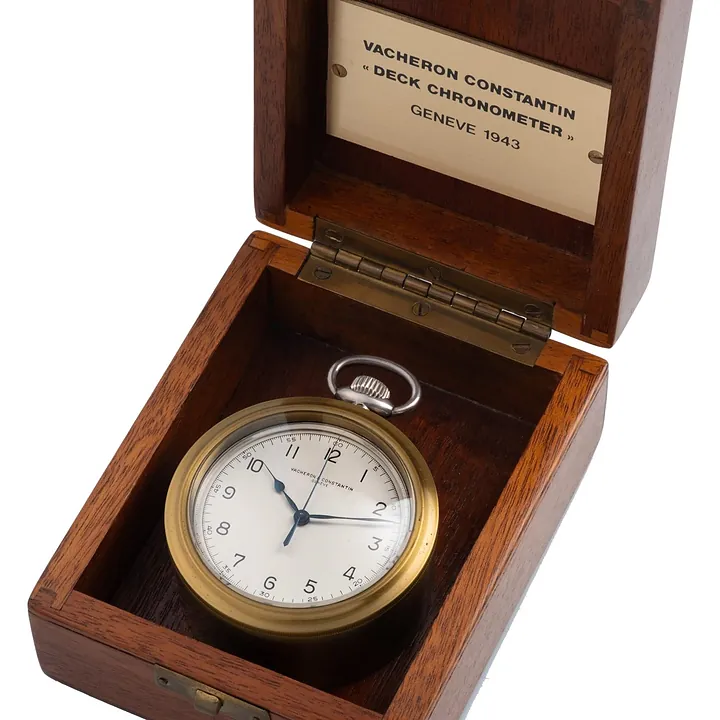
Vacheron Constantin pocket chronometer, c. 1945
Antiquorum auction archive, Geneva
Pocket Watches · c. 1945
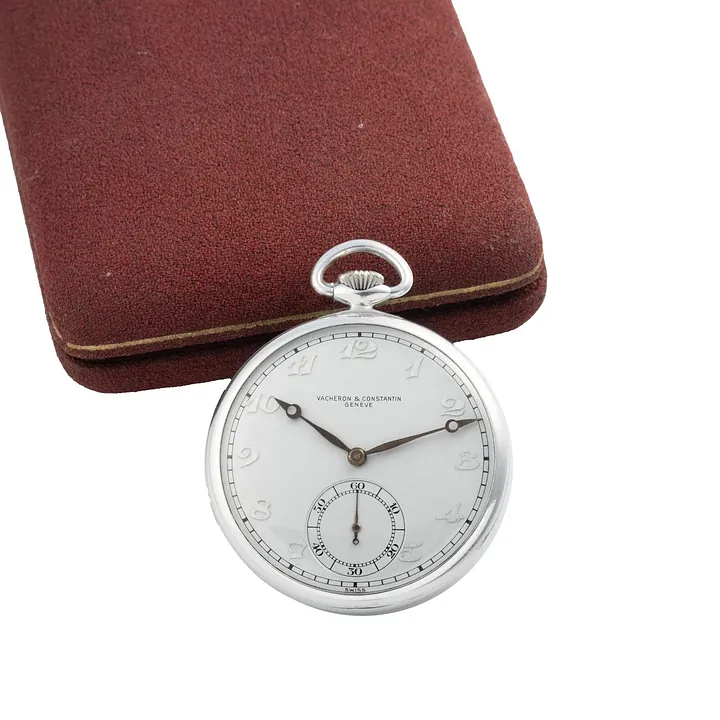
Vacheron Constantin watch, c. 1945
Antiquorum auction archive, Geneva
Pocket Watches · Sold to Longines France in January 1946
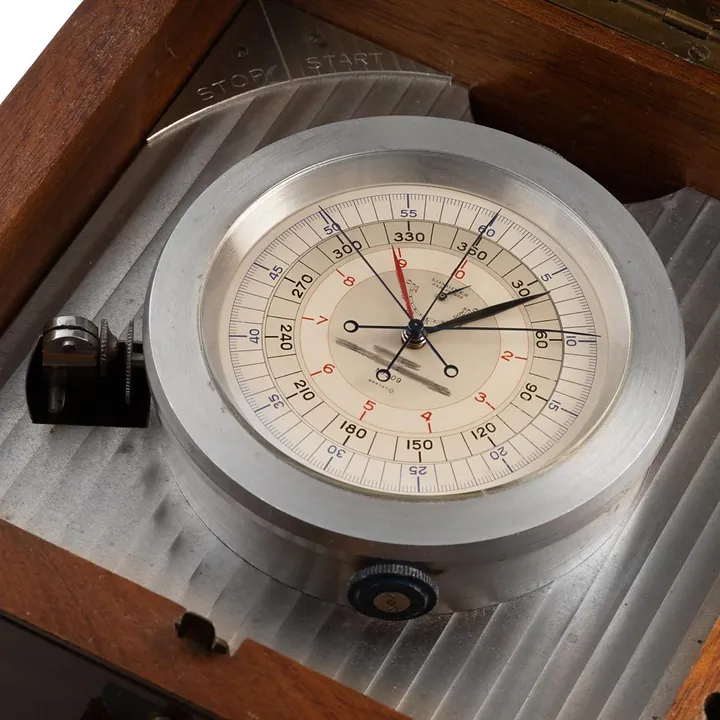
Longines Siderograph, ref. 5397, Sold to Longines France in January 1946
Antiquorum auction archive, Geneva
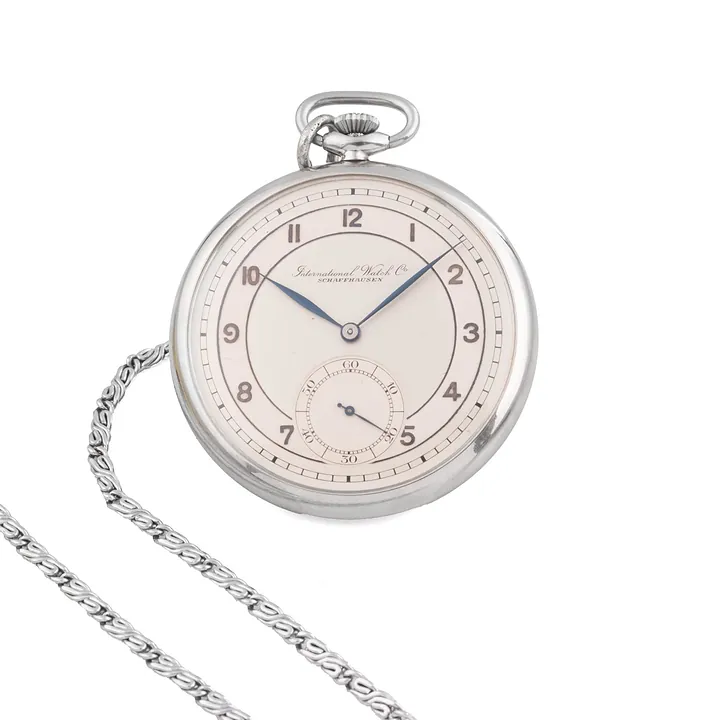
Pocket Watches · c. 1950
IWC Pocket Watch, c. 1950
Antiquorum auction archive, Geneva
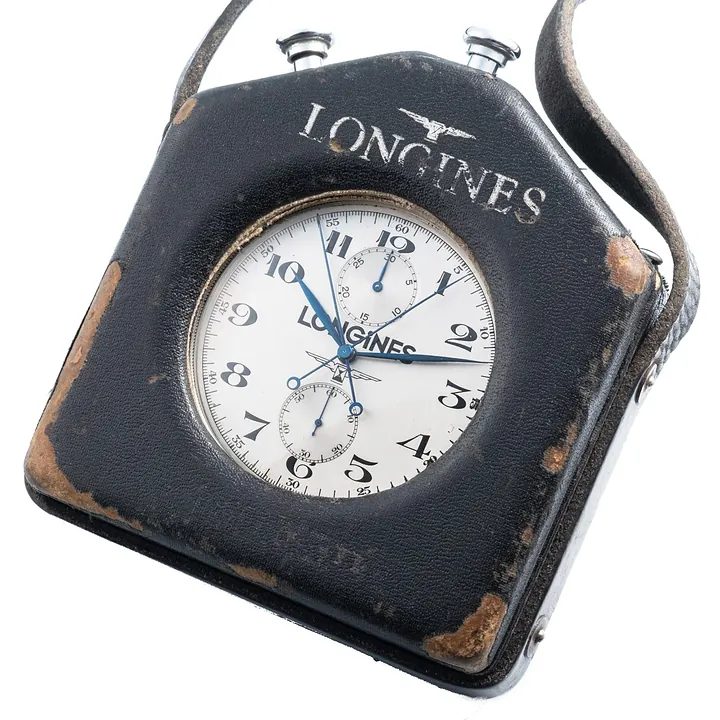
Pocket Watches · c. 1950
Longines pocket watch, ref. 4507, c. 1950
Antiquorum auction archive, Geneva
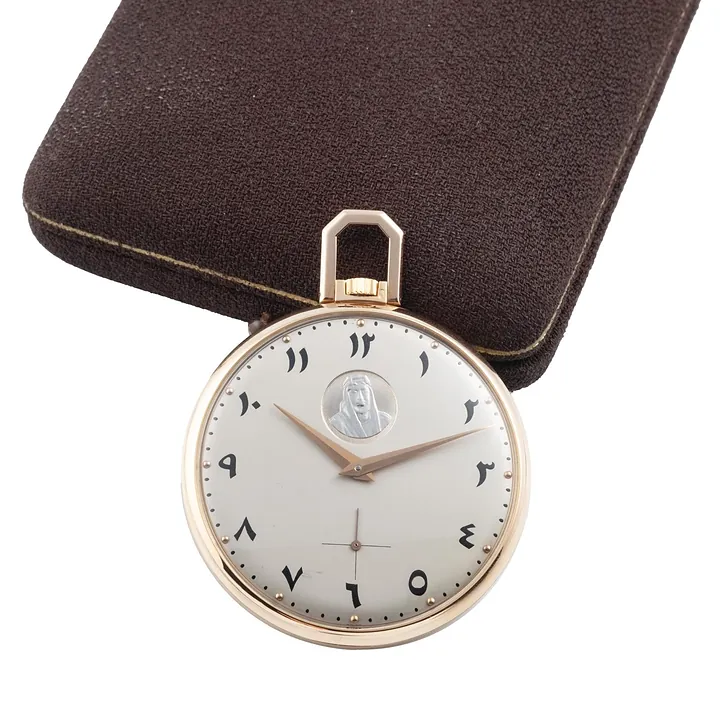
Pocket Watches · c. 1950s
Universal Genève pocket watch, ref. 11746 3/ 11746 1, c. 1950s
Antiquorum auction archive, Geneva
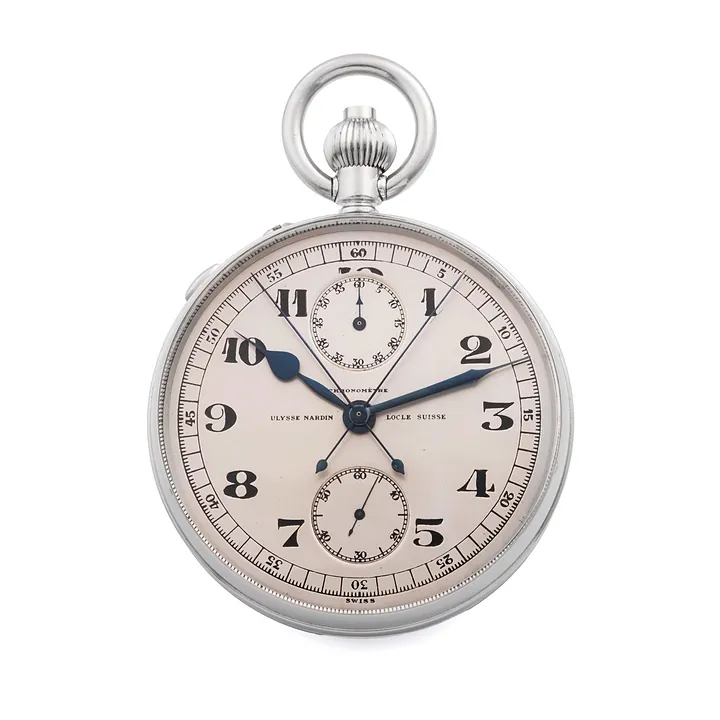
Pocket Watches · c. 1955
Ulysse Nardin Chronometer, c. 1955
Antiquorum auction archive, Geneva

Pocket Watches · c. 1960
Audemars Piguet ''couteau'', c. 1960
Antiquorum auction archive, Geneva