
Clocks · Clock
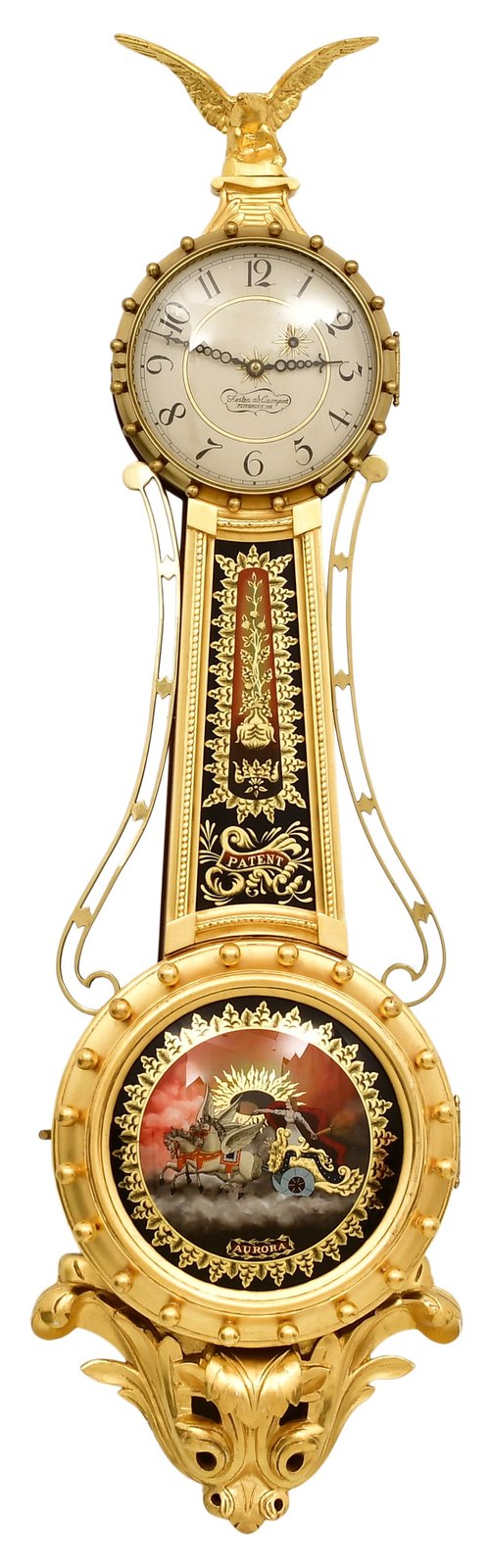
Foster Campos Girandole Banjo Clock, Pembroke, Massachusetts, c. 1991
- Maker / attribution
- Unrecorded in source
- Date
- c. 1991
- Historical period
- Mechanical Renaissance (1990 – 2010)
- Country of origin
- United States
- Object type
- Clock
- Materials / technique
- glass
- Auction house
- LiveAuctioneers auction archive
- Lot
- Item 202748723
- Credit line
- Auction lot record: lot 46, American & European Timepieces, Fontaine's Auction Gallery (2025), via LiveAuctioneers
- Catalogue title (original)
- Foster Campos Girandole Banjo Clock, Pembroke, Massachusetts (English)
View the source record (auction lot) ↗ (opens another website in a new tab)Suggest a correction
Record summary
Catalogued by LiveAuctioneers auction archive (lot Item 202748723), this is a clock, made in United States, dated c. 1991. The Atlas places it in the Mechanical Renaissance period (1990 – 2010) of its Clocks collection. Materials and techniques recorded by the source: glass. The record is illustrated with 4 photographs.
Assembled from the source record's structured fields. Dates and attributions are given as the source states them; where a field is missing the Atlas leaves it blank rather than estimating.
Catalogue description
Lot description — Fontaine's Auction Gallery
Foster Campos Girandole Banjo Clock, Pembroke, Massachusetts circa 1991 elaborate Girandole presentation banjo case with a large eagle and acanthus bracket, bottom glass painted with a scene of Aurora (goddess of dawn), 8-day time only weight driven movement, signed on the movement and dial, tablet signed "Moberg," case stamped "91" (1991) and "3" 45 x 13 x 5 inches
Historical context
Mechanical Renaissance (1990 – 2010)
Mechanical watches return as cultural objects; independent watchmaking flourishes.
Mechanical clocks returned as luxury and craft objects, alongside radio-controlled and designer quartz clocks. Independent makers and restorers revived traditional techniques, and museums increasingly documented industrial and electric clocks as heritage.
Read the period in the timelineMore clocks from this periodEarlier: Quartz Revolution
Atlas type guide
Domestic clocks
A clock combines four systems: a source of power (falling weight, coiled spring, or later electricity), a gear train that divides time, an escapement and oscillator that regulate it (foliot, pendulum or balance), and an indicating system of dial and hands or a bell. Its history runs from the large iron weight-driven clocks of the late thirteenth century to Renaissance spring-driven table clocks, the pendulum revolution of 1656, the factory clocks of the nineteenth century and electric and quartz clocks of the twentieth.
Domestic clocks also reflect regional furniture and decorative traditions — English longcase and bracket clocks, French pendules, Viennese regulators, Black Forest and American shelf clocks — and therefore record changing tastes as much as technical progress.
What to look for
- How the clock is powered: weights, spring barrel, fusee, electric coil.
- The oscillator: foliot, short pendulum, long seconds pendulum or balance.
- Whether it strikes: hour only (count wheel) or hours and quarters (rack striking).
- The maker or retailer's name on dial and movement, and any factory trademarks.
- Signs of alteration — replaced dials, converted escapements, 'married' cases.
Dating clues
- Before 1656 clocks used foliots or balances; after, most domestic clocks have pendulums.
- Anchor escapements spread after c. 1670; minute hands became common at the same time.
- Factory production in America and Germany transformed prices after c. 1840.
General guidance written by the Atlas editors about this kind of object. It is not a statement about this particular piece; for that, rely on the source record above and on physical examination.
Related records
Clocks · 2004
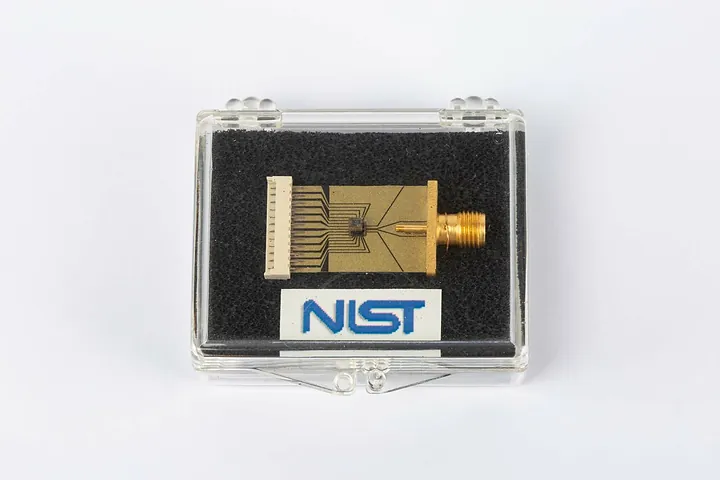
Electric clock by National Institute of Standards and Technology (NIST), United States, 2004
German Clock Museum
Clocks · c. 1990
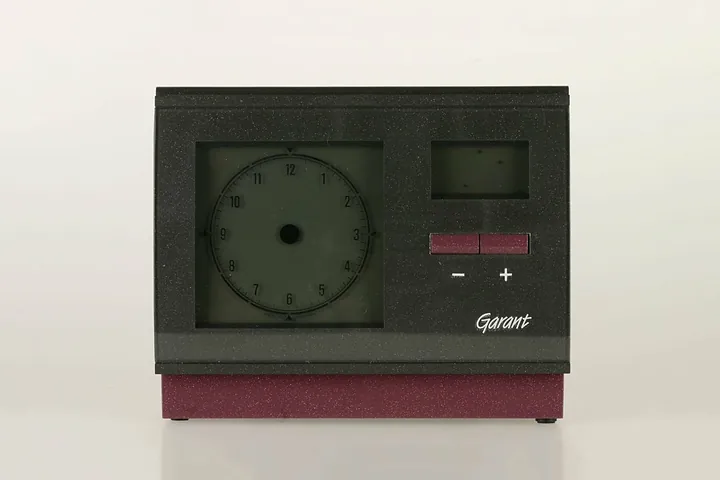
Alarm clock by Andreas GmbH und Co. Haller, Germany, c. 1990
German Clock Museum
Clocks · c. 1990s
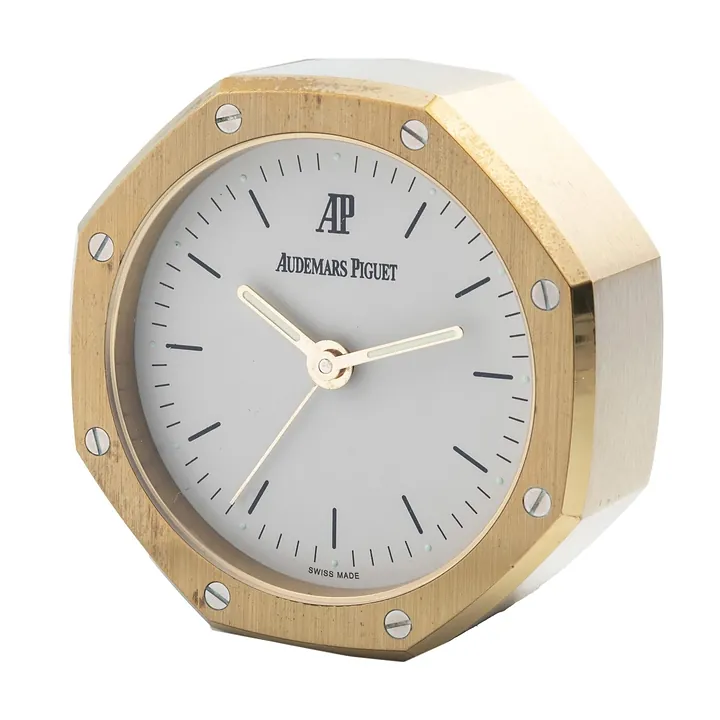
Audemars Piguet Royal Oak, c. 1990s
Antiquorum auction archive, Geneva

Clocks · c. 1990s
Breitling clock, c. 1990s (Antiquorum Lot 389-18)
Antiquorum auction archive, Geneva
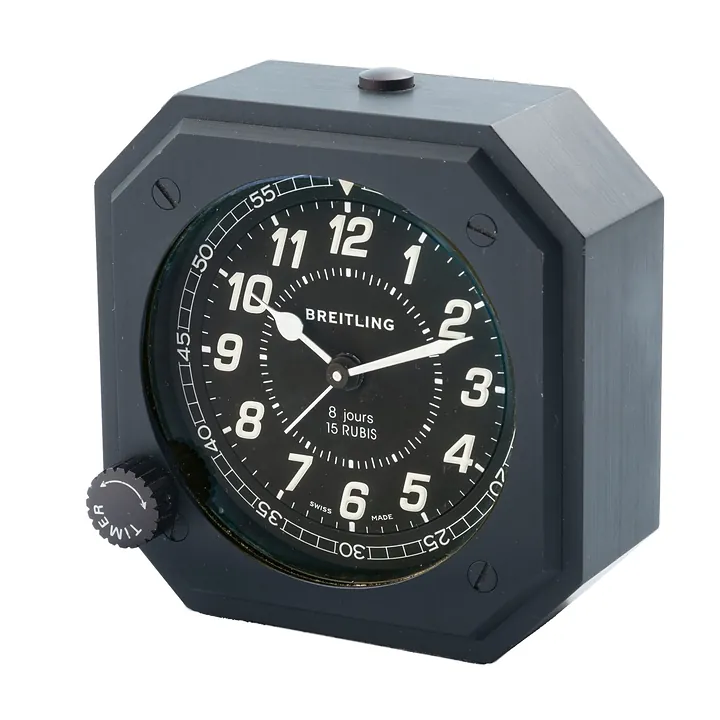
Clocks · c. 1990s
Breitling clock, c. 1990s (Antiquorum Lot 389-20)
Antiquorum auction archive, Geneva
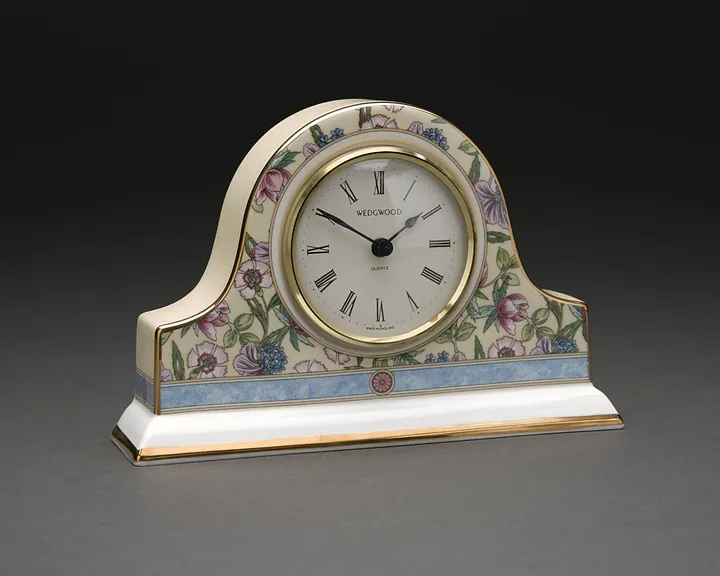
Clocks · c. 1995
Clock, Bone China with transfer printing, Josiah Wedgwood and Sons, Barlaston, c. 1995 (V&A WE.18792-2014)
Victoria and Albert Museum, London
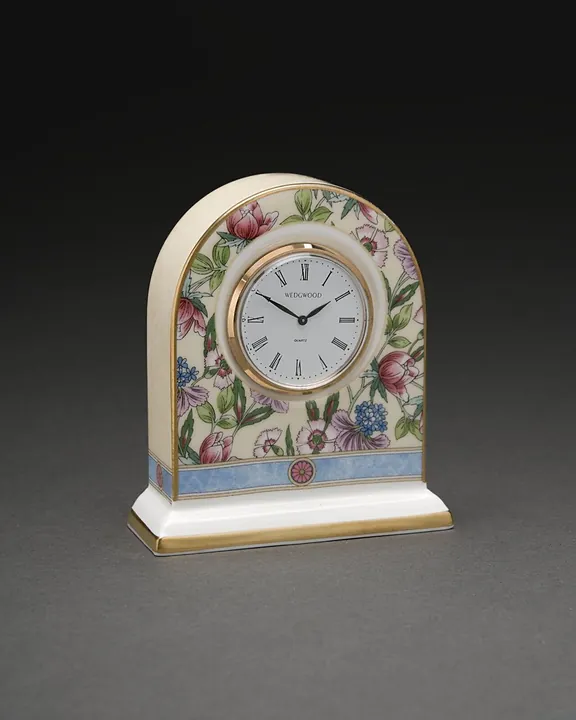
Clocks · c. 1995
Clock, Bone China with transfer printing, Josiah Wedgwood and Sons, Barlaston, c. 1995 (V&A WE.18793-2014)
Victoria and Albert Museum, London
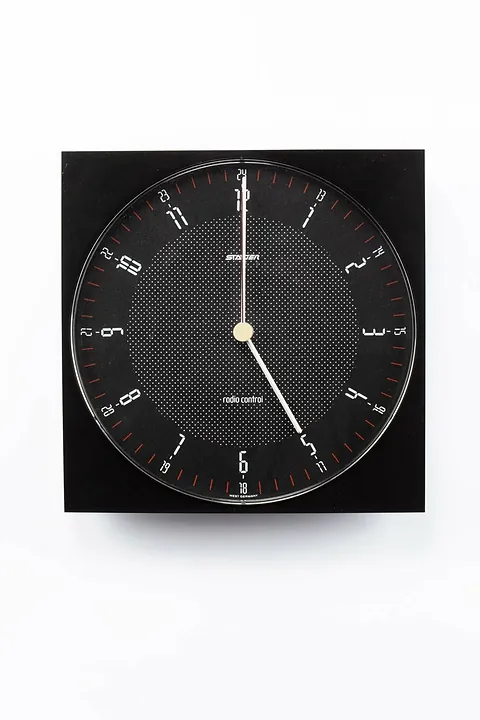
Clocks · c. 1990
Electric clock by Werner Staiger, Germany, c. 1990
German Clock Museum