
Clocks · Clock
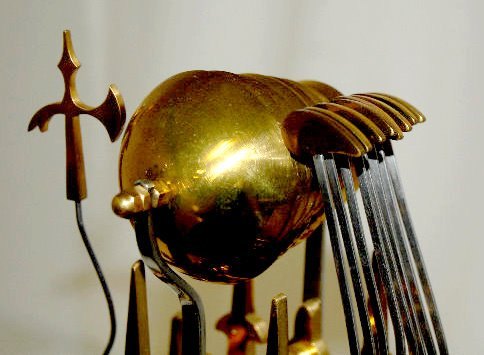
English Triple Fusee Skeleton Clock, circa 1970's
- Maker / attribution
- Unrecorded in source
- Date
- c. 1970
- Historical period
- Quartz Revolution (1969 – 1990)
- Country of origin
- England
- Object type
- Clock
- Auction house
- LiveAuctioneers auction archive
- Lot
- Item 20610494
- Credit line
- Auction lot record: lot 75, 92nd Gene Harris Antique Clock Auction, Tom Harris Auctions (2013), via LiveAuctioneers
- Catalogue title (original)
- English Triple Fusee Skeleton Clock, Circa 1970's (English)
View the source record (auction lot) ↗ (opens another website in a new tab)Suggest a correction
Record summary
Catalogued by LiveAuctioneers auction archive (lot Item 20610494), this is a clock, made in England, dated c. 1970. The Atlas places it in the Quartz Revolution period (1969 – 1990) of its Clocks collection. The record is illustrated with 3 photographs.
Assembled from the source record's structured fields. Dates and attributions are given as the source states them; where a field is missing the Atlas leaves it blank rather than estimating.
Catalogue description
Lot description — Tom Harris Auctions
English Triple Fusee Skeleton Clock, Circa 1970's: Produced by Classic Clocks (Clerkenwell) Limited, circa 1970's. Cathedral style with 8 bells and hammers for the musical tones and a pike for striking the time. Comes with complete assembly instructions. (The clock does not run at this time.) Dome - 18 1/2" Tall; Clock w/dome - 21 2/4" Tall Sells as is, where is. ** Please note, this item ships F.O.B. which means you, the buyer, must make all of your own packing and shipping arrangements.
Historical context
Quartz Revolution (1969 – 1990)
Seiko's Astron begins mass quartz timekeeping; traditional industries contract sharply.
Quartz movements and digital displays made accurate clocks cheap and ubiquitous after the early 1970s. LED and LCD clocks, clock radios and radio-controlled clocks appeared, while traditional mechanical clockmaking contracted sharply in Germany, France and Britain.
Read the period in the timelineMore clocks from this periodEarlier: Modern Mechanical Horology
Atlas type guide
Skeleton clocks
A skeleton clock displays its movement: the plates are pierced to a minimum so that wheels, escapement and fusee can be seen, usually under a glass dome. French makers produced fine skeleton clocks in the late eighteenth century; in Victorian England they became popular showpieces, with frames in the shapes of cathedrals and famous buildings.
What to look for
- Pierced brass plates in scroll or architectural shapes.
- A glass dome and wooden or marble base.
- Fusee movements and sometimes passing strike on a bell.
Dating clues
- French skeleton clocks: c. 1780–1830.
- English cathedral-style skeleton clocks: c. 1840–1890.
General guidance written by the Atlas editors about this kind of object. It is not a statement about this particular piece; for that, rely on the source record above and on physical examination.
Read next:Anchor (recoil) escapement
Related records
Clocks · late 20th century
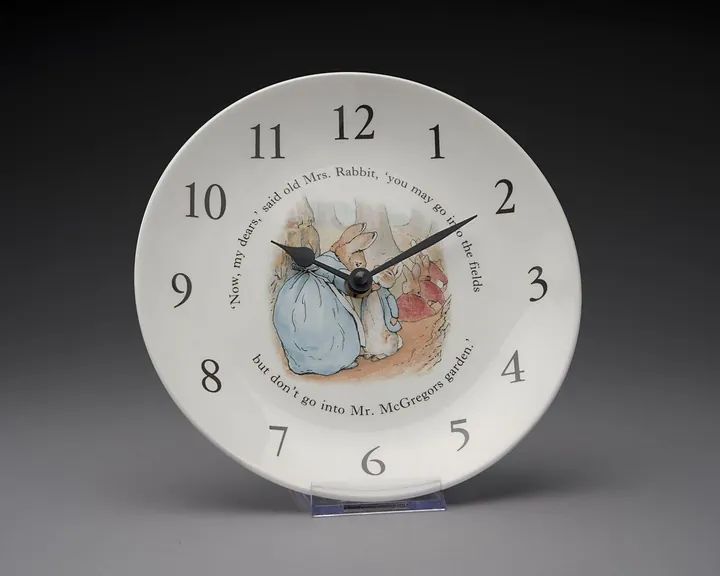
Clock, 'Peter Rabbit', Queen's ware, transfer printing, Josiah Wedgwood and Sons, Barlaston, late 20th century (V&A WE.17466-2014)
Victoria and Albert Museum, London
Clocks · late 20th century
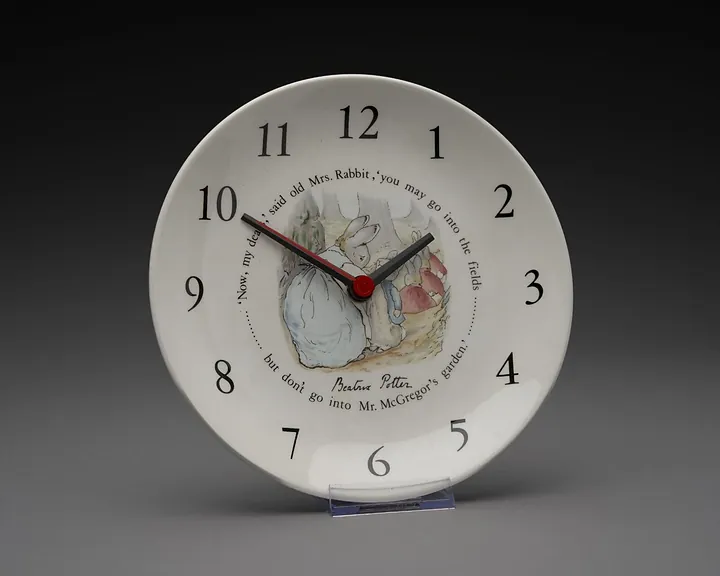
Clock, 'Peter Rabbit', Queen's ware, transfer printing, Josiah Wedgwood and Sons, Barlaston, late 20th century (V&A WE.18029-2014)
Victoria and Albert Museum, London
Clocks · late 20th century
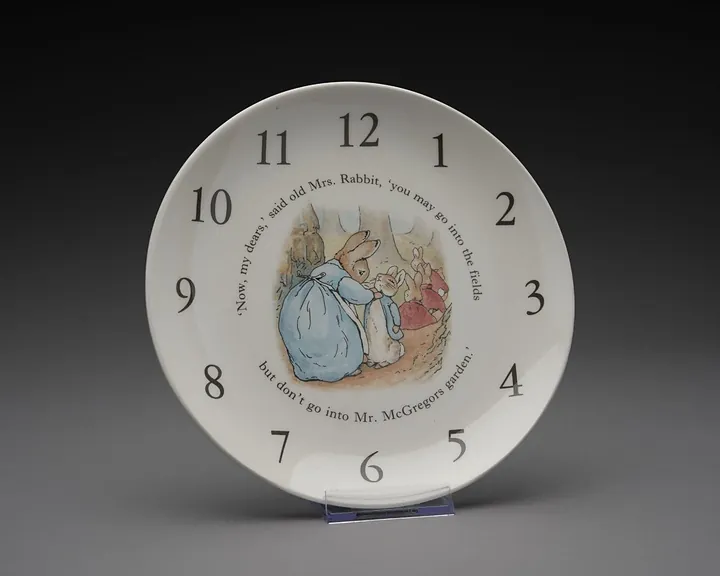
Clock, 'Peter Rabbit', glazed earthenware, transfer printing, Josiah Wedgwood and Sons, Barlaston, late 20th century
Victoria and Albert Museum, London
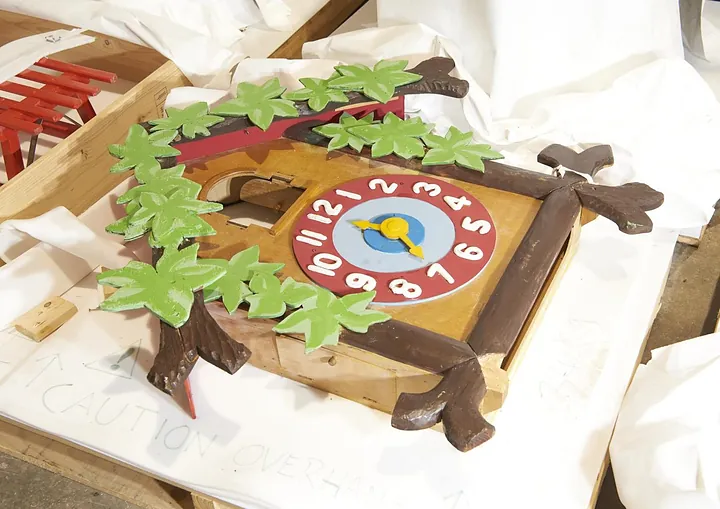
Clocks · 1964–1988
The clock from BBC children's television series 'Playschool', c 1977
Science Museum Group, London
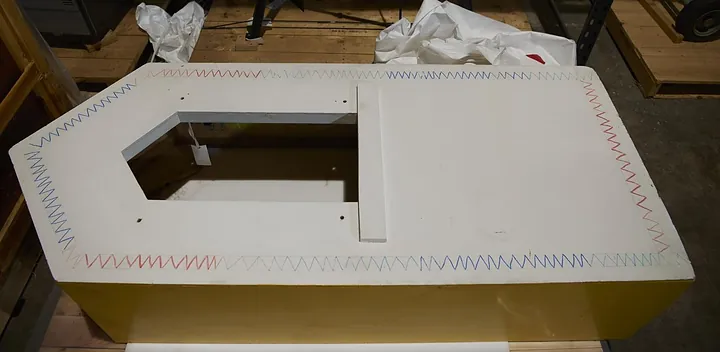
Clocks · 1964–1988
The clock housing from BBC children's television series 'Playschool', c 1977
Science Museum Group, London
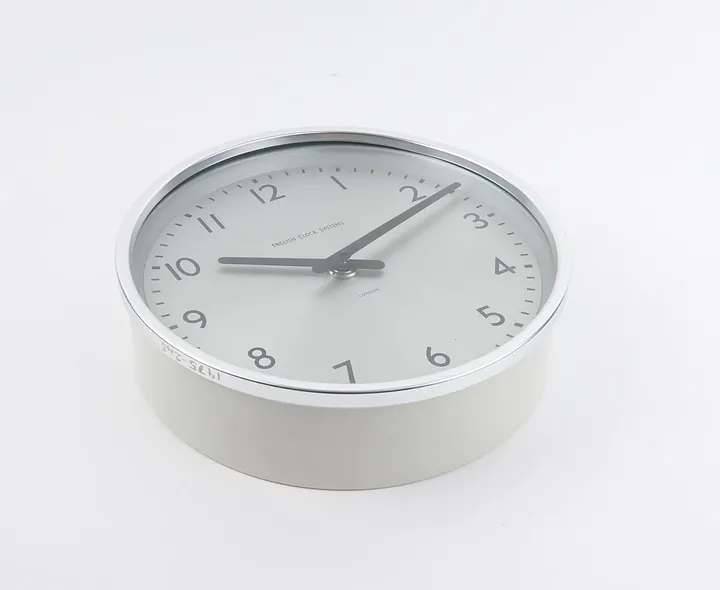
Clocks · 1965–1975
9-inch wall clock (School/3/P) by English Clock Systems, London, England, 1965–1975.
Science Museum Group, London
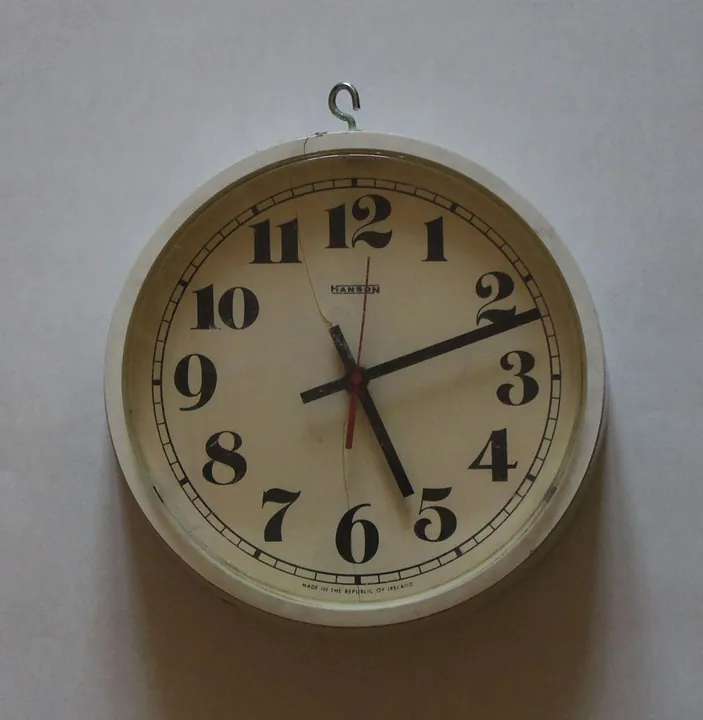
Clocks · c.1970
Comedy clock used in performance by Tommy Cooper, c.1970
Victoria and Albert Museum, London
Clocks · 1969
Clock, weekly, Mk 2A, serial No. 14410/69, date 1969. By the Horstmann Gear Co. Ltd., Bath, England.
Science Museum Group, London