
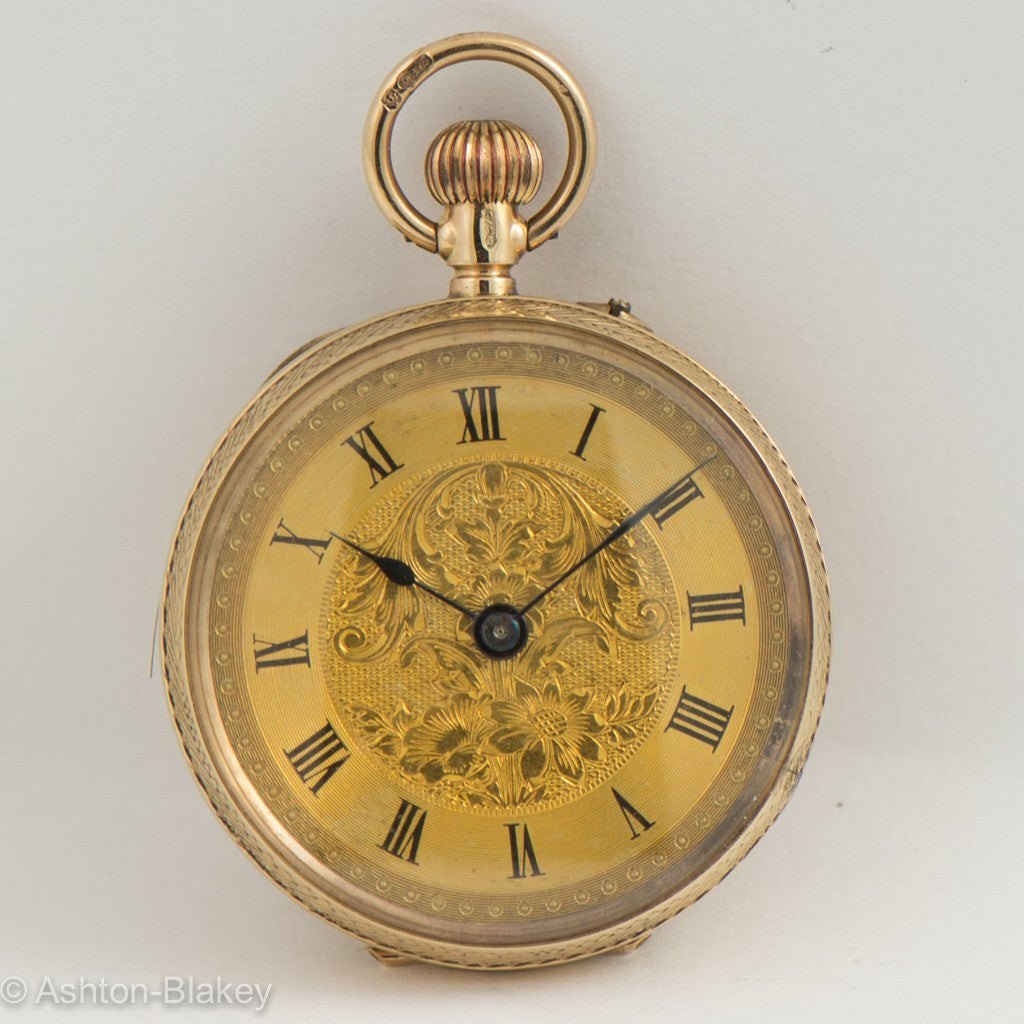
Pocket Watches · Open-face pocket watch
English 9k Gold Open Face Pocket Watch
- Maker / attribution
- Unrecorded in source
- Date
- c. 1870
- Historical period
- Industrial Revolution (1850 – 1900)
- Country of origin
- England
- Object type
- Open-face pocket watch
- Materials / technique
- 9-karat gold
- Dimensions
- 31 mm
- Holding institution
- Ashton-Blakey Antiques
- Accession / object no.
- english-9k-gold-open-face-pocket-watch-30dc938b90
- Credit line
- Ashton-Blakey Antiques
- Catalogue title (original)
- ساعت جیبی طلا 9K مدل Open Face ساخت انگلستان حدود ۱۸۷۰ (English)
View the source record ↗ (opens another website in a new tab)Suggest a correction
Record summary
Held and catalogued by Ashton-Blakey Antiques (object number english-9k-gold-open-face-pocket-watch-30dc938b90), this is an open-face pocket watch, made in England, dated c. 1870. The Atlas places it in the Industrial Revolution period (1850 – 1900) of its Pocket Watches collection. Materials and techniques recorded by the source: 9-karat gold. Recorded dimensions: 31 mm. The record is illustrated with 1 photograph.
Assembled from the source record's structured fields. Dates and attributions are given as the source states them; where a field is missing the Atlas leaves it blank rather than estimating.
Catalogue description
Original object description
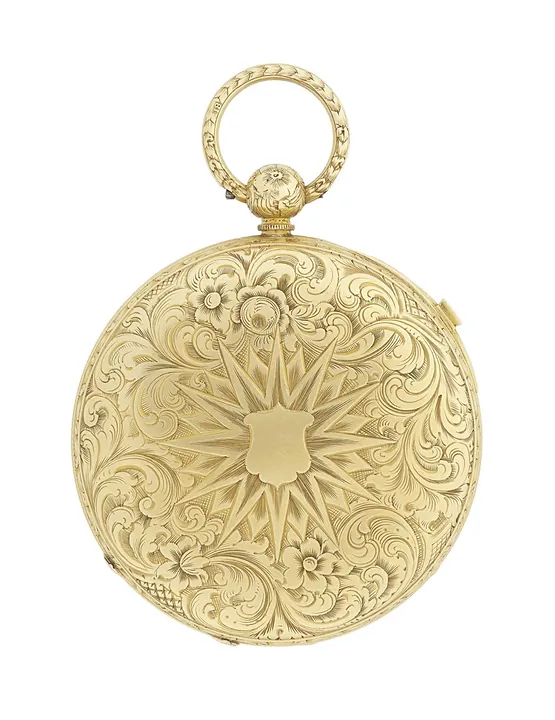
Measuring 31 mm across, this size-0 English open-face pocket watch dates to circa 1870 and is cased in 9-karat gold. Botanical and acanthus motifs are engraved on the back of the case, framing an unengraved central cartouche. The gold-coloured dial displays raised foliage and blossoms, black spade hands, black Roman numerals, and a perimeter track composed of gold minute dots. Timekeeping is driven by a gilt mechanical cylinder movement, which is adjusted by means of a pin-set mechanism located on the case exterior. Sourced documentation notes that the watch is operational, although independent verification of its historical service history, physical condition, and background is not present.
Historical context
Industrial Revolution (1850 – 1900)
American interchangeable-parts manufacture; railroad time standards; Swiss and German factory systems.
Machine production with interchangeable parts, pioneered by Waltham (1850s) and adopted by Elgin, Longines, Omega and others, made reliable lever watches widely affordable. Keyless winding became standard, railroad watch standards were introduced (1890s), and Swiss and American industries competed globally.
Read the period in the timelineMore pocket watches from this periodEarlier: Precision & Scientific Horology
Atlas type guide
Hunter, half-hunter and open-face watches
In the nineteenth century the pocket watch case settled into a few standard forms. The hunter (French savonnette) has a hinged front lid protecting the crystal — reputedly for riders who could not risk broken glass — and is opened by pressing the crown or a push-piece. The half-hunter has a small window in the lid so the hands can be read when closed. The open-face (lépine) watch has no front cover, with the crown at 12; hunters normally carry the crown at 3.
Case types also changed with winding: key-wound watches gave way to keyless (stem-wound) mechanisms after Adrien Philippe's and others' designs of the 1840s, with pendant setting or lever setting.
What to look for
- Crown position relative to the seconds dial: at 3 for hunters, at 12 for open-face watches.
- Spring-loaded front cover with a push-piece in the pendant.
- Half-hunter chapter ring enamelled on the lid.
- Key holes in the inner dome (cuvette) versus keyless winding.
Dating clues
- Keyless winding spread after c. 1850 and became standard by c. 1890.
- English hallmarks inside gold and silver cases give the year of assay.
General guidance written by the Atlas editors about this kind of object. It is not a statement about this particular piece; for that, rely on the source record above and on physical examination.
Read next:Detached lever escapement
Related records
Pocket Watches · 1835–1875
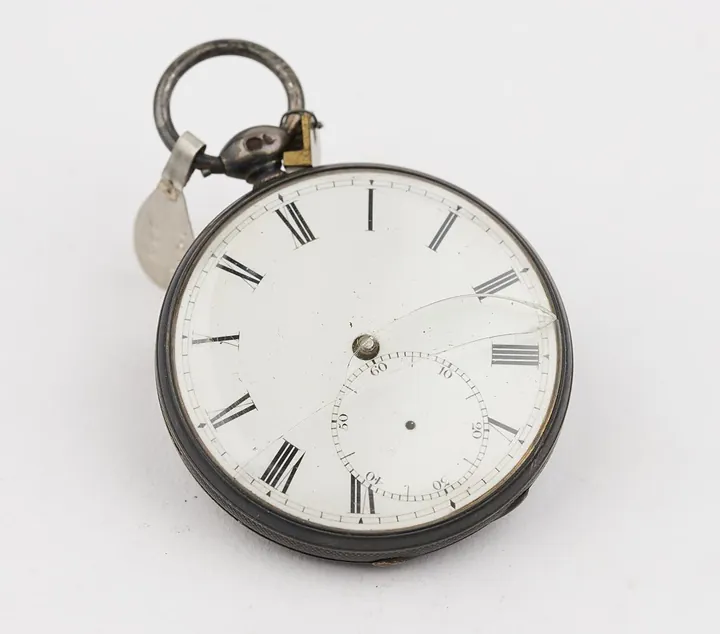
Pocket watch by Cornelius Brooks Holliday, England, 1835–1875
Science Museum Group, London
Pocket Watches · c. 1849–50
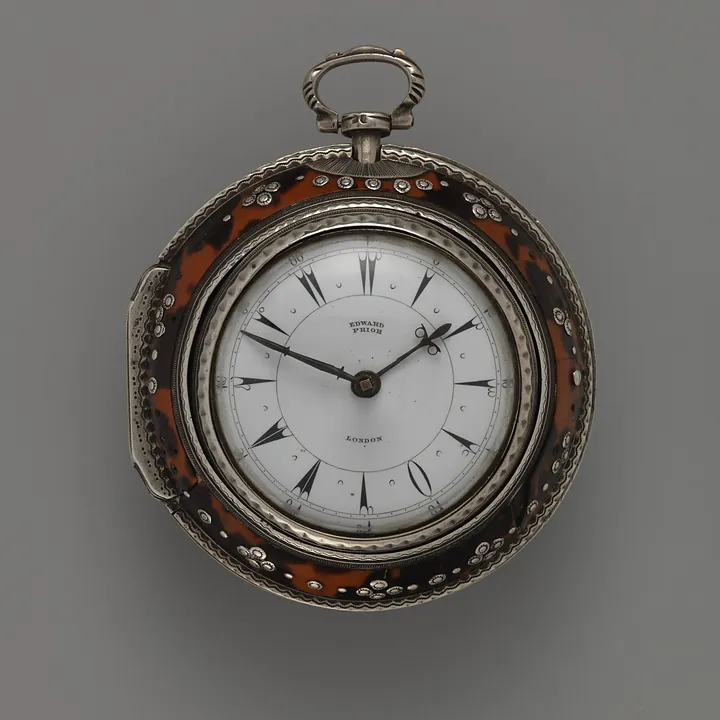
Watch by Edward Prior, England, c. 1849–50
The Metropolitan Museum of Art, New York
Pocket Watches · 1850-1862; hallmarked 1862
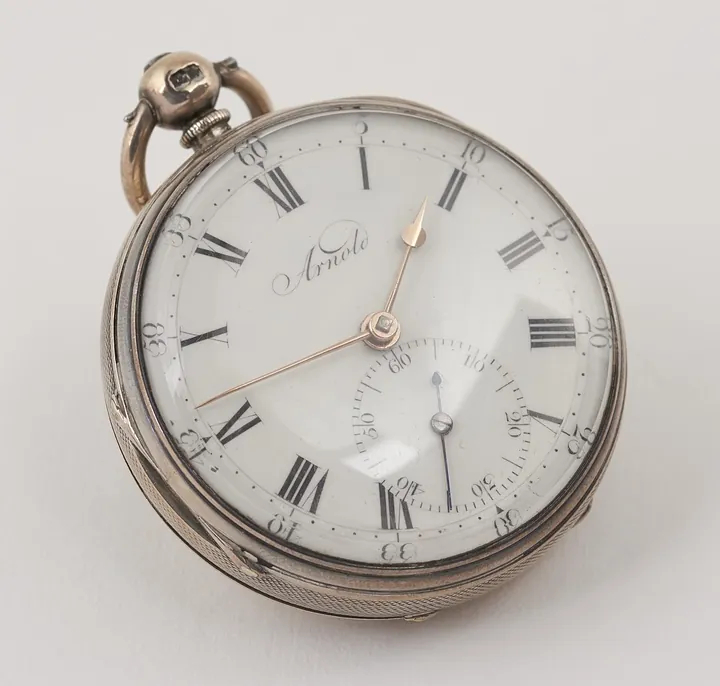
Cylinder watch in silver case by Jno. R. Arnold, London, no.3636, compensated curb, hall marked 1862
Science Museum Group, London
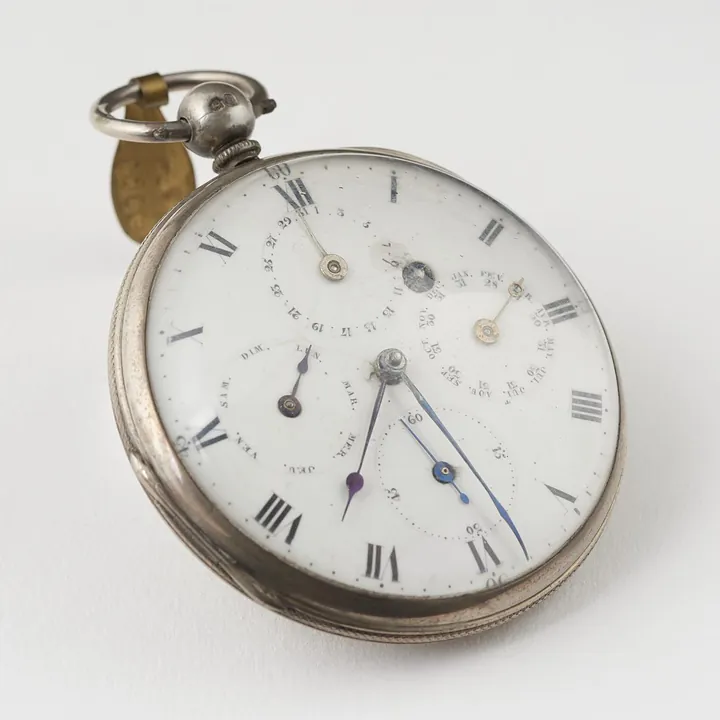
Pocket Watches · hallmarked 1860; 1850-1890
Cylinder watch in silver case, calendar, balance under dial, R.Q., in case. Hall marked 1860
Science Museum Group, London
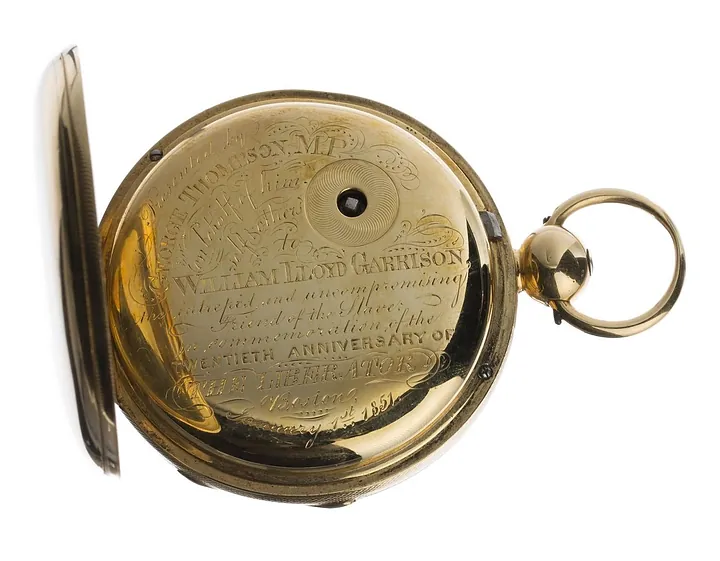
Pocket Watches · 1850
Gold half-hunter pocket watch presented to William Lloyd Garrison, England, 1850
National Museum of African American History and Culture, Smithsonian Institution, Washington DC
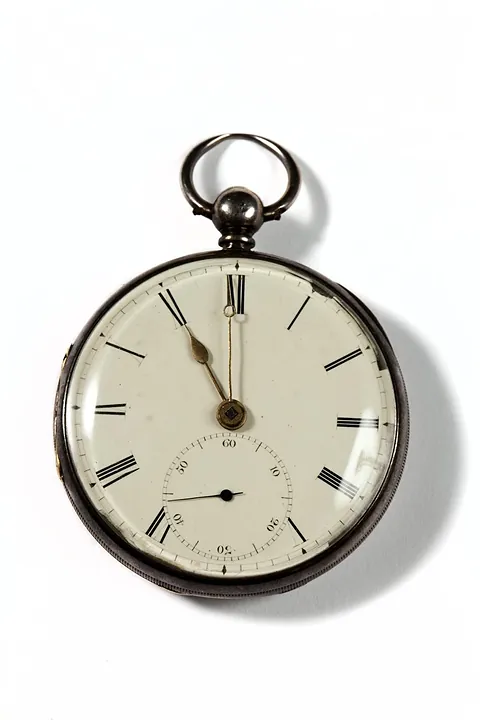
Pocket Watches · 1850–1860
Sterling silver lever pocket watch in original case, made by Thomas & John Ollivant, Manchester, around 1851.
Science Museum Group, London
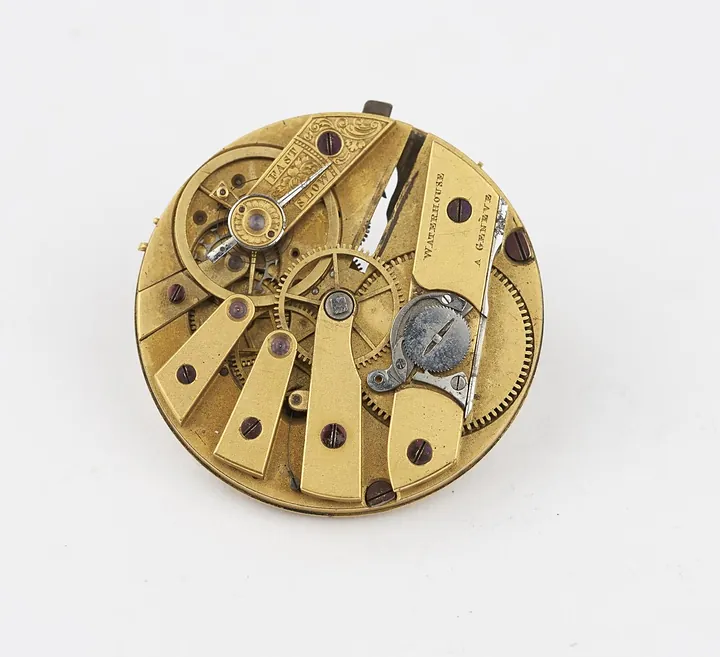
Pocket Watches · 1850
Watch movement with pumping keyless winding mechanism, by G. Waterhouse, London, England, 1845-1851.
Science Museum Group, London
Pocket Watches · 1851
Pocket watch by Alexander Watkins, England, 1851
Science Museum Group, London