
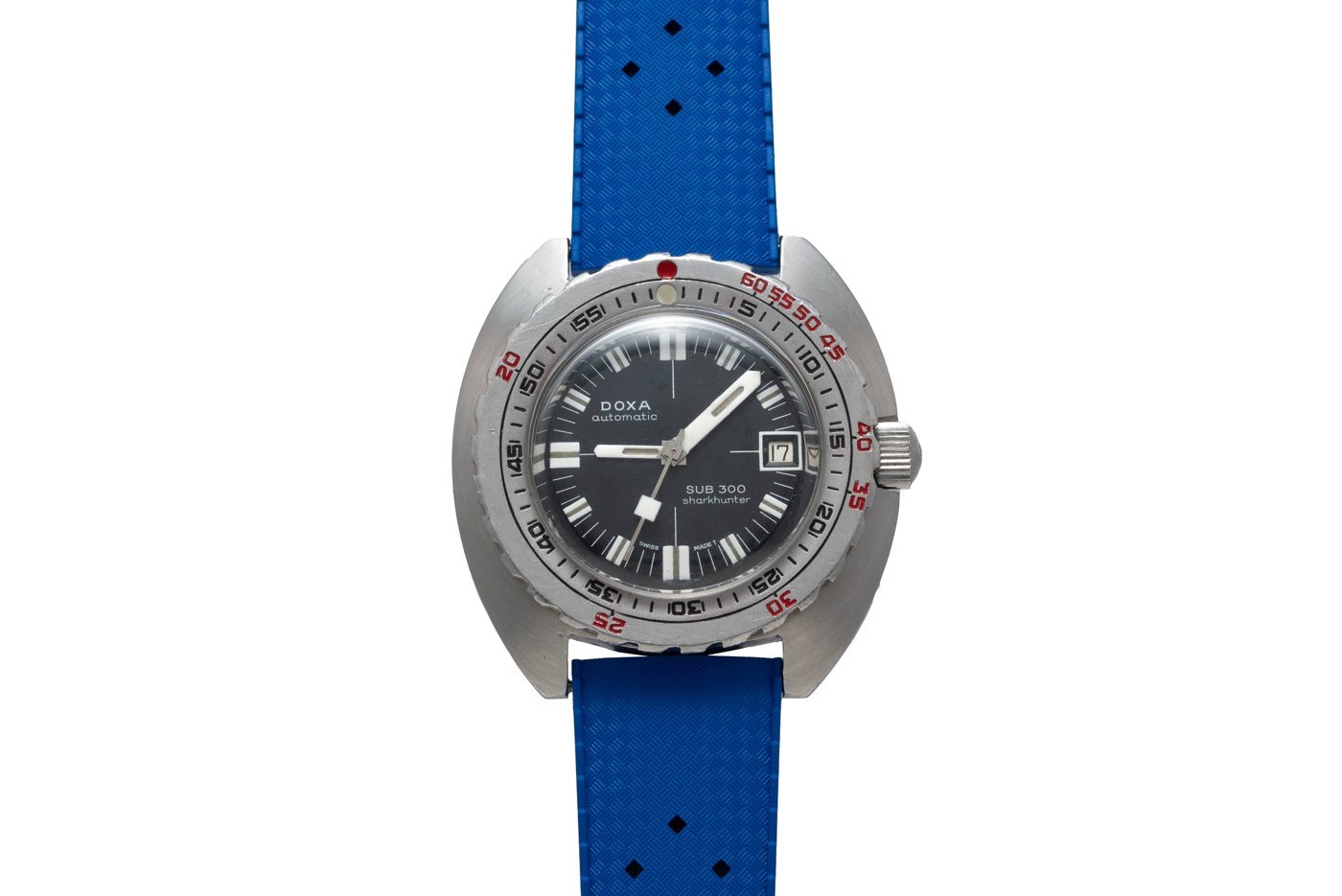
Pocket Watches · Diving watch
DOXA Sub 300 'No-T' Sharkhunter 'Whiteshark'
- Maker / attribution
- Doxa (source attribution)
- Date
- 1967
- Historical period
- Modern Mechanical Horology (1945 – 1969)
- Country of origin
- Switzerland
- Object type
- Diving watch
- Dimensions
- 42.5mm
- Holding institution
- Analog:Shift
- Accession / object no.
- doxa-sub-300-no-t-sharkhunter-whiteshark-9323fc3868
- Credit line
- Analog:Shift
- Catalogue title (original)
- ساعت مچی غواصی DOXA Sub 300 'No-T' Sharkhunter 'Whiteshark' مدل ۱۹۶۷ (English)
View the source record ↗ (opens another website in a new tab)Suggest a correction
Record summary
Held and catalogued by Analog:Shift (object number doxa-sub-300-no-t-sharkhunter-whiteshark-9323fc3868), this is a diving watch attributed to Doxa, made in Switzerland, dated 1967. The Atlas places it in the Modern Mechanical Horology period (1945 – 1969) of its Pocket Watches collection. Recorded dimensions: 42.5mm. The record is illustrated with 1 photograph.
Assembled from the source record's structured fields. Dates and attributions are given as the source states them; where a field is missing the Atlas leaves it blank rather than estimating.
Catalogue description
Original object description
Hailing from 1967, the introductory year of the series, this first-generation DOXA Sub 300 'Sharkhunter' belongs to the distinct single-year 'No-T' production characterized by a slim profile. Its 42.5 mm stainless steel case is fitted with a domed acrylic crystal, an unbranded screw-down locking crown, and a caseback engraved with a sailboat motif. Encircling the dial is a unidirectional rotating steel bezel calibrated with the U.S. Navy no-decompression limits in red numerals. The matte black dial displays printed hour markers with an even patina, a calendar aperture at 3 o'clock, and the entirely white hand set that gives rise to the collector nickname 'Whiteshark'. Powered by an automatic movement, the timepiece has undergone professional movement overhaul and case refinishing, and it is fitted with an aftermarket textured blue rubber strap.
Historical context
Modern Mechanical Horology (1945 – 1969)
Tool watches for divers, pilots and astronauts; electric watches anticipate the electronic age.
After 1945 the pocket watch became a niche product — presentation and railway watches, inexpensive pin-lever watches, and commemorative pieces — while most innovation moved to the wrist.
Read the period in the timelineMore pocket watches from this periodEarlier: Golden Age of Mechanical Watchmaking
Atlas type guide
Hunter, half-hunter and open-face watches
In the nineteenth century the pocket watch case settled into a few standard forms. The hunter (French savonnette) has a hinged front lid protecting the crystal — reputedly for riders who could not risk broken glass — and is opened by pressing the crown or a push-piece. The half-hunter has a small window in the lid so the hands can be read when closed. The open-face (lépine) watch has no front cover, with the crown at 12; hunters normally carry the crown at 3.
Case types also changed with winding: key-wound watches gave way to keyless (stem-wound) mechanisms after Adrien Philippe's and others' designs of the 1840s, with pendant setting or lever setting.
What to look for
- Crown position relative to the seconds dial: at 3 for hunters, at 12 for open-face watches.
- Spring-loaded front cover with a push-piece in the pendant.
- Half-hunter chapter ring enamelled on the lid.
- Key holes in the inner dome (cuvette) versus keyless winding.
Dating clues
- Keyless winding spread after c. 1850 and became standard by c. 1890.
- English hallmarks inside gold and silver cases give the year of assay.
General guidance written by the Atlas editors about this kind of object. It is not a statement about this particular piece; for that, rely on the source record above and on physical examination.
Read next:Detached lever escapement
Related records
Wristwatches · c. 1930s
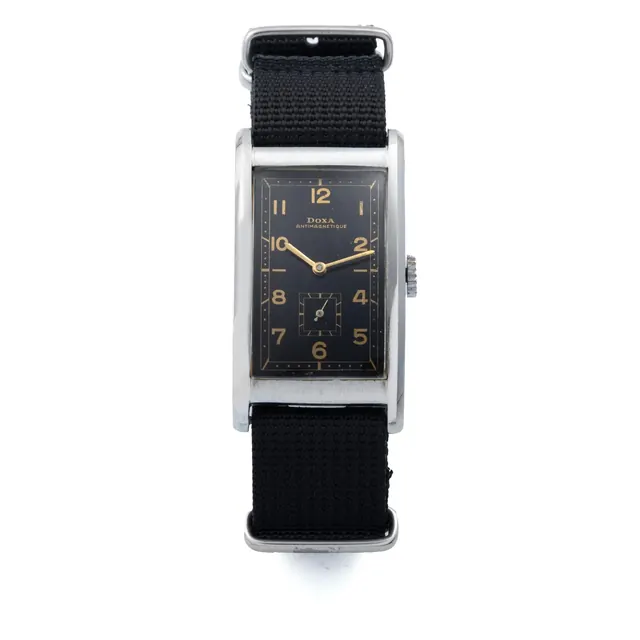
Doxa wristwatch, Antimagnetique, circa 1930's
Antiquorum auction archive, Geneva
Wristwatches · c. 1940
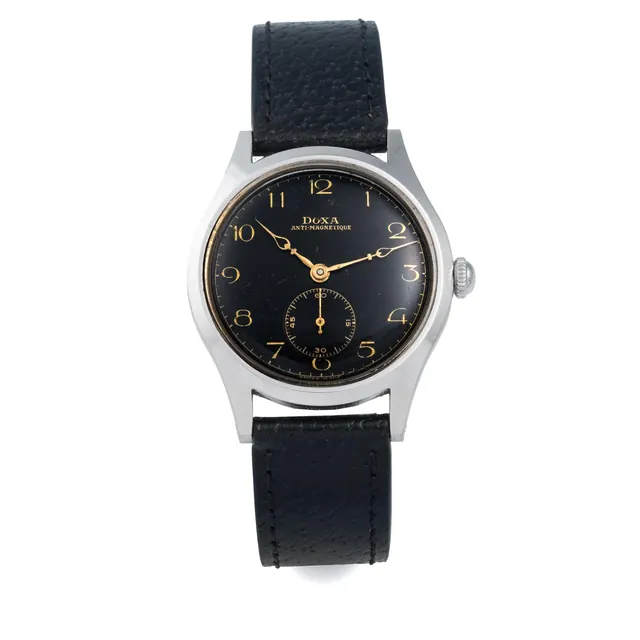
Doxa wristwatch, circa 1940
Antiquorum auction archive, Geneva
Wristwatches · c. 1970s
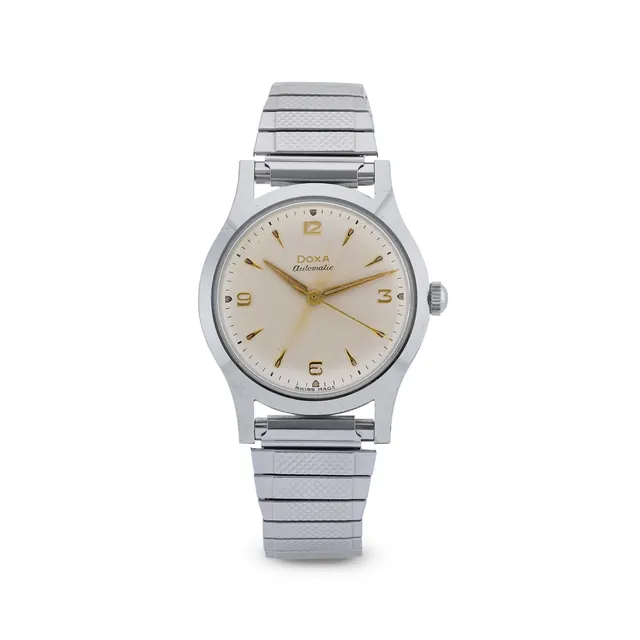
Doxa wristwatch, ref. 13921, circa 1970s
Antiquorum auction archive, Geneva
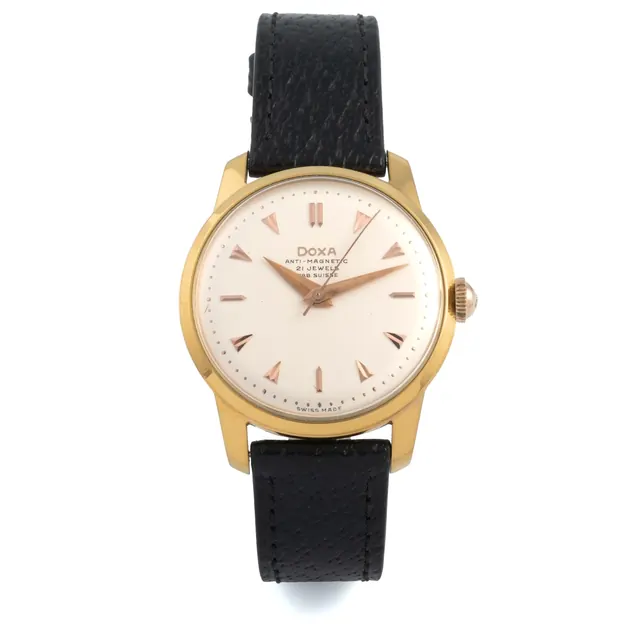
Wristwatches · c. 1960s
Doxa wristwatch, ref. 15001, circa 1960's
Antiquorum auction archive, Geneva
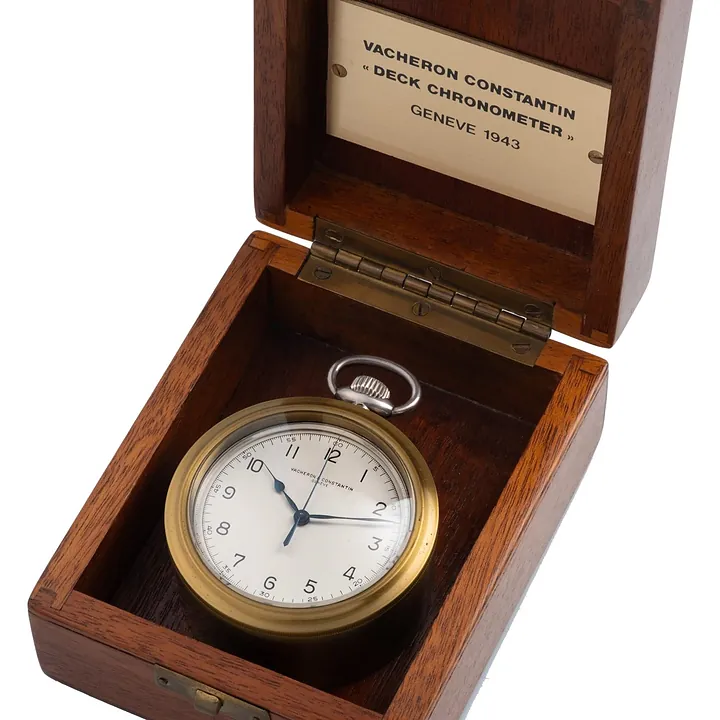
Pocket Watches · c. 1945
Vacheron Constantin pocket chronometer, c. 1945
Antiquorum auction archive, Geneva
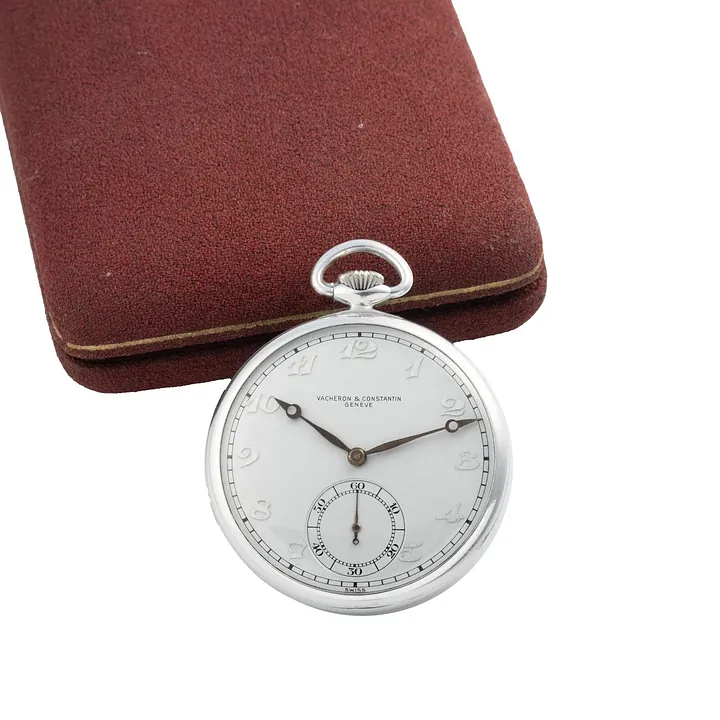
Pocket Watches · c. 1945
Vacheron Constantin watch, c. 1945
Antiquorum auction archive, Geneva
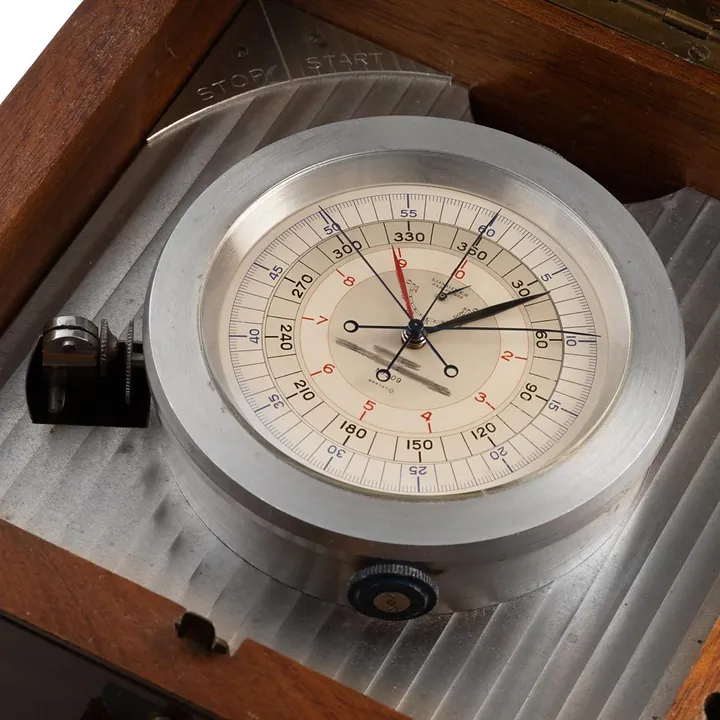
Pocket Watches · Sold to Longines France in January 1946
Longines Siderograph, ref. 5397, Sold to Longines France in January 1946
Antiquorum auction archive, Geneva
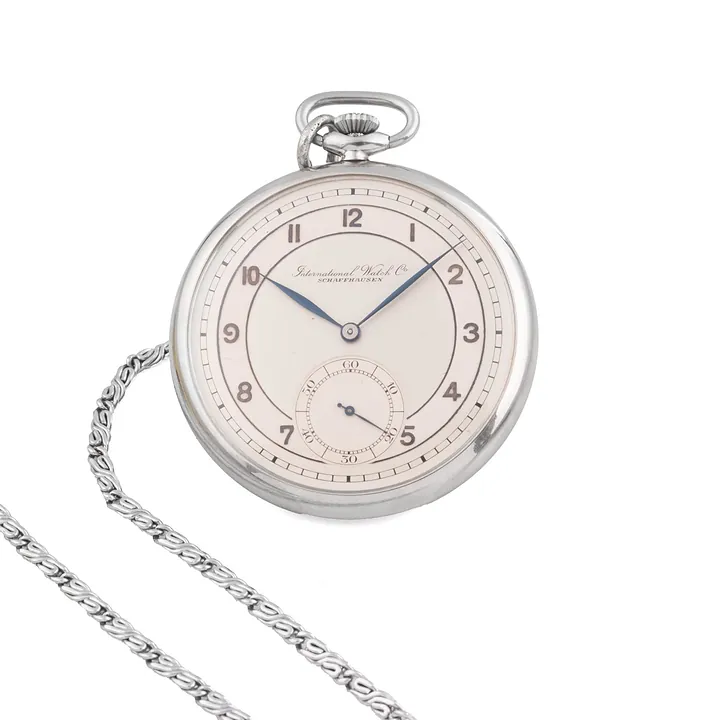
Pocket Watches · c. 1950
IWC Pocket Watch, c. 1950
Antiquorum auction archive, Geneva