
Clocks · Clock
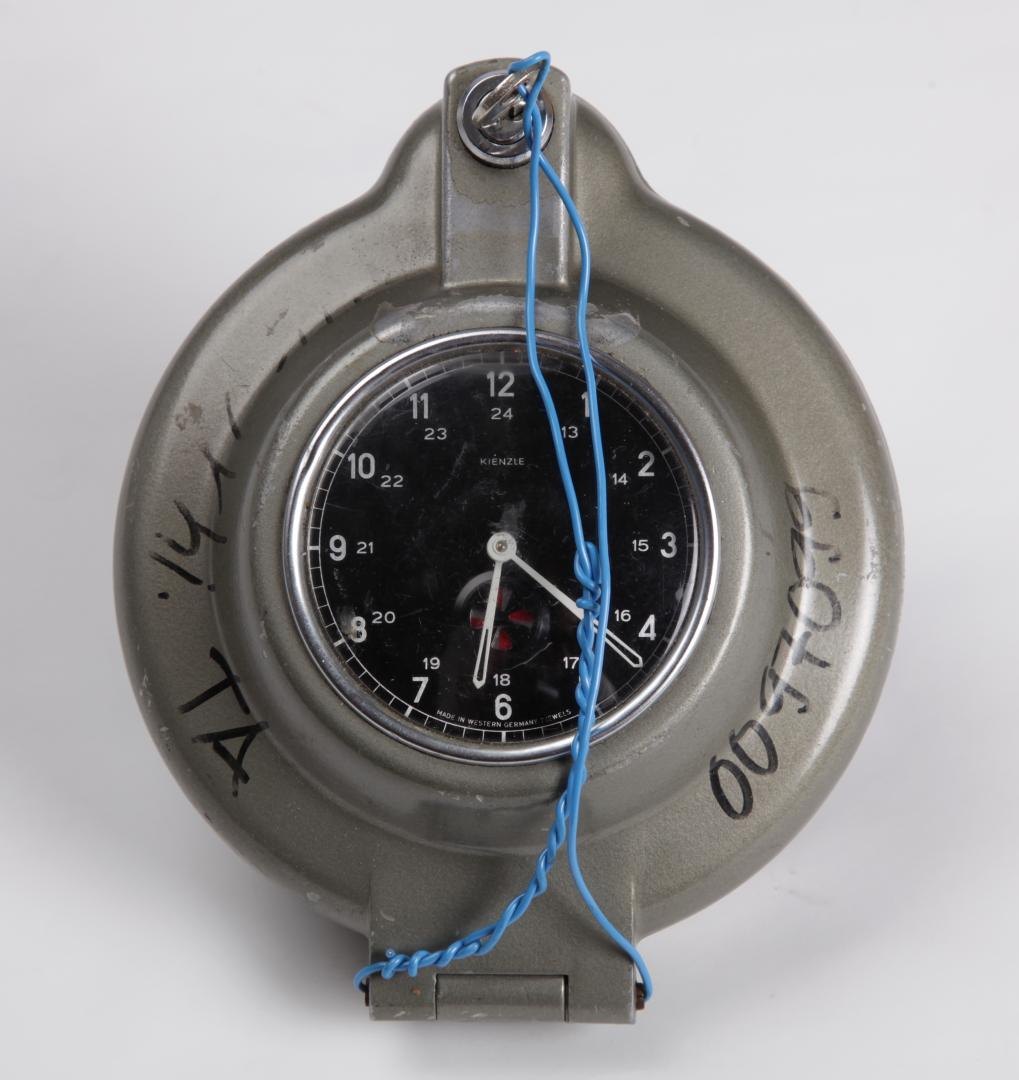
Clock by Kienzle Argo GmbH, 1980stimated
- Maker / attribution
- Kienzle Argo GmbH (maker)
- Date
- 1980s (estimated)
- Historical period
- Quartz Revolution (1969 – 1990)
- Country of origin
- Germany
- Place
- West Germany
- Object type
- Clock
- Materials / technique
- metal, plastic
- Dimensions
- diameter: 14,5 cm, height: 17,5 cm, thickness: 5,7 cm, Kellotaulun diameter: 7 cm.
- Holding institution
- Lusto – Suomen Metsämuseo
- Accession / object no.
- E17010:54
- Credit line
- Lusto – Suomen Metsämuseo (via Finna)
- Catalogue title (original)
- Kello; Käyntiaikakello (Finnish)
View the source record ↗ (opens another website in a new tab)Suggest a correction
Record summary
Held and catalogued by Lusto – Suomen Metsämuseo (object number E17010:54), this is a clock by Kienzle Argo GmbH, made in West Germany, dated 1980s (estimated). The Atlas places it in the Quartz Revolution period (1969 – 1990) of its Clocks collection. Materials and techniques recorded by the source: metal, plastic. Recorded dimensions: diameter: 14,5 cm, height: 17,5 cm, thickness: 5,7 cm, Kellotaulun diameter: 7 cm. The record is illustrated with 4 photographs.
Assembled from the source record's structured fields. Dates and attributions are given as the source states them; where a field is missing the Atlas leaves it blank rather than estimating.
Catalogue description
Description — Lusto – Suomen Metsämuseo
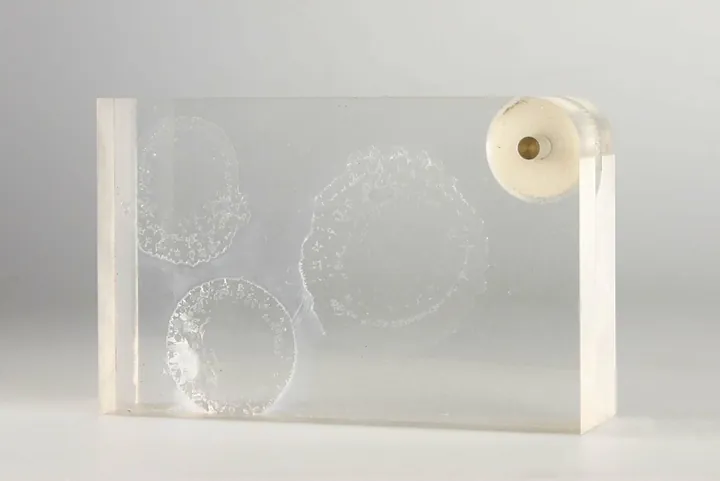
Metallikuorinen, harmaa ja pyöreämuotoinen mekaaninen kello, jossa on keskellä mustapohjainen ja loivasti kuperalla muovikannella päällystetty kellotaulu. Kellon rungon yläosassa on litteällä, pyöreäkantaisella avaimella toimiva lukitsinmekanismi. Kellon alareunassa on tukeva sarana, jonka varassa kellon puoliskot on avattavissa niin, että kellon sisään saadaan kiinnitettyä paperinen merkintäkiekko. Pohjakappaleessa on sisässä valkoisten muovikiekkojen ja metallisten osien muodostama mekanismi, joka piirtää kapealla nystyrällä viivaa herkkään paperikiekkoon kellon olleessa käynnissä ja täristessä liikkuvassa koneessa. Kellon mekanismi pyörittää kiekkoa. Kiekot on osittain peitetty ohuella harmaalla metallilevyllä, johon on painettu mustalla kellon käytöohjeita saksaksi, englanniksi ja ranskaksi. Kellotaulun reunaa kiertävät kahdessa rivissä vaaleanharmaat numerot 1-12 ja 13-24. Kellossa on valkoiset viisarit. Kellotaulun alaosassa, numero 6:n yläpuolella on neljän ulkoreunaa kohti levenevän sektorin muodostama aukkokuvio, jossa pyörii kellon käydessä puna-harmaa levy. Kellon avain on kiinnitetty saranan läpi kulkevaan putkeen ohuella sinisellä muovipintaisella vaijerilla.
Shown in the original language of the source catalogue. An editor-reviewed English translation has not yet been published; we do not publish machine translations as authoritative text.
Inscriptions & marks
Kellon kanteen on kirjoitettu mustalla tussikynällä toiselle reunalla 0097099 ja vastapäätä hyvin kulunut merkintä ??Khj (todennäköisesti MHSKhj = Metsähallituksen kehittämisjaosto) sekä TA (= Timo Ari). Kellon takasivuun on kirjoitettu mustalla tussilla: MH/Kehittämisyksikkö / PL 8016 / 96101 Rovaniemi. Takasivun yläosaan on liimattu kaksi mustapohjaista tarraa, joissa on valkoinen kohoteksti: METSÄHALLITUS / KEHITTÄMISJAOSTO. Takasivun alaosassa on väritön kohoteksti: Made in Western Germany. Kellotaulussa on reunaa kahdessa rivissä kiertävät vaaleanharmaat numerot 1-12 ja 13-24 sekä tekstit KIENZLE ja MADE IN WESTERN GERMANY 7 JEWELS.
Historical context
Quartz Revolution (1969 – 1990)
Seiko's Astron begins mass quartz timekeeping; traditional industries contract sharply.
Quartz movements and digital displays made accurate clocks cheap and ubiquitous after the early 1970s. LED and LCD clocks, clock radios and radio-controlled clocks appeared, while traditional mechanical clockmaking contracted sharply in Germany, France and Britain.
Read the period in the timelineMore clocks from this periodEarlier: Modern Mechanical Horology
Atlas type guide
Domestic clocks
A clock combines four systems: a source of power (falling weight, coiled spring, or later electricity), a gear train that divides time, an escapement and oscillator that regulate it (foliot, pendulum or balance), and an indicating system of dial and hands or a bell. Its history runs from the large iron weight-driven clocks of the late thirteenth century to Renaissance spring-driven table clocks, the pendulum revolution of 1656, the factory clocks of the nineteenth century and electric and quartz clocks of the twentieth.
Domestic clocks also reflect regional furniture and decorative traditions — English longcase and bracket clocks, French pendules, Viennese regulators, Black Forest and American shelf clocks — and therefore record changing tastes as much as technical progress.
What to look for
- How the clock is powered: weights, spring barrel, fusee, electric coil.
- The oscillator: foliot, short pendulum, long seconds pendulum or balance.
- Whether it strikes: hour only (count wheel) or hours and quarters (rack striking).
- The maker or retailer's name on dial and movement, and any factory trademarks.
- Signs of alteration — replaced dials, converted escapements, 'married' cases.
Dating clues
- Before 1656 clocks used foliots or balances; after, most domestic clocks have pendulums.
- Anchor escapements spread after c. 1670; minute hands became common at the same time.
- Factory production in America and Germany transformed prices after c. 1840.
General guidance written by the Atlas editors about this kind of object. It is not a statement about this particular piece; for that, rely on the source record above and on physical examination.
Related records
Clocks · 1960–1996
Electric clock by Efratom GmbH, Germany, 1960–1996
Science Museum Group, London
Clocks · 1969
Clock by VDO, Germany, 1969
German Clock Museum
Clocks · 1970
Alarm clock by Werner Staiger, Germany, 1970
German Clock Museum
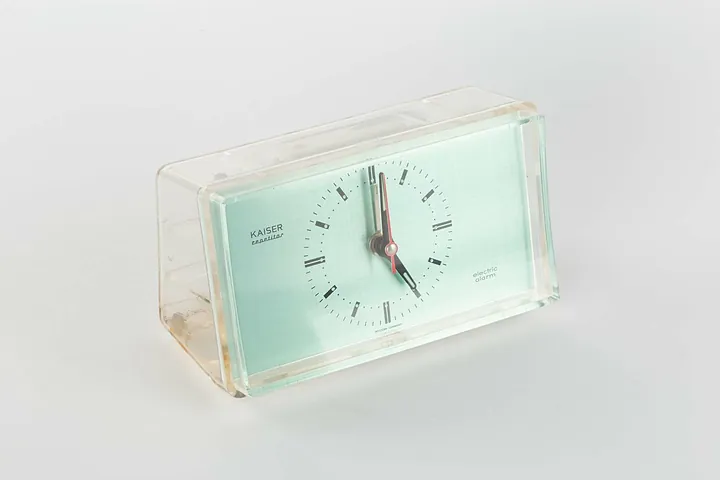
Clocks · c. 1970
Alarm clock, Germany, c. 1970 (no. 59356)
German Clock Museum
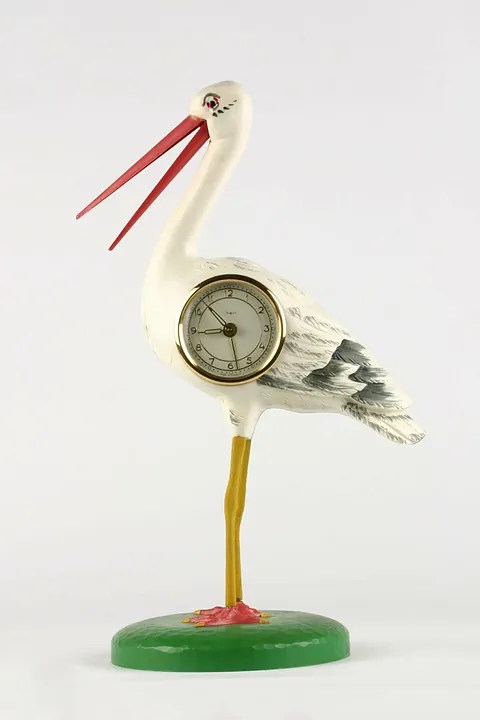
Clocks · c. 1970
Alarm clock, Germany, c. 1970 (no. 59389)
German Clock Museum
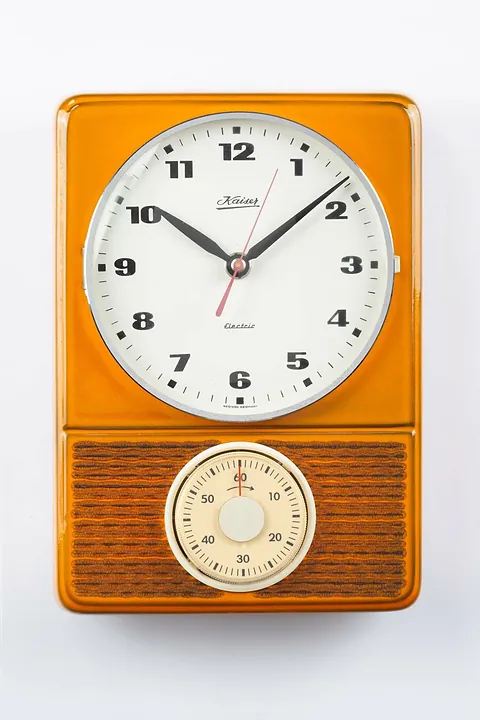
Clocks · c. 1970
Clock, Germany, c. 1970
German Clock Museum
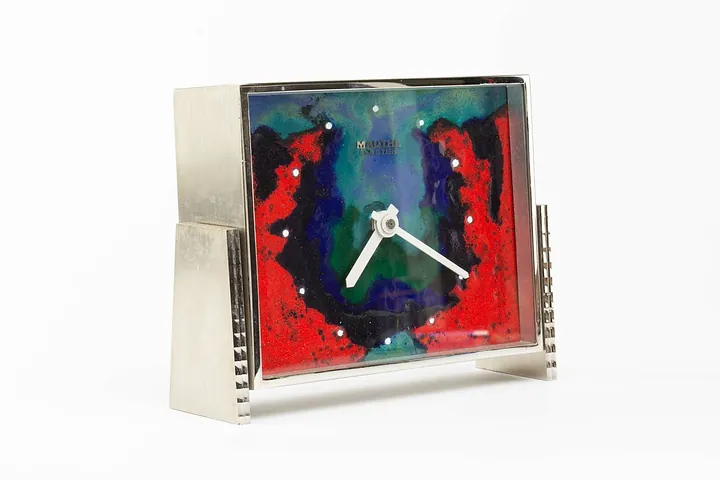
Clocks · c. 1970
Table clock by Friedrich Mauthe, Germany, c. 1970
German Clock Museum
Clocks · 1971
Alarm clock by Kienzle - Uhrenfabrik, Germany, 1971
German Clock Museum