
Clocks · Clock
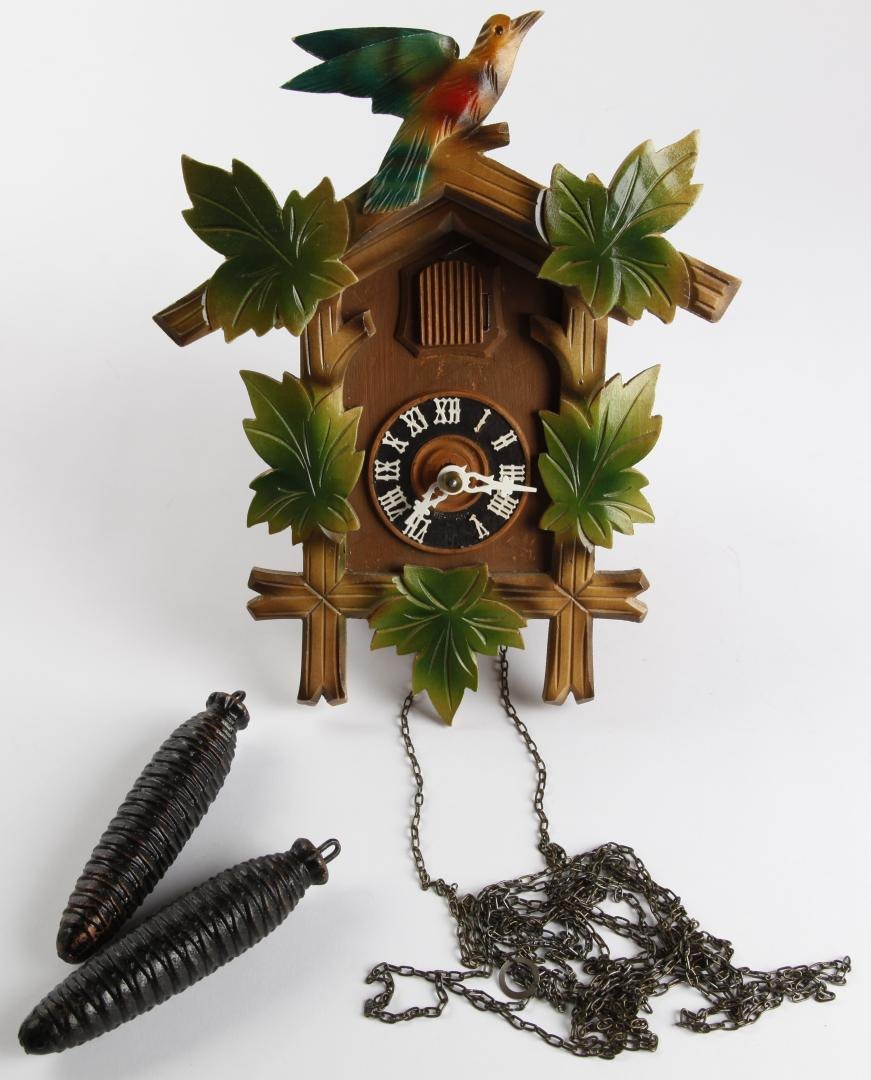
Clock by Hubert Herr ?, Germany, 1958?
- Maker / attribution
- Hubert Herr ? (maker)
- Date
- 1958?
- Historical period
- Modern Mechanical Horology (1945 – 1969)
- Country of origin
- Germany
- Place
- Germany
- Object type
- Clock
- Materials / technique
- wood, metal
- Dimensions
- width: 21,5 cm height: 28,5 cm depth: 14,5 cm Punnuksen length 13,5 cm
- Holding institution
- Lusto – Suomen Metsämuseo
- Accession / object no.
- E93001:1
- Credit line
- Lusto – Suomen Metsämuseo (via Finna)
- Catalogue title (original)
- Kello; Käkikello (Finnish)
View the source record ↗ (opens another website in a new tab)Suggest a correction
Record summary
Held and catalogued by Lusto – Suomen Metsämuseo (object number E93001:1), this is a clock by Hubert Herr ?, made in Germany, dated 1958?. The Atlas places it in the Modern Mechanical Horology period (1945 – 1969) of its Clocks collection. Materials and techniques recorded by the source: wood, metal. Recorded dimensions: width: 21,5 cm height: 28,5 cm depth: 14,5 cm Punnuksen length 13,5 cm. The record is illustrated with 2 photographs.
Assembled from the source record's structured fields. Dates and attributions are given as the source states them; where a field is missing the Atlas leaves it blank rather than estimating.
Catalogue description
Description — Lusto – Suomen Metsämuseo
Perinteinen saksalainen (Schwarzwald) käkikello, joka on maalattu moniväriseksi. Kellon mökkiä jäljittelevä, laatikkomainen runko-osa on tehty puusta ja maalattu ruskeaksi. Katto on tehty kahdesta laudanpalasta, kolmiomaisen katon harja kulkee kellon etuseinästä takaseinään. Rungon takaseinän neliönmallinen alaosa on irrotettava, sitä kautta päästään käsiksi kellon koneistoon. Takaseinän yläosassa on rungon läpi porattu reikä kellon seinälle kiinnittämistä varten. Edestä katsoen rungon oikealla sivulla on pieni saranoitu luukku ja siinä ohuesta metallilangasta taivutettu lukkosalpa. Salvan ulkopää on kierretty lenkiksi ja siihen nähden 90 asteen kulmaan käännetty sisäosa jätetty suoraksi. Ulko-osan alle on lisätty pyöreä metallilevy. Luukun vieressä sivuseinässä on ovaalin muotoinen reikä, jonka yläosassa näkyy rungon sisäosien puussa oleva kapea vaakasuuntainen aukko. Reiän alapuolella sivuseinässä on nähtävissä urakantainen ruuvi ja sen alapuolella kiiltävä metallinen piste (naulan pää?). Myös rungon toisella sivulla on vastaava aukko, ruuvi ja metallipiste. Rungon pohjassa lähellä takasivua on pitkä ja kapea aukko heiluria varten. Aukosta pilkistää vielä ohut metallilanka, jonka pää on taivutettu kolmion muotoiseksi renkaaksi. Heiluria kellossa ei (enää) ole. Pohjan etuosassa on neljä pyöreää reikää, joista kahdesta (joka toisesta) tulee läpi pitkä metalliketju ja kahdesta metallilevystä leikattu koukku. Pitkien ketjujen päässä on metallilevystä leikatut pyöreät, umpinaiset renkaat. Ketjuista toisen alaosaan on yhdistetty myös toinen, lyhyempi ketju. Kellon katon etuseinään on pienillä metallikannakkeilla kiinnitetty kaiverrettu reuna, jonka keskellä katon harjan päällä on oikealle kurottava lintuhahmo ja lähellä katon ulkoreunoja molemmilla puolilla vihreäksi maalatut lehdet, jotka nousevat katon yläpuolelle. Kellon etusivun reunoihin on kiinnitetty pienillä nauloilla puusta kaiverretut listat, joissa keskellä vihreäksi maalatut kookkaat lehdet, samoin alareunassa. Sivu"listat" ulottuvat reilusti kellon rungon alareunan alapuolelle. Keskellä kellon etusivua on pyöreä, hieman koholla oleva kellotaulu, jonka pohja on maalattu mustaksi ja koholla olevat roomalaiset numerot valkoisiksi. Kellotaulun keskiosassa on ruskea ympyrä, jonka keskeltä kohoavaan tappiin valkoiset, koristeelliset viisarit on kiinnitetty. Kellotaulun yläpuolella on pieni luukku, jonka takana, metallitangolla oveen kiinnitettynä, valko-sininen lintu. Luukun yläpuolella on ohut, useaksi kulmaksi taivutettu metallilanka, luukun suljin(?). Pitkät ja kapeat punnukset on valmistettu metallista ja muotoiltu näyttämään lähinnä kuusen kävyiltä. Punnukset on maalattu mustiksi.
Shown in the original language of the source catalogue. An editor-reviewed English translation has not yet been published; we do not publish machine translations as authoritative text.
Inscriptions & marks
Kellon takaseinään liimatussa paperietiketissä teksti: Kuckucksuhr / Cuckoo-clock / Horloge à coucou / No. 302 bunt.
Historical context
Modern Mechanical Horology (1945 – 1969)
Tool watches for divers, pilots and astronauts; electric watches anticipate the electronic age.
Post-war clocks combined new materials and industrial design: plastic and metal cases, battery-powered transistor movements from the late 1950s, and design classics by George Nelson, Max Bill and others. The first caesium atomic clock (1955) moved the definition of time from astronomy to physics.
Read the period in the timelineMore clocks from this periodEarlier: Golden Age of Mechanical Watchmaking
Atlas type guide
Domestic clocks
A clock combines four systems: a source of power (falling weight, coiled spring, or later electricity), a gear train that divides time, an escapement and oscillator that regulate it (foliot, pendulum or balance), and an indicating system of dial and hands or a bell. Its history runs from the large iron weight-driven clocks of the late thirteenth century to Renaissance spring-driven table clocks, the pendulum revolution of 1656, the factory clocks of the nineteenth century and electric and quartz clocks of the twentieth.
Domestic clocks also reflect regional furniture and decorative traditions — English longcase and bracket clocks, French pendules, Viennese regulators, Black Forest and American shelf clocks — and therefore record changing tastes as much as technical progress.
What to look for
- How the clock is powered: weights, spring barrel, fusee, electric coil.
- The oscillator: foliot, short pendulum, long seconds pendulum or balance.
- Whether it strikes: hour only (count wheel) or hours and quarters (rack striking).
- The maker or retailer's name on dial and movement, and any factory trademarks.
- Signs of alteration — replaced dials, converted escapements, 'married' cases.
Dating clues
- Before 1656 clocks used foliots or balances; after, most domestic clocks have pendulums.
- Anchor escapements spread after c. 1670; minute hands became common at the same time.
- Factory production in America and Germany transformed prices after c. 1840.
General guidance written by the Atlas editors about this kind of object. It is not a statement about this particular piece; for that, rely on the source record above and on physical examination.
Related records
Clocks · c. 1960
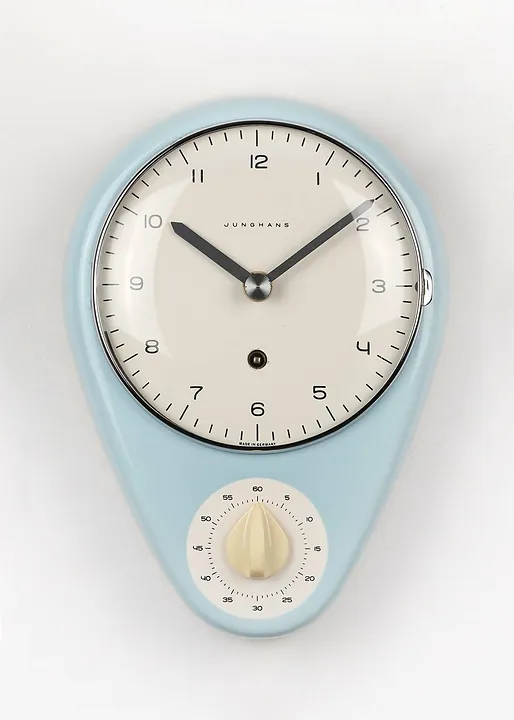
Clock, Germany, c. 1960 (no. 58196)
German Clock Museum
Clocks · 1945
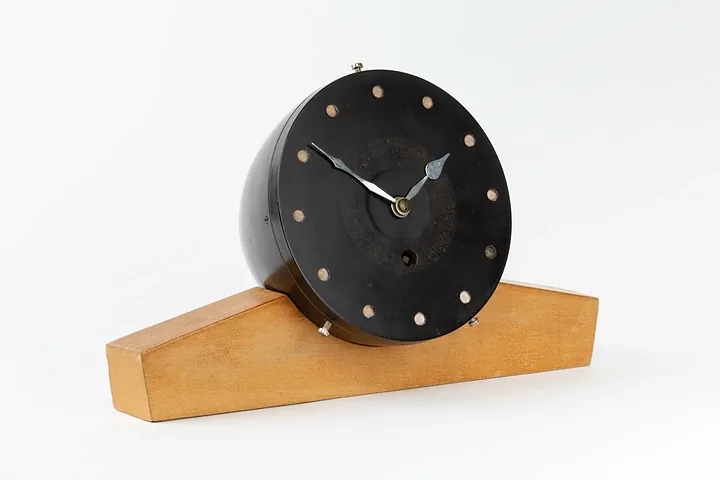
Table clock, Germany, 1945
German Clock Museum
Clocks · c. 1945
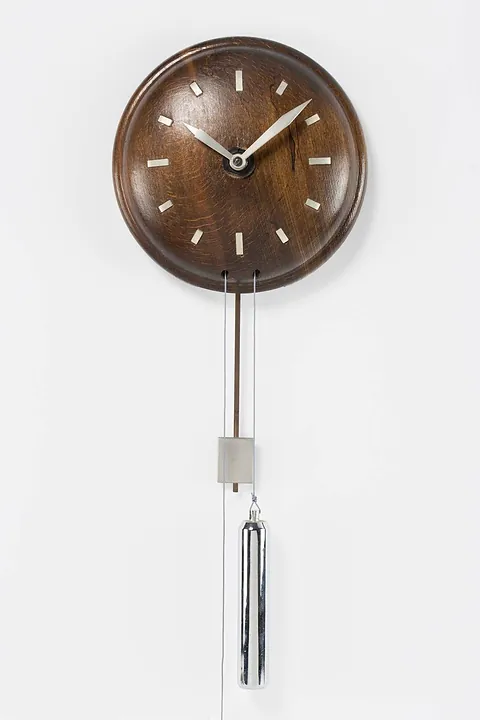
Wall clock, Germany, c. 1945 (no. 59680)
German Clock Museum
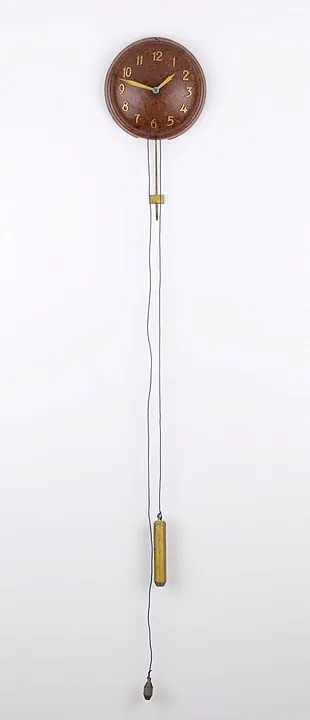
Clocks · c. 1945
Wall clock, Germany, c. 1945 (no. 59700)
German Clock Museum
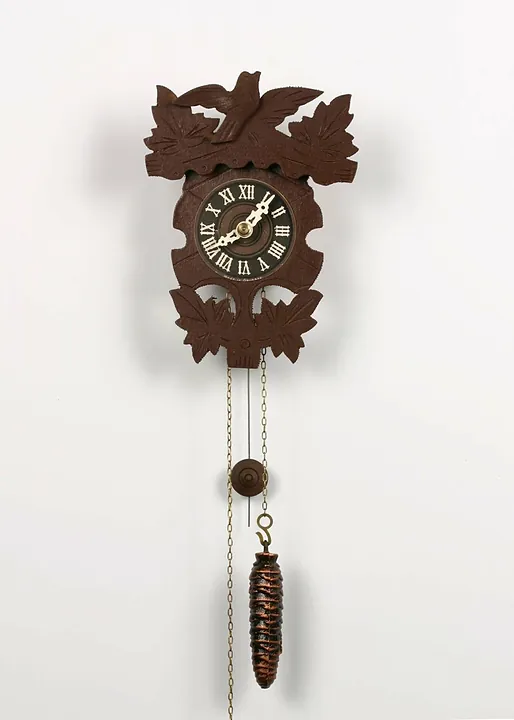
Clocks · c. 1948
Wall clock, Germany, c. 1948
German Clock Museum
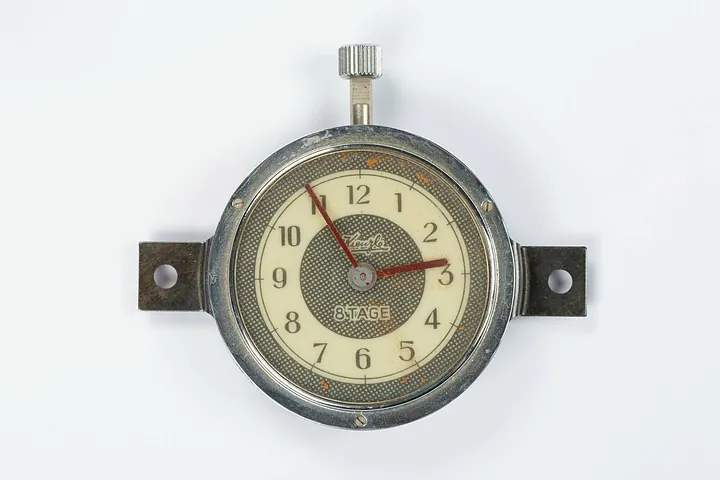
Clocks · c. 1950
Clock by Kienzle - Uhrenfabrik, Germany, c. 1950
German Clock Museum
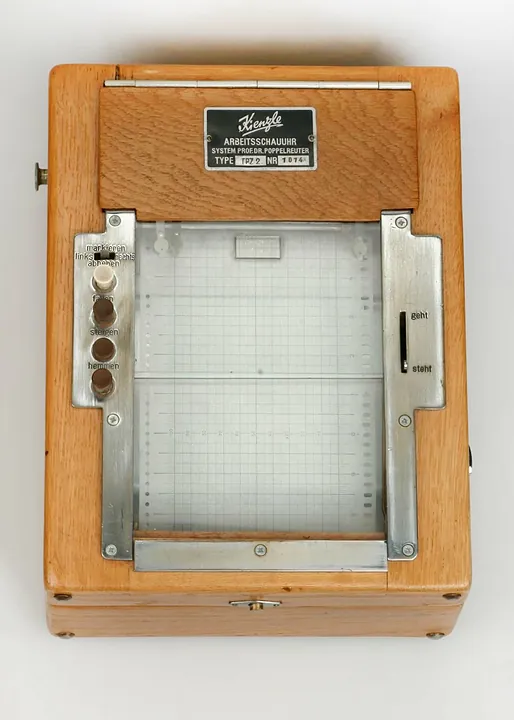
Clocks · c. 1950
Clock by Kienzle Apparate GmbH, Germany, c. 1950
German Clock Museum
Clocks · c. 1950
Clock, Germany, c. 1950
German Clock Museum