Clocks · Clock
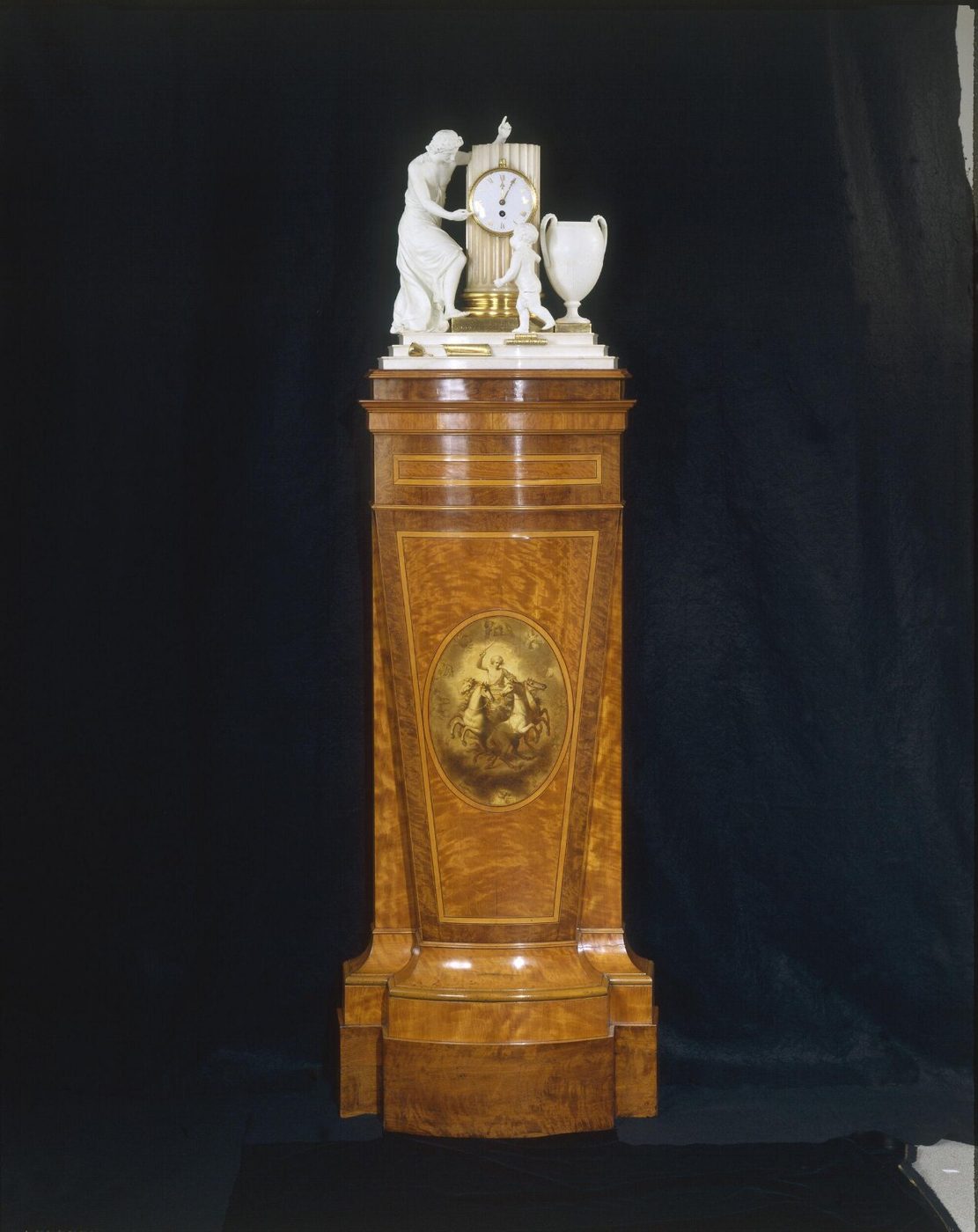
Clock by Benjamin Vulliamy, England, 1787
- Maker / attribution
- Benjamin Vulliamy (designer and maker)
- Date
- 1787
- Historical period
- Precision & Scientific Horology (1750 – 1850)
- Country of origin
- England
- Place
- London
- Object type
- Clock
- Materials / technique
- Plinth veneered in satinwood and mahogany; the porcelain clock with enamel dial.
- Dimensions
- Height: 173 cm; Width: 48.5 cm; Depth: 20 cm
- Holding institution
- Victoria and Albert Museum, London
- Accession / object no.
- W.15:1,2-1958
Record summary
Held and catalogued by Victoria and Albert Museum, London (object number W.15:1,2-1958), this is a clock by Benjamin Vulliamy, made in London, England, dated 1787. The Atlas places it in the Precision & Scientific Horology period (1750 – 1850) of its Clocks collection. Materials and techniques recorded by the source: Plinth veneered in satinwood and mahogany; the porcelain clock with enamel dial. Recorded dimensions: Height: 173 cm; Width: 48.5 cm; Depth: 20 cm. The record is illustrated with 4 photographs.
Assembled from the source record's structured fields. Dates and attributions are given as the source states them; where a field is missing the Atlas leaves it blank rather than estimating.
Catalogue description
V&A — Summary
Object Type As well as keeping time, clocks served as ornaments to be prominently displayed in all the main rooms of the house. Since clocks were so highly valued, they were often lavishly decorated. This one combines an unglazed white porcelain known as 'biscuit' with gilt bronze, elegant marquetry and a painted scene. People The clock was made by the firm of Benjamin Vulliamy, clockmaker to George III. The King was passionately interested in clocks and there is one by Vulliamy, dated 1786 and very similar to this, at Windsor Castle. The London firm of Thomas Brownley, who made the case, specialised in this work. The pedestal was probably painted by Thomas Bromley, a decorative painter. The biscuit figures are based on models that are likely to have been made by John Deare (1759-1798). He was a sculptor from Liverpool and the youngest Royal Academy gold medallist of his day. From 1785 until his death, Deare enjoyed a very successful career in Rome. Subjects Depicted The figures looking at the clock are Venus and Cupid. On the pedestal is the Greek god Apollo, surrounded by the signs of the Zodiac. This scene derives from an engraved gemstone illustrated in Bernard de Montfaucon's Antiquity Explained , published in London between 1721 and 1722.
V&A — Physical description
A clock in a case of marble and Derby porcelain, with gilt-brass mounts, mounted on a tall plinth veneered in satinwood and mahogany, with an oval painted panel showing Apollo driving the chariot of the sun, surrounded by the signs of the zodiac. The top is made with a central, tapering panel, which gives the appearance of a tapering, sculptural plinth. The clock face is mounted in a section of a fluted pillar and a figure of a man in classical drapery is consulting it, and showing it to a child. To the right of the column is a vase.
V&A — Object history
This, and its pair (W.16-1958) were almost certainly made in London by Vulliamy & Son; figures purchased from the Derby porcelain factory; stand probably made in London by Thomas Brownley (active 1768-1803) and probably painted by John Bromley (active 1768-1803). The clocks and barometers sold by the firm of Vulliamy, with their classical sculptural figures, competed in a luxury market in which French products led the field. The design of this stand, and that of the matching barometer nearby, reflect a move towards simplicity that marked Neo-classical design from the late 1780s onwards. Three other, more complex, clocks on similar plinths are known, in the State Dining Room, Buckingham Palace, one in a private collection and one with the Parisian dealer Kugel, shown at TEFAF fair, 2025.
V&A gallery label
PEDESTAL CLOCK ENGLISH; about 1787 Marble mounted in ormolu with figures of Derby porcelain on a satinwood plinth. Signed by Benjamin Vuillamy, Clockmaker to George III. En suite with barometer (W.16-1958).
Inscriptions & marks
Inscribed on ormolu scroll at base of steps 'Fugit irreperabile tempus. Virgil'; on back of clock regulator BREVETE SGDG; Vulliamy London 1787
Historical context
Precision & Scientific Horology (1750 – 1850)
Harrison solves longitude; Mudge invents the lever; Breguet's Paris workshop defines the modern watch.
The age of the deadbeat escapement, compensated pendulums and observatory regulators. Domestic clocks spread through the middle classes: English longcase and bracket clocks, French gilt-bronze mantel clocks, Viennese Biedermeier wall clocks, Black Forest painted-shield clocks, and the first American shelf clocks.
Read the period in the timelineMore clocks from this periodEarlier: Early Modern Horology
Atlas type guide
Domestic clocks
A clock combines four systems: a source of power (falling weight, coiled spring, or later electricity), a gear train that divides time, an escapement and oscillator that regulate it (foliot, pendulum or balance), and an indicating system of dial and hands or a bell. Its history runs from the large iron weight-driven clocks of the late thirteenth century to Renaissance spring-driven table clocks, the pendulum revolution of 1656, the factory clocks of the nineteenth century and electric and quartz clocks of the twentieth.
Domestic clocks also reflect regional furniture and decorative traditions — English longcase and bracket clocks, French pendules, Viennese regulators, Black Forest and American shelf clocks — and therefore record changing tastes as much as technical progress.
What to look for
- How the clock is powered: weights, spring barrel, fusee, electric coil.
- The oscillator: foliot, short pendulum, long seconds pendulum or balance.
- Whether it strikes: hour only (count wheel) or hours and quarters (rack striking).
- The maker or retailer's name on dial and movement, and any factory trademarks.
- Signs of alteration — replaced dials, converted escapements, 'married' cases.
Dating clues
- Before 1656 clocks used foliots or balances; after, most domestic clocks have pendulums.
- Anchor escapements spread after c. 1670; minute hands became common at the same time.
- Factory production in America and Germany transformed prices after c. 1840.
General guidance written by the Atlas editors about this kind of object. It is not a statement about this particular piece; for that, rely on the source record above and on physical examination.
Related records
Clocks · 1780
Regulator clock by Vulliamy, Benjamin, 1747-1811, England, 1780
Science Museum Group, London
Movements & Components · 1795
Turret clock by Thwaites and Reed; Vulliamy, Benjamin, England, 1795
Science Museum Group, London
Clocks · 1711–1827
Longcase clock by David Roentgen ( - ), England, 1711–1827
Badisches Landesmuseum Karlsruhe
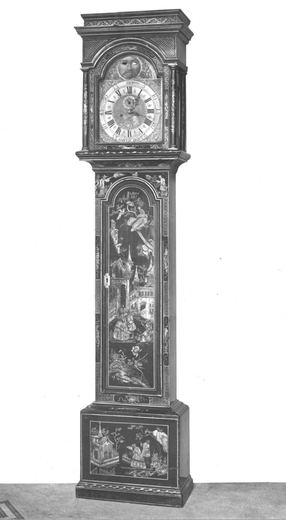
Clocks · 1740-1760
Longcase clock, English, 1740-1760, japanned wood, John Ellicott
Victoria and Albert Museum, London
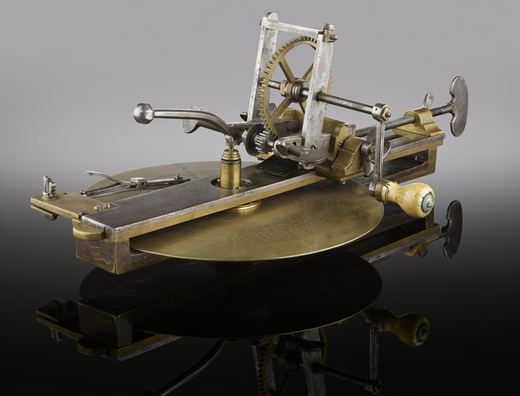
Clocks · 1751
Large wheel engine, signed and dated "John Tipping, Whildon Green, 1751".
Science Museum Group, London
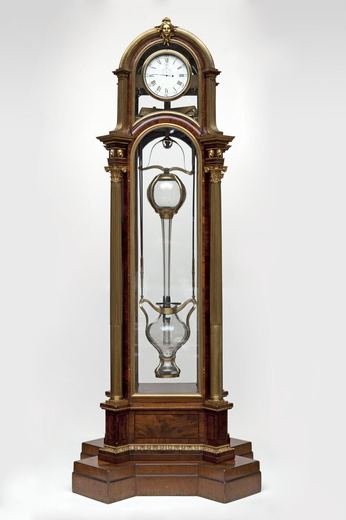
Clocks · ca. 1760
Longcase clock by James Cox, England, ca. 1760
Victoria and Albert Museum, London
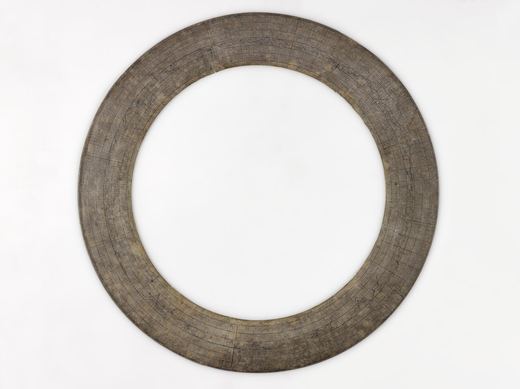
Clocks · 1766
Clock by Cumming, Alexander, England, 1766
Science Museum Group, London
Clocks · 1768-1769
Regulator clock by Shelton, John, England, 1768-1769
Science Museum Group, London