
Wristwatches · Wristwatch
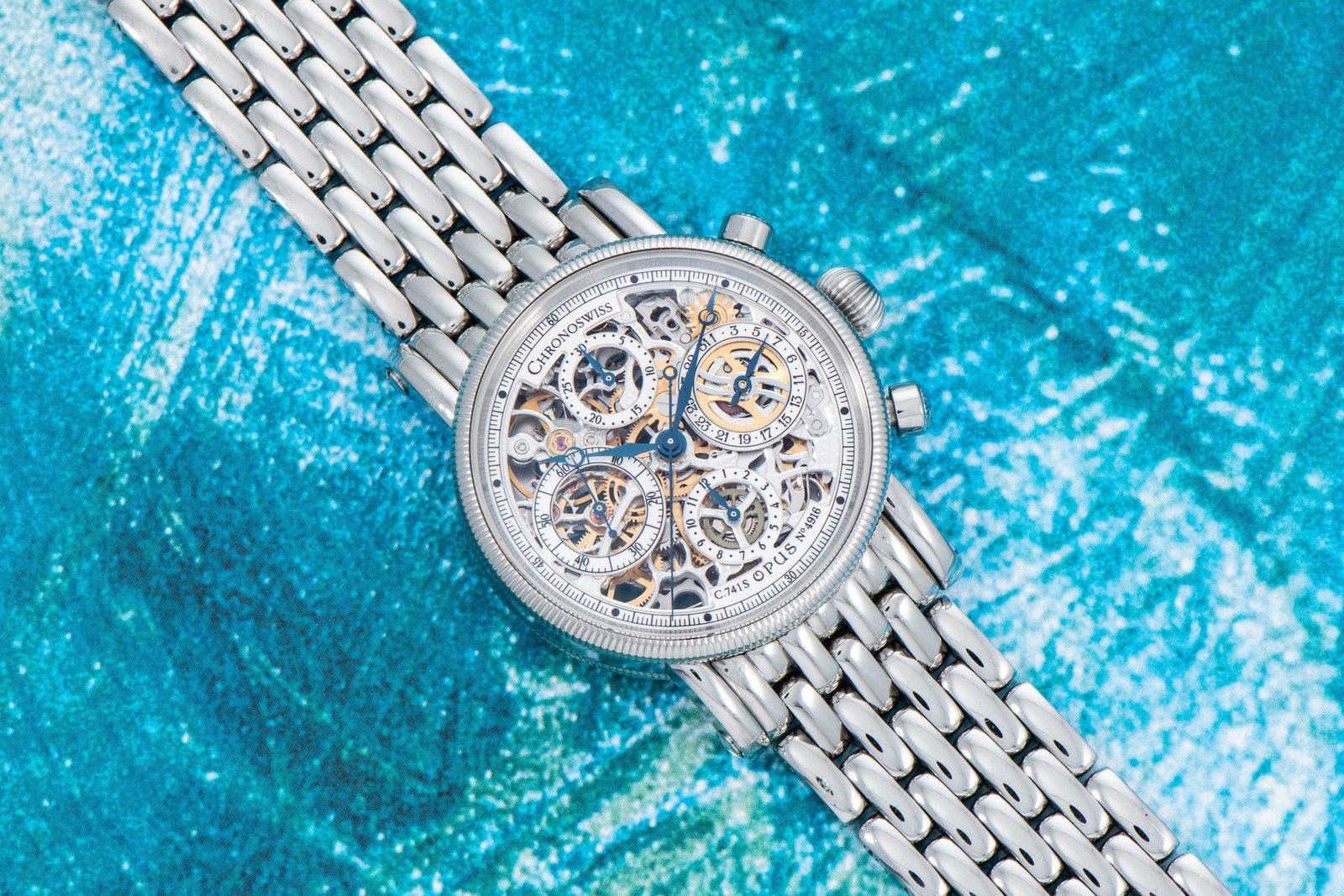
Chronoswiss Opus Skeleton Chronograph, 2010s
- Maker / attribution
- Chronoswiss (maker)
- Date
- 2010s
- Historical period
- Contemporary Horology (2010 – Present)
- Country of origin
- Germany
- Object type
- Wristwatch
- Dimensions
- Case 38 mm
- Stock no.
- 408000325490
- Credit line
- Dealer listing, Analog/Shift (408000325490)
- Catalogue title (original)
- Chronoswiss Opus Skeleton Chronograph (English)
View the source record (dealer listing) ↗ (opens another website in a new tab)Suggest a correction
Record summary
Catalogued by Analog/Shift (dealer), New York (stock number 408000325490), this is a wristwatch by Chronoswiss, made in Germany, dated 2010s. The Atlas places it in the Contemporary Horology period (2010 – Present) of its Wristwatches collection. Recorded dimensions: Case 38 mm. The record is illustrated with 6 photographs.
Assembled from the source record's structured fields. Dates and attributions are given as the source states them; where a field is missing the Atlas leaves it blank rather than estimating.
Catalogue description
Dealer description — Analog/Shift
Skeletonized watches — watches whose dials reveal parts of the movement ticking away beneath — have been around much longer than you think. Watchmaker André Charles Caron, clockmaker to King Louis XV of France, is credited with developing the first skeletonized movements way back in the early 18th century. Depending on the watch, this is done by some combination of providing the timepiece with a transparent dial and/or by removing material from the movement’s bridges and other parts such that the constituent components are visible. Chronoswiss, a Swiss watchmaker established in Lucerne in 1983, has been making specialized skeleton watches since 1995. Their Skeleton Chronograph in particular has seen numerous iterations of the years, but never fails to dazzle with its openworked dial that reveals a dizzyingly complicated movement beneath. The Reference CH7523S, which dates to the 2010s, is housed in a 38mm stainless steel case with a sapphire crystal, an ‘onion’ crown, an coin-edge bezel, and the extra-long lugs that were characteristic of the model during that time period. It features a striking skeletonized dial with a white outer minute track, matching white subsidiary register rings, a blued steel ‘Breguet’ handset, and a triple-register chronograph with a date wheel at 3:00. Controlling this horological wonder is an automatic movement, the Calibre C. 741, which is visible not only via the dial but also through a sapphire exhibition caseback. When paired with its matching, stainless steel ‘beads of rice’ bracelet with a signed, hidden deployant clasp, the net result is nothing less than stunning. Whether you’re a ‘watch guy’ or not, it’s easy to become mesmerized and stare at this compelling dial all day long. What’s more, this CH7523S is accompanied by its factory goodies. Don’t let it slip through your fingers!
Historical context
Contemporary Horology (2010 – Present)
Silicon components, connected watches, optical-lattice research clocks and a thriving independent scene.
Smartwatches became the world's best-selling watches, while mechanical watchmaking focuses on craft, innovation (silicon components, new escapements) and independent makers.
Read the period in the timelineMore wristwatches from this periodEarlier: Mechanical Renaissance
Atlas type guide
Chronographs and split-seconds watches
A chronograph is a watch with an additional seconds hand that can be started, stopped and returned to zero independently of the timekeeping. Louis Moinet built an early example in 1816 and Nicolas Rieussec a recording 'chronographe' in 1821; Adolphe Nicole's heart-shaped reset cam (patented 1862) made the modern return-to-zero possible. Split-seconds (rattrapante) chronographs add a second hand that can be stopped for intermediate times; flyback chronographs restart instantly.
Chronographs were essential tools for doctors (pulsometer scales), artillery (telemeter), engineers and sport. In wristwatches, Valjoux, Venus, Lemania and later the automatic chronographs of 1969 (Zenith El Primero, the Chronomatic Calibre 11 group and Seiko 6139) are milestones.
What to look for
- Push-pieces on the case band or a single button in the crown (monopusher).
- Subsidiary registers for minutes and hours; tachymeter, telemeter or pulsometer scales.
- Column wheel versus cam control visible in the movement.
- Calibre markings of specialist makers (Valjoux, Lemania, Venus, Landeron).
Dating clues
- Pocket chronographs with heart cam reset: after 1862.
- Wrist chronographs: from c. 1910; two-button designs from the 1930s.
- Automatic chronographs: from 1969.
General guidance written by the Atlas editors about this kind of object. It is not a statement about this particular piece; for that, rely on the source record above and on physical examination.
Read next:Flyback chronographChronograph
Related records
Wristwatches · c. 2004
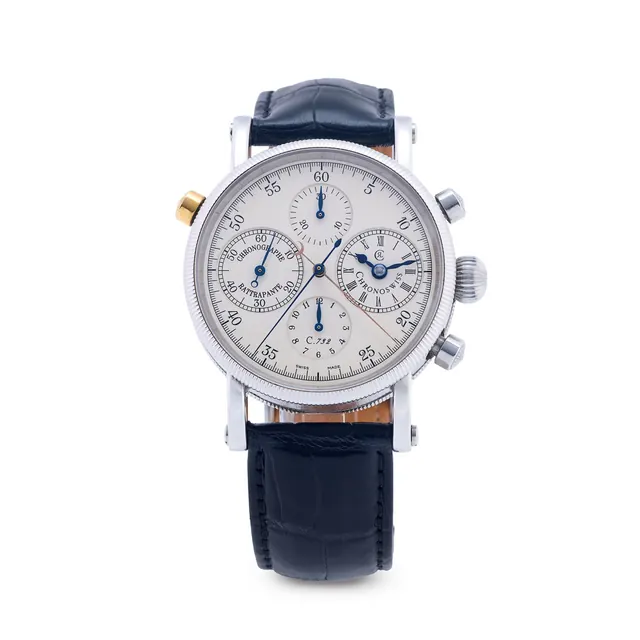
Chronoswiss wristwatch, ref. CH7323, Rattrapante Chronograph, circa 2004
Antiquorum auction archive, Geneva
Wristwatches · Sold in June 1994
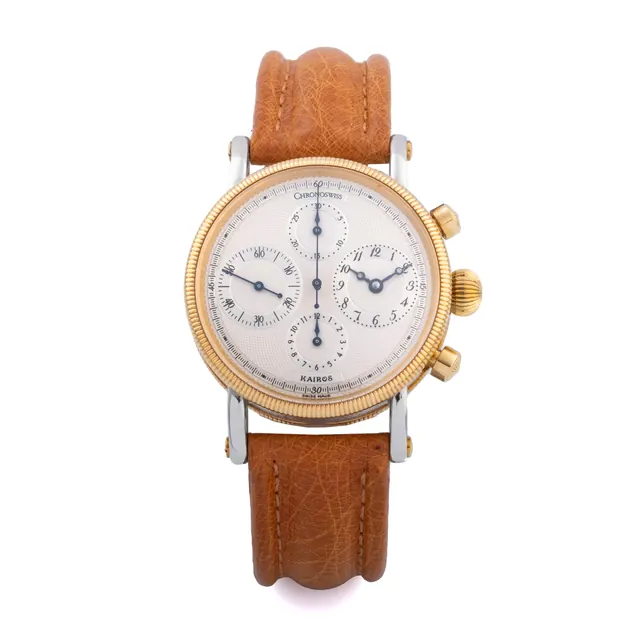
Chronoswiss wristwatch, ref. CH, Swiss Kairos Chronograph, Sold in June 1994
Antiquorum auction archive, Geneva
Wristwatches · c. 1996
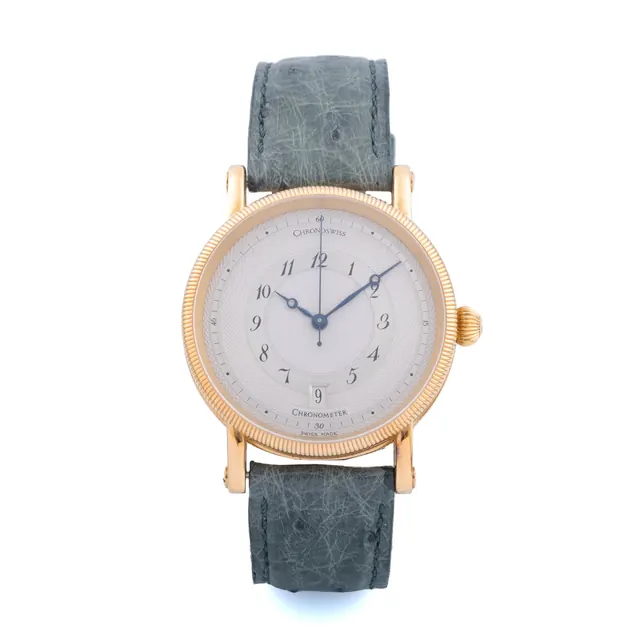
Chronoswiss wristwatch, ref. CH2821, Swiss Chronometer, circa 1996
Antiquorum auction archive, Geneva
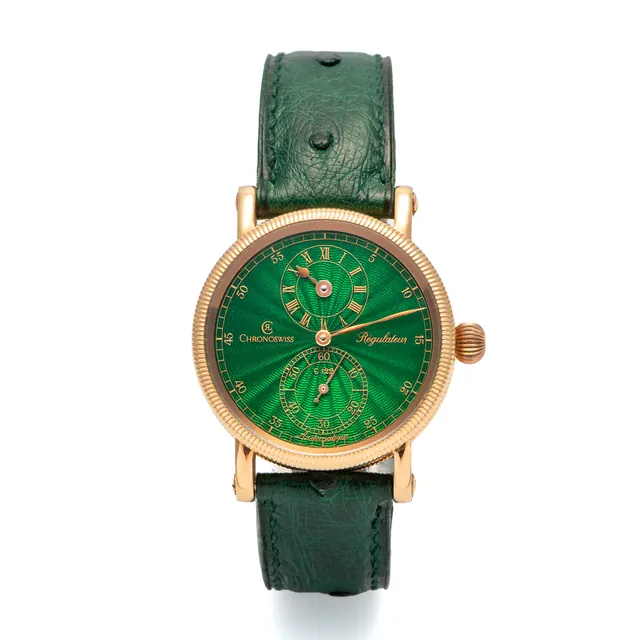
Wristwatches · c. 2000
Chronoswiss wristwatch, Regulateur Green Enamel Guilloche Dial, circa 2000
Antiquorum auction archive, Geneva
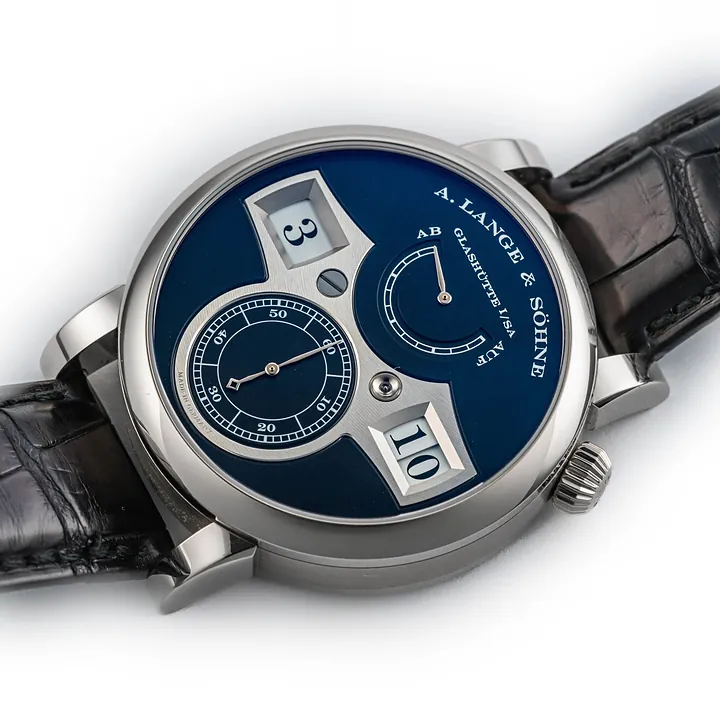
Wristwatches · c. 2018
A.Lange & Söhne Zeitwerk, ref. 140.029, c. 2018
Antiquorum auction archive, Geneva
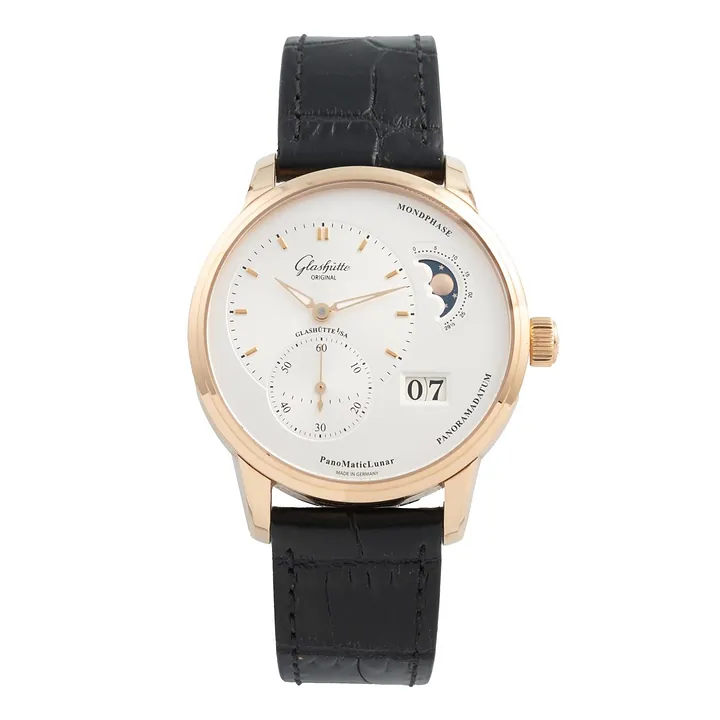
Wristwatches · originally sold in April 2022 (per the lot record)
Glashã¼tte Original Panomaticlunar, ref. 1-90-02-45-35-04, originally sold in April 2022
Antiquorum auction archive, Geneva
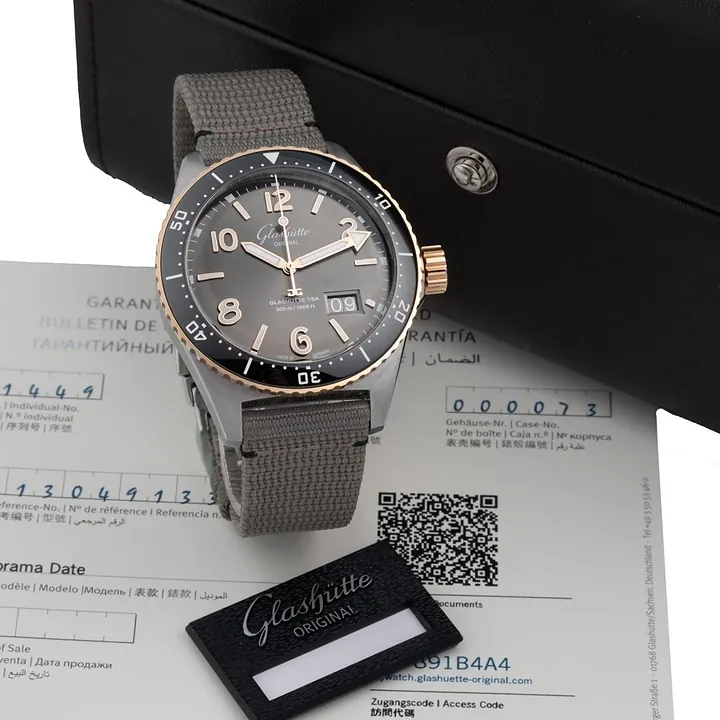
Wristwatches · c. 2022
Glashütte Original Seaq Panorama Date, ref. 1-36-13-04-91-33, c. 2022
Antiquorum auction archive, Geneva
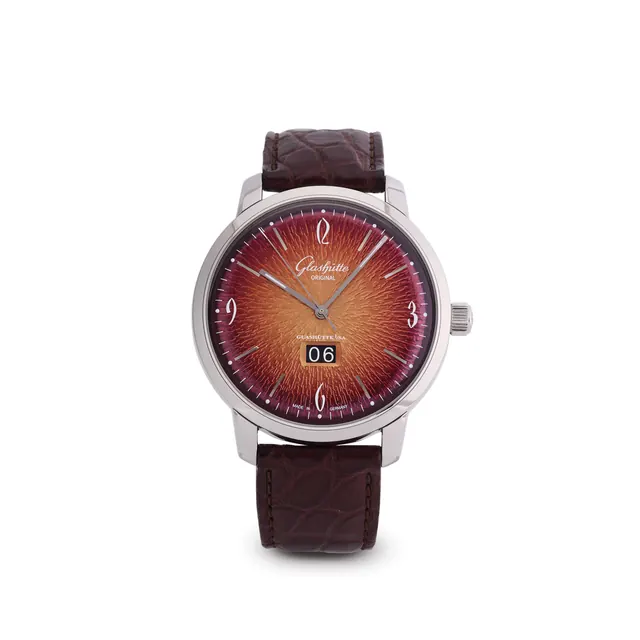
Wristwatches · originally sold in December 2021 (per the lot record)
Glashütte Original wristwatch, ref. W23947090204, Sixities Panorama Date Annual Edition, originally sold in December 2021 (per the lot record)
Antiquorum auction archive, Geneva