
Wristwatches · Wristwatch
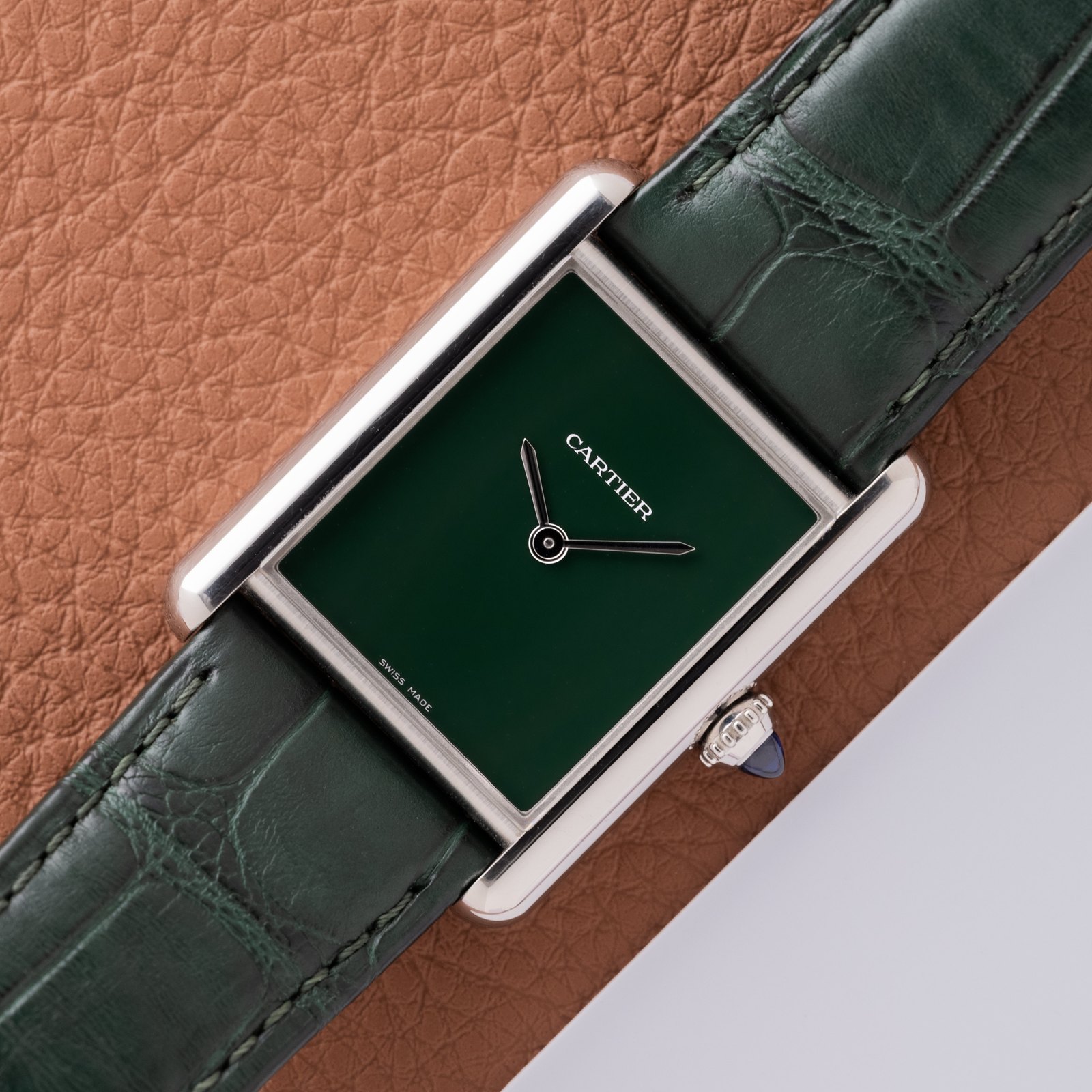
Cartier Tank Must Green Dial (Ref. WSTA0056 / 4323), 2025
- Maker / attribution
- Cartier (maker)
- Date
- 2025
- Historical period
- Contemporary Horology (2010 – Present)
- Country of origin
- France
- Object type
- Wristwatch
- Dimensions
- Case 25.5 mm
- Stock no.
- Product 8771602612407
- Credit line
- Dealer listing, Huntington Company (product 8771602612407)
- Catalogue title (original)
- 2025 Cartier Tank Must Green Dial - Box and Papers (Ref. WSTA0056 / 4323) (English)
View the source record (dealer listing) ↗ (opens another website in a new tab)Suggest a correction
Record summary
Catalogued by Huntington Company (dealer) (stock number Product 8771602612407), this is a wristwatch by Cartier, made in France, dated 2025. The Atlas places it in the Contemporary Horology period (2010 – Present) of its Wristwatches collection. Recorded dimensions: Case 25.5 mm. The record is illustrated with 6 photographs.
Assembled from the source record's structured fields. Dates and attributions are given as the source states them; where a field is missing the Atlas leaves it blank rather than estimating.
Catalogue description
Dealer description — Huntington Company
History and Significance The Tank Must is an interesting Cartier because it is not trying to reinvent the Tank. The familiar brancards, rectangular dial, railroad minute track, and blue cabochon are all still there. What Cartier changed was the part of the formula that had traditionally been treated as almost untouchable: the dial. In green, the Tank suddenly feels younger and considerably less formal without losing the design that makes it immediately recognizable. That relationship with color also has deeper roots at Cartier than it might initially appear. The historic Must de Cartier watches showed how dramatically a Tank could change through the use of bold, often monochromatic dials. Those watches have become a fascinating collecting category of their own, and the modern Tank Must revisits some of that same willingness to have fun with the format. It is less about creating a completely new Cartier and more about showing how much personality can be extracted from a design that has existed for generations. The green version is particularly good at demonstrating why the Tank has survived so many reinterpretations. Remove the Roman numerals and the traditional white dial, introduce a saturated color, and the underlying architecture is still unmistakably Cartier. Very few watch designs can lose so many of their familiar visual signatures and remain immediately identifiable. That says quite a bit about how strong the Tank silhouette was in the first place. Writer's Thoughts There is a tendency to treat the Tank too seriously. The classic versions deserve their place, but Cartier has spent decades proving that the shape can handle much more than a white dial and Roman numerals. The green Tank Must is fun precisely because it does not pretend to be anything other than that. The monochromatic dial gives the watch a completely different attitude while the case keeps everything grounded in Cartier. It can be worn in situations where a traditional Tank might feel a little too proper, and that makes the design surprisingly versatile. More importantly, it has personality. Among modern entry points into Cartier, that makes this one particularly easy to like. Our Promise Every watch is thoroughly vetted, carefully described with complete transparency, and guaranteed authentic. Each piece is offered in honest condition, ensuring collectors receive a timepiece that reflects both originality and integrity. Specifications Brand: Cartier Model: Tank Must Reference: WSTA0056 / 4323 Year: 2025 Case Material: Stainless steel Case Size: 25.5mm x 33.7mm Dial: Green lacquer dial Movement: Quartz Strap/Buckle: Original Cartier green leather strap Buckle/Clasp: Original Cartier buckle Condition Case: The stainless steel case presents in excellent overall condition with minimal signs of wear. Dial: The green dial presents in excellent condition with a rich, even finish. Hands: The hands present in excellent condition. Crystal: The crystal presents in excellent condition with no notable wear. Strap/Buckle: The original Cartier green leather strap presents very well. Buckle/Clasp: The original Cartier buckle presents in excellent overall condition.
Historical context
Contemporary Horology (2010 – Present)
Silicon components, connected watches, optical-lattice research clocks and a thriving independent scene.
Smartwatches became the world's best-selling watches, while mechanical watchmaking focuses on craft, innovation (silicon components, new escapements) and independent makers.
Read the period in the timelineMore wristwatches from this periodEarlier: Mechanical Renaissance
Atlas type guide
Wristwatches
Bracelet watches were worn by women from the early nineteenth century — Breguet made one for Caroline Murat, Queen of Naples, in 1810–12 — but the wristwatch only became a man's instrument with military use and aviation in the early twentieth century. Between the World Wars it overtook the pocket watch; the 1920s and 1930s brought rectangular Art Deco cases, water-resistant cases and the first automatic winding systems.
After 1945 the wristwatch became a carrier of identity — dress watches, sports and dive watches, chronographs, calendars — produced by Swiss, American, Japanese, German, Soviet and Chinese industries. The quartz revolution after 1969 and the mechanical renaissance since the 1990s, including the rise of independent watchmakers, complete the story.
What to look for
- The reference number (between the lugs or inside the case back) and serial number, the starting point for dating.
- The calibre: its maker and number are often stamped under the dial or on the bridge.
- Originality of dial, hands and crown — refinished ('redial') dials are common.
- Case material marks: 18K/750, 14K/585, stainless steel, gold-filled, plated.
Dating clues
- Wire-lug cases: before c. 1925.
- Water-resistant screw-down cases: from 1926.
- Quartz movements: from 1969; sapphire crystals widespread after c. 1980.
General guidance written by the Atlas editors about this kind of object. It is not a statement about this particular piece; for that, rely on the source record above and on physical examination.
Related records
Clocks · 1863
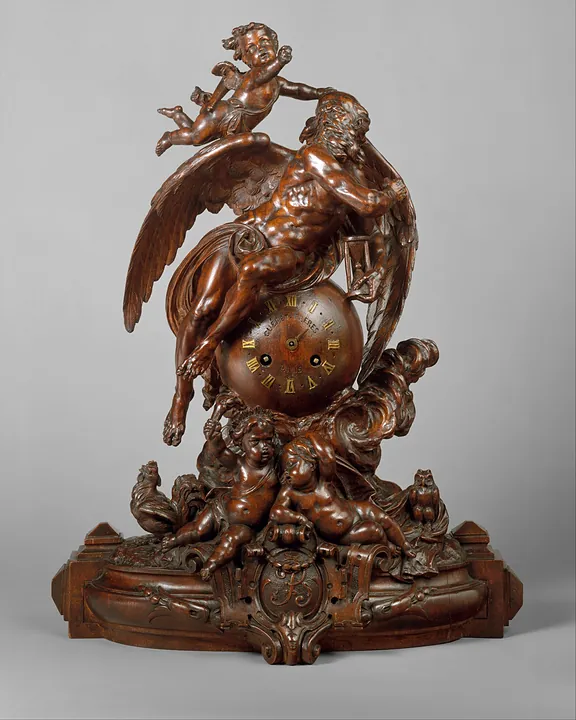
Clock by Albert-Ernest Carrier-Belleuse, France, 1863
The Metropolitan Museum of Art, New York
Clocks · c. 1980s
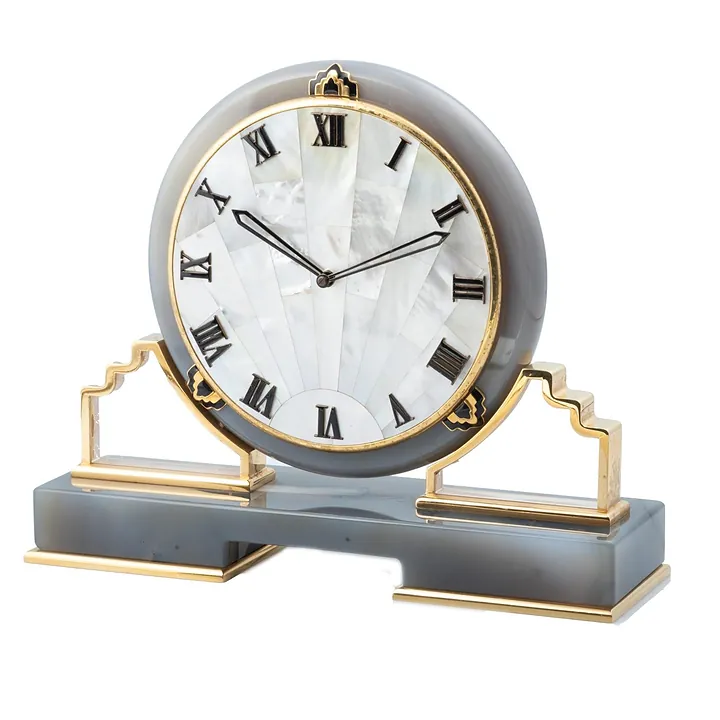
Cartier "art Deco", c. 1980s
Antiquorum auction archive, Geneva
Clocks · c. 2000s
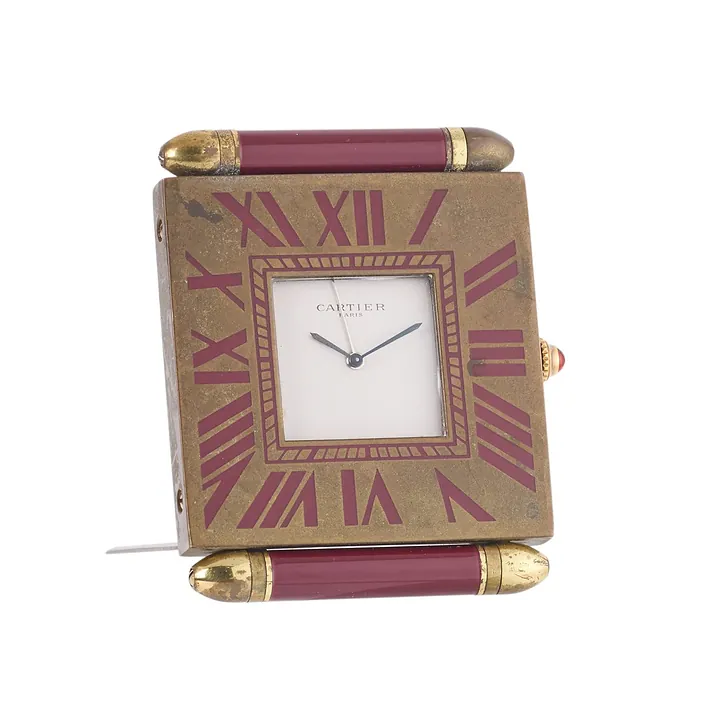
Cartier Desk Clock with Alarm, c. 2000s
Antiquorum auction archive, Geneva
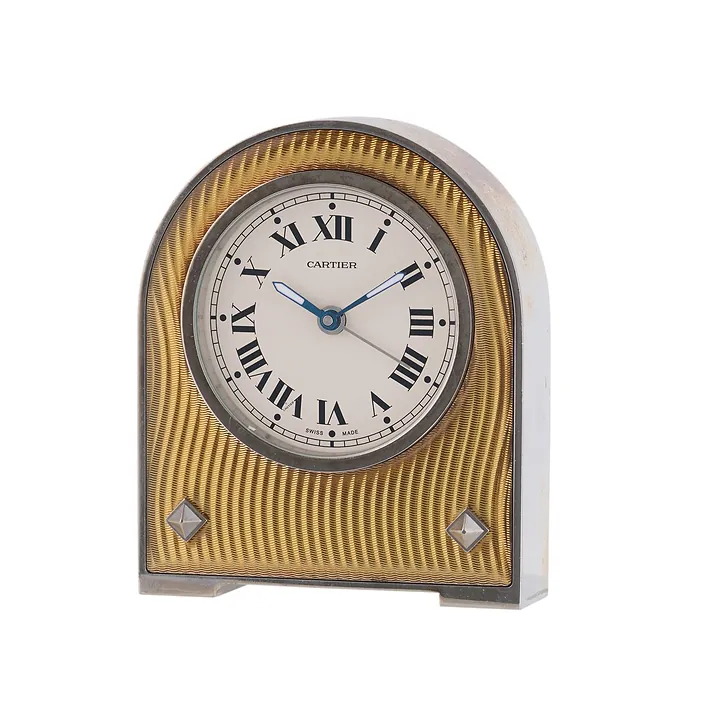
Clocks · c. 2000s
Cartier Lacquer Arched Desk Clock with Alarm, ref. W0100037, c. 2000s
Antiquorum auction archive, Geneva
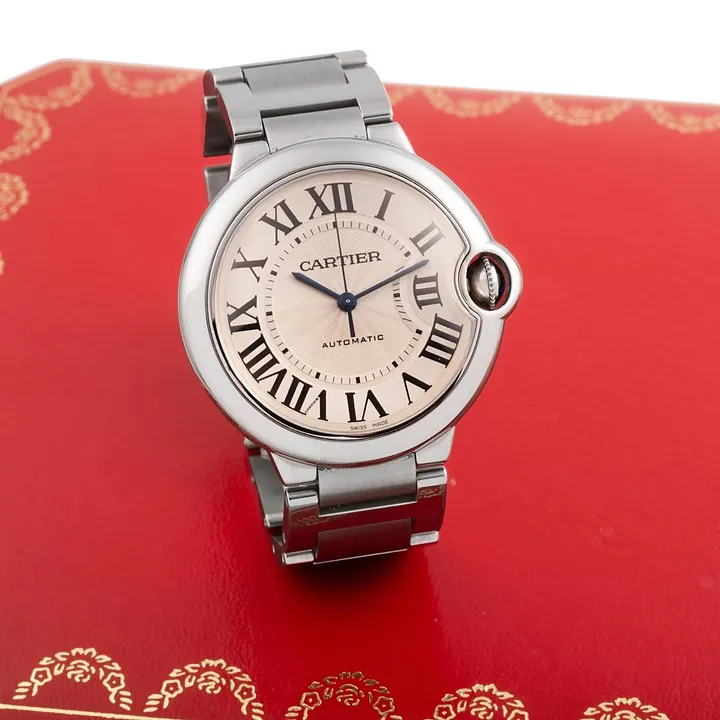
Wristwatches · c. 2010s
Cartier Ballon Bleu, ref. 3284, c. 2010s
Antiquorum auction archive, Geneva

Wristwatches · originally sold in December 2021 (per the lot record)
Cartier Tank Must, ref. CRWSTA0054, originally sold in December 2021
Antiquorum auction archive, Geneva
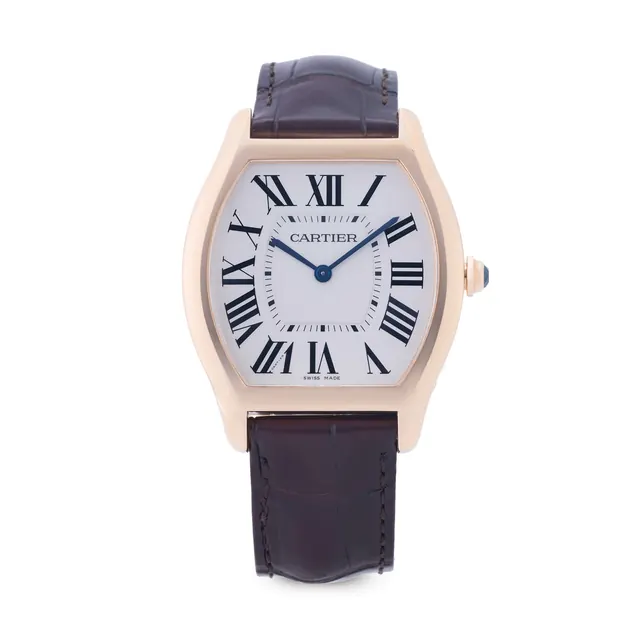
Wristwatches · originally sold in 2023 (per the lot record)
Cartier wristwatch, ref. WGTO0002, Tortue, originally sold in 2023
Antiquorum auction archive, Geneva
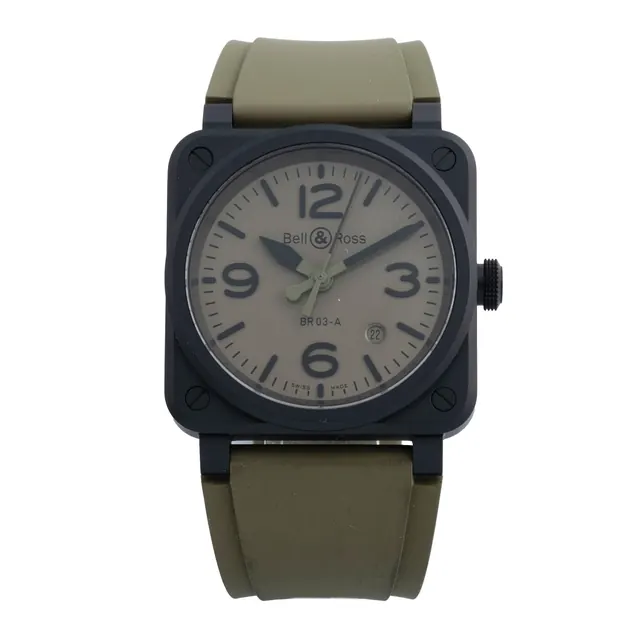
Wristwatches · c. 2020
Bell & Ross wristwatch, ref. BR, Aviation Type, circa 2020
Antiquorum auction archive, Geneva