
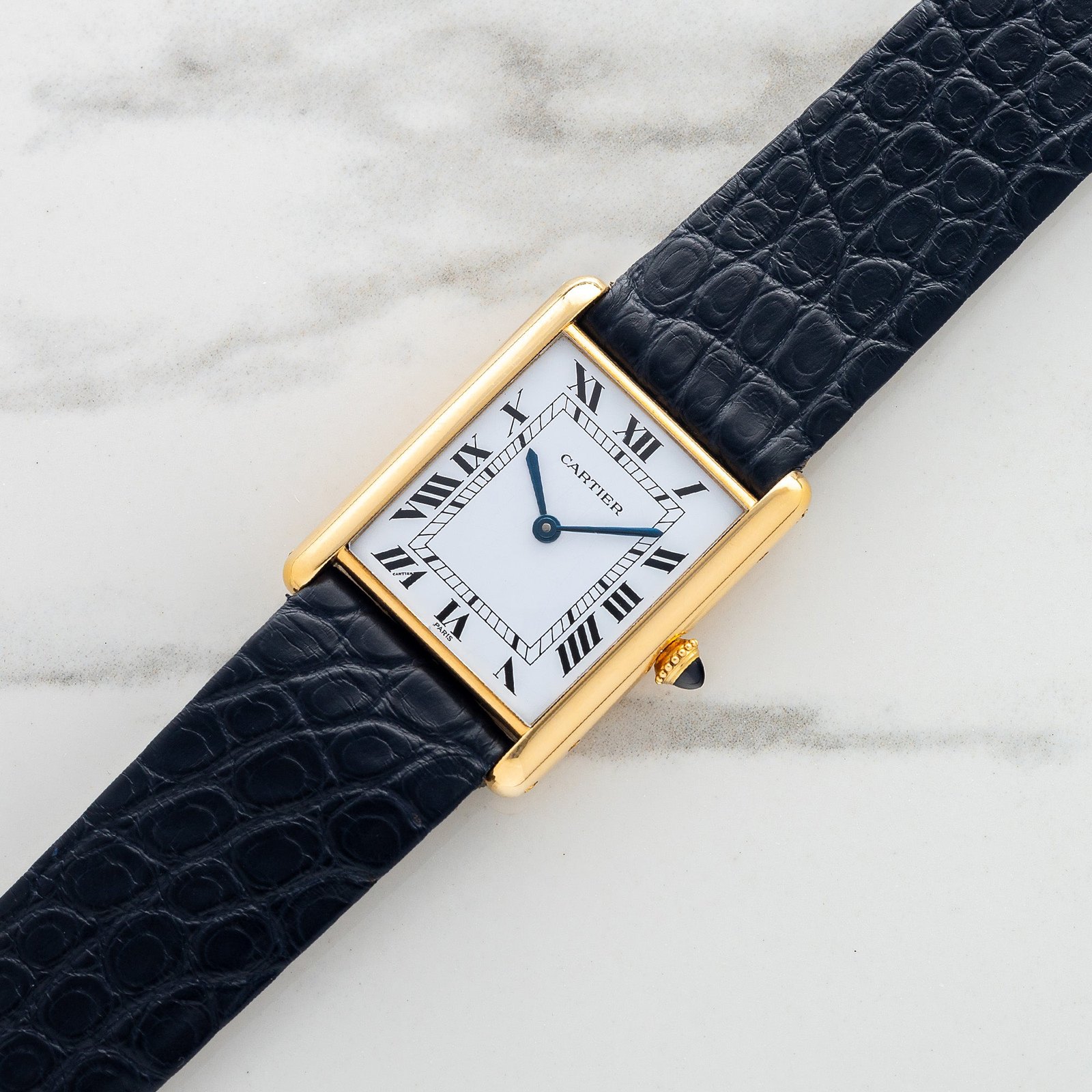
Wristwatches · Wristwatch
Cartier Tank Louis "Small Jumbo Automatique" 17011
- Maker / attribution
- Cartier (maker)
- Date
- c. 1970s
- Historical period
- Quartz Revolution (1969 – 1990)
- Country of origin
- France
- Object type
- Wristwatch
- Stock no.
- Product 9709527761172
- Credit line
- Dealer listing, Collectors Corner NY (product 9709527761172)
- Catalogue title (original)
- Cartier Tank Louis "Small Jumbo Automatique" 17011 - Very Rare (English)
View the source record (dealer listing) ↗ (opens another website in a new tab)Suggest a correction
Record summary
Catalogued by Collectors Corner NY (dealer), New York (stock number Product 9709527761172), this is a wristwatch by Cartier, made in France, dated c. 1970s. The Atlas places it in the Quartz Revolution period (1969 – 1990) of its Wristwatches collection. The record is illustrated with 6 photographs.
Assembled from the source record's structured fields. Dates and attributions are given as the source states them; where a field is missing the Atlas leaves it blank rather than estimating.
Catalogue description
Dealer description — Collectors Corner NY
The Cartier Tank has achieved iconic status in the world of watch design and, with the exception of a few distinctive variations, has maintained a consistent aesthetic throughout its extensive production history. The first commercially available Tank Normale was introduced in 1919, having been inspired by the treads of the French Renault FT-17 tank used in WW1. Throughout the decades, Tank watches have been documented on the wrists of notable figures from Jackie Kennedy to Andy Warhol. Today, Cartier feels more relevant in the worlds of fashion, music and popular culture than ever before. As Cartier scholarship develops, the recognition of what is more rare has become more apparent in recent years. This Tank Automatic "Jumbo" ref. 17011 is one such example of a seldom seen gem. Firstly, any automatic Tank is rare in and of itself (the "Jumbo XL" ref. 17002 being the larger counterpart), however we believe this smaller cased version to have been produced in even fewer quantities and many collectors would agree its proportions wear better on wrist. This example, circa 1970s features a "Paris" signed dial that has remained in nice vintage condition. There is some light crazing in its lacquer, as with most examples of this era but presents well with no distracting marks. The case has been polished in the past but remains thick and even. There is a hallmark still visible on its side. No notable dings or dents. The lettering and hallmark on the back are still clearly legible. We love the standard Tank Louis size but this reference is perfect for anyone looking for slightly more wrist presence with some added scarcity. Explore more of our vintage Cartier watches .
Historical context
Quartz Revolution (1969 – 1990)
Seiko's Astron begins mass quartz timekeeping; traditional industries contract sharply.
Quartz and digital watches transformed the market after 1969. Swiss employment collapsed, Japanese and Hong Kong production soared, and the Swatch (1983) helped the Swiss industry recover; mechanical watches survived as luxury goods.
Read the period in the timelineMore wristwatches from this periodEarlier: Modern Mechanical Horology
Atlas type guide
Automatic (self-winding) watches
Self-winding watches use the wearer's motion to wind the mainspring. Abraham-Louis Perrelet and Breguet made 'perpétuelle' pocket watches with oscillating weights in the late eighteenth century, but the principle only became practical in the wristwatch. John Harwood patented a bumper automatic in 1923; Rolex's Perpetual rotor (1931) winding in one direction, and later bidirectional rotors (Eterna, Felsa Bidynator), established the modern form. Micro-rotors (Universal Genève, Buren) and peripheral rotors made automatic watches thinner.
What to look for
- A semicircular rotor turning 360° over the movement, or a 'bumper' weight that rebounds between springs.
- 'Automatic', 'Perpetual' or 'Self-winding' on the dial.
- A sealed screw-back case, since automatic watches are wound less often by the crown.
Dating clues
- Bumper automatics: 1923–c. 1955.
- Full rotors: from 1931 (Rolex); widespread after c. 1950.
- Micro-rotors: from 1954–1958.
General guidance written by the Atlas editors about this kind of object. It is not a statement about this particular piece; for that, rely on the source record above and on physical examination.
Related records
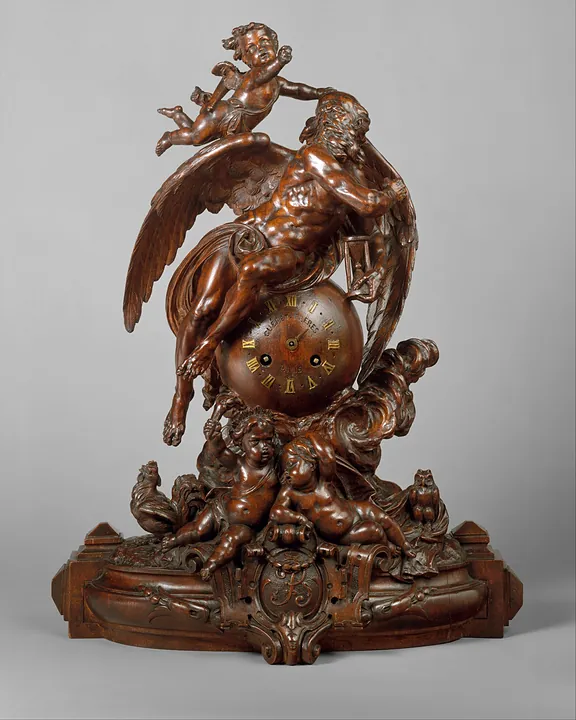
Clocks · 1863
Clock by Albert-Ernest Carrier-Belleuse, France, 1863
The Metropolitan Museum of Art, New York
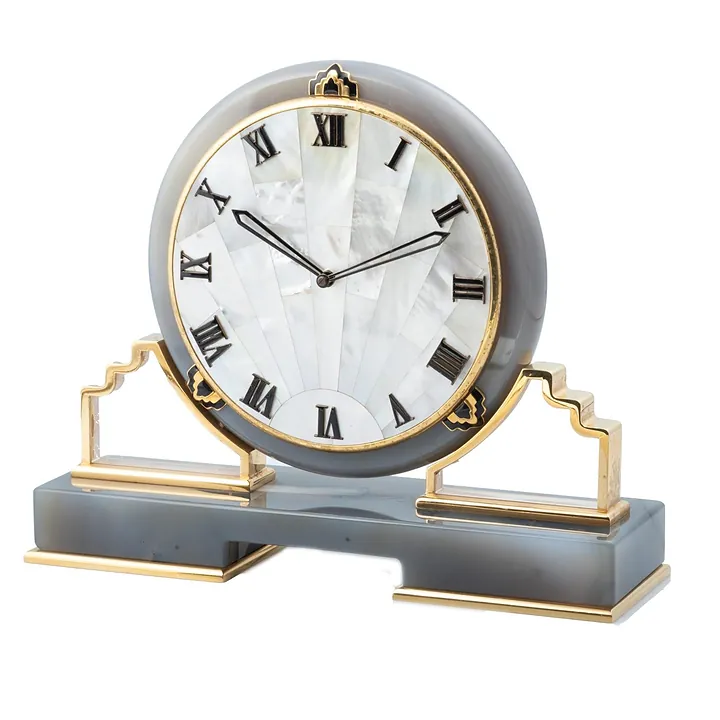
Clocks · c. 1980s
Cartier "art Deco", c. 1980s
Antiquorum auction archive, Geneva
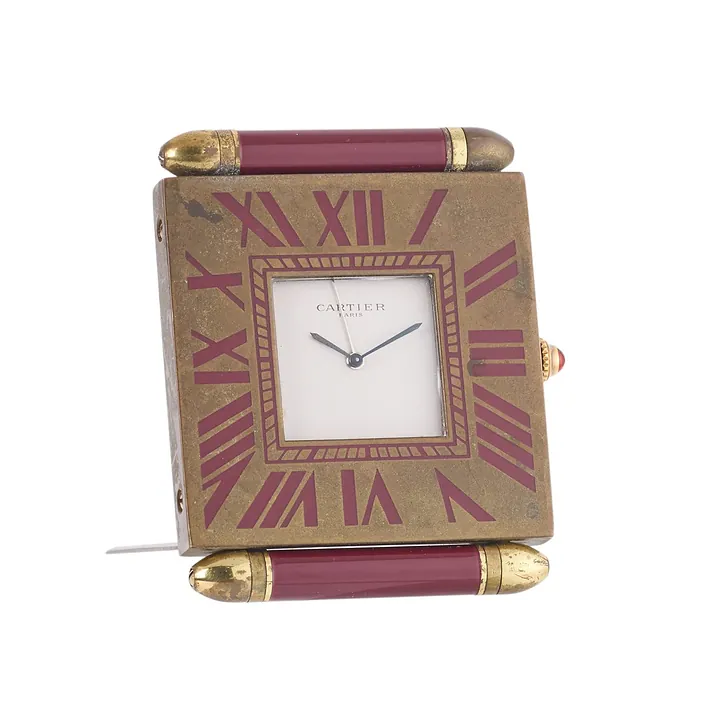
Clocks · c. 2000s
Cartier Desk Clock with Alarm, c. 2000s
Antiquorum auction archive, Geneva
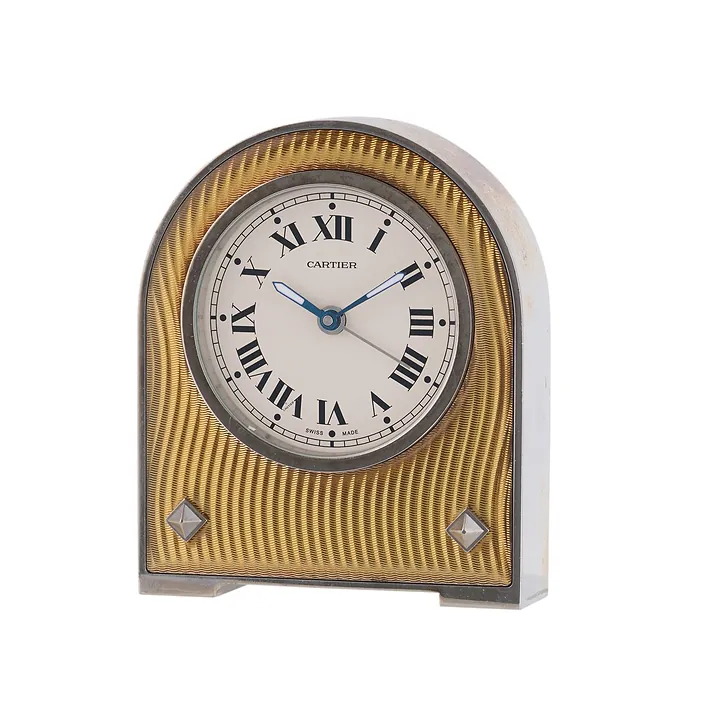
Clocks · c. 2000s
Cartier Lacquer Arched Desk Clock with Alarm, ref. W0100037, c. 2000s
Antiquorum auction archive, Geneva
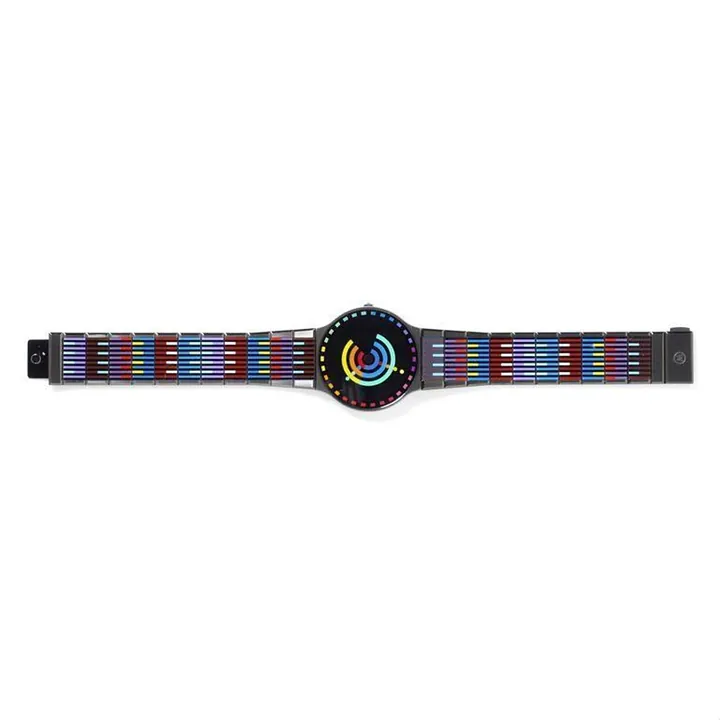
Wristwatches · c.1989
Steel, France and Switzerland, 1989; designed by Yaacov Agam (born 1928) for a limited edition by Movado
Victoria and Albert Museum, London
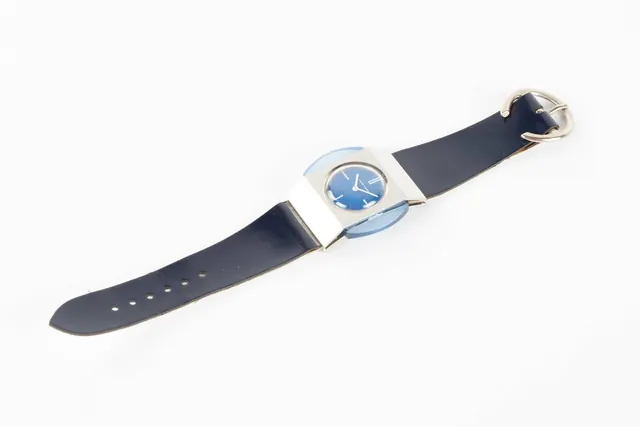
Wristwatches · c. 1972
Wristwatch, France, c. 1972
German Clock Museum

Wristwatches · 1986
Wristwatch, France, 1986
Työväenmuseo Werstas
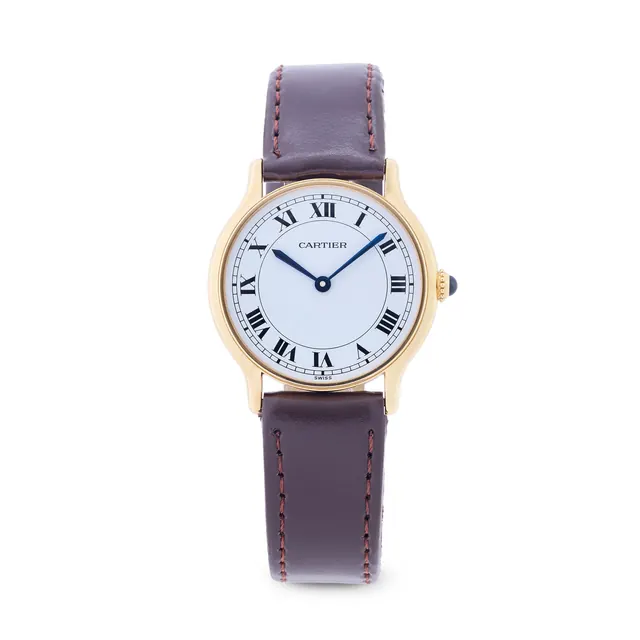
Wristwatches · c. 1970-1980s
Cartier wristwatch, ref. 10713, Riviera, circa 1970-1980s
Antiquorum auction archive, Geneva