
Wristwatches · Wristwatch
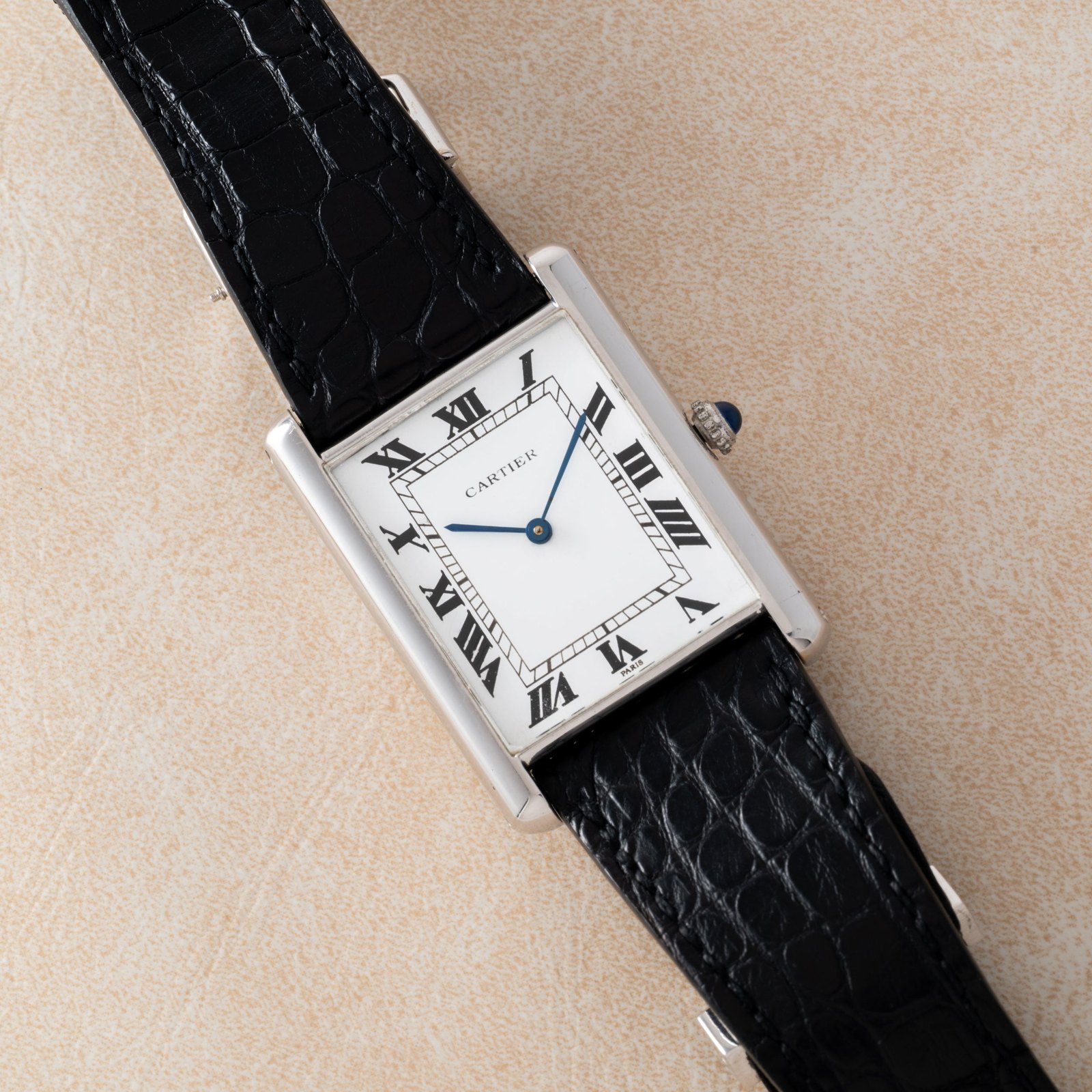
Cartier Tank Louis Automatique 'Jumbo', c. 1980s
- Maker / attribution
- Cartier (maker)
- Date
- c. 1980s
- Historical period
- Quartz Revolution (1969 – 1990)
- Country of origin
- France
- Object type
- Wristwatch
- Dimensions
- Case 28 mm
- Stock no.
- 40950488
- Credit line
- Dealer listing, Analog/Shift (40950488)
- Catalogue title (original)
- Cartier Tank Louis Automatique 'Jumbo' (English)
View the source record (dealer listing) ↗ (opens another website in a new tab)Suggest a correction
Record summary
Catalogued by Analog/Shift (dealer), New York (stock number 40950488), this is a wristwatch by Cartier, made in France, dated c. 1980s. The Atlas places it in the Quartz Revolution period (1969 – 1990) of its Wristwatches collection. Recorded dimensions: Case 28 mm. The record is illustrated with 6 photographs.
Assembled from the source record's structured fields. Dates and attributions are given as the source states them; where a field is missing the Atlas leaves it blank rather than estimating.
Catalogue description
Dealer description — Analog/Shift
There are certain designs that just resonate throughout the years and remain evergreen despite changing trends and tastes. The Cartier Tank, in all its one hundred-plus years of production, is one such design. Whether in gold (yellow, pink, or white), stainless steel, or vermeil; whether Française, Chinoise, Americaine, or Normale; the Tank by Cartier is one watch that truly deserves to be called "iconic." Cartier introduced the Tank in 1917, with a run of six pieces — given, or so the legend goes, to American General Joseph Pershing and his staff. The design of the Tank was inspired by the Renault FT-17 tanks Cartier glimpsed on the battlefield of the Great War. (Cartier took the look of the Renault tank's treads and applied it to the lugs, which were integrated via brancards into the case itself.) That first run of six pieces increased to thirty-three by 1920, and by the end of the 20th century, that number stood well in the thousands. In sheer volume alone, the Tank — in all its various models — is Cartier's largest line of watches. The Tank Louis was introduced in 1922, following close on the heels of the Asian-influenced Tank Chinoise. With the Tank Louis, Cartier went back to basics, with the classic lugs that resemble the treads that inspired them. Louis Cartier himself wore the watch that bore his name — that association with the man himself marks the Tank Louis as the quintessence of the Cartier Tanks. This particular example, a larger than usual 'jumbo,' dates to circa the 1980s and features a 28mm x 35mm 18K white gold case with a glossy white dial with printed 'Roman' indices, a matching blued-steel 'sword' handset, and a sapphire cabochon crown. The watch also features a Jaeger-LeCoultre automatic winding movement - a bit of a departure from the typically manually-wound tank, but a welcome one! This unusual iteration of the Tank Louis upholds the legend, adding increased wearability and versatility. Beloved by movie stars, heads of state (and First Ladies), and even four-star generals, the Tank Louis Carter is a necessity for those who want to add class, style and distinction to their horological arsenal.
Historical context
Quartz Revolution (1969 – 1990)
Seiko's Astron begins mass quartz timekeeping; traditional industries contract sharply.
Quartz and digital watches transformed the market after 1969. Swiss employment collapsed, Japanese and Hong Kong production soared, and the Swatch (1983) helped the Swiss industry recover; mechanical watches survived as luxury goods.
Read the period in the timelineMore wristwatches from this periodEarlier: Modern Mechanical Horology
Atlas type guide
Automatic (self-winding) watches
Self-winding watches use the wearer's motion to wind the mainspring. Abraham-Louis Perrelet and Breguet made 'perpétuelle' pocket watches with oscillating weights in the late eighteenth century, but the principle only became practical in the wristwatch. John Harwood patented a bumper automatic in 1923; Rolex's Perpetual rotor (1931) winding in one direction, and later bidirectional rotors (Eterna, Felsa Bidynator), established the modern form. Micro-rotors (Universal Genève, Buren) and peripheral rotors made automatic watches thinner.
What to look for
- A semicircular rotor turning 360° over the movement, or a 'bumper' weight that rebounds between springs.
- 'Automatic', 'Perpetual' or 'Self-winding' on the dial.
- A sealed screw-back case, since automatic watches are wound less often by the crown.
Dating clues
- Bumper automatics: 1923–c. 1955.
- Full rotors: from 1931 (Rolex); widespread after c. 1950.
- Micro-rotors: from 1954–1958.
General guidance written by the Atlas editors about this kind of object. It is not a statement about this particular piece; for that, rely on the source record above and on physical examination.
Related records

Clocks · 1863
Clock by Albert-Ernest Carrier-Belleuse, France, 1863
The Metropolitan Museum of Art, New York

Clocks · c. 1980s
Cartier "art Deco", c. 1980s
Antiquorum auction archive, Geneva

Clocks · c. 2000s
Cartier Desk Clock with Alarm, c. 2000s
Antiquorum auction archive, Geneva

Clocks · c. 2000s
Cartier Lacquer Arched Desk Clock with Alarm, ref. W0100037, c. 2000s
Antiquorum auction archive, Geneva
Wristwatches · c.1989
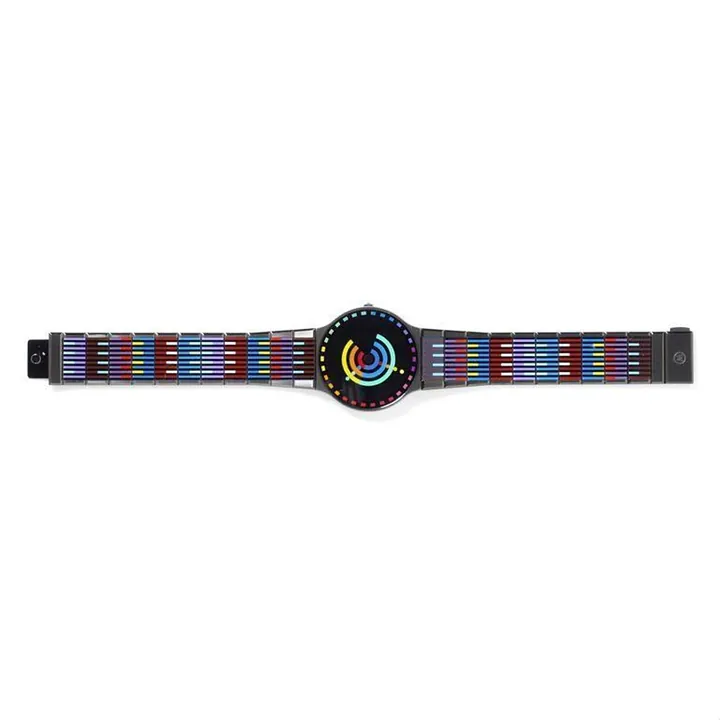
Steel, France and Switzerland, 1989; designed by Yaacov Agam (born 1928) for a limited edition by Movado
Victoria and Albert Museum, London
Wristwatches · c. 1972
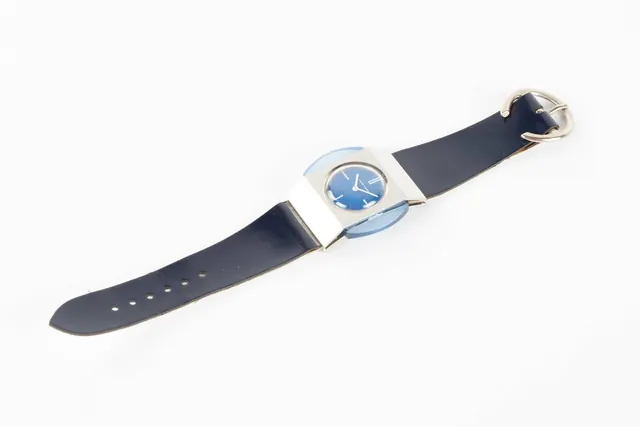
Wristwatch, France, c. 1972
German Clock Museum

Wristwatches · 1986
Wristwatch, France, 1986
Työväenmuseo Werstas
Wristwatches · c. 1970-1980s
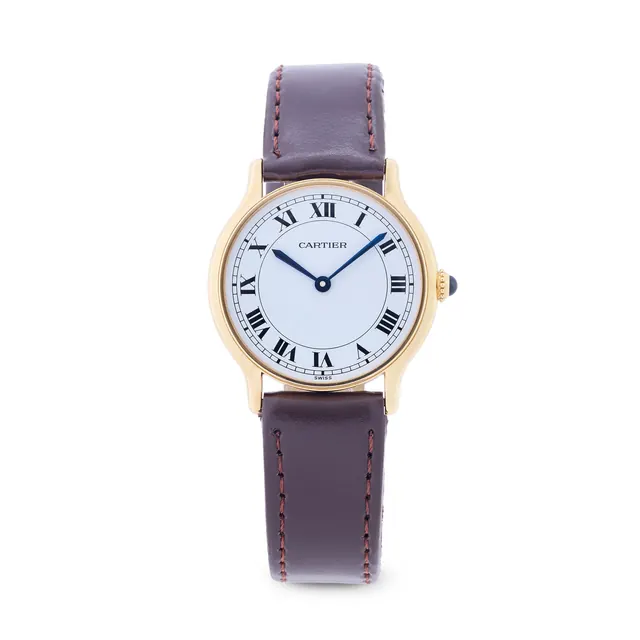
Cartier wristwatch, ref. 10713, Riviera, circa 1970-1980s
Antiquorum auction archive, Geneva