
Wristwatches · Wristwatch
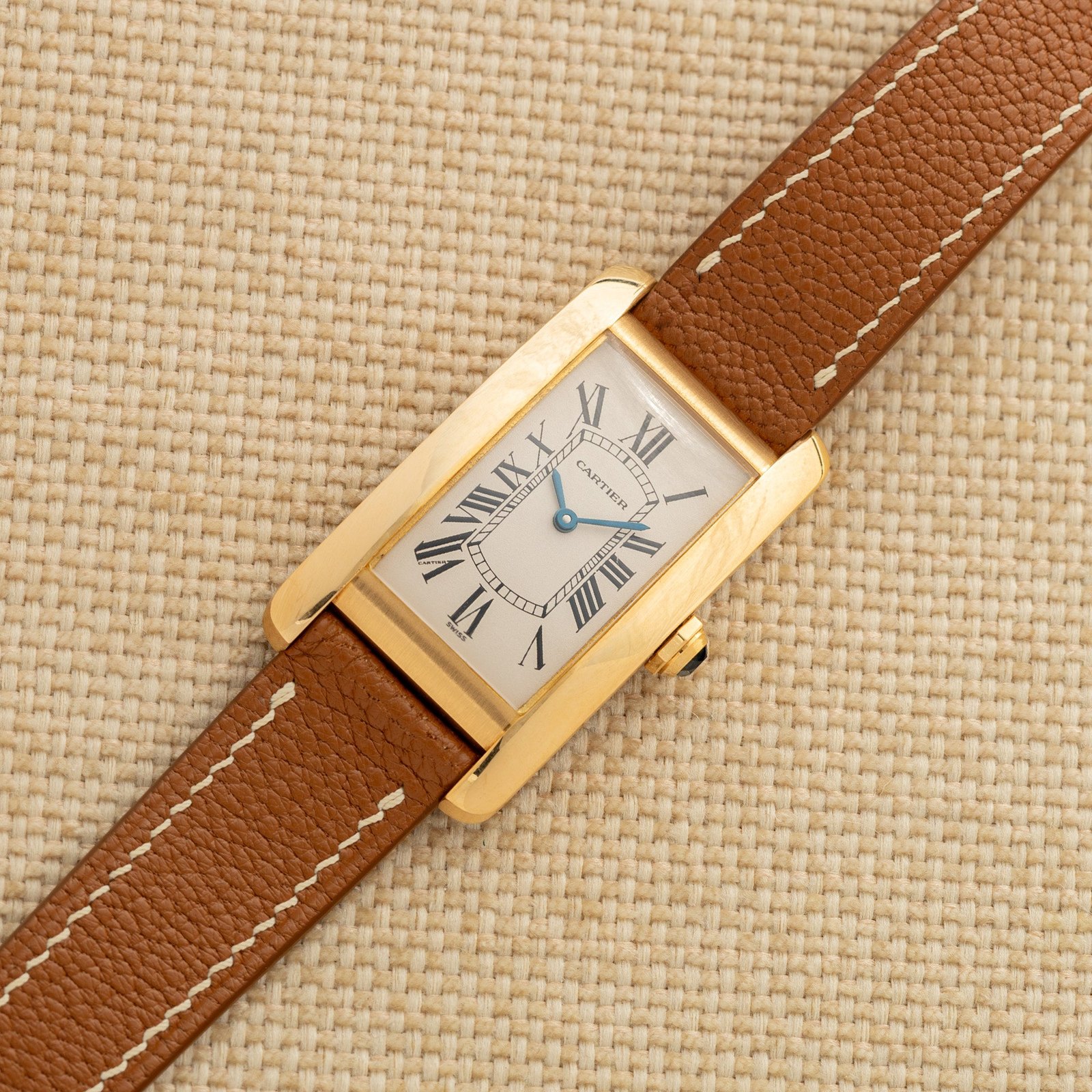
Cartier Tank Américaine 1720, 18k Yellow Gold
- Maker / attribution
- Cartier (maker)
- Date
- c. 1990s
- Historical period
- Mechanical Renaissance (1990 – 2010)
- Country of origin
- France
- Object type
- Wristwatch
- Materials / technique
- 18k yellow gold
- Stock no.
- Product 9228744360212
- Credit line
- Dealer listing, Collectors Corner NY (product 9228744360212)
- Catalogue title (original)
- Cartier Tank Américaine 1720 - 18k Yellow Gold - *Unpolished* (English)
View the source record (dealer listing) ↗ (opens another website in a new tab)Suggest a correction
Record summary
Catalogued by Collectors Corner NY (dealer), New York (stock number Product 9228744360212), this is a wristwatch by Cartier, made in France, dated c. 1990s. The Atlas places it in the Mechanical Renaissance period (1990 – 2010) of its Wristwatches collection. Materials and techniques recorded by the source: 18k yellow gold. The record is illustrated with 6 photographs.
Assembled from the source record's structured fields. Dates and attributions are given as the source states them; where a field is missing the Atlas leaves it blank rather than estimating.
Catalogue description
Dealer description — Collectors Corner NY
The Cartier Tank has achieved iconic status in the world of watch design and, with the exception of a few distinctive variations, has maintained a consistent aesthetic throughout its extensive production history. The first commercially available Tank Normale was introduced in 1919, having been inspired by the treads of the French Renault FT-17 tank used in WW1. Throughout the decades, Tank watches have been documented on the wrists of notable figures from Jackie Kennedy to Andy Warhol. Today, Cartier feels more relevant in the worlds of fashion, music and popular culture than ever before. Cartier released the Tank Américaine in 1987 in reference to the Tank Cintrée which was first introduced commercially in 1919. Both are elongated shapes with curved cases that are designed to be contoured to the wrist and anyone who experiences this design should agree it's not only gorgeous but extremely comfortable. This particular example, circa 1990s, features a quartz movement making it perfect for daily wear. It boasts a mint dial, a sharp unpolished case that we could not pass up on and is ready for its next chapter of enjoyment. Explore more of our vintage Cartier watches .
Historical context
Mechanical Renaissance (1990 – 2010)
Mechanical watches return as cultural objects; independent watchmaking flourishes.
Mechanical watches returned as cultural and luxury objects. Complications, tourbillons and new materials proliferated; independent watchmakers such as George Daniels, F.P. Journe and Philippe Dufour revived artisanal watchmaking; collecting vintage watches became a major field.
Read the period in the timelineMore wristwatches from this periodEarlier: Quartz Revolution
Atlas type guide
Wristwatches
Bracelet watches were worn by women from the early nineteenth century — Breguet made one for Caroline Murat, Queen of Naples, in 1810–12 — but the wristwatch only became a man's instrument with military use and aviation in the early twentieth century. Between the World Wars it overtook the pocket watch; the 1920s and 1930s brought rectangular Art Deco cases, water-resistant cases and the first automatic winding systems.
After 1945 the wristwatch became a carrier of identity — dress watches, sports and dive watches, chronographs, calendars — produced by Swiss, American, Japanese, German, Soviet and Chinese industries. The quartz revolution after 1969 and the mechanical renaissance since the 1990s, including the rise of independent watchmakers, complete the story.
What to look for
- The reference number (between the lugs or inside the case back) and serial number, the starting point for dating.
- The calibre: its maker and number are often stamped under the dial or on the bridge.
- Originality of dial, hands and crown — refinished ('redial') dials are common.
- Case material marks: 18K/750, 14K/585, stainless steel, gold-filled, plated.
Dating clues
- Wire-lug cases: before c. 1925.
- Water-resistant screw-down cases: from 1926.
- Quartz movements: from 1969; sapphire crystals widespread after c. 1980.
General guidance written by the Atlas editors about this kind of object. It is not a statement about this particular piece; for that, rely on the source record above and on physical examination.
Related records

Clocks · 1863
Clock by Albert-Ernest Carrier-Belleuse, France, 1863
The Metropolitan Museum of Art, New York

Clocks · c. 1980s
Cartier "art Deco", c. 1980s
Antiquorum auction archive, Geneva

Clocks · c. 2000s
Cartier Desk Clock with Alarm, c. 2000s
Antiquorum auction archive, Geneva

Clocks · c. 2000s
Cartier Lacquer Arched Desk Clock with Alarm, ref. W0100037, c. 2000s
Antiquorum auction archive, Geneva
Wristwatches · c. 1990
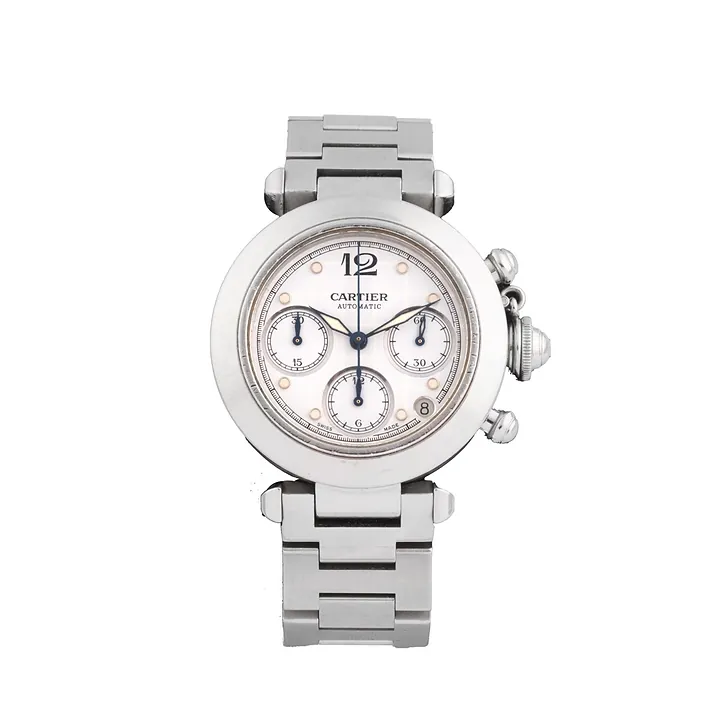
Cartier Pasha, ref. 2412, c. 1990
Antiquorum auction archive, Geneva
Wristwatches · c. 1990
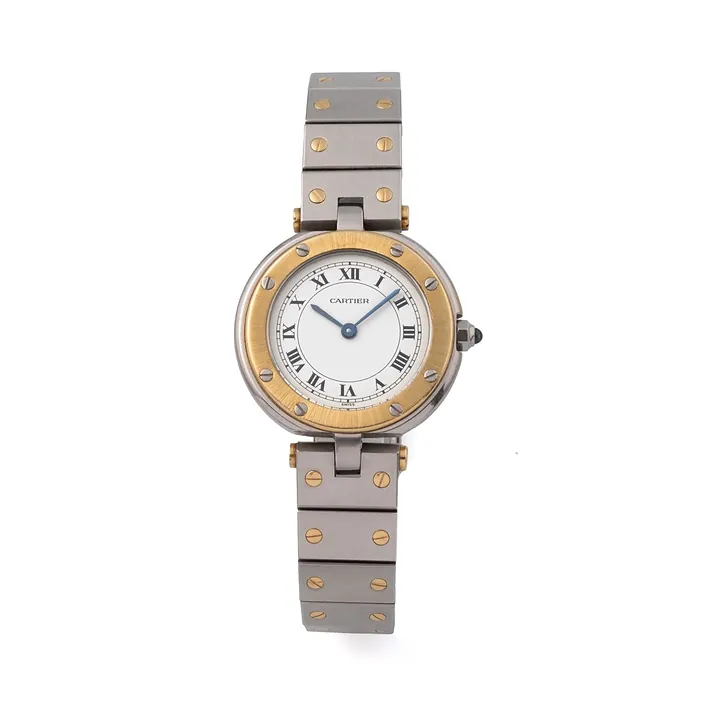
Cartier Santos Ronde Vendome, c. 1990
Antiquorum auction archive, Geneva
Wristwatches · c. 1990s
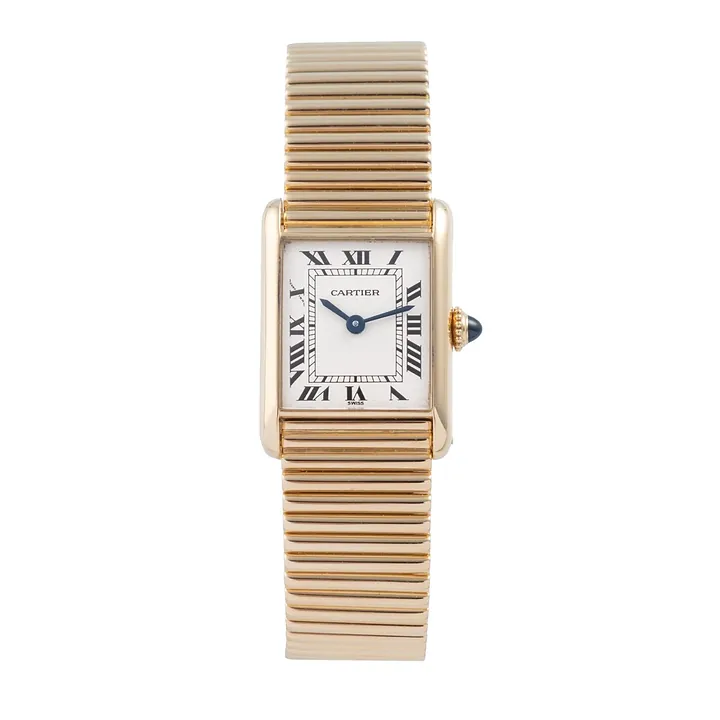
Cartier Tank Louis Cartier, ref. 6711, c. 1990s
Antiquorum auction archive, Geneva
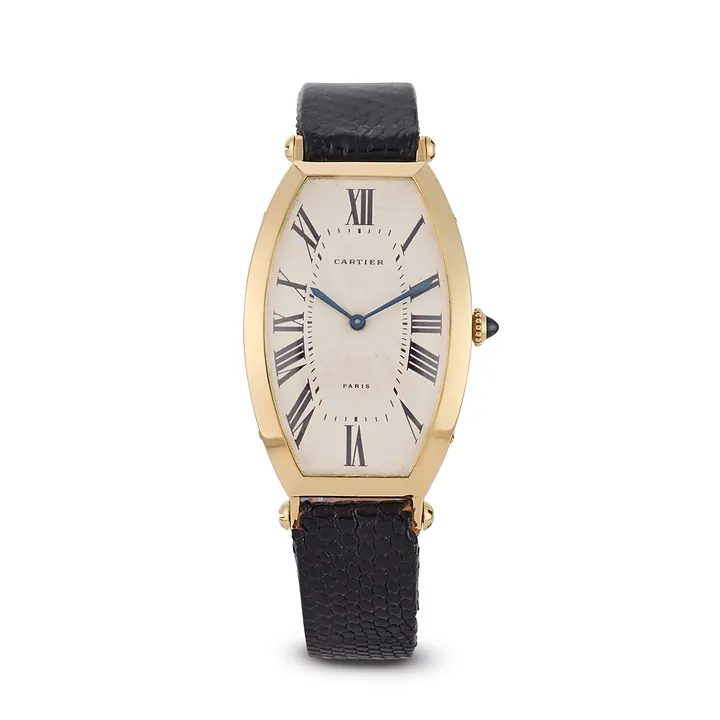
Wristwatches · c. 1991
Cartier Tonneau Paris 1991, c. 1991
Antiquorum auction archive, Geneva