
Wristwatches · Wristwatch
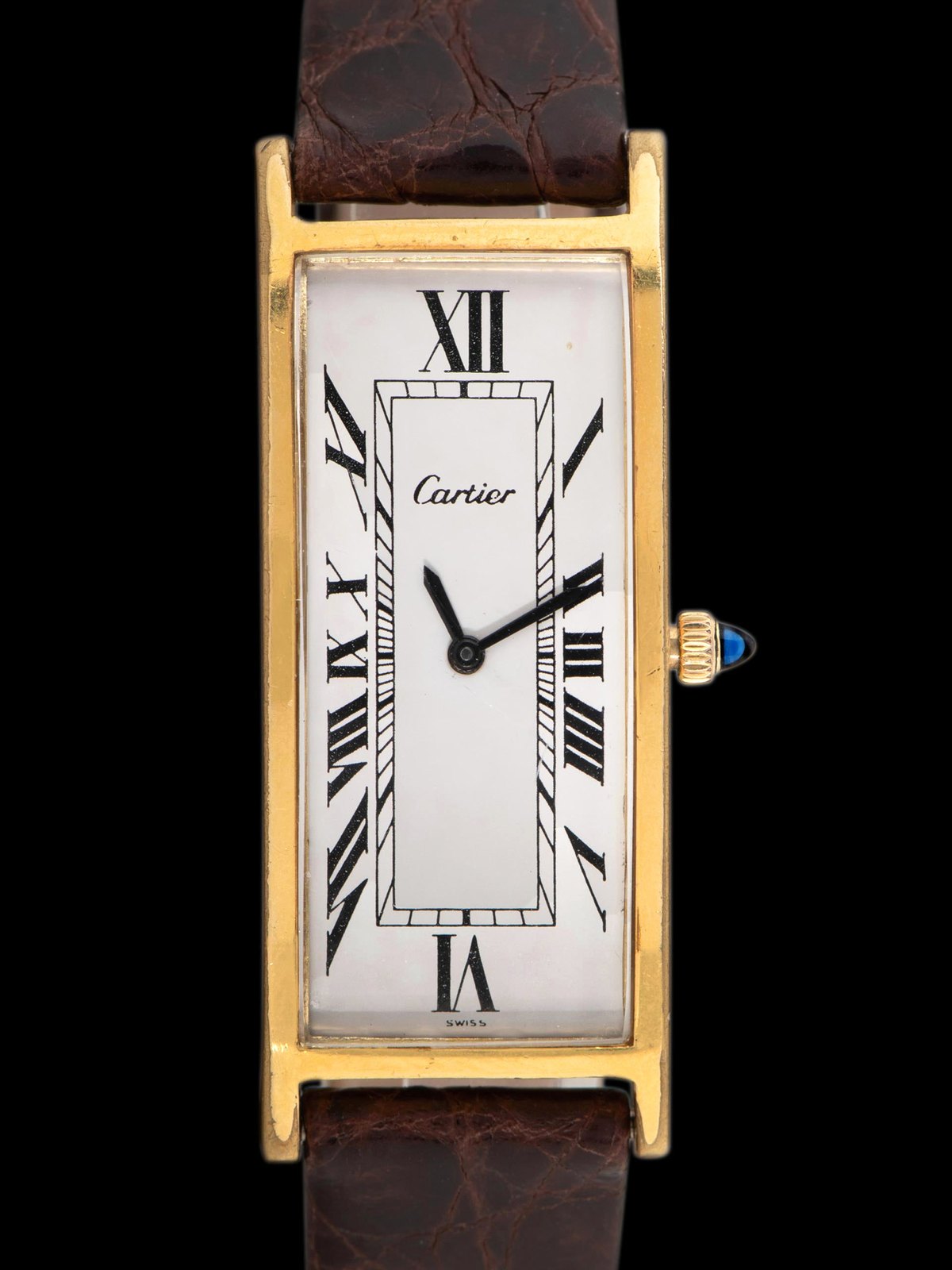
Cartier Tank Allongee 18K Gold Plaque "Steve McQueen", 1960s
- Maker / attribution
- Cartier (maker)
- Date
- 1960s
- Historical period
- Modern Mechanical Horology (1945 – 1969)
- Country of origin
- France
- Object type
- Wristwatch
- Materials / technique
- gold
- Dimensions
- Case 50 mm
- Stock no.
- CTRTALP
- Credit line
- Dealer listing, Craft & Tailored (CTRTALP)
- Catalogue title (original)
- 1960s Cartier Tank Allongee 18K Gold Plaque "Steve McQueen" (English)
View the source record (dealer listing) ↗ (opens another website in a new tab)Suggest a correction
Record summary
Catalogued by Craft & Tailored (dealer), Los Angeles (stock number CTRTALP), this is a wristwatch by Cartier, made in France, dated 1960s. The Atlas places it in the Modern Mechanical Horology period (1945 – 1969) of its Wristwatches collection. Materials and techniques recorded by the source: gold. Recorded dimensions: Case 50 mm. The record is illustrated with 6 photographs.
Assembled from the source record's structured fields. Dates and attributions are given as the source states them; where a field is missing the Atlas leaves it blank rather than estimating.
Catalogue description
Dealer description — Craft & Tailored
The Cartier name is synonymous with luxury and has been since the brand's inception in 1847. Offering bespoke and unique jewelry to the world’s elite allowed Cartier to steadily grow through the 19th century and eventually introduced new offerings and wristwatches to their clientele. Most notably known for the Tank Louis, the Cartier brand and jewelry juggernaut also produced some eclectic references that are just as interesting and in many cases much more rare than the classic Tank. The Tank Allongee was initially introduced in the 1920s under the direction of Louis Cartier himself. This was an era of expansion for the Cartier watch department, and one that we see the most iconic models come from, like the Allongee, Cintree, Cloche, and Basculante. With a name that directly translates to "Elongated Tank", this distinct Cartier took the traditional Tank style and gave it a subtle, or sometimes severe, stretch. Steve McQueen is well known and well documented within the watch community for the watches he wore on and off screen, but the classiest watch the iconic movie star wore is one that is seldom mentioned when his name is brought up, likely due to how rare the watch is itself. That watch is the Cartier Tank Allongee 18K Gold Plaque featured in the 1968 film "The Thomas Crown Affair", a watch designed by Cartier New York exclusively for the American market and was sold between the 60s and early 70s. It is believed fewer than 1000 of this Cartier model were made, with only a fraction surviving today. Due to the extremely long and thin proportions that feature a significant curve, which is unique for the Allongee line, this watch is often mistaken for the more commercially known Tank Cintree. However, upon closer inspection, there are numerous attributes that set this unique Tank Allongee apart, most notably being the case construction that houses the ETA Cal. 2412 manual wind movement. Considering the rarity, extremely attractive design, and pop culture significance, the Cartier Tank Allongee 18K Gold Plaque currently remains undervalued and the example offered here is in exceptionally impressive and well-preserved condition. Stock # CTRTALP Brand Cartier Style Tank Allongee Model N/A Serial N/A Size Men's Material 18K Gold Plated Dial White Roman Millimeters 20X50 Bracelet 2pc Brown Crocodile Leather Strap CASE & BRACELET The long and thin 18K gold-plated case is an impressive 50mm in length and only 20mm wide. The case is in exceptional original condition, has never been re-plated, and exhibits only very minimal signs of use or age. The case retains its original blue sapphire cabochon crown. The case back retains its original factory markings, though faint, they are still visible to the naked eye. The watch comes supplied on a 2pc brown crocodile strap. DIAL & HANDS The original white Roman numeral "Swiss" signed dial is in beautiful original condition. The dial shows nominal signs of age and no actual damage. The original black steel hands are in perfect condition. ACCESSORIES
Historical context
Modern Mechanical Horology (1945 – 1969)
Tool watches for divers, pilots and astronauts; electric watches anticipate the electronic age.
The classic era of the mechanical wristwatch: dive watches, chronographs for motor racing and space flight, GMT watches for jet travel, slim dress watches, automatic calendars, and the rise of Japanese manufacturers alongside Swiss, American, German and Soviet industries.
Read the period in the timelineMore wristwatches from this periodEarlier: Golden Age of Mechanical Watchmaking
Atlas type guide
Wristwatches
Bracelet watches were worn by women from the early nineteenth century — Breguet made one for Caroline Murat, Queen of Naples, in 1810–12 — but the wristwatch only became a man's instrument with military use and aviation in the early twentieth century. Between the World Wars it overtook the pocket watch; the 1920s and 1930s brought rectangular Art Deco cases, water-resistant cases and the first automatic winding systems.
After 1945 the wristwatch became a carrier of identity — dress watches, sports and dive watches, chronographs, calendars — produced by Swiss, American, Japanese, German, Soviet and Chinese industries. The quartz revolution after 1969 and the mechanical renaissance since the 1990s, including the rise of independent watchmakers, complete the story.
What to look for
- The reference number (between the lugs or inside the case back) and serial number, the starting point for dating.
- The calibre: its maker and number are often stamped under the dial or on the bridge.
- Originality of dial, hands and crown — refinished ('redial') dials are common.
- Case material marks: 18K/750, 14K/585, stainless steel, gold-filled, plated.
Dating clues
- Wire-lug cases: before c. 1925.
- Water-resistant screw-down cases: from 1926.
- Quartz movements: from 1969; sapphire crystals widespread after c. 1980.
General guidance written by the Atlas editors about this kind of object. It is not a statement about this particular piece; for that, rely on the source record above and on physical examination.
Related records

Clocks · 1863
Clock by Albert-Ernest Carrier-Belleuse, France, 1863
The Metropolitan Museum of Art, New York

Clocks · c. 1980s
Cartier "art Deco", c. 1980s
Antiquorum auction archive, Geneva

Clocks · c. 2000s
Cartier Desk Clock with Alarm, c. 2000s
Antiquorum auction archive, Geneva

Clocks · c. 2000s
Cartier Lacquer Arched Desk Clock with Alarm, ref. W0100037, c. 2000s
Antiquorum auction archive, Geneva
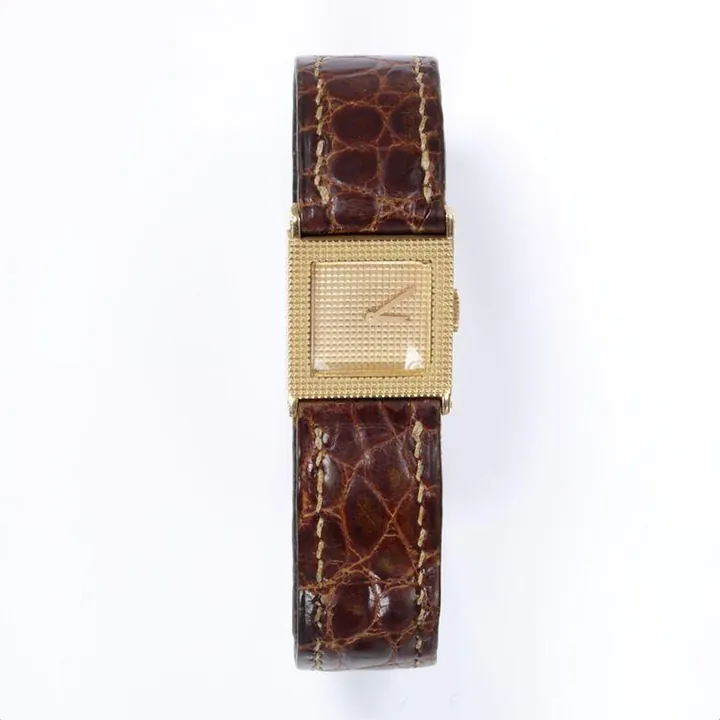
Wristwatches · c. 1963
Wristwatch with gold case and leather strap, Boucheron, Paris, about 1963.
Victoria and Albert Museum, London
Wristwatches · 1960–1965
Wristwatch, France, 1960–1965
Suomen kansallismuseo
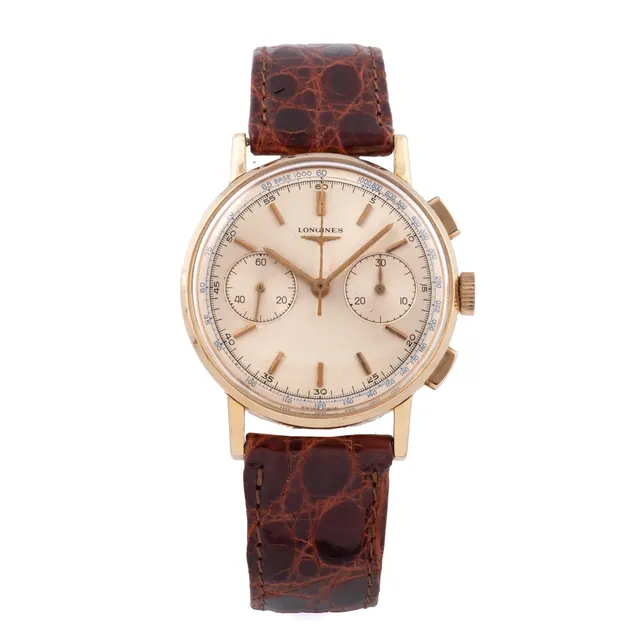
Wristwatches · c. 1960s
Longines wristwatch, 30 Ch French Case, circa 1960's
Antiquorum auction archive, Geneva
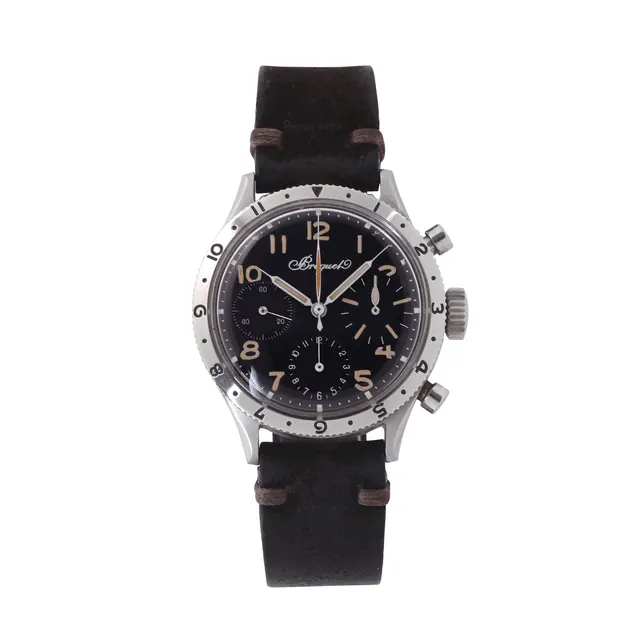
Wristwatches · 1958
Breguet wristwatch, 1958
Antiquorum auction archive, Geneva