
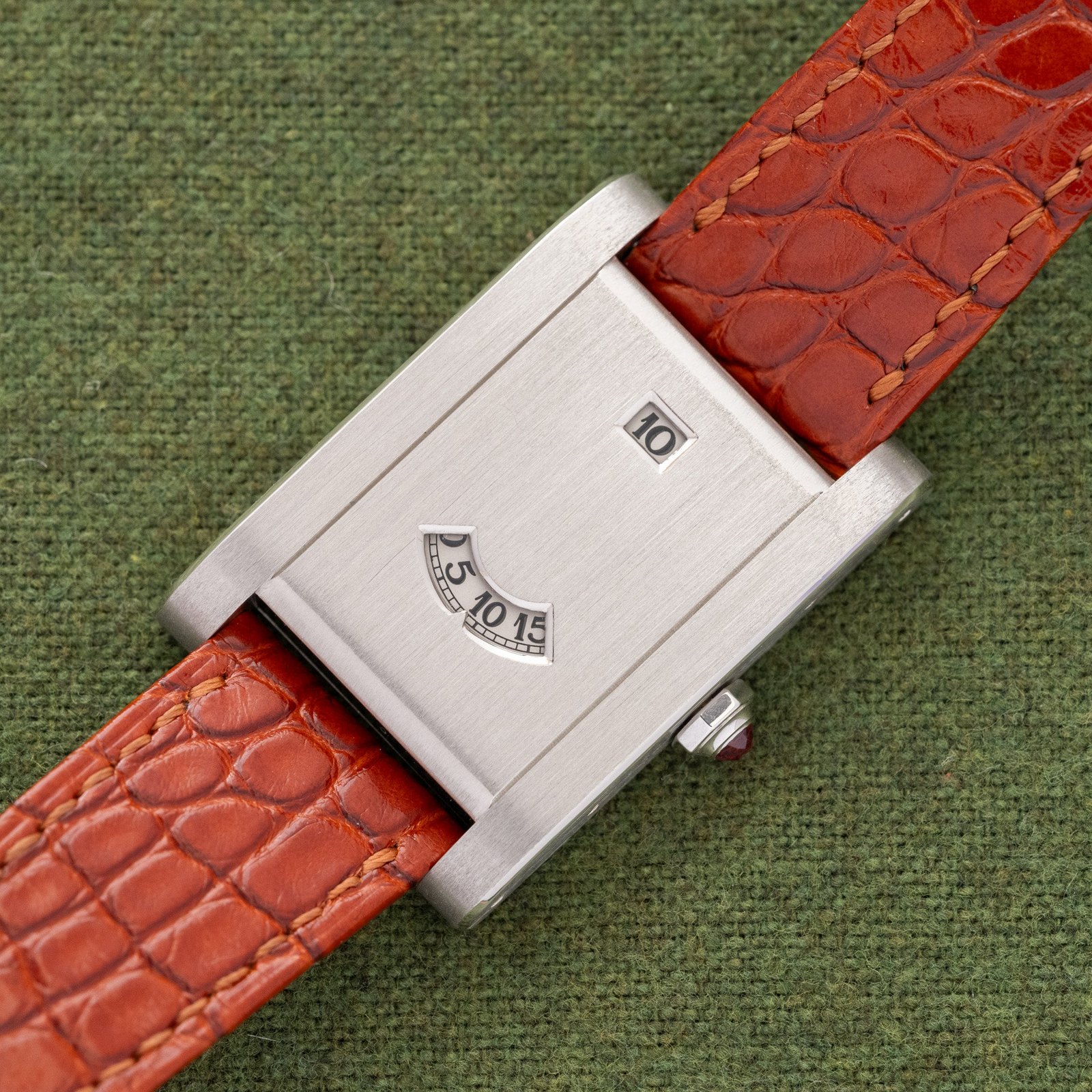
Wristwatches · Wristwatch
Cartier Tank à Guichets Platinum - 150th Anniversary, 1997
- Maker / attribution
- Cartier (maker)
- Date
- 1997
- Historical period
- Mechanical Renaissance (1990 – 2010)
- Country of origin
- France
- Object type
- Wristwatch
- Materials / technique
- platinum
- Stock no.
- Product 8037941838007
- Credit line
- Dealer listing, Huntington Company (product 8037941838007)
- Catalogue title (original)
- 1997 Cartier Tank à Guichets Platinum - 150th Anniversary (English)
View the source record (dealer listing) ↗ (opens another website in a new tab)Suggest a correction
Record summary
Catalogued by Huntington Company (dealer) (stock number Product 8037941838007), this is a wristwatch by Cartier, made in France, dated 1997. The Atlas places it in the Mechanical Renaissance period (1990 – 2010) of its Wristwatches collection. Materials and techniques recorded by the source: platinum. The record is illustrated with 6 photographs.
Assembled from the source record's structured fields. Dates and attributions are given as the source states them; where a field is missing the Atlas leaves it blank rather than estimating.
Catalogue description
Dealer description — Huntington Company
Worth The Read Cartier, the great maker of shapes and jeweler to celebrities is known for its many variations of the Tank watch. The tank watch, since its initial design in 1917, has been front-and-center as one of the most iconic watch designs of all time. It all began with Louis Cartier’s Tank Normale, inspired by the treads of the French Renault FT-17 tank used in World War I. But, as one of the most highly regarded Cartier collectors says, “the Tank à Guichets is the most tank of all the tank watches.” This armoured jump-hour mechanical wristwatch with two small windows that display the hour and minute clearly showcases Louis Cartier’s military-inspired design. In French, Guichets translates to “windows,” aptly explaining Louis Cartier’s tank-inspired design. First produced in 1928, the Guichets was only available as a special commission to Cartier’s most important clients. So rare and coveted was this watch, that there are thought to be fewer than a dozen of these early models that have surfaced to the market. This is a remarkably low number, considering that these early models were produced nearly 100 years ago. This watch was avant-garde for its time and graced the wrists of acclaimed jazz composer Duke Ellington, cinema legend Gary Cooper, and the Maharaja of Patiala. The rarity of this watch cannot be understated, considering that in 1928, according to Franco Cologni’s The Tank Watch , the entirety of Cartier Paris’ production was only sixty-eight total tank watches, of which perhaps only one or two may have been the Tank à Guichets. One year later, in 1997, Cartier celebrated the brand’s 150th Anniversary of its founding in 1847 with a special limited edition release of 150 Tank à Guichets in platinum. This model features a slightly larger case than the 9 watches from Antiquorum’s auction, measuring 26x37mm, and notably the crown has changed to a ruby cabochon located at 3 o’clock. This release comes as the final edition of what is known to collectors as the Manufacture Horologerie Cartier Paris (MHCP) line of watches, including notable limited edition releases of other iconic Cartier designs such as the 1991 Cartier Crash (400 total pieces), 1991 Baignoire Allongée (400 total pieces), 1995 Cloche (200 total pieces), and Tank Asymetrique (400 total pieces). Against these other significant releases, the 1997 150th Anniversary Tank à Guichets in platinum stands out with the lowest production numbers during the MHCP period of historical production. Notably, several examples of the 1997 Guichet have surfaced to the market with platinum brick bracelets. Unbeknownst to most collectors, these bracelets are an aftermarket creation that is not original to the watch. Cartier never produced this model with a bracelet, rather a group of savvy collectors approached a jeweler and had the bracelet manufactured to incorporate the Guichet’s deployant into the bracelet. Thus, while these bracelets have original Cartier deployant clasps, the bracelets are aftermarket and were not produced by Cartier. With the cessation of the MHCP production in 1997, Cartier embarked on a new era of haute-horology with the launch of the Collection Privée Cartier Paris (CPCP) in 1998. With this new initiative, Cartier once again revisited its archive of historical shapes to reproduce some of its most iconic designs, with much greater focus given to movement quality and finishing. As part of the CPCP releases, in 2006, Cartier announced the final iteration of the Tank à Guichets, a limited edition of 100 pieces in rose gold. This rose gold case measures 28x40mm and features a sapphire cabochon crown at 3 o’clock. It is our opinion, and the opinion of many others, that the Tank à Guichets represents the pinnacle of Cartier Tank collecting. In fact, it is amongst the rarest of Cartier’s Tank variations, many orders of magnitude rarer than other high-profile Cartier watches, such as the Crash or Cintrée. In fact, it is estimated that 271 Tank à Guichets have been produced since the first iteration in 1928 - a miniscule production in the Guichets’ nearly 100-year-old design. For example, the market is aware of at least 1558 total examples of limited edition Cartier Crash’s that have been produced in various iterations over the years from the original London Crash to the 1991 release of the Paris Crash and the numerous other versions that have been released since then. This count of the Crash does not include the many custom commissions that have taken place, which accounts for at least several hundred additional examples. Whereas to the best of our knowledge Cartier has not permitted any custom commissions of the Guichets since its initial period of production in the late 1920’s into the early 1930’s. This places the Tank à Guichets at or near to ten-times more rare than the Cartier Crash. You will be hard-pressed to find a single Tank à Guichets for sale anywhere in the world, whereas at the moment of writing on March 11, 2025 there are 14 examples of the Cartier Crash for sale on Chrono24 and at least another 8 examples publicly listed for sale in dealer inventory that do not overlap with the Chrono24 listings. Specifications Model: Tank à Guichets Movement: Calibre 9752 MC Year: 1997 Contents: Box Case: The limited edition platinum case is in great shape with very little signs of wear. The case size for the 150th Anniversary is 25.5 by 37, to be exact. Strap & Buckle: Comes with the white gold Cartier deployant.
Historical context
Mechanical Renaissance (1990 – 2010)
Mechanical watches return as cultural objects; independent watchmaking flourishes.
Mechanical watches returned as cultural and luxury objects. Complications, tourbillons and new materials proliferated; independent watchmakers such as George Daniels, F.P. Journe and Philippe Dufour revived artisanal watchmaking; collecting vintage watches became a major field.
Read the period in the timelineMore wristwatches from this periodEarlier: Quartz Revolution
Atlas type guide
Wristwatches
Bracelet watches were worn by women from the early nineteenth century — Breguet made one for Caroline Murat, Queen of Naples, in 1810–12 — but the wristwatch only became a man's instrument with military use and aviation in the early twentieth century. Between the World Wars it overtook the pocket watch; the 1920s and 1930s brought rectangular Art Deco cases, water-resistant cases and the first automatic winding systems.
After 1945 the wristwatch became a carrier of identity — dress watches, sports and dive watches, chronographs, calendars — produced by Swiss, American, Japanese, German, Soviet and Chinese industries. The quartz revolution after 1969 and the mechanical renaissance since the 1990s, including the rise of independent watchmakers, complete the story.
What to look for
- The reference number (between the lugs or inside the case back) and serial number, the starting point for dating.
- The calibre: its maker and number are often stamped under the dial or on the bridge.
- Originality of dial, hands and crown — refinished ('redial') dials are common.
- Case material marks: 18K/750, 14K/585, stainless steel, gold-filled, plated.
Dating clues
- Wire-lug cases: before c. 1925.
- Water-resistant screw-down cases: from 1926.
- Quartz movements: from 1969; sapphire crystals widespread after c. 1980.
General guidance written by the Atlas editors about this kind of object. It is not a statement about this particular piece; for that, rely on the source record above and on physical examination.
Related records
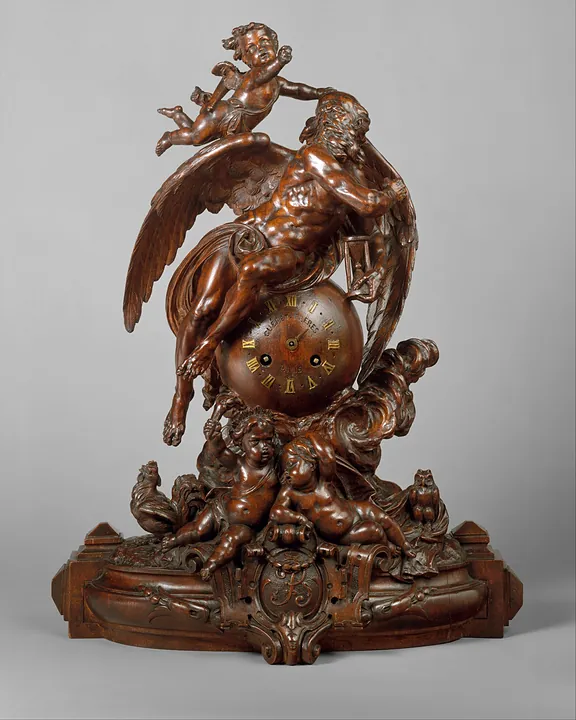
Clocks · 1863
Clock by Albert-Ernest Carrier-Belleuse, France, 1863
The Metropolitan Museum of Art, New York
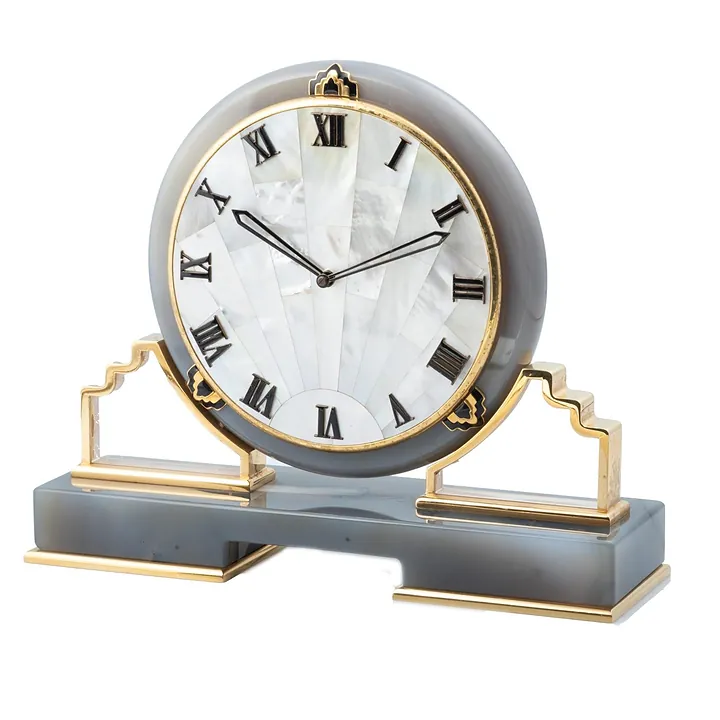
Clocks · c. 1980s
Cartier "art Deco", c. 1980s
Antiquorum auction archive, Geneva
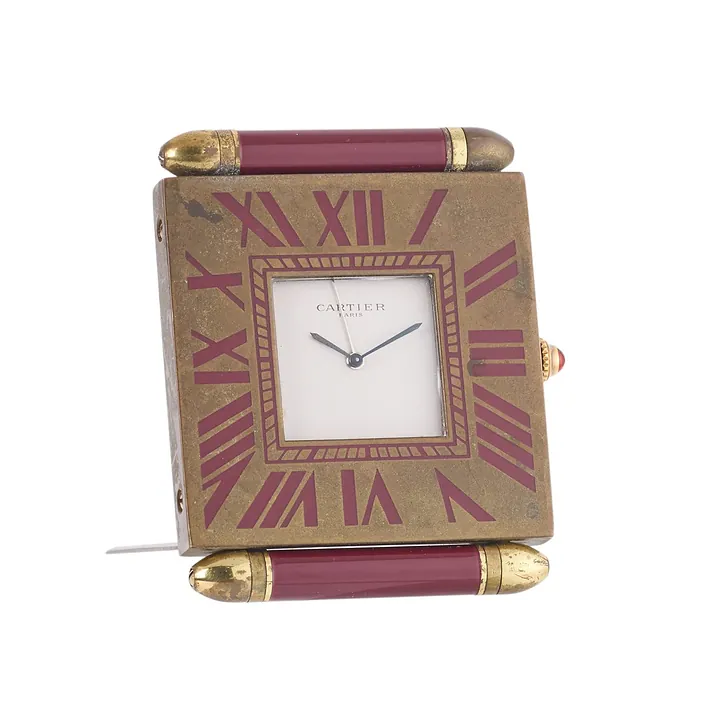
Clocks · c. 2000s
Cartier Desk Clock with Alarm, c. 2000s
Antiquorum auction archive, Geneva
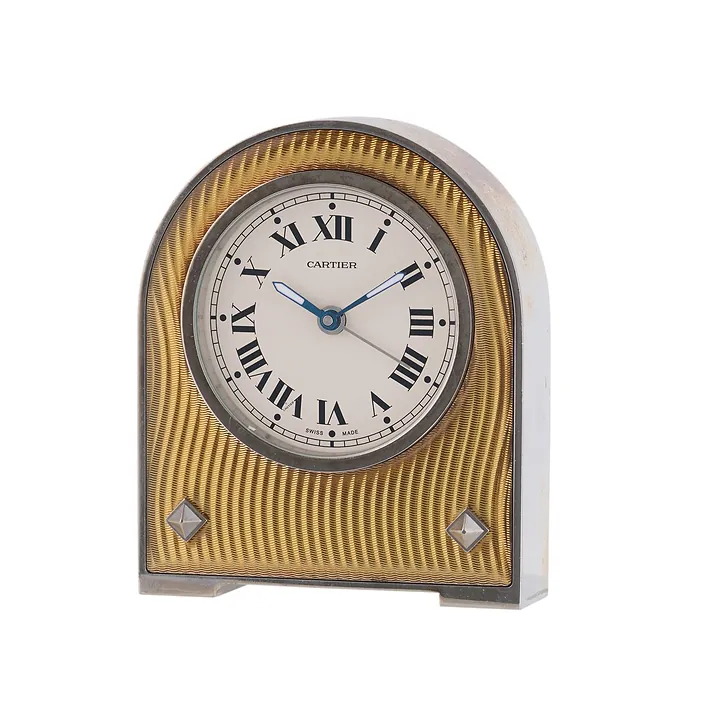
Clocks · c. 2000s
Cartier Lacquer Arched Desk Clock with Alarm, ref. W0100037, c. 2000s
Antiquorum auction archive, Geneva
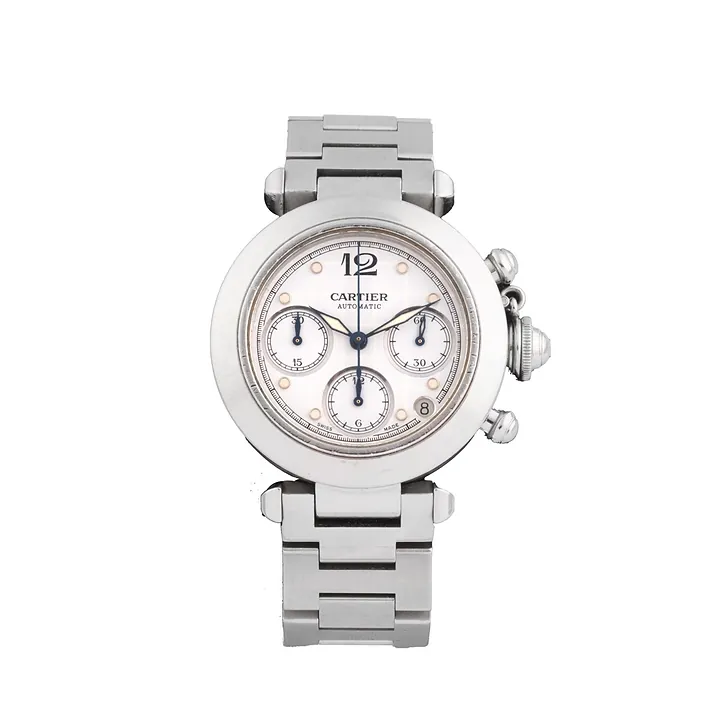
Wristwatches · c. 1990
Cartier Pasha, ref. 2412, c. 1990
Antiquorum auction archive, Geneva
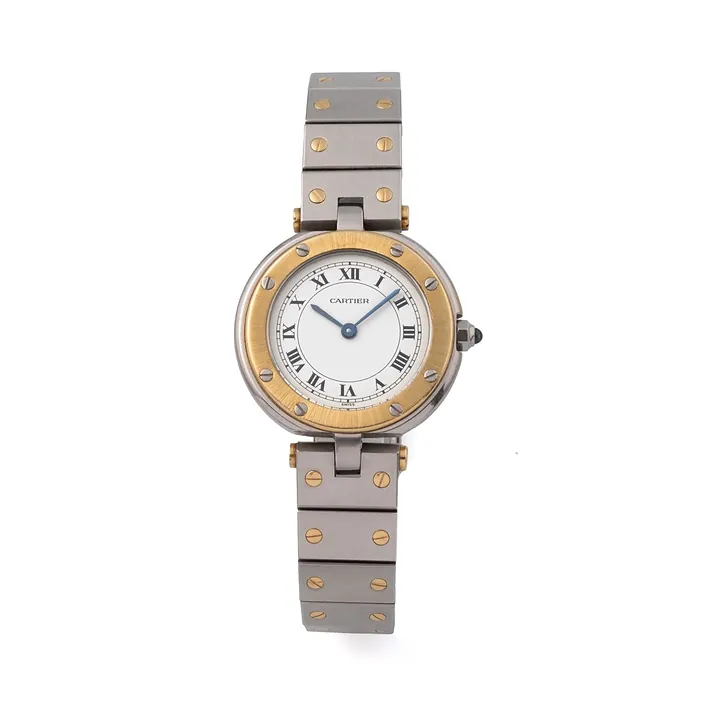
Wristwatches · c. 1990
Cartier Santos Ronde Vendome, c. 1990
Antiquorum auction archive, Geneva
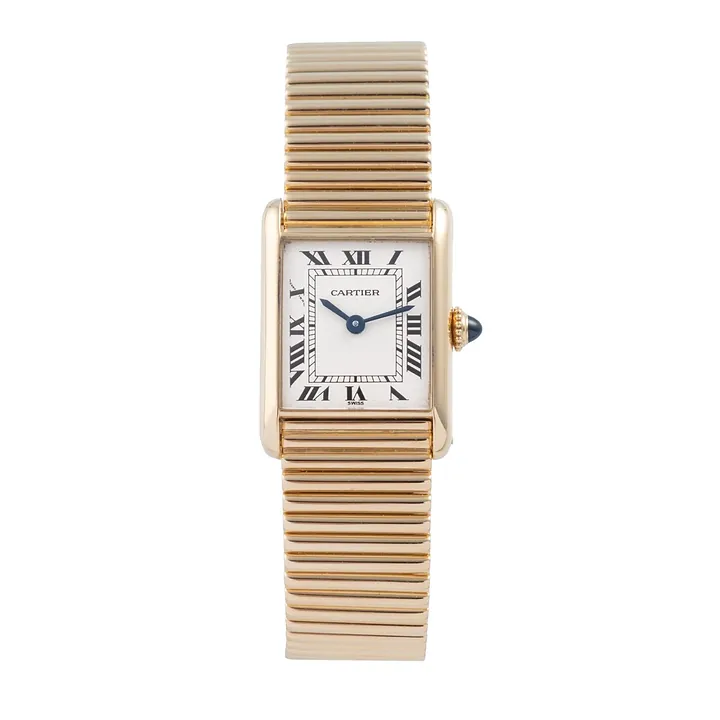
Wristwatches · c. 1990s
Cartier Tank Louis Cartier, ref. 6711, c. 1990s
Antiquorum auction archive, Geneva
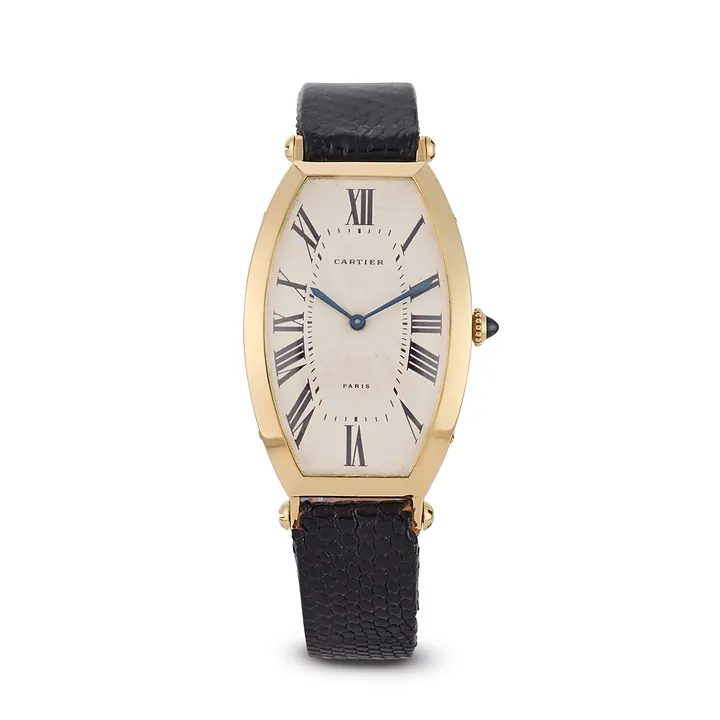
Wristwatches · c. 1991
Cartier Tonneau Paris 1991, c. 1991
Antiquorum auction archive, Geneva