
Wristwatches · Wristwatch
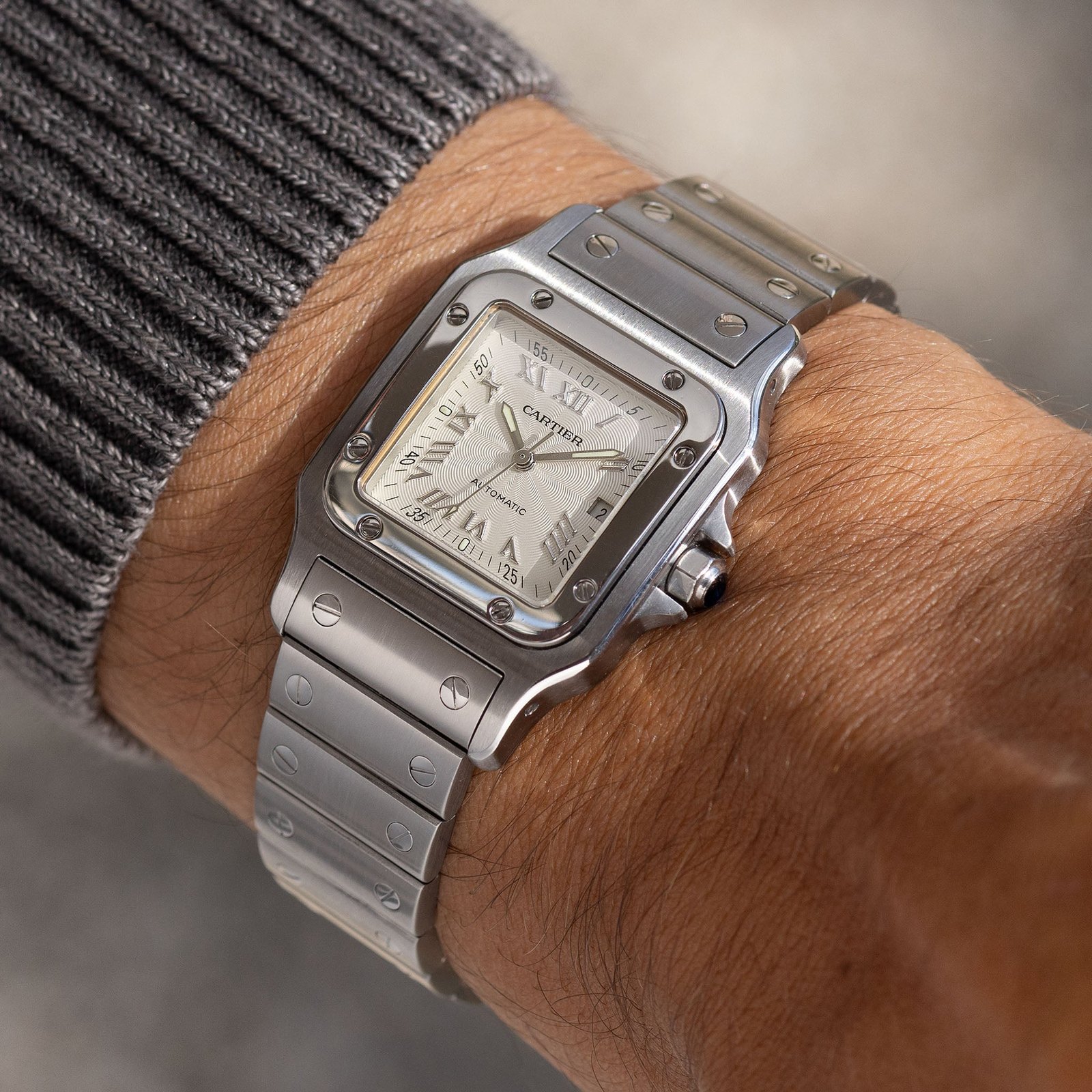
Cartier Santos Galbée 2319 Automatic Silver Guilloché Dial, late 1990
- Maker / attribution
- Cartier (maker)
- Date
- late 1990
- Historical period
- Mechanical Renaissance (1990 – 2010)
- Country of origin
- France
- Object type
- Wristwatch
- Materials / technique
- silver
- Dimensions
- Case 41 mm
- Stock no.
- W-3899
- Credit line
- Dealer listing, Bulang & Sons (W-3899)
- Catalogue title (original)
- Cartier Santos Galbée 2319 Automatic Silver Guilloché Dial (English)
View the source record (dealer listing) ↗ (opens another website in a new tab)Suggest a correction
Record summary
Catalogued by Bulang & Sons (dealer), Copenhagen (stock number W-3899), this is a wristwatch by Cartier, made in France, dated late 1990. The Atlas places it in the Mechanical Renaissance period (1990 – 2010) of its Wristwatches collection. Materials and techniques recorded by the source: silver. Recorded dimensions: Case 41 mm. The record is illustrated with 6 photographs.
Assembled from the source record's structured fields. Dates and attributions are given as the source states them; where a field is missing the Atlas leaves it blank rather than estimating.
Catalogue description
Dealer description — Bulang & Sons
The story of the Cartier Santos goes all the way back to 1904, when Louis Cartier created a wristwatch for his friend, Brazilian aviator Alberto Santos-Dumont. What started as a practical watch for the skies would become one of Cartier’s most recognizable and enduring designs. Fast forward to 1978, and Cartier gave the Santos a more contemporary feel with the introduction of the Santos Carrée. Its exposed screws, integrated bracelet and steel-and-gold construction gave the classic design a sportier edge. Then, in 1987, Cartier softened things up with the Santos Galbée. The name refers to the curved case, with its rounded contours and bracelet designed to sit more comfortably around the wrist. The ref. 2319 belongs to this later Galbée generation, particularly associated with the 1990s and early 2000s. Measuring approximately 29 × 41mm, it has just the right amount of presence while retaining the elegant proportions that make the Galbée such a cool Cartier. This example is in great condition, with a lovely case and bezel showing no heavy scratches or significant defects. The winding crown is finished with Cartier’s signature blue cabochon—a small detail, but one we always love to see.The watch feutures a small and cute case back inscription a clover leaf with what we think as first letters of names and at the Dutch word “bedankt “- translated to “Thank you”, giving the watch some lovely history we find . The real star of the show, however, is the dial. Finished in silver with a beautiful guilloché pattern and subtle soleil effect, it catches the light wonderfully. The applied Roman numerals are unmistakably Cartier, while the date window at 3 o’clock adds a practical touch to the elegant design. The semi-integrated bracelet is in tight condition and fits wrists up to 18 cm. The watch and its automatic movement have been fully serviced by our watchmaker and are ready for many more years of enjoyment. A great-looking Santos Galbée with plenty of classic Cartier character—and exactly the kind of watch that looks even better once it’s on the wrist! Specifications: Cartier Santos Galbé reference 2319 Serial 308xxxCD dating to late 1990’s Steel Case measures 29 x 41mm Silver guilloché dial with Roman numerals Date function Lovely case-back engraving Blue cabochon crown Automatic movement Cartier integrated bracelet Fully serviced by our watchmaker
Historical context
Mechanical Renaissance (1990 – 2010)
Mechanical watches return as cultural objects; independent watchmaking flourishes.
Mechanical watches returned as cultural and luxury objects. Complications, tourbillons and new materials proliferated; independent watchmakers such as George Daniels, F.P. Journe and Philippe Dufour revived artisanal watchmaking; collecting vintage watches became a major field.
Read the period in the timelineMore wristwatches from this periodEarlier: Quartz Revolution
Atlas type guide
Automatic (self-winding) watches
Self-winding watches use the wearer's motion to wind the mainspring. Abraham-Louis Perrelet and Breguet made 'perpétuelle' pocket watches with oscillating weights in the late eighteenth century, but the principle only became practical in the wristwatch. John Harwood patented a bumper automatic in 1923; Rolex's Perpetual rotor (1931) winding in one direction, and later bidirectional rotors (Eterna, Felsa Bidynator), established the modern form. Micro-rotors (Universal Genève, Buren) and peripheral rotors made automatic watches thinner.
What to look for
- A semicircular rotor turning 360° over the movement, or a 'bumper' weight that rebounds between springs.
- 'Automatic', 'Perpetual' or 'Self-winding' on the dial.
- A sealed screw-back case, since automatic watches are wound less often by the crown.
Dating clues
- Bumper automatics: 1923–c. 1955.
- Full rotors: from 1931 (Rolex); widespread after c. 1950.
- Micro-rotors: from 1954–1958.
General guidance written by the Atlas editors about this kind of object. It is not a statement about this particular piece; for that, rely on the source record above and on physical examination.
Related records
Clocks · 1863
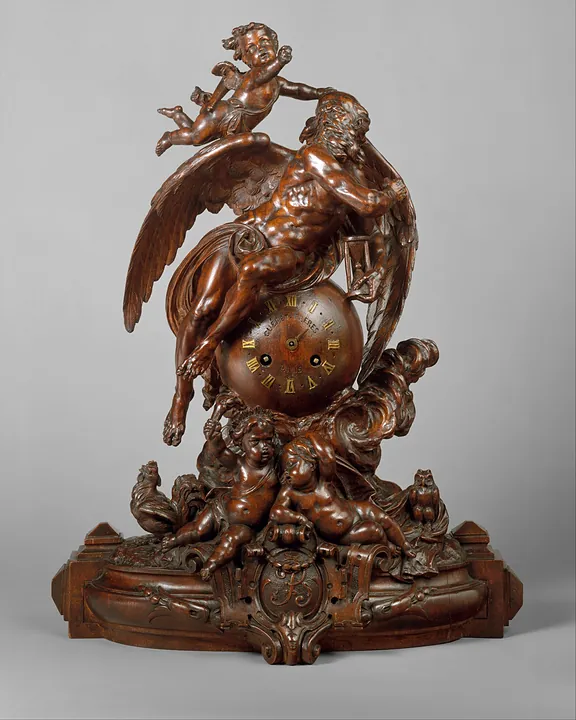
Clock by Albert-Ernest Carrier-Belleuse, France, 1863
The Metropolitan Museum of Art, New York
Clocks · c. 1980s
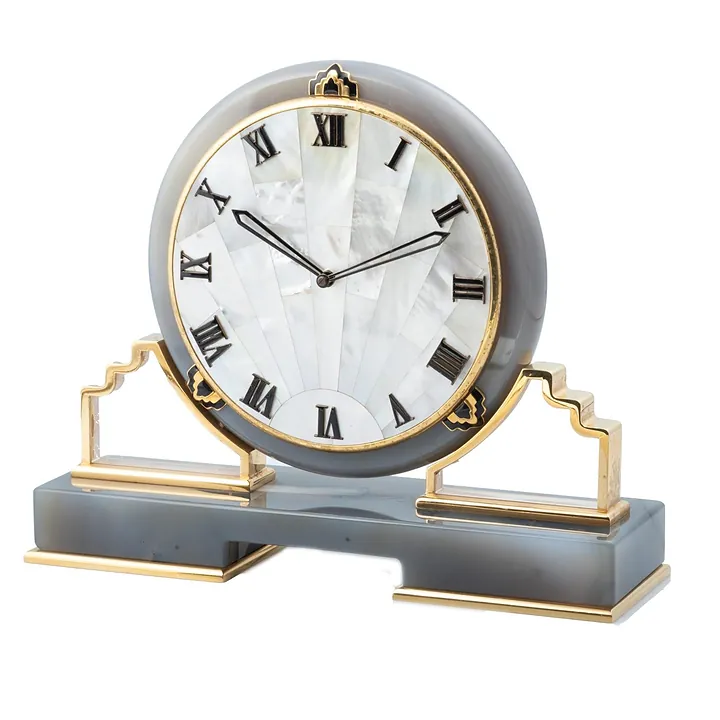
Cartier "art Deco", c. 1980s
Antiquorum auction archive, Geneva
Clocks · c. 2000s
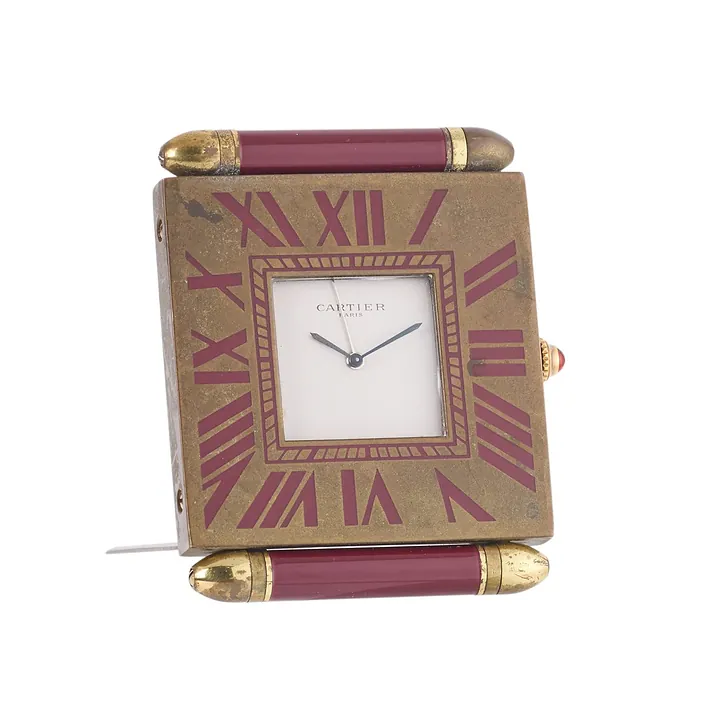
Cartier Desk Clock with Alarm, c. 2000s
Antiquorum auction archive, Geneva
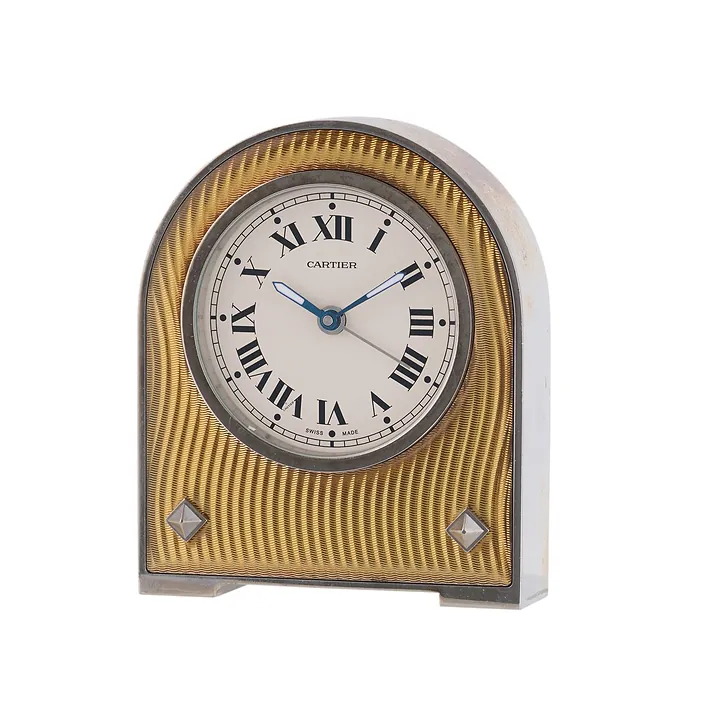
Clocks · c. 2000s
Cartier Lacquer Arched Desk Clock with Alarm, ref. W0100037, c. 2000s
Antiquorum auction archive, Geneva
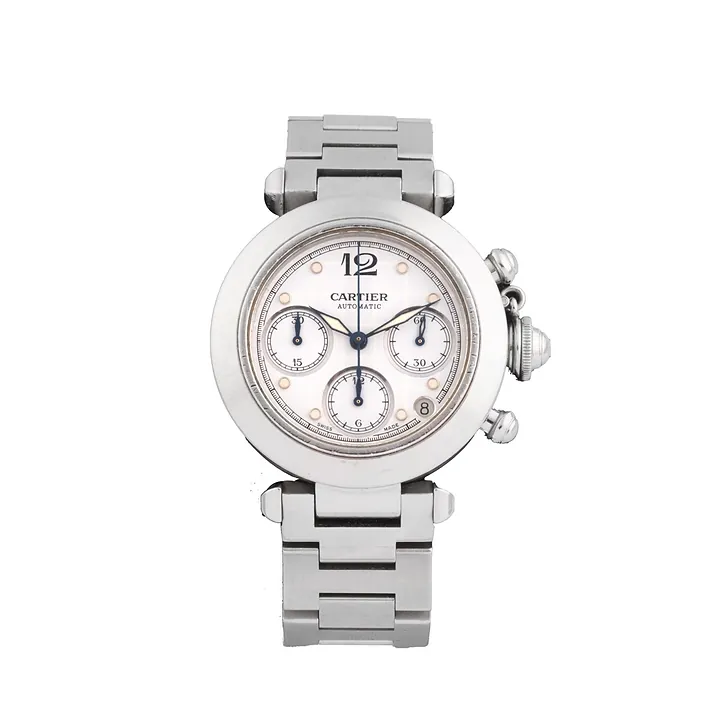
Wristwatches · c. 1990
Cartier Pasha, ref. 2412, c. 1990
Antiquorum auction archive, Geneva
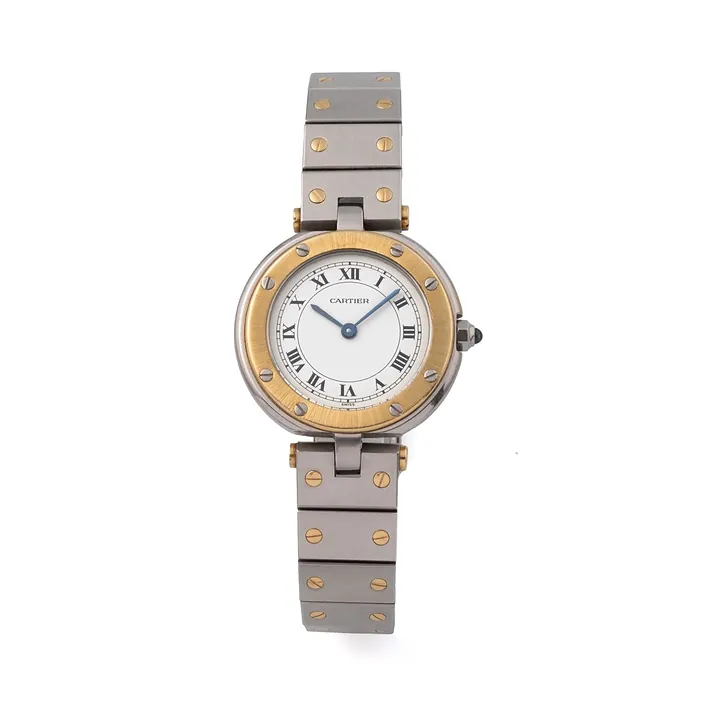
Wristwatches · c. 1990
Cartier Santos Ronde Vendome, c. 1990
Antiquorum auction archive, Geneva
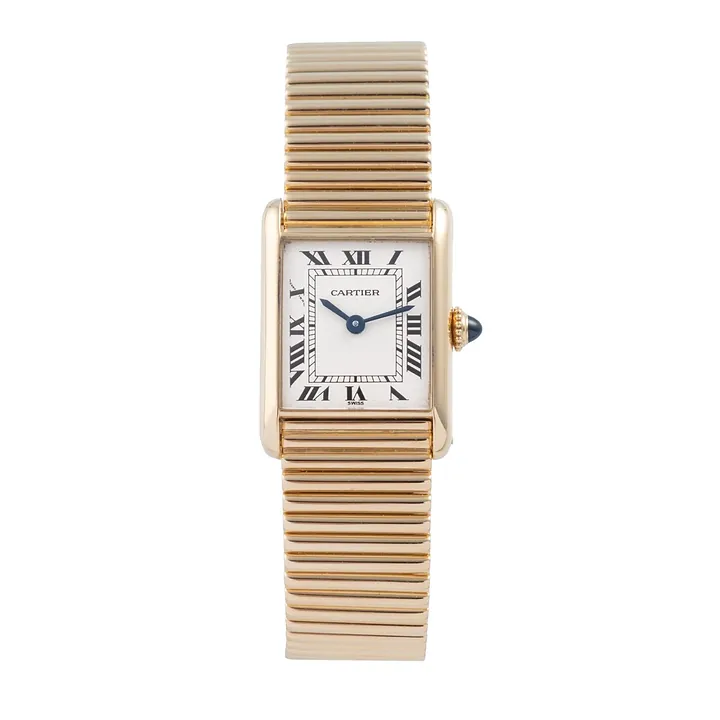
Wristwatches · c. 1990s
Cartier Tank Louis Cartier, ref. 6711, c. 1990s
Antiquorum auction archive, Geneva
Wristwatches · c. 1991
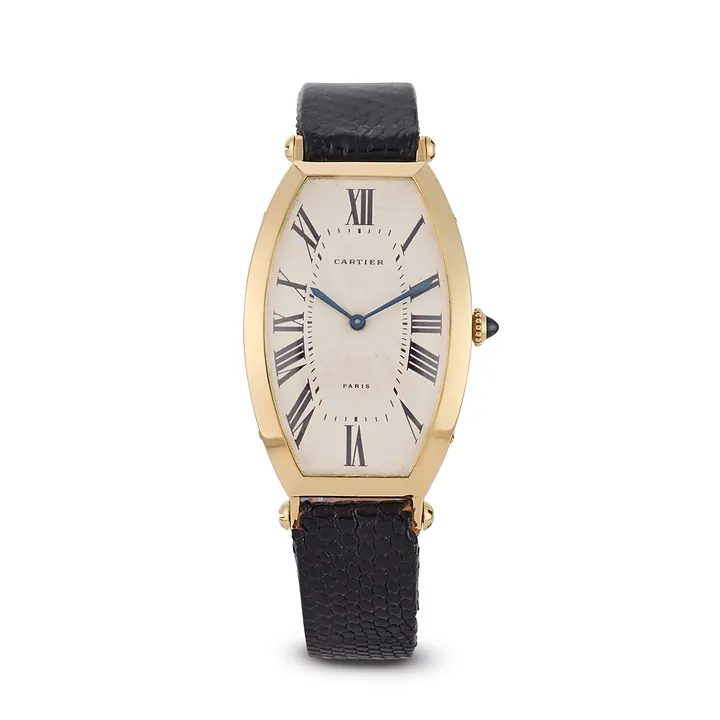
Cartier Tonneau Paris 1991, c. 1991
Antiquorum auction archive, Geneva