
Wristwatches · Wristwatch
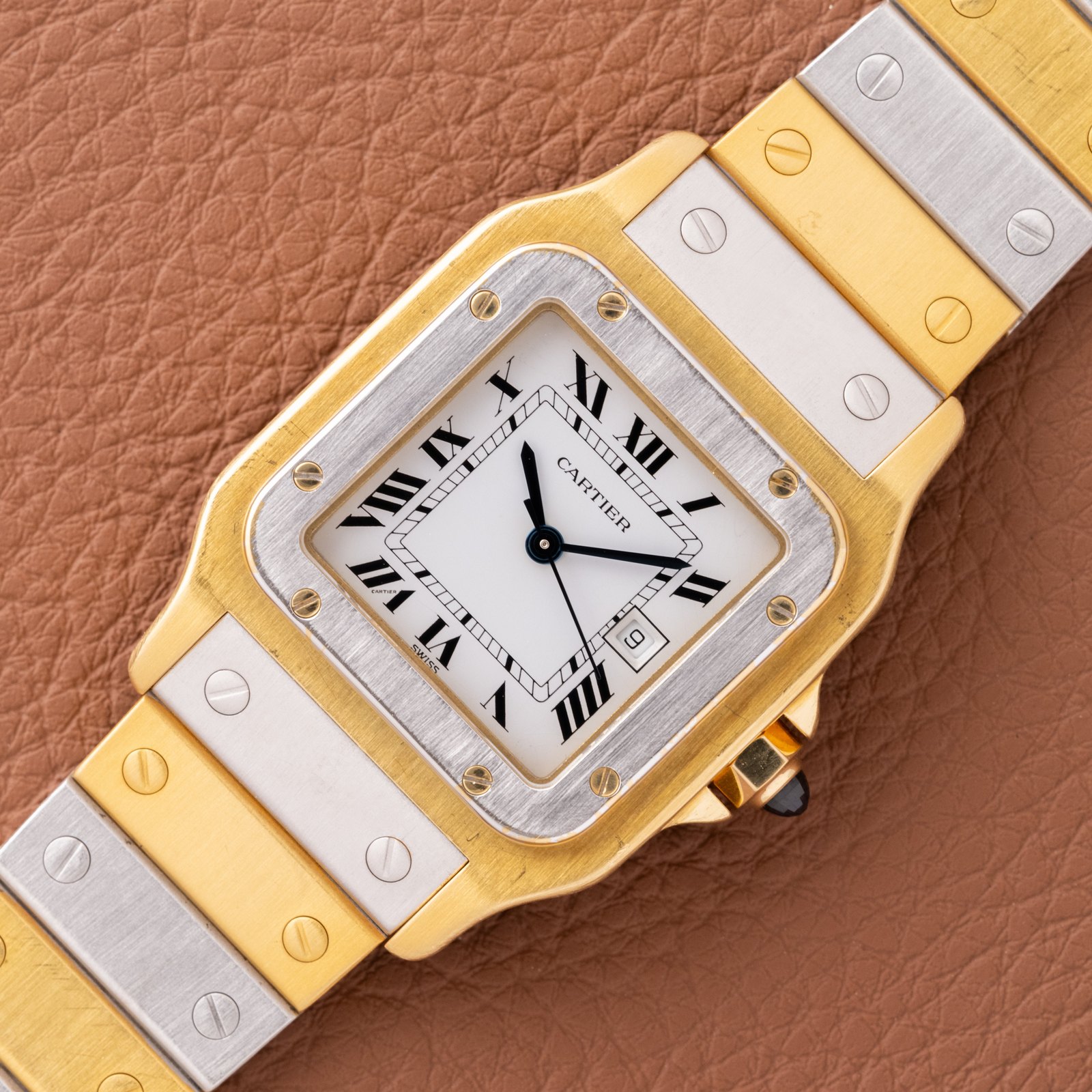
Cartier Santos Carrée Deux Or Two Tone Gold (Ref. 2960), 1980s
- Maker / attribution
- Cartier (maker)
- Date
- 1980s
- Historical period
- Quartz Revolution (1969 – 1990)
- Country of origin
- France
- Object type
- Wristwatch
- Materials / technique
- gold
- Dimensions
- Case 29 mm
- Stock no.
- Product 8533400584375
- Credit line
- Dealer listing, Huntington Company (product 8533400584375)
- Catalogue title (original)
- 1980s Cartier Santos Carrée Deux Or Two Tone Gold (Ref. 2960) (English)
View the source record (dealer listing) ↗ (opens another website in a new tab)Suggest a correction
Record summary
Catalogued by Huntington Company (dealer) (stock number Product 8533400584375), this is a wristwatch by Cartier, made in France, dated 1980s. The Atlas places it in the Quartz Revolution period (1969 – 1990) of its Wristwatches collection. Materials and techniques recorded by the source: gold. Recorded dimensions: Case 29 mm. The record is illustrated with 6 photographs.
Assembled from the source record's structured fields. Dates and attributions are given as the source states them; where a field is missing the Atlas leaves it blank rather than estimating.
Catalogue description
Dealer description — Huntington Company
History and Significance The Cartier Santos is one of the earliest purpose-built wristwatches, originally designed in 1904 for aviator Alberto Santos-Dumont. By the late 1970s and into the 1980s, Cartier reintroduced the Santos in a more modern, sport-oriented format with the Carrée case, integrated bracelet, and exposed screws that defined the look for a new generation. The reference 2960 sits within that revival period and represents the classic mid-size Santos Carrée proportions. It carries the DNA of the original design but with a sharper, more industrial edge that feels very much in line with the design language of the era. The squared case, visible screws, and integrated bracelet all work together as a single design rather than separate components. This particular example stands out due to its Deux Or construction. While two-tone Santos models are common, this configuration using both white gold and yellow gold is far less frequently seen. The contrast between the metals gives the watch a different character compared to standard steel and gold examples, with a slightly softer and more refined presence while still maintaining the Santos identity. Writer’s Thoughts This is not your ordinary Carrée by any means. A crazy configuration, a mix of both white and yellow gold. The Carrée case still wears well today. It has enough presence without feeling oversized. There’s also something about these early Santos bracelets that just works. The proportions and finishing feel right on the wrist. It’s a good option if you want a Santos that’s a bit less common without stepping too far away from the classic design. Our Promise Every watch is thoroughly vetted, carefully described with complete transparency, and guaranteed authentic. Each piece is offered in honest condition, ensuring collectors receive a timepiece that reflects both originality and integrity. Specifications Brand: Cartier Model: Santos Carrée Deux Or (Ref. 2960) Year: circa 1980s Case Material: White gold and yellow gold Case Size: 29mm Dial: White dial with Roman numerals Movement: Automatic Cartier caliber Strap/Bracelet: Integrated two-tone bracelet Buckle/Clasp: Cartier folding clasp Contents: Watch only Condition Case: In excellent condition, with light signs of age-related wear; retains strong shape and definition. There are normal signs of polish. Dial: Clean with no visible imperfections; printing and numerals remain crisp. There is very little crazing that is not noticeable in most light. Hands: Clean with no visible wear. Crystal: Crystal shows no wear or scratches. Strap/Bracelet: Bracelet is in very good condition with light wear and no stretch.
Historical context
Quartz Revolution (1969 – 1990)
Seiko's Astron begins mass quartz timekeeping; traditional industries contract sharply.
Quartz and digital watches transformed the market after 1969. Swiss employment collapsed, Japanese and Hong Kong production soared, and the Swatch (1983) helped the Swiss industry recover; mechanical watches survived as luxury goods.
Read the period in the timelineMore wristwatches from this periodEarlier: Modern Mechanical Horology
Atlas type guide
Wristwatches
Bracelet watches were worn by women from the early nineteenth century — Breguet made one for Caroline Murat, Queen of Naples, in 1810–12 — but the wristwatch only became a man's instrument with military use and aviation in the early twentieth century. Between the World Wars it overtook the pocket watch; the 1920s and 1930s brought rectangular Art Deco cases, water-resistant cases and the first automatic winding systems.
After 1945 the wristwatch became a carrier of identity — dress watches, sports and dive watches, chronographs, calendars — produced by Swiss, American, Japanese, German, Soviet and Chinese industries. The quartz revolution after 1969 and the mechanical renaissance since the 1990s, including the rise of independent watchmakers, complete the story.
What to look for
- The reference number (between the lugs or inside the case back) and serial number, the starting point for dating.
- The calibre: its maker and number are often stamped under the dial or on the bridge.
- Originality of dial, hands and crown — refinished ('redial') dials are common.
- Case material marks: 18K/750, 14K/585, stainless steel, gold-filled, plated.
Dating clues
- Wire-lug cases: before c. 1925.
- Water-resistant screw-down cases: from 1926.
- Quartz movements: from 1969; sapphire crystals widespread after c. 1980.
General guidance written by the Atlas editors about this kind of object. It is not a statement about this particular piece; for that, rely on the source record above and on physical examination.
Related records

Clocks · 1863
Clock by Albert-Ernest Carrier-Belleuse, France, 1863
The Metropolitan Museum of Art, New York

Clocks · c. 1980s
Cartier "art Deco", c. 1980s
Antiquorum auction archive, Geneva

Clocks · c. 2000s
Cartier Desk Clock with Alarm, c. 2000s
Antiquorum auction archive, Geneva

Clocks · c. 2000s
Cartier Lacquer Arched Desk Clock with Alarm, ref. W0100037, c. 2000s
Antiquorum auction archive, Geneva
Wristwatches · c.1989
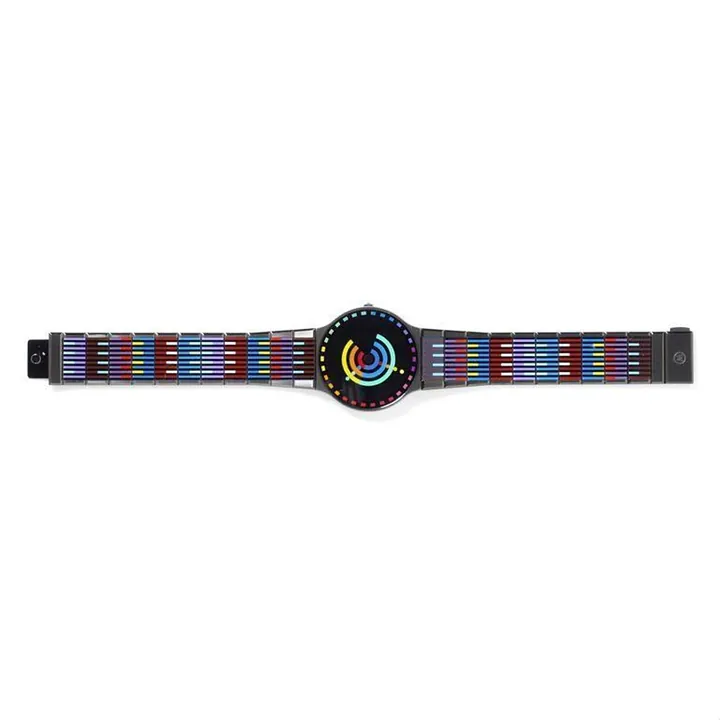
Steel, France and Switzerland, 1989; designed by Yaacov Agam (born 1928) for a limited edition by Movado
Victoria and Albert Museum, London
Wristwatches · c. 1972
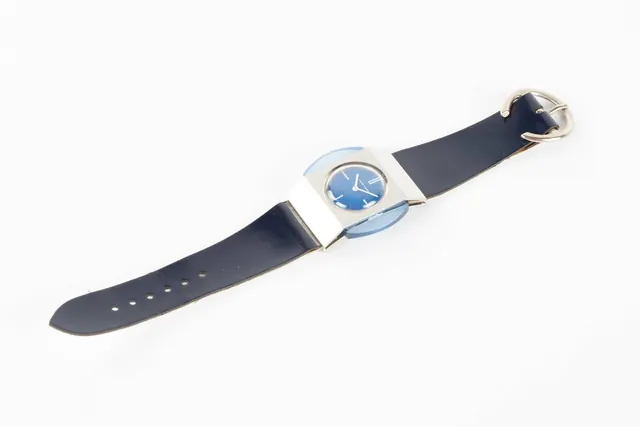
Wristwatch, France, c. 1972
German Clock Museum

Wristwatches · 1986
Wristwatch, France, 1986
Työväenmuseo Werstas
Wristwatches · c. 1970-1980s
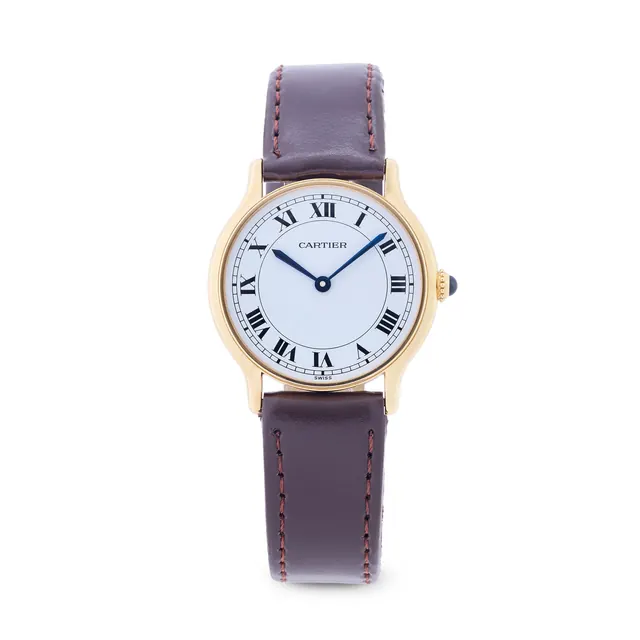
Cartier wristwatch, ref. 10713, Riviera, circa 1970-1980s
Antiquorum auction archive, Geneva