
Wristwatches · Wristwatch
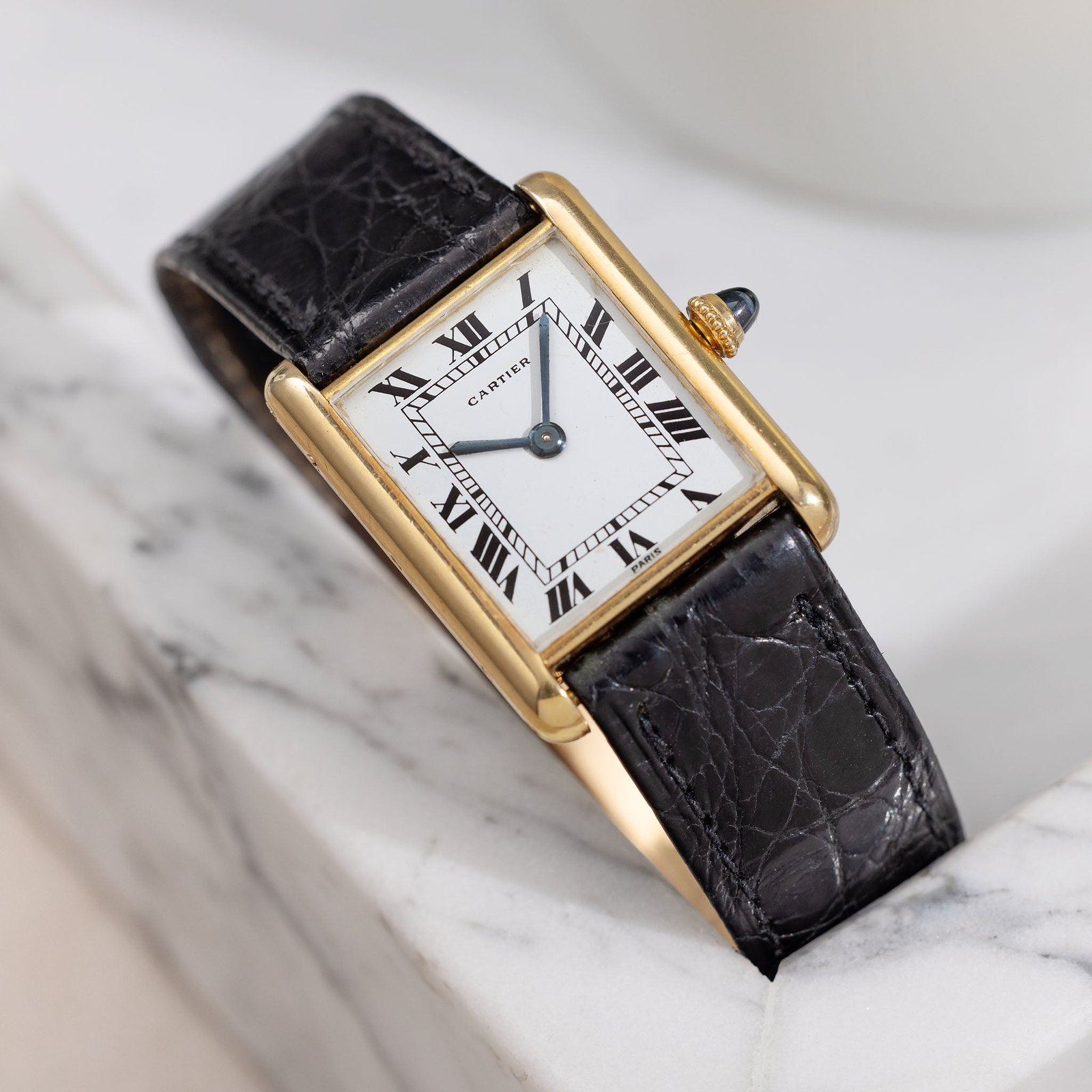
Cartier Paris Tank Louis 18kt Yellow Gold Jaeger Movement 1960s
- Maker / attribution
- Cartier (maker)
- Date
- late 1960s
- Historical period
- Modern Mechanical Horology (1945 – 1969)
- Country of origin
- France
- Object type
- Wristwatch
- Materials / technique
- yellow gold
- Stock no.
- W-2630
- Credit line
- Dealer listing, Bulang & Sons (W-2630)
- Catalogue title (original)
- Cartier Paris Tank Louis 18kt Yellow Gold Jaeger Movement 1960s (English)
View the source record (dealer listing) ↗ (opens another website in a new tab)Suggest a correction
Record summary
Catalogued by Bulang & Sons (dealer), Copenhagen (stock number W-2630), this is a wristwatch by Cartier, made in France, dated late 1960s. The Atlas places it in the Modern Mechanical Horology period (1945 – 1969) of its Wristwatches collection. Materials and techniques recorded by the source: yellow gold. The record is illustrated with 6 photographs.
Assembled from the source record's structured fields. Dates and attributions are given as the source states them; where a field is missing the Atlas leaves it blank rather than estimating.
Catalogue description
Dealer description — Bulang & Sons
This is another incredibly beautiful and rare Cartier Paris Tank Louis that dates to the late 1960s. This is important, as watches that pre-date the 1972 Cartier buy-out are much rarer and desirable. This is a very desirable watch that houses the Jaeger-LeCoultre calibre 818/2 manual wind movement made for Cartier. This watch is made in 18kt gold with matching serials on the case and caseback. This classic looking Cartier Tank Louis has all the hallmarks of the brand, including white dial with black Roman numerals, without the hidden signature, and railroad track, blued hands and a blue cabochon-topped winding crown. The dial and case are both in nice condition with the dial signed Paris. The watch will come on the pictured Cartier leather strap that is fitted with the original Cartier Paris yellow gold folding clasp. The Jaeger-LeCoultre for Cartier manual wind movement has been fully serviced by our watchmaker. This is a very special and collectible Cartier Paris Tank and we would love to share more with you. Please get in touch! Specifications: - Cartier Paris Tank Louis - Yellow gold case 23x30mm - Dates to late 1960s - White dial with painted black Roman numerals - Blued hands - Blue cabochon-topped winder - Jaeger-LeCoultre 818/2 manual wind movement for Cartier - Comes on the pictured Cartier leather strap - Cartier yellow gold folding clasp with Cartier serial numbers - Fully serviced by our watchmaker
Historical context
Modern Mechanical Horology (1945 – 1969)
Tool watches for divers, pilots and astronauts; electric watches anticipate the electronic age.
The classic era of the mechanical wristwatch: dive watches, chronographs for motor racing and space flight, GMT watches for jet travel, slim dress watches, automatic calendars, and the rise of Japanese manufacturers alongside Swiss, American, German and Soviet industries.
Read the period in the timelineMore wristwatches from this periodEarlier: Golden Age of Mechanical Watchmaking
Atlas type guide
Wristwatches
Bracelet watches were worn by women from the early nineteenth century — Breguet made one for Caroline Murat, Queen of Naples, in 1810–12 — but the wristwatch only became a man's instrument with military use and aviation in the early twentieth century. Between the World Wars it overtook the pocket watch; the 1920s and 1930s brought rectangular Art Deco cases, water-resistant cases and the first automatic winding systems.
After 1945 the wristwatch became a carrier of identity — dress watches, sports and dive watches, chronographs, calendars — produced by Swiss, American, Japanese, German, Soviet and Chinese industries. The quartz revolution after 1969 and the mechanical renaissance since the 1990s, including the rise of independent watchmakers, complete the story.
What to look for
- The reference number (between the lugs or inside the case back) and serial number, the starting point for dating.
- The calibre: its maker and number are often stamped under the dial or on the bridge.
- Originality of dial, hands and crown — refinished ('redial') dials are common.
- Case material marks: 18K/750, 14K/585, stainless steel, gold-filled, plated.
Dating clues
- Wire-lug cases: before c. 1925.
- Water-resistant screw-down cases: from 1926.
- Quartz movements: from 1969; sapphire crystals widespread after c. 1980.
General guidance written by the Atlas editors about this kind of object. It is not a statement about this particular piece; for that, rely on the source record above and on physical examination.
Related records

Clocks · 1863
Clock by Albert-Ernest Carrier-Belleuse, France, 1863
The Metropolitan Museum of Art, New York

Clocks · c. 1980s
Cartier "art Deco", c. 1980s
Antiquorum auction archive, Geneva

Clocks · c. 2000s
Cartier Desk Clock with Alarm, c. 2000s
Antiquorum auction archive, Geneva

Clocks · c. 2000s
Cartier Lacquer Arched Desk Clock with Alarm, ref. W0100037, c. 2000s
Antiquorum auction archive, Geneva
Wristwatches · c. 1963
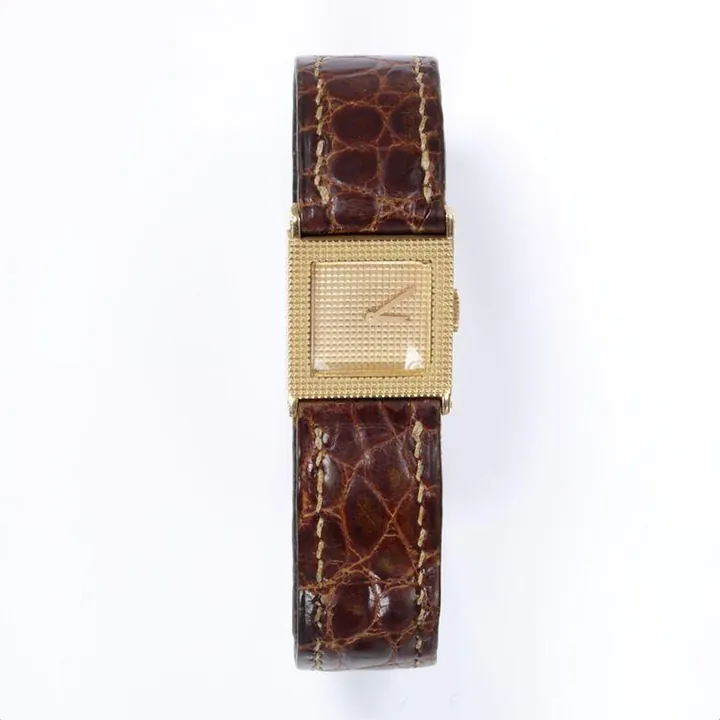
Wristwatch with gold case and leather strap, Boucheron, Paris, about 1963.
Victoria and Albert Museum, London
Wristwatches · 1960–1965
Wristwatch, France, 1960–1965
Suomen kansallismuseo
Wristwatches · c. 1960s
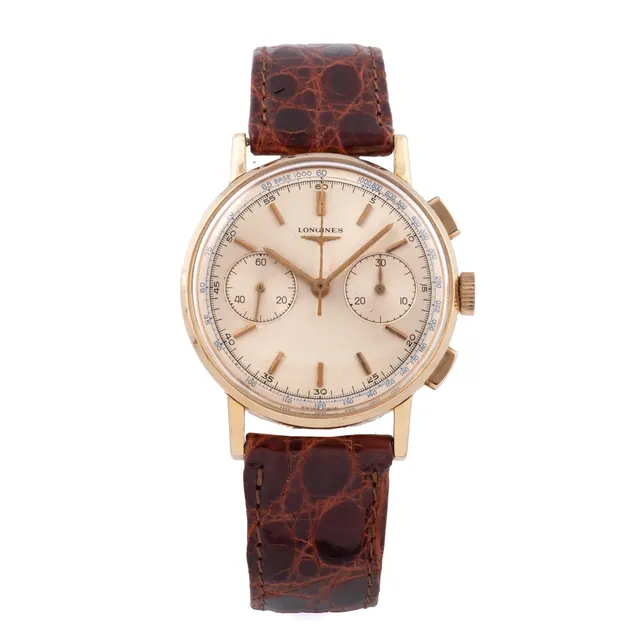
Longines wristwatch, 30 Ch French Case, circa 1960's
Antiquorum auction archive, Geneva
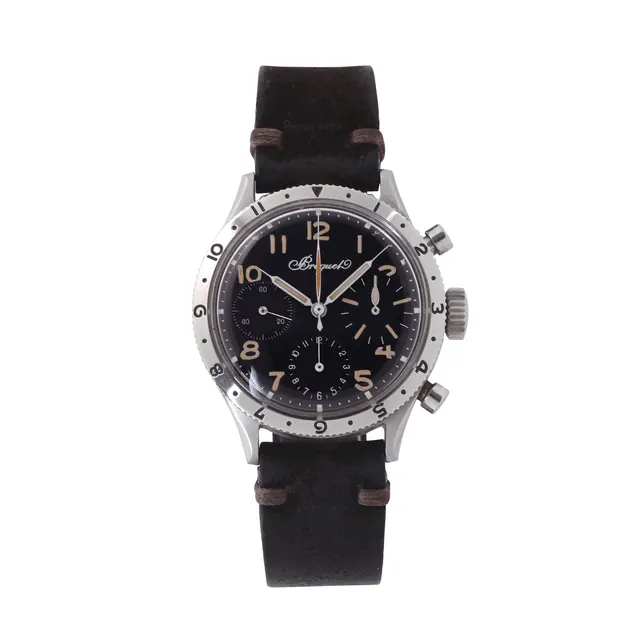
Wristwatches · 1958
Breguet wristwatch, 1958
Antiquorum auction archive, Geneva