
Wristwatches · Wristwatch
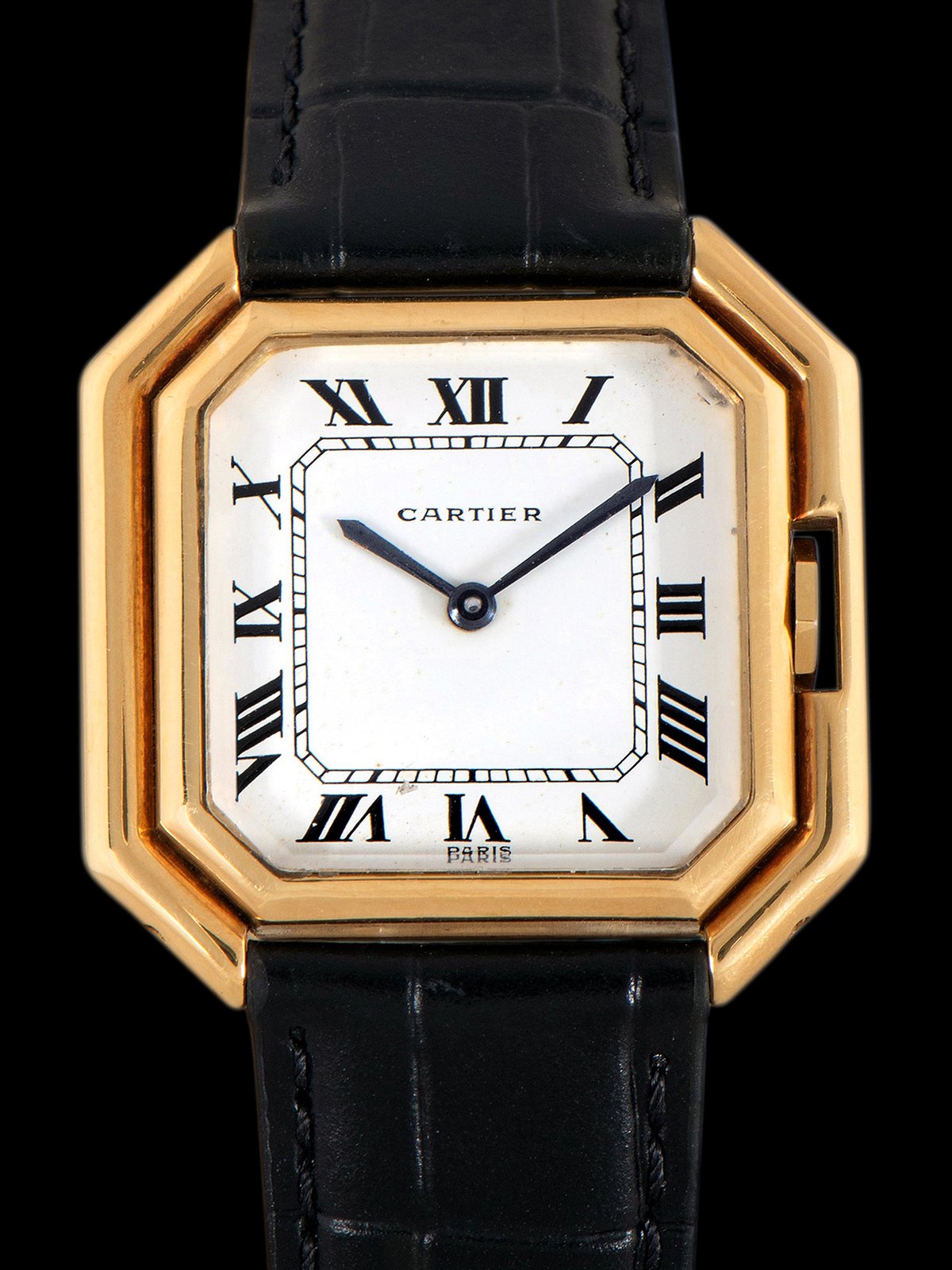
Cartier Paris Ceinture Automatique 18K YG (Ref. 17001) "Jumbo", 1970s
- Maker / attribution
- Cartier (maker)
- Date
- 1970s
- Historical period
- Quartz Revolution (1969 – 1990)
- Country of origin
- France
- Object type
- Wristwatch
- Stock no.
- CTRCNTR17001-2
- Credit line
- Dealer listing, Craft & Tailored (CTRCNTR17001-2)
- Catalogue title (original)
- 1970s Cartier Paris Ceinture Automatique 18K YG (Ref. 17001) "Jumbo" (English)
View the source record (dealer listing) ↗ (opens another website in a new tab)Suggest a correction
Record summary
Catalogued by Craft & Tailored (dealer), Los Angeles (stock number CTRCNTR17001-2), this is a wristwatch by Cartier, made in France, dated 1970s. The Atlas places it in the Quartz Revolution period (1969 – 1990) of its Wristwatches collection. The record is illustrated with 6 photographs.
Assembled from the source record's structured fields. Dates and attributions are given as the source states them; where a field is missing the Atlas leaves it blank rather than estimating.
Catalogue description
Dealer description — Craft & Tailored
The Cartier name is synonymous with luxury and has been since the brand's inception in 1847. Offering bespoke and unique jewelry to the world’s elite allowed Cartier to steadily grow through the 19th century, and it eventually introduced new offerings and wristwatches to their clientele. Most notably known for the Tank Louis, the Cartier brand and jewelry juggernaut also produced some eclectic references that are just as interesting and in many cases much rarer than the classic Tank. The Cartier Ceinture is one such eclectic watch and is often forgotten amongst the Cartier community as it was only produced for a short period of time in the 1970s and never recreated. With the name directly translating to "belt" in French, the Ceinture's square case with missing corners was designed to reflect the look of a belt buckle. SPECS Stock # CTRCNTR17001-2 Brand Cartier Style Ceinture Automatique Model 17001 Serial 04XX Size Men's / Unisex Material 18K Yellow Gold Dial White "Paris" Millimeters 31 X 31 Strap 2pc Black Alligator Deployant Strap W/ Cartier Tang Buckle CASE & BRACELET The beautiful 18K yellow gold "jumbo" case is very well-preserved, featuring defined case angles and strong factory dimensions, with evidence of only light polishing in the past present. The case features a subtle rosy patina within the case edges, which is evidence of the minimal polishing the watch has seen in the past. The back of the case features the classic Automatique "bubble"; the original factory engravings remain present on the back as well, though they are faint through wear over time. The watch will come supplied on 2pc black alligator leather strap with a gold plaque Cartier tang buckle. DIAL & HANDS The original "Paris" signed white Roman numeral dial features a charming vintage aesthetic and is in good overall condition, showing some normal spots from aging and some expected spidering in the top lacquer. There are some chips on the dial, between the 6 and 7 o'clock numerals, as well as in the top right corner of the dial, hidden underneath the crystal, though they are mostly unnoticeable to the naked eye. The blued hands are original to the watch as well, and remain in excellent shape. ACCESSORIES None. The watch is keeping time, though the service history is unknown. A movement service can be purchased upon request.
Historical context
Quartz Revolution (1969 – 1990)
Seiko's Astron begins mass quartz timekeeping; traditional industries contract sharply.
Quartz and digital watches transformed the market after 1969. Swiss employment collapsed, Japanese and Hong Kong production soared, and the Swatch (1983) helped the Swiss industry recover; mechanical watches survived as luxury goods.
Read the period in the timelineMore wristwatches from this periodEarlier: Modern Mechanical Horology
Atlas type guide
Automatic (self-winding) watches
Self-winding watches use the wearer's motion to wind the mainspring. Abraham-Louis Perrelet and Breguet made 'perpétuelle' pocket watches with oscillating weights in the late eighteenth century, but the principle only became practical in the wristwatch. John Harwood patented a bumper automatic in 1923; Rolex's Perpetual rotor (1931) winding in one direction, and later bidirectional rotors (Eterna, Felsa Bidynator), established the modern form. Micro-rotors (Universal Genève, Buren) and peripheral rotors made automatic watches thinner.
What to look for
- A semicircular rotor turning 360° over the movement, or a 'bumper' weight that rebounds between springs.
- 'Automatic', 'Perpetual' or 'Self-winding' on the dial.
- A sealed screw-back case, since automatic watches are wound less often by the crown.
Dating clues
- Bumper automatics: 1923–c. 1955.
- Full rotors: from 1931 (Rolex); widespread after c. 1950.
- Micro-rotors: from 1954–1958.
General guidance written by the Atlas editors about this kind of object. It is not a statement about this particular piece; for that, rely on the source record above and on physical examination.
Related records

Clocks · 1863
Clock by Albert-Ernest Carrier-Belleuse, France, 1863
The Metropolitan Museum of Art, New York

Clocks · c. 1980s
Cartier "art Deco", c. 1980s
Antiquorum auction archive, Geneva

Clocks · c. 2000s
Cartier Desk Clock with Alarm, c. 2000s
Antiquorum auction archive, Geneva

Clocks · c. 2000s
Cartier Lacquer Arched Desk Clock with Alarm, ref. W0100037, c. 2000s
Antiquorum auction archive, Geneva
Wristwatches · c.1989
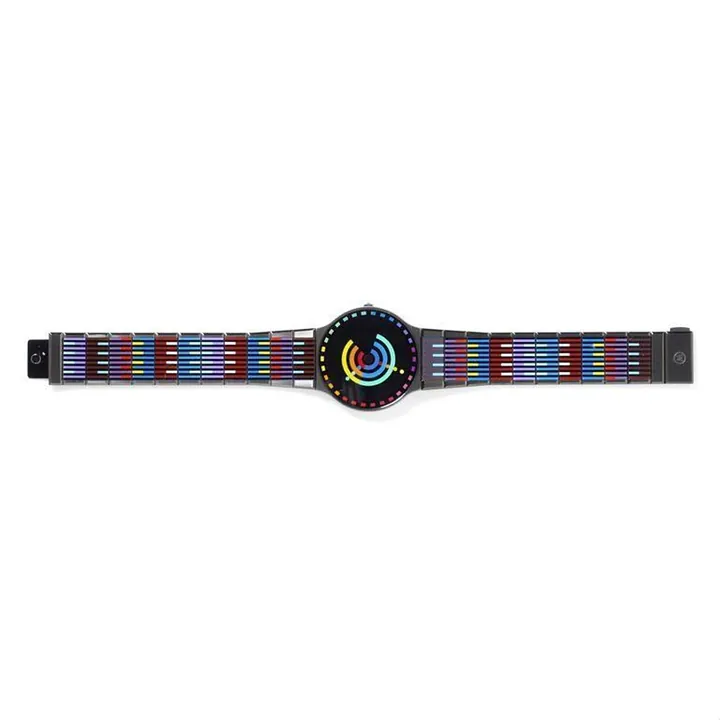
Steel, France and Switzerland, 1989; designed by Yaacov Agam (born 1928) for a limited edition by Movado
Victoria and Albert Museum, London

Wristwatches · c. 1972
Wristwatch, France, c. 1972
German Clock Museum

Wristwatches · 1986
Wristwatch, France, 1986
Työväenmuseo Werstas
Wristwatches · c. 1970-1980s
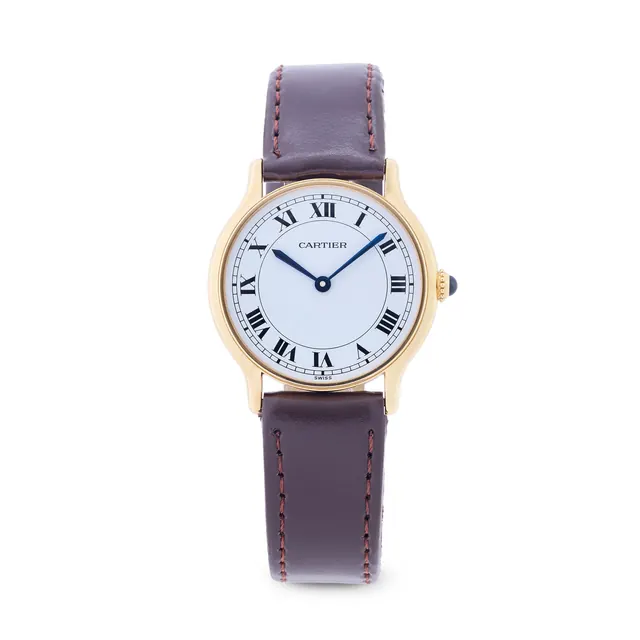
Cartier wristwatch, ref. 10713, Riviera, circa 1970-1980s
Antiquorum auction archive, Geneva