
Wristwatches · Wristwatch
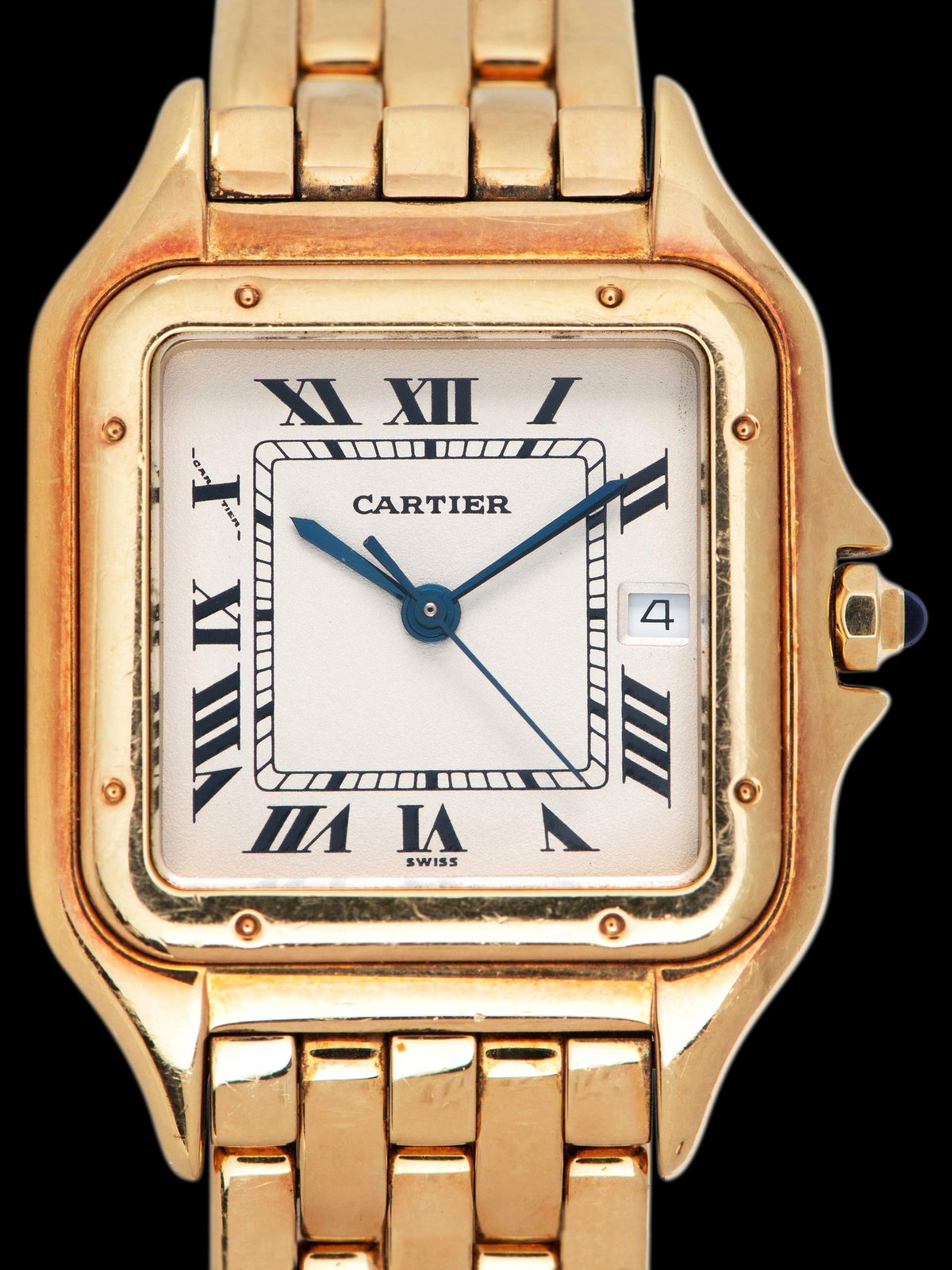
Cartier Panthère Quartz (Ref. W25014B9) 18K YG, 2000s
- Maker / attribution
- Cartier (maker)
- Date
- 2000s
- Historical period
- Mechanical Renaissance (1990 – 2010)
- Country of origin
- France
- Object type
- Wristwatch
- Stock no.
- CTRPTHQ
- Credit line
- Dealer listing, Craft & Tailored (CTRPTHQ)
- Catalogue title (original)
- 2000s Cartier Panthère Quartz (Ref. W25014B9) 18K YG (English)
View the source record (dealer listing) ↗ (opens another website in a new tab)Suggest a correction
Record summary
Catalogued by Craft & Tailored (dealer), Los Angeles (stock number CTRPTHQ), this is a wristwatch by Cartier, made in France, dated 2000s. The Atlas places it in the Mechanical Renaissance period (1990 – 2010) of its Wristwatches collection. The record is illustrated with 6 photographs.
Assembled from the source record's structured fields. Dates and attributions are given as the source states them; where a field is missing the Atlas leaves it blank rather than estimating.
Catalogue description
Dealer description — Craft & Tailored
The Cartier name is synonymous with luxury and has been since the brand's inception in 1847. Offering bespoke and unique jewelry to the world’s elite allowed Cartier to steadily grow through the 19th century and eventually introduced new offerings and wristwatches to their clientele. Cartier's now iconic panther or "Panthère" motif all circles back to one person, the also iconic Jeanne Toussaint. Louis Cartier hired Toussaint in 1913 to be the director of bags and accessories, but she also became the main inspiration for the panther and fittingly so as she spearheaded many of the subsequent Panthère designs through the deco era and onwards. The result of which being beautifully designed jewelry and watches inspired by or directly resembling the luxurious jungle cat. The Panthère de Cartier collection of watches was originally introduced in 1983 and quickly became a staple within the Cartier offering until it was discontinued in the early 2000s. This Cartier Panthère W25014B9 represents everything we love about the Panthère line, unrivaled and unpretentious elegance that acts just as much as jewelry as it does a timekeeping device. Stock # CTRPTHQ Brand Cartier Style Panthère Model W25014B9 Serial 88XXXX / 00XXXX Size Unisex / Men's Material 18K Yellow Gold Dial Paris Millimeters 27 Bracelet Cartier 18K YG Deployant Clasp Bracelet CASE & BRACELET The 18K yellow gold case is exceptionally well-preserved with only gentle wear visible. The case also features a lovely rosy patina that has formed around the bezel due to a lack of polishing throughout its existence. The case retains its original blue sapphire cabochon crown. The case back retains all of its factory markings in perfectly legible and crisp condition. The original 18K yellow gold deployant clasp bracelet exhibits no stretch and retains 14 links, sized to a 6 1/4-inch wrist. The bracelet comes with one additional link. DIAL & HANDS The beautifully executed dial consisting of a subtle yet luxurious texture remains in factory flawless condition. The original blued hands are also in flawless condition. ACCESSORIES None. The watch just received a new battery and it is keeping time perfectly.
Historical context
Mechanical Renaissance (1990 – 2010)
Mechanical watches return as cultural objects; independent watchmaking flourishes.
Mechanical watches returned as cultural and luxury objects. Complications, tourbillons and new materials proliferated; independent watchmakers such as George Daniels, F.P. Journe and Philippe Dufour revived artisanal watchmaking; collecting vintage watches became a major field.
Read the period in the timelineMore wristwatches from this periodEarlier: Quartz Revolution
Atlas type guide
Quartz, digital and electronic watches
Electronic watches arrived in three steps. The Hamilton Electric 500 (1957) was the first battery-powered wristwatch, still with a balance; Bulova's Accutron (1960) used a tuning fork. On 25 December 1969 Seiko released the Astron 35SQ, the first quartz wristwatch, closely followed by the Swiss Beta 21 group. In 1972 Hamilton's Pulsar introduced the LED digital watch, and LCD displays soon made digital watches cheap.
The 'Quartz Crisis' that followed devastated the Swiss mechanical industry, which lost two-thirds of its workforce between 1970 and 1984 before recovering with the Swatch (1983) and the luxury mechanical revival. Solar, radio-controlled, kinetic and connected smartwatches continue the electronic line.
What to look for
- Battery hatch in the case back and calibre markings with 'Quartz' or a crystal frequency.
- Display technology: LED (red, push-button) versus LCD (always-on).
- Tuning-fork hum and a smoothly sweeping seconds hand on Accutrons.
- Model and reference numbers, often printed on the back.
Dating clues
- Electric balance watches: from 1957.
- Tuning-fork watches: 1960–c. 1977.
- Quartz analogue: from December 1969; LED digital: 1972–c. 1978; LCD from 1973.
General guidance written by the Atlas editors about this kind of object. It is not a statement about this particular piece; for that, rely on the source record above and on physical examination.
Read next:Seiko calibre 35A (Astron)
Related records
Clocks · 1863
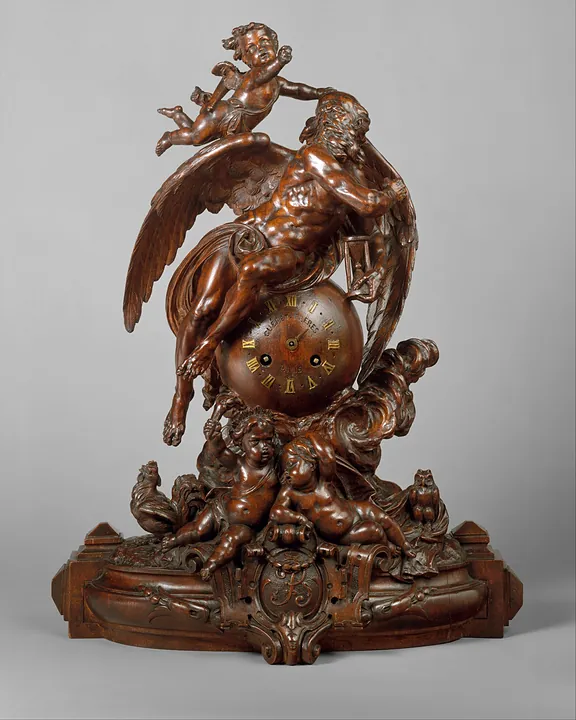
Clock by Albert-Ernest Carrier-Belleuse, France, 1863
The Metropolitan Museum of Art, New York
Clocks · c. 1980s
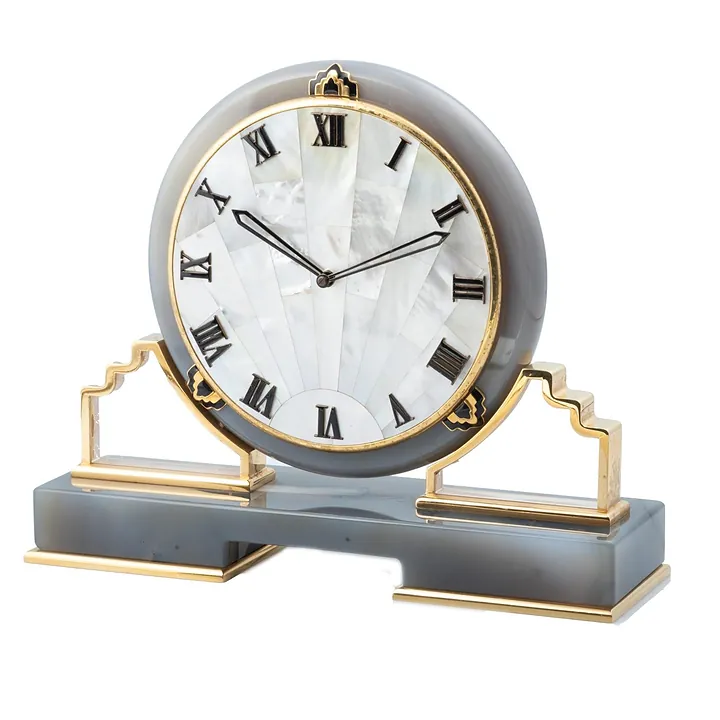
Cartier "art Deco", c. 1980s
Antiquorum auction archive, Geneva
Clocks · c. 2000s
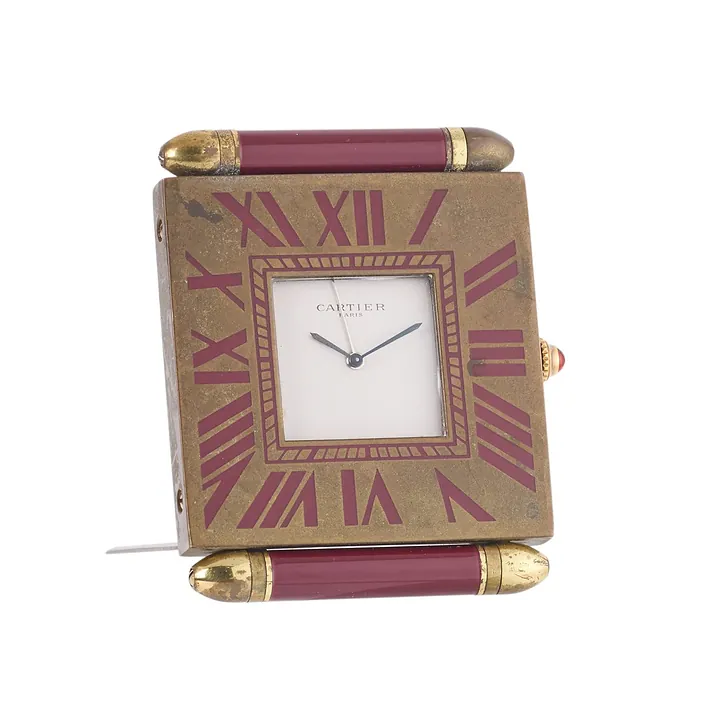
Cartier Desk Clock with Alarm, c. 2000s
Antiquorum auction archive, Geneva
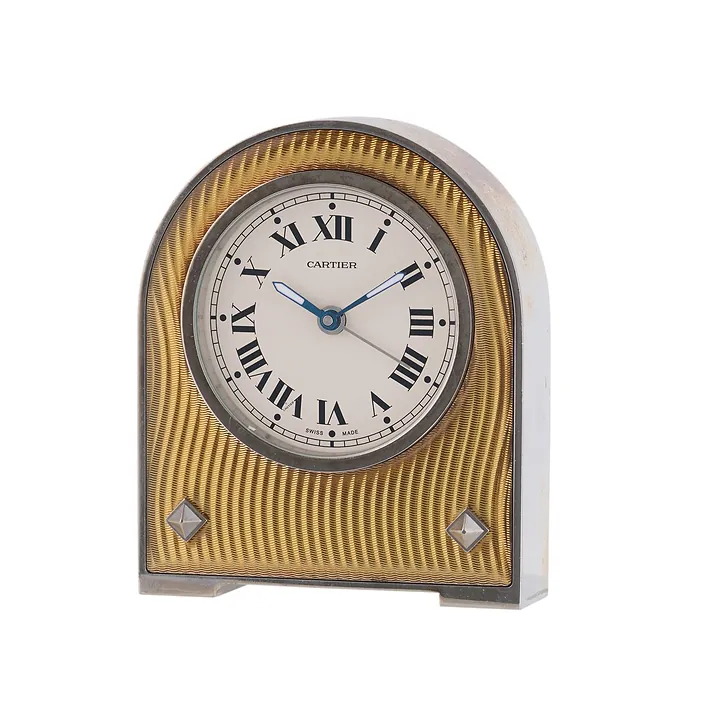
Clocks · c. 2000s
Cartier Lacquer Arched Desk Clock with Alarm, ref. W0100037, c. 2000s
Antiquorum auction archive, Geneva
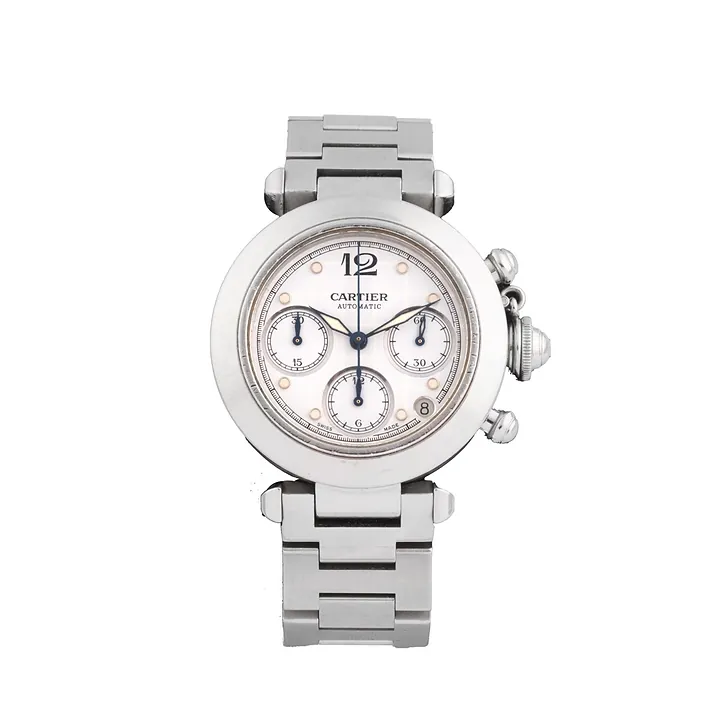
Wristwatches · c. 1990
Cartier Pasha, ref. 2412, c. 1990
Antiquorum auction archive, Geneva
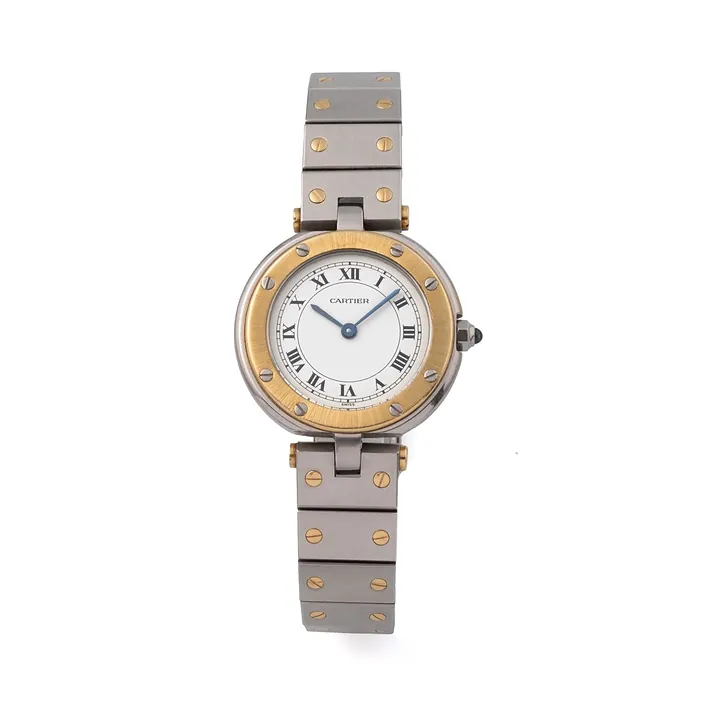
Wristwatches · c. 1990
Cartier Santos Ronde Vendome, c. 1990
Antiquorum auction archive, Geneva
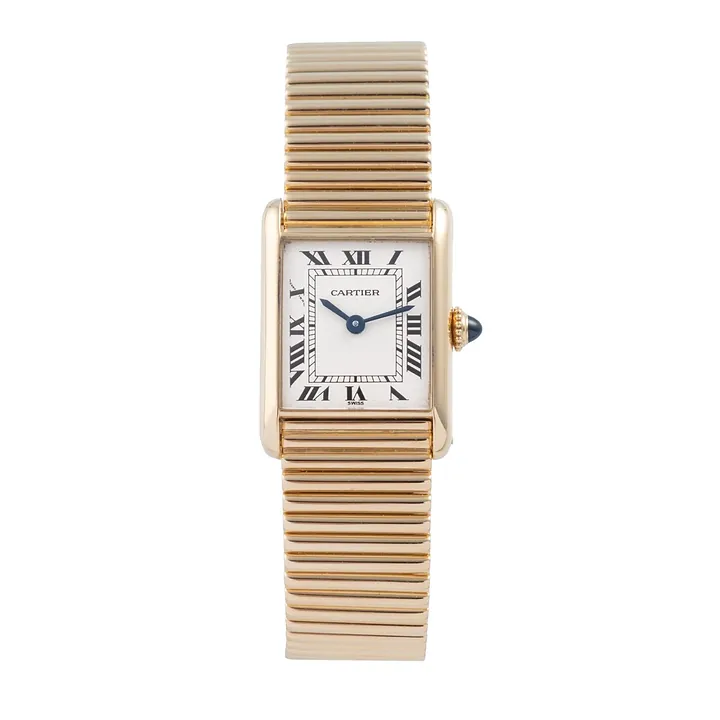
Wristwatches · c. 1990s
Cartier Tank Louis Cartier, ref. 6711, c. 1990s
Antiquorum auction archive, Geneva
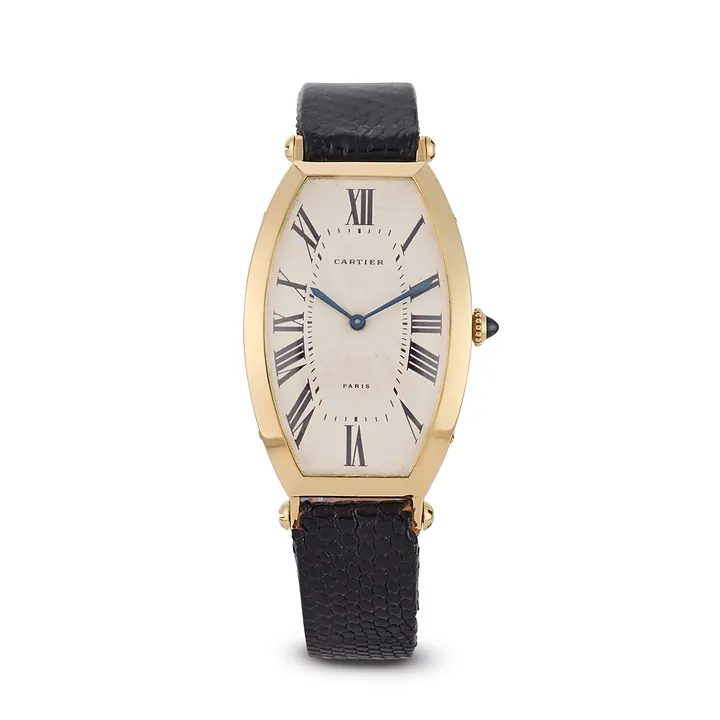
Wristwatches · c. 1991
Cartier Tonneau Paris 1991, c. 1991
Antiquorum auction archive, Geneva