
Wristwatches · Wristwatch
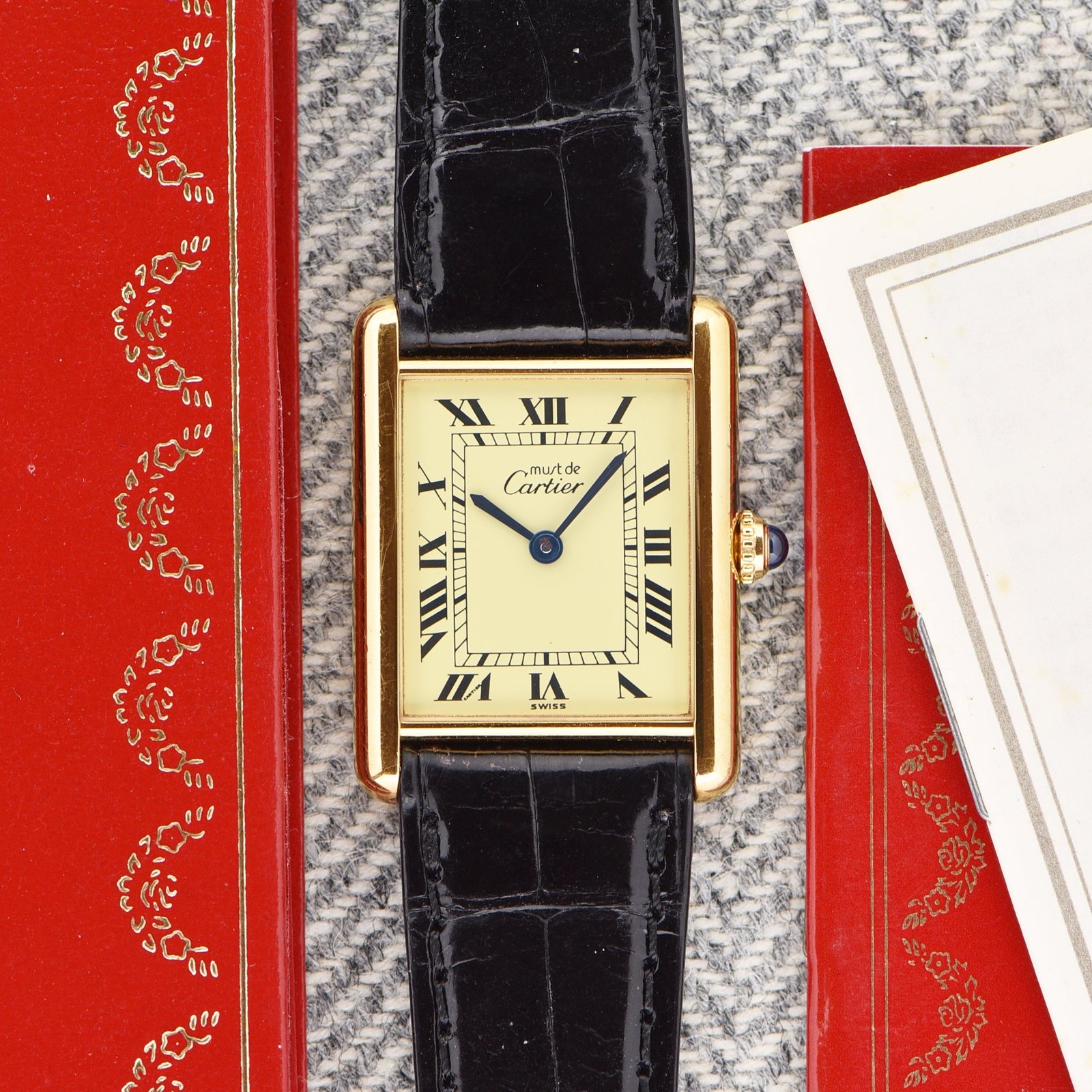
Cartier Must De Tank Roman Dial, 1993
- Maker / attribution
- Cartier (maker)
- Date
- 1993
- Historical period
- Mechanical Renaissance (1990 – 2010)
- Country of origin
- France
- Object type
- Wristwatch
- Dimensions
- Case 23 mm
- Stock no.
- Product 7535128772791
- Credit line
- Dealer listing, Huntington Company (product 7535128772791)
- Catalogue title (original)
- 1993 Cartier Must De Tank Roman Dial - Complete Set (English)
View the source record (dealer listing) ↗ (opens another website in a new tab)Suggest a correction
Record summary
Catalogued by Huntington Company (dealer) (stock number Product 7535128772791), this is a wristwatch by Cartier, made in France, dated 1993. The Atlas places it in the Mechanical Renaissance period (1990 – 2010) of its Wristwatches collection. Recorded dimensions: Case 23 mm. The record is illustrated with 6 photographs.
Assembled from the source record's structured fields. Dates and attributions are given as the source states them; where a field is missing the Atlas leaves it blank rather than estimating.
Catalogue description
Dealer description — Huntington Company
Reference 590005 Original Buckle, Booklets, Certificate, Boxes Specifications Year: 1993 Model: Must De Cartier Tank Case Diameter: 23mm Lug to Lug: 30mm Case: Gold Plated Sterling Silver Dial: Ivory Movement: Quartz Condition Another day, another Cartier! The case has no plate wear and some oxidization on the gold. The dial is nice and clean with the original blued hands. The watch is on a black aftermarket strap and the original buckle. It is a complete set with booklets and a certificate. The Story The Must de Cartier line, created by Robert Hocq and Alain-Dominique Perrin, aimed to attract new customers by offering accessories and leather goods with the essence of Cartier. The Must de Cartier Tank wristwatch was the brand's most iconic item, made from sterling silver with a minimum of 10k plating at 2.5 microns thick. Launched in 1976, the line marked key milestones for the brand, including being the first non-precious metal watch and the first mass-produced watch. The brand produced around 3000 watches per year before the Must line, and by the end of the 70s, they were producing over 160,000 watches per year. The dials varied, with faux-stone dials resembling onyx and lapis, lacquer dials in wood and tortoiseshell, and the Trinity dial featuring five stripes in a center section in yellow, white, and rose gold. The Trinity dial was a favorite among fans. A design that has stayed true to what it started out to be. The Cartier tank deserves to be in every watch collection. Its size might be smaller than most watches, but that doesn't mean it doesn't look great on the wrist. The Brand Cartier, a luxury watch brand, has been synonymous with elegance, innovation, and timeless appeal since its inception in 1847. The brand's early creations, including the Cartier Santos and Cartier Tank, were an embodiment of aesthetic innovation and mechanical mastery, merging the finesse of jewelry with the functionality of timekeeping. As the brand grew, so did the family's involvement, as the children and grandchildren of Louis-François Cartier expanded the business and opened boutiques in various cosmopolitan cities. The turn of the 20th century marked a revolutionary phase for Cartier, with the introduction of the Cartier Santos, which was designed for the famous aviator Alberto Santos-Dumont and became one of the first wristwatches designed explicitly for men. The Cartier Tank watch, inspired by the geometric design of military tanks, was a symbol of modernity and minimalistic elegance. The uniquely shaped Cartier Tonneau broke away from conventional circular designs, demonstrating Cartier's commitment to artistic creativity and mechanical excellence. Through strategic collaborations with local artisans, careful selection of materials, and a deep understanding of regional tastes, Cartier transformed from a Parisian marvel into an international sensation. The Cartier watch became more than a French luxury; it became a global emblem of style and refinement, transcending geographical boundaries to become a timeless classic. This era of expansion validated Cartier's enduring appeal, demonstrating that true luxury, as epitomized by Cartier's watches, knows no borders and speaks a universal language of elegance and excellence.
Historical context
Mechanical Renaissance (1990 – 2010)
Mechanical watches return as cultural objects; independent watchmaking flourishes.
Mechanical watches returned as cultural and luxury objects. Complications, tourbillons and new materials proliferated; independent watchmakers such as George Daniels, F.P. Journe and Philippe Dufour revived artisanal watchmaking; collecting vintage watches became a major field.
Read the period in the timelineMore wristwatches from this periodEarlier: Quartz Revolution
Atlas type guide
Wristwatches
Bracelet watches were worn by women from the early nineteenth century — Breguet made one for Caroline Murat, Queen of Naples, in 1810–12 — but the wristwatch only became a man's instrument with military use and aviation in the early twentieth century. Between the World Wars it overtook the pocket watch; the 1920s and 1930s brought rectangular Art Deco cases, water-resistant cases and the first automatic winding systems.
After 1945 the wristwatch became a carrier of identity — dress watches, sports and dive watches, chronographs, calendars — produced by Swiss, American, Japanese, German, Soviet and Chinese industries. The quartz revolution after 1969 and the mechanical renaissance since the 1990s, including the rise of independent watchmakers, complete the story.
What to look for
- The reference number (between the lugs or inside the case back) and serial number, the starting point for dating.
- The calibre: its maker and number are often stamped under the dial or on the bridge.
- Originality of dial, hands and crown — refinished ('redial') dials are common.
- Case material marks: 18K/750, 14K/585, stainless steel, gold-filled, plated.
Dating clues
- Wire-lug cases: before c. 1925.
- Water-resistant screw-down cases: from 1926.
- Quartz movements: from 1969; sapphire crystals widespread after c. 1980.
General guidance written by the Atlas editors about this kind of object. It is not a statement about this particular piece; for that, rely on the source record above and on physical examination.
Related records

Clocks · 1863
Clock by Albert-Ernest Carrier-Belleuse, France, 1863
The Metropolitan Museum of Art, New York

Clocks · c. 1980s
Cartier "art Deco", c. 1980s
Antiquorum auction archive, Geneva

Clocks · c. 2000s
Cartier Desk Clock with Alarm, c. 2000s
Antiquorum auction archive, Geneva

Clocks · c. 2000s
Cartier Lacquer Arched Desk Clock with Alarm, ref. W0100037, c. 2000s
Antiquorum auction archive, Geneva
Wristwatches · c. 1990
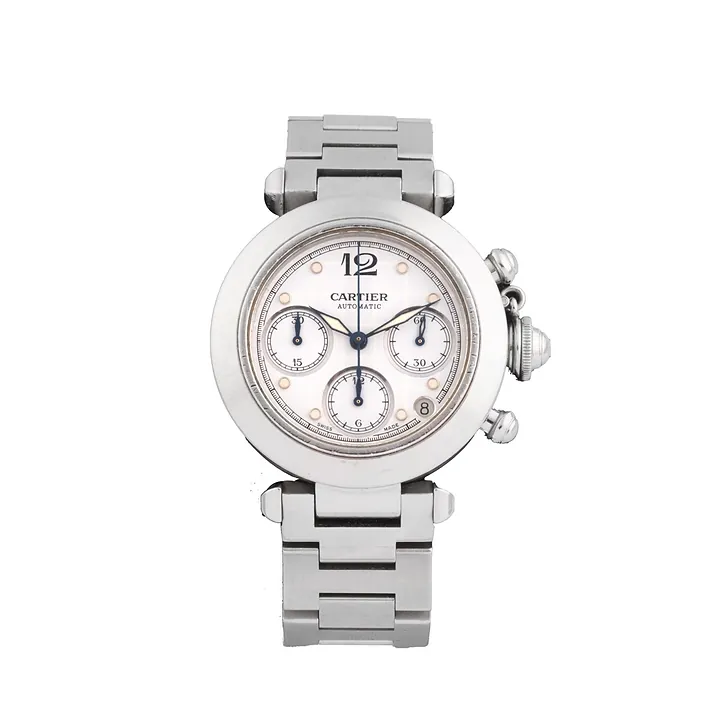
Cartier Pasha, ref. 2412, c. 1990
Antiquorum auction archive, Geneva
Wristwatches · c. 1990
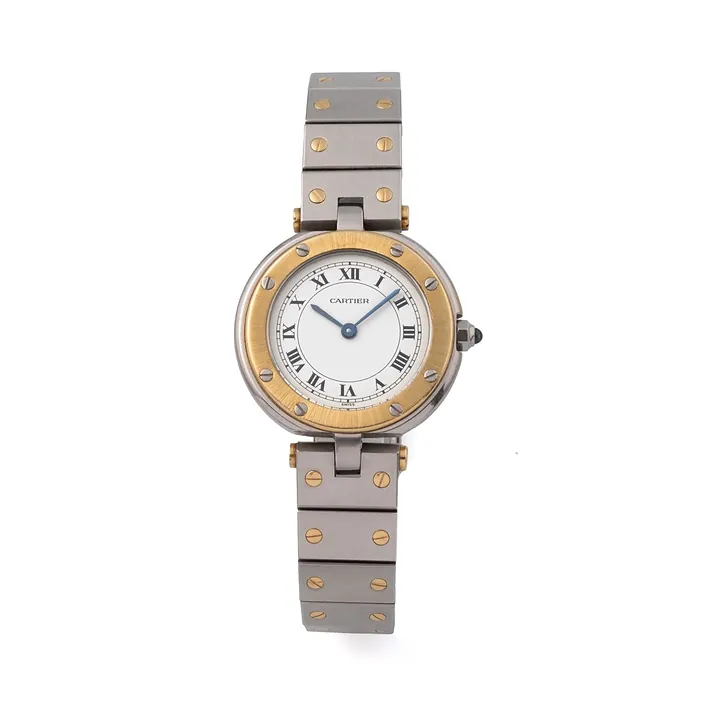
Cartier Santos Ronde Vendome, c. 1990
Antiquorum auction archive, Geneva
Wristwatches · c. 1990s
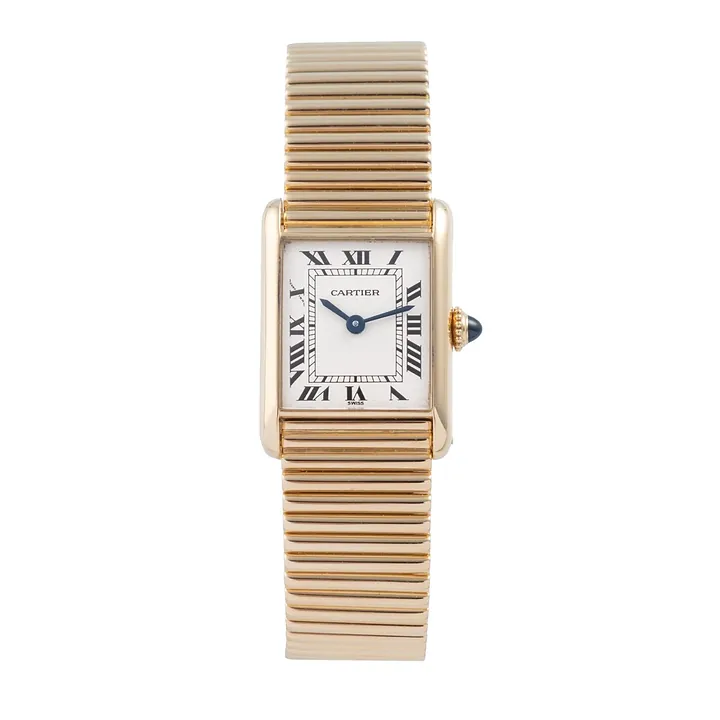
Cartier Tank Louis Cartier, ref. 6711, c. 1990s
Antiquorum auction archive, Geneva
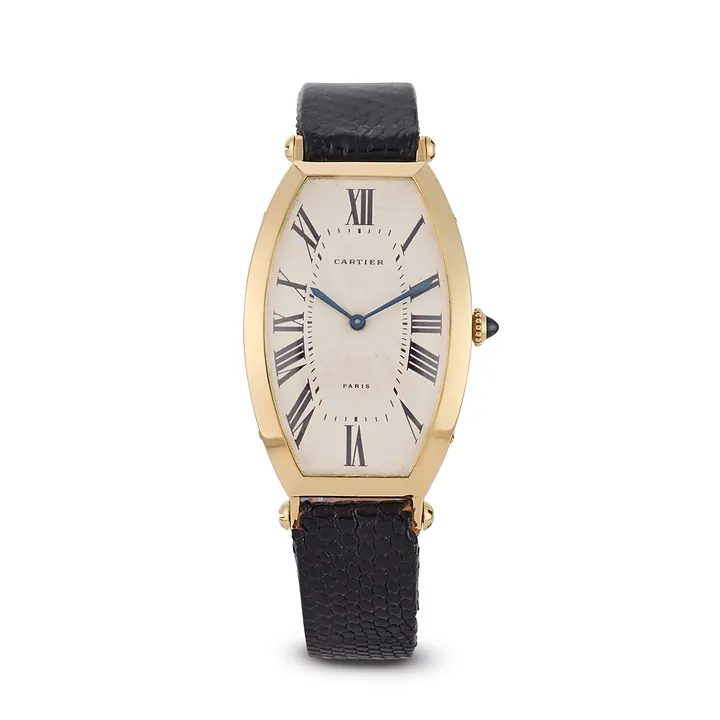
Wristwatches · c. 1991
Cartier Tonneau Paris 1991, c. 1991
Antiquorum auction archive, Geneva