
Clocks · Bracket clock
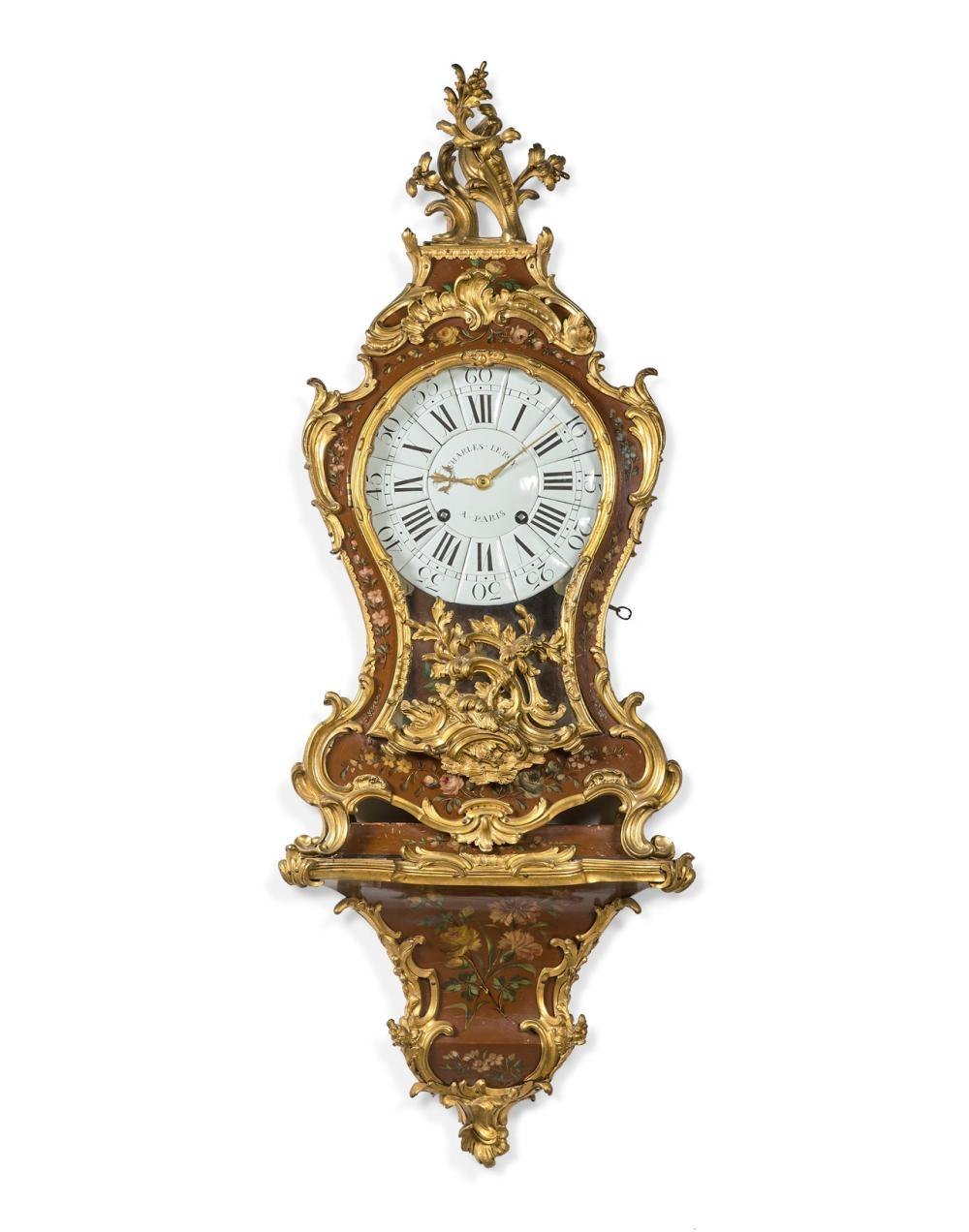
Cartel d'applique and matching console
- Maker / attribution
- Charles Le Roy (source attribution)
- Date
- Second quarter of the 18th century
- Historical period
- Early Modern Horology (1600 – 1750)
- Country of origin
- France
- Object type
- Bracket clock
- Dimensions
- 110 x 39 x 19 cm
- Auction house
- Tajan (via Invaluable)
- Lot
- 170
- Credit line
- Tajan (via Invaluable)
- Catalogue title (original)
- CARTEL D'APPLIQUE ET SA CONSOLE, SIGNÉ CHARLES LE ROY, DEUXIÈME QUART DU XVIIIe SIÈCLE de forme mouvementée en vernis martin à déc... (English)
View the source record (auction lot) ↗ (opens another website in a new tab)Suggest a correction
Record summary
Catalogued by Tajan (via Invaluable) (lot 170), this is a bracket clock attributed to Charles Le Roy, made in France, dated Second quarter of the 18th century. The Atlas places it in the Early Modern Horology period (1600 – 1750) of its Clocks collection. Recorded dimensions: 110 x 39 x 19 cm. The record is illustrated with 1 photograph.
Assembled from the source record's structured fields. Dates and attributions are given as the source states them; where a field is missing the Atlas leaves it blank rather than estimating.
Catalogue description
Original object description
Assigned to the second quarter of the 18th century and measuring 110 x 39 x 19 cm, this cartel d'applique and matching console bracket bears the mark of the Parisian clockmaker Charles Le Roy. Le Roy achieved master status in August 1733, working from workshops in the rue Saint-Denis and rue des Prêcheurs during the reign of Louis XV; after his death in 1771, the workshop continued under his son Étienne-Augustin Le Roy (eventually Horloger du Roi), making this ensemble a product of the mid-1700s family atelier. Rendered in vernis martin, the violon-shaped case and console display pink-toned floral sprays against a tobacco-brown lacquer ground, framed by contrasting gilded brass rocaille mounts cast with detailed foliage and blossoms. Formed of thirteen separate enamel plaques, the white dial is signed 'Charles Le Roy à Paris' and incorporates brass hands alongside Roman hour digits and Arabic minute numerals. Within, the rectangular movement features an anchor escapement, an exterior numbered count wheel, a rear spring suspension that represents a subsequent alteration, and a backplate inscribed with the same maker's signature found on the dial.
Historical context
Early Modern Horology (1600 – 1750)
Huygens' pendulum and balance spring transform accuracy; English makers develop the anchor and deadbeat escapements.
Huygens's pendulum (1656–57) improved clock accuracy from about a quarter of an hour to under a minute a day. The anchor escapement (c. 1670) and the long seconds pendulum created the longcase clock; London makers such as Fromanteel, Knibb, Tompion and Quare led European clockmaking, and French makers created the Boulle pendule.
Read the period in the timelineMore clocks from this periodEarlier: Renaissance Horology
Atlas type guide
Bracket, table and spring-driven clocks
Spring-driven clocks freed timekeeping from the hanging weight. The coiled mainspring, documented from the fifteenth century, made portable table clocks possible; to even out its declining force, makers used the fusee, a conical pulley connected to the barrel by a gut line or chain. Renaissance table clocks from Augsburg and Nuremberg — drum-shaped, square or tower-shaped in gilt brass — were luxury scientific objects, often with astronomical dials and alarms.
After the pendulum, English makers developed the bracket clock: a wooden case with a carrying handle, a short pendulum with a verge escapement, and often repeating work to sound the hours on demand at night. Later examples use the anchor escapement. In the nineteenth century, 'table clock' became a broad term for spring clocks of every nationality.
What to look for
- A fusee in the movement (cone-shaped pulley) and the type of line — gut or chain.
- Verge escapement with a short bob pendulum, often with a decoratively engraved backplate.
- Repeat cords or buttons that make the clock strike again on demand.
- Gilt-brass engraved cases and horizontal dials on Renaissance pieces.
- Case shapes: inverted bell, bell top, break-arch, lancet or balloon.
Dating clues
- Drum and tower table clocks: c. 1520–1650.
- Ebony veneered English bracket clocks with verge escapements: c. 1670–1800.
- Engraved backplates were usual on English clocks until c. 1800, then generally plain.
General guidance written by the Atlas editors about this kind of object. It is not a statement about this particular piece; for that, rely on the source record above and on physical examination.
Read next:FuseeVerge escapement
Related records
Movements & Components · 1700–1799
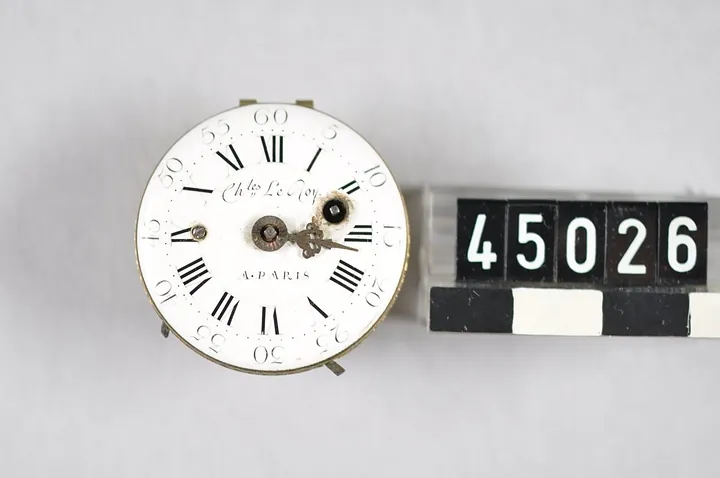
Watch movement by Charles Le Roy, France, 1700–1799
Swedish National Museum of Science and Technology
Pocket Watches · c. 1740 - c. 1750
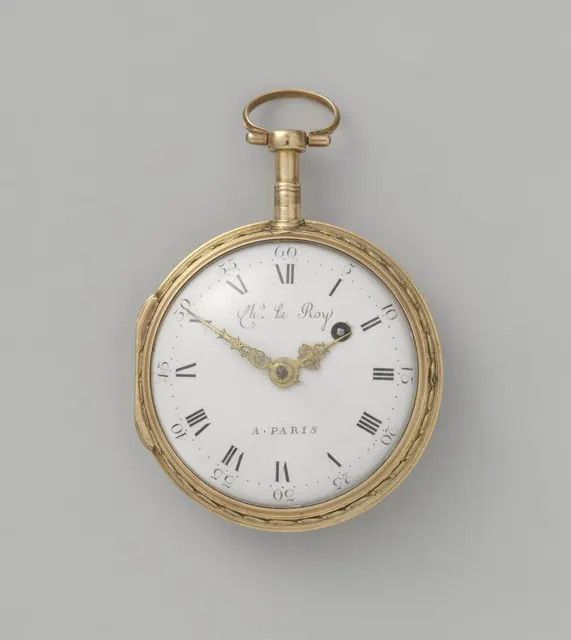
Watch with Ladies Sacrificing a Dove on the Altar of Love
Rijksmuseum
Pocket Watches · 1770–1800
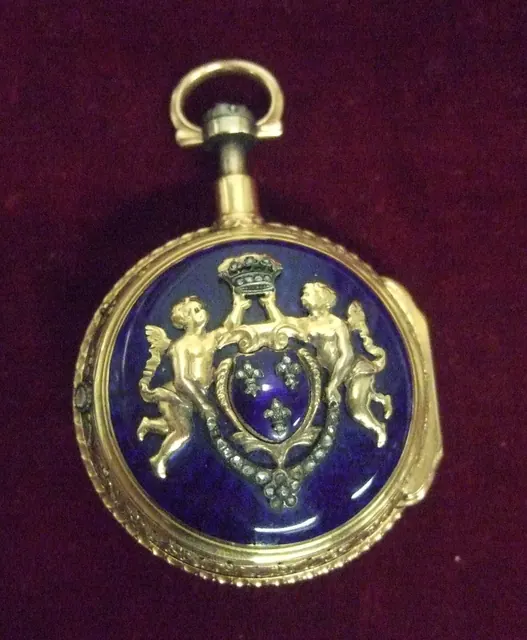
Watch by Charles Le Roy, France, 1770–1800
Musée du Louvre, Paris
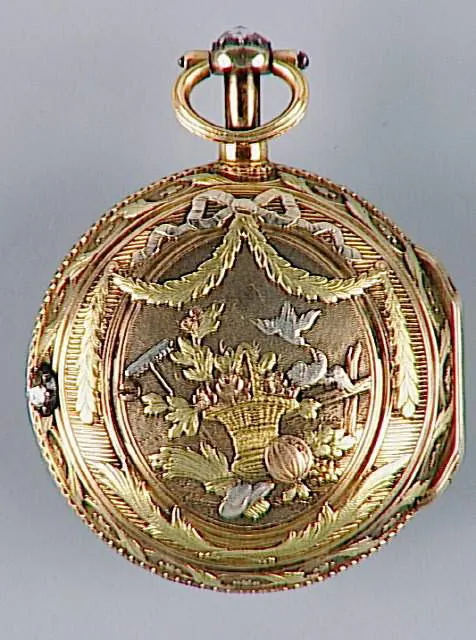
Pocket Watches · 1765–1766
Watch by Charles Le Roy, France, 1765–1766
Musée du Louvre, Paris
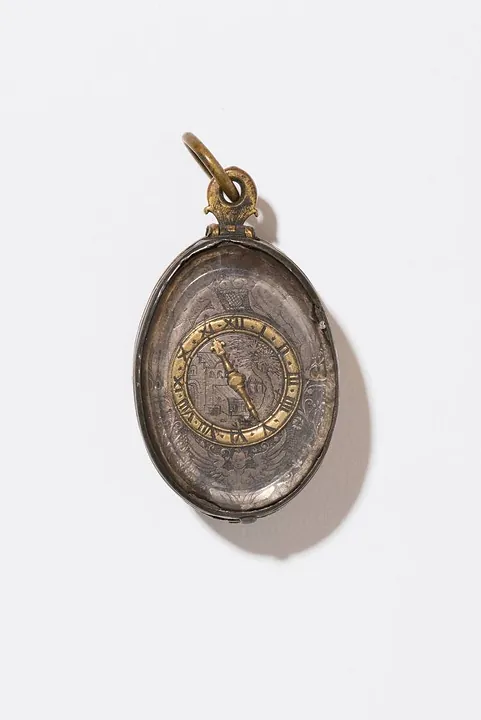
Clocks · 1590–1610
Clock, France, 1590–1610
MAK – Museum of Applied Arts
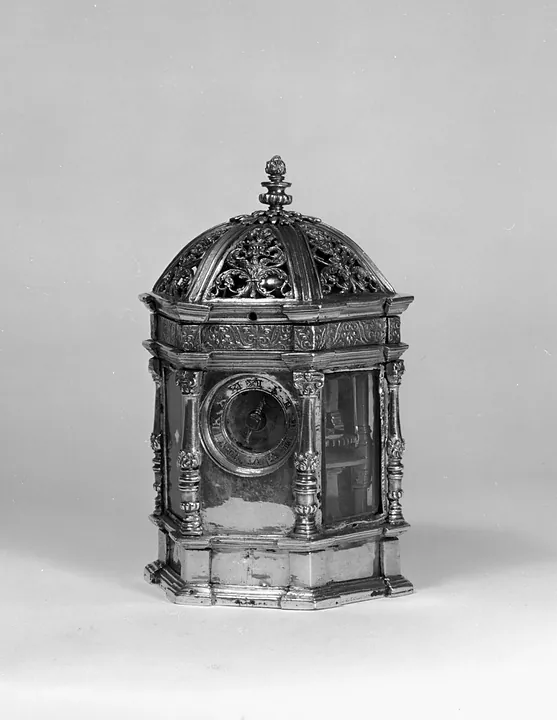
Clocks · c. 1600
Table Clock, sheet brass, engraved, pierced and gilt, Paris, ca.1600, signed 'B(?) Pichard, à Paris'
Victoria and Albert Museum, London
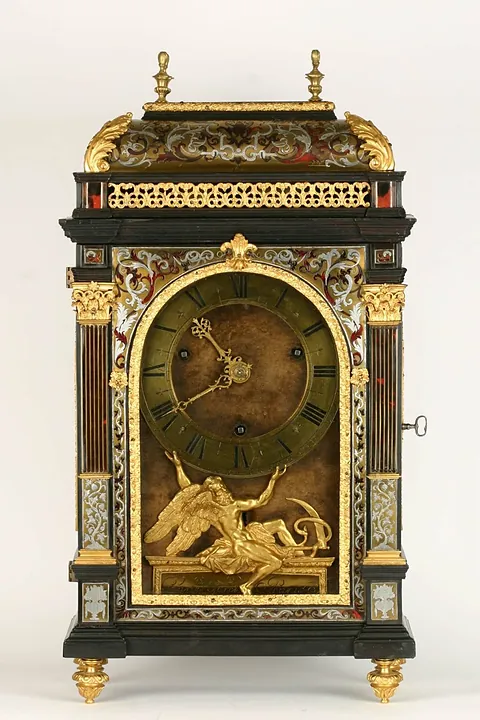
Clocks · 1600–1699
Table clock by Charles Goret, France, 1600–1699
German Clock Museum
Clocks · 1640
Table clock, France, 1640
Rijksmuseum