
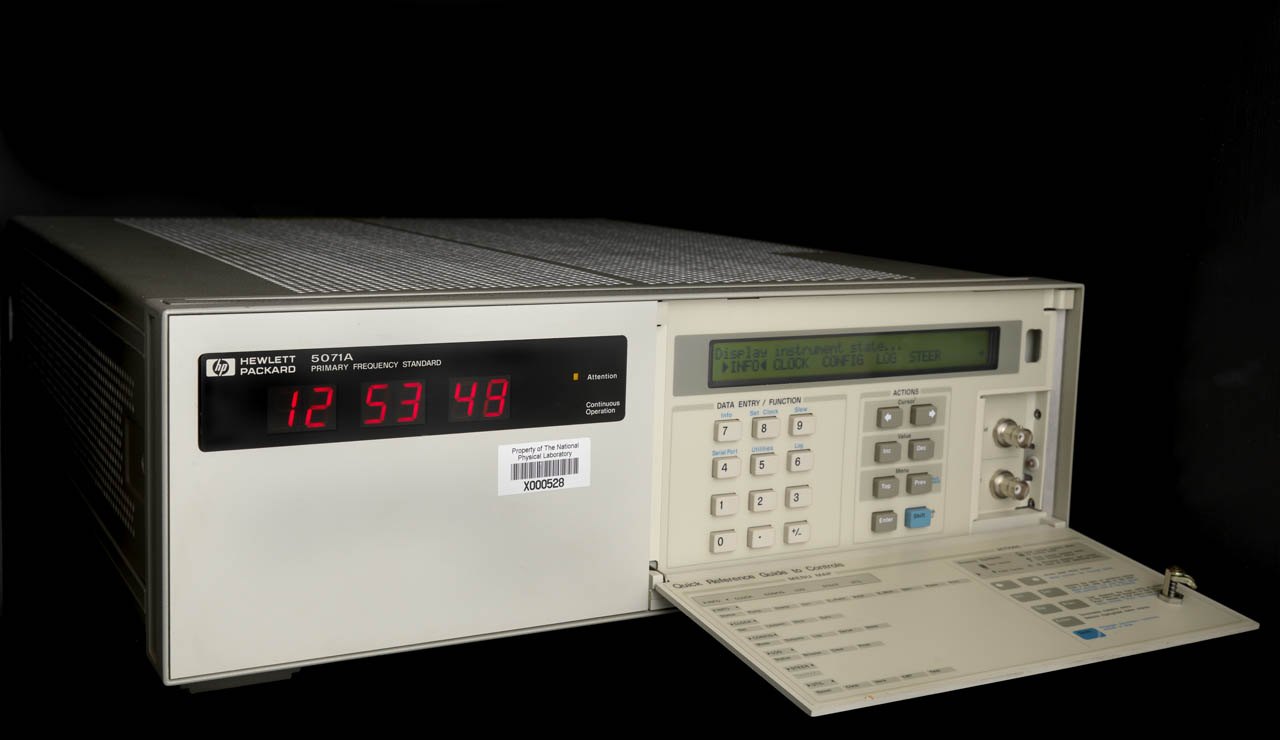
Clocks · Caesium atomic clock
Caesium atomic clock no. Hp5071a by Hewlett Packard
- Maker / attribution
- Hewlett Packard (maker)
- Date
- 1991
- Historical period
- Mechanical Renaissance (1990 – 2010)
- Country of origin
- Unrecorded in source
- Object type
- Caesium atomic clock
- Materials / technique
- metal; plastic
- Dimensions
- Overall: 135 x 425 x 525 mm
- Holding institution
- Royal Museums Greenwich
- Accession / object no.
- ZBA2599
- Credit line
- National Maritime Museum, Greenwich, London
- Catalogue title (original)
- HP5071A (English)
View the source record ↗ (opens another website in a new tab)Suggest a correction
Record summary
Held and catalogued by Royal Museums Greenwich (object number ZBA2599), this is a caesium atomic clock by Hewlett Packard, dated 1991. The Atlas places it in the Mechanical Renaissance period (1990 – 2010) of its Clocks collection. Materials and techniques recorded by the source: metal; plastic. Recorded dimensions: Overall: 135 x 425 x 525 mm. The record is illustrated with 1 photograph.
Assembled from the source record's structured fields. Dates and attributions are given as the source states them; where a field is missing the Atlas leaves it blank rather than estimating.
Catalogue description
Catalogue description — Royal Museums Greenwich
The National Physical Laboratory (NPL) made the first successful atomic clock in 1955. In 1967, the length of a second was redefined as an atomic measurement, rather than an astronomical one. This particular clock, by Hewlett Packard, was used at the NPL in the 1990s for its contribution to the global timescale, called 'UTC'. It was decommissioned in 1999. Presented by the National Physical Laboratory
Historical context
Mechanical Renaissance (1990 – 2010)
Mechanical watches return as cultural objects; independent watchmaking flourishes.
Mechanical clocks returned as luxury and craft objects, alongside radio-controlled and designer quartz clocks. Independent makers and restorers revived traditional techniques, and museums increasingly documented industrial and electric clocks as heritage.
Read the period in the timelineMore clocks from this periodEarlier: Quartz Revolution
Atlas type guide
Quartz, atomic and electronic time standards
In 1927 Warren Marrison and J. W. Horton at Bell Telephone Laboratories built the first quartz clock, which used the piezoelectric vibration of a quartz crystal as its oscillator. Quartz clocks replaced pendulum regulators in observatories in the 1930s and 1940s and revealed irregularities in the Earth's rotation. In 1955 Louis Essen and Jack Parry at the National Physical Laboratory in Britain operated the first practical caesium atomic clock; in 1967 the SI second was redefined in terms of the caesium-133 transition.
Atomic and quartz standards are distributed by radio time signals, telephone 'speaking clocks', and today by satellite navigation and network time protocols. Objects in this group — oscillators, frequency dividers, receivers, master clocks — document the transition from mechanical to electronic timekeeping.
What to look for
- Laboratory racks, oscillator ovens and frequency counters rather than dials.
- Makers' labels from national laboratories, observatories or telecom companies.
- Indications of frequency (e.g. 100 kHz, 9,192,631,770 Hz for caesium).
Dating clues
- Quartz observatory clocks: from about 1930.
- Caesium standards: from 1955.
- Radio-controlled consumer clocks: from the 1980s.
General guidance written by the Atlas editors about this kind of object. It is not a statement about this particular piece; for that, rely on the source record above and on physical examination.
Read next:The Quartz Revolution era
Related records
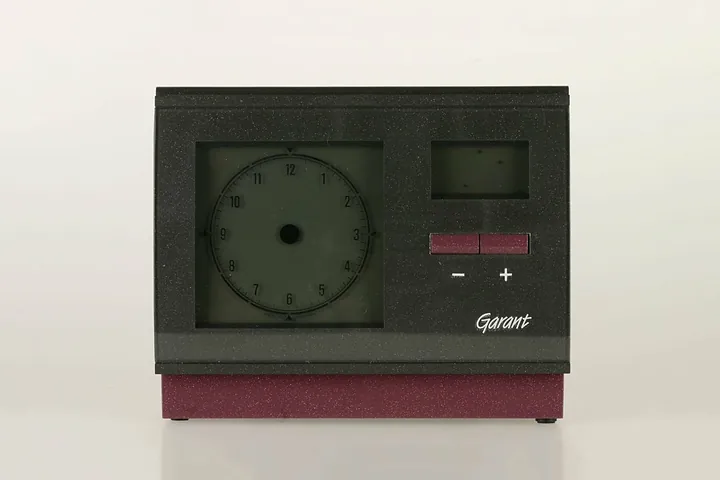
Clocks · c. 1990
Alarm clock by Andreas GmbH und Co. Haller, Germany, c. 1990
German Clock Museum
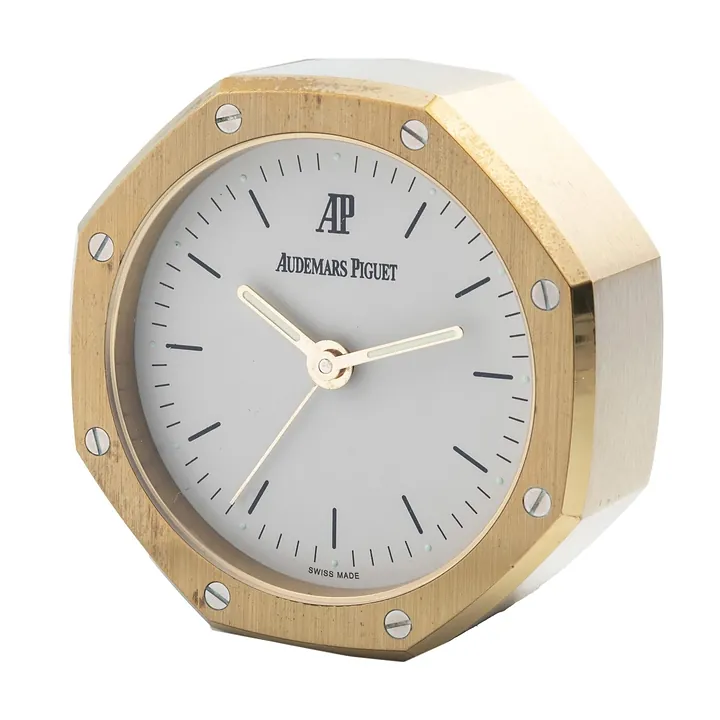
Clocks · c. 1990s
Audemars Piguet Royal Oak, c. 1990s
Antiquorum auction archive, Geneva
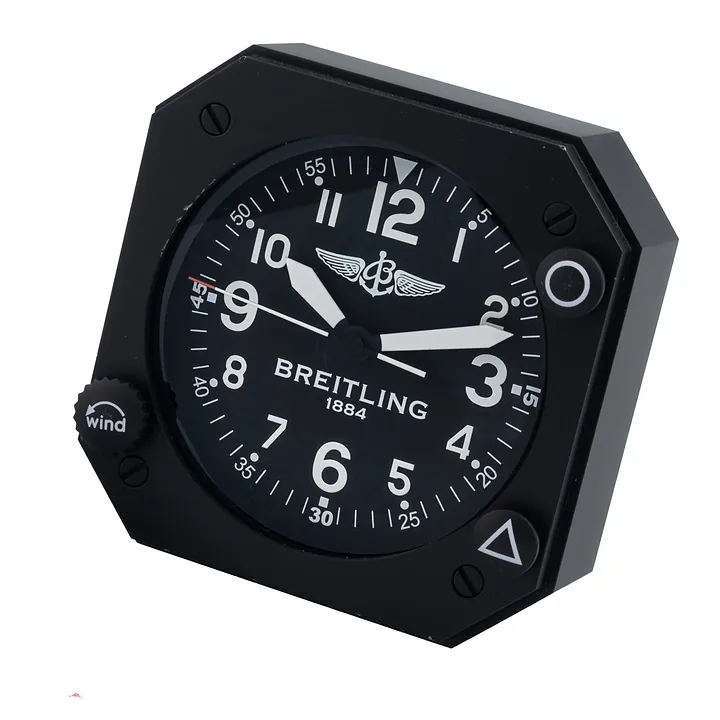
Clocks · c. 1990s
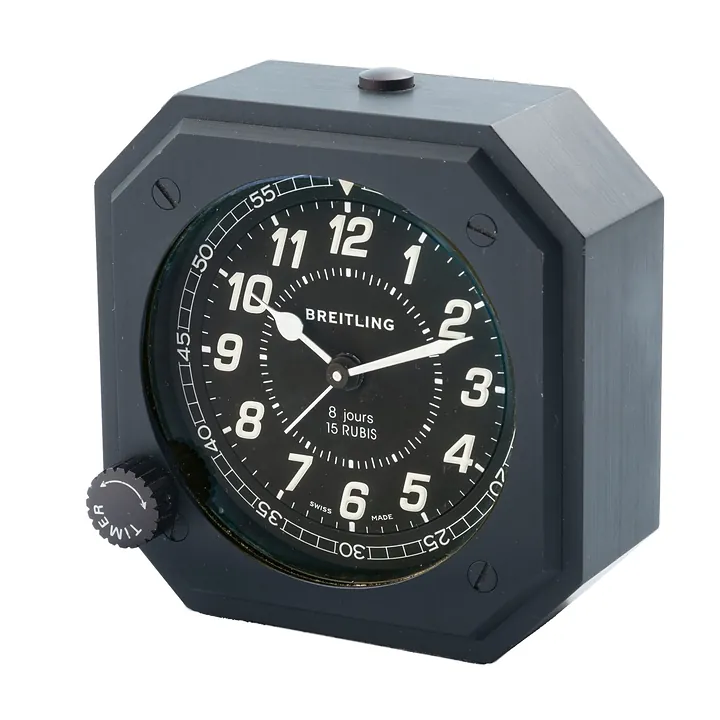
Breitling clock, c. 1990s (Antiquorum Lot 389-18)
Antiquorum auction archive, Geneva
Clocks · c. 1990s
Breitling clock, c. 1990s (Antiquorum Lot 389-20)
Antiquorum auction archive, Geneva
Clocks · c. 1995
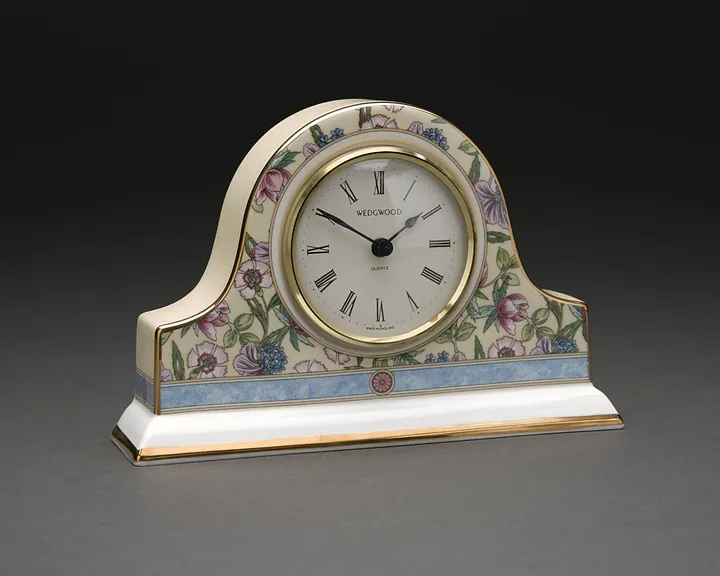
Clock, Bone China with transfer printing, Josiah Wedgwood and Sons, Barlaston, c. 1995 (V&A WE.18792-2014)
Victoria and Albert Museum, London
Clocks · c. 1995
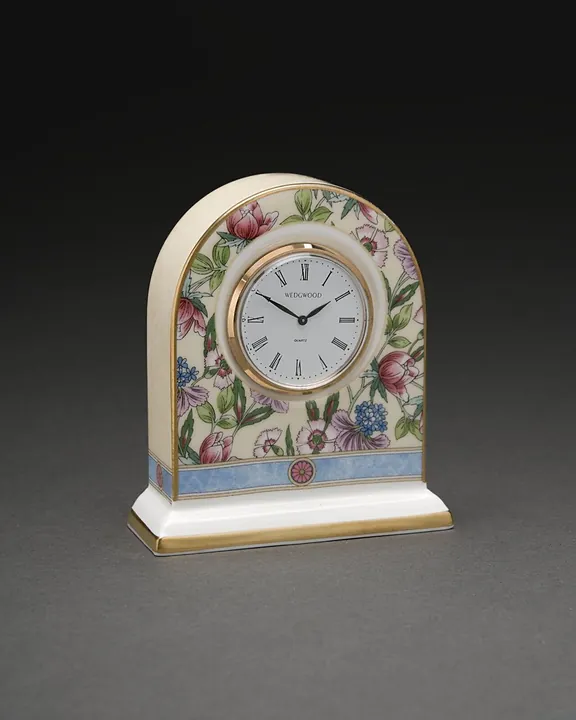
Clock, Bone China with transfer printing, Josiah Wedgwood and Sons, Barlaston, c. 1995 (V&A WE.18793-2014)
Victoria and Albert Museum, London
Clocks · c. 1990
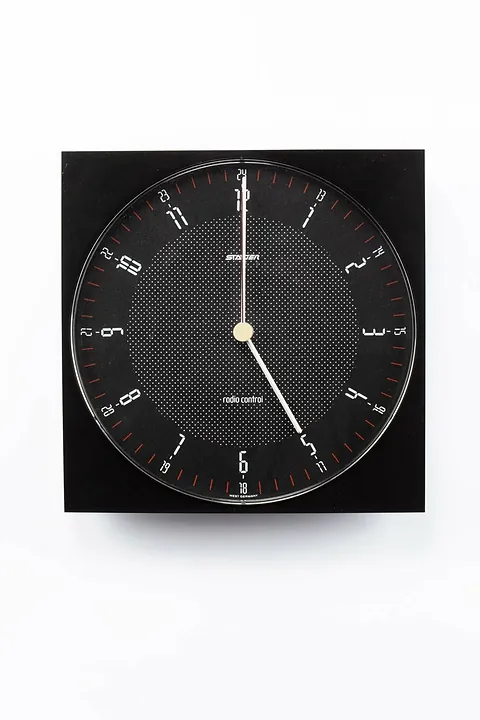
Electric clock by Werner Staiger, Germany, c. 1990
German Clock Museum
Clocks · 1991
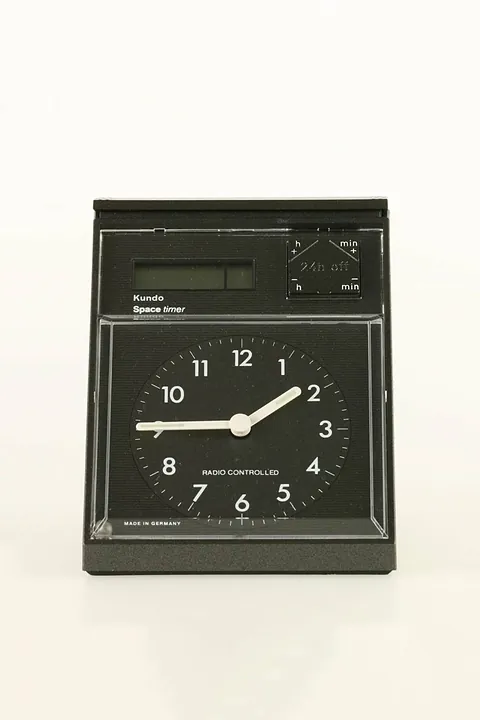
Alarm clock by Kieninger und Obergfell (Kundo), Germany, 1991
German Clock Museum