
Wristwatches · Wristwatch
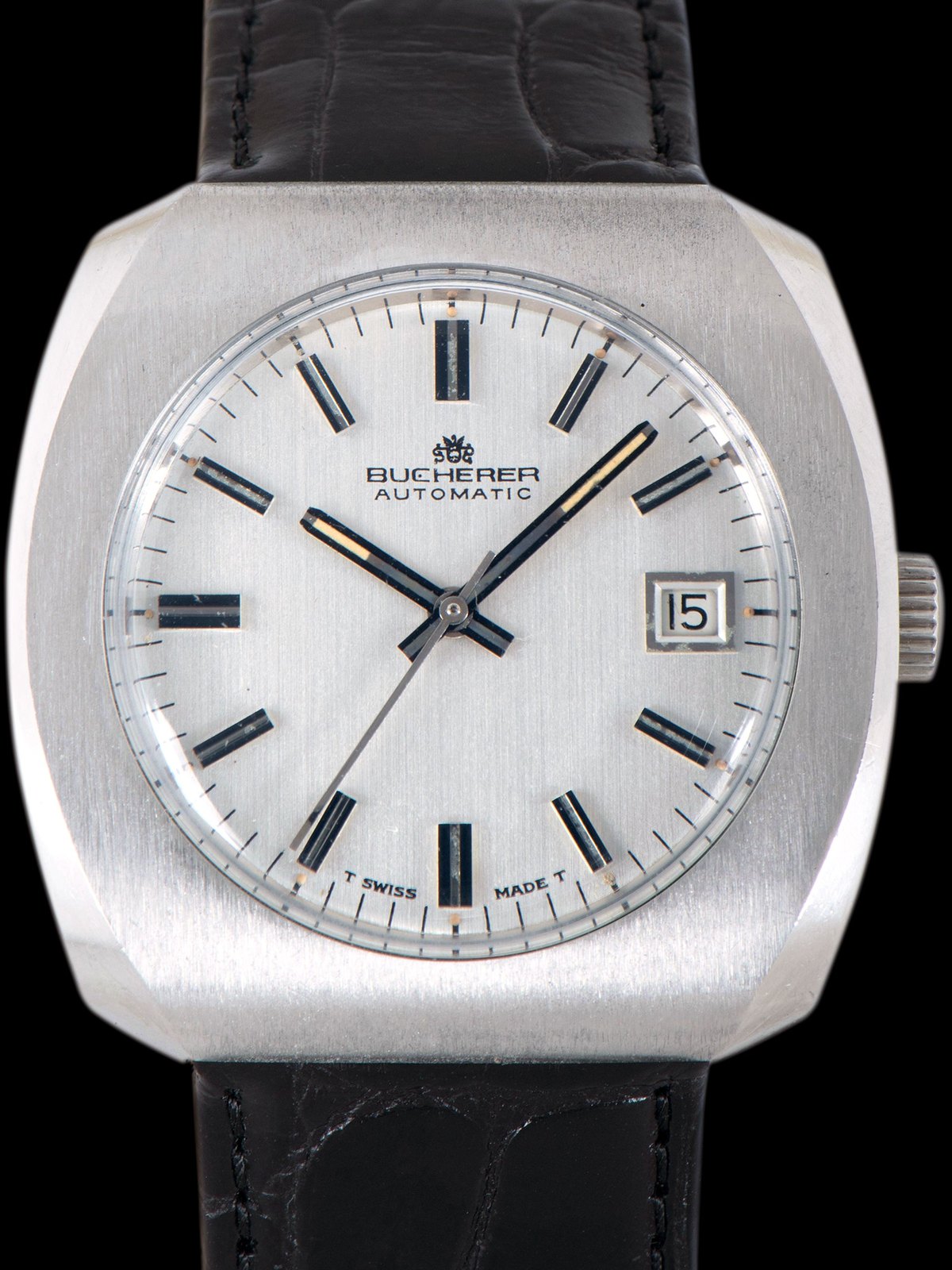
Bucherer Automatic Cushion Case Watch, 1970s
- Maker / attribution
- Bucherer (maker)
- Date
- 1970s
- Historical period
- Quartz Revolution (1969 – 1990)
- Country of origin
- Unrecorded in source
- Object type
- Wristwatch
- Stock no.
- BUCSDW-2
- Credit line
- Dealer listing, Craft & Tailored (BUCSDW-2)
- Catalogue title (original)
- 1970s Bucherer Automatic Cushion Case Watch (English)
View the source record (dealer listing) ↗ (opens another website in a new tab)Suggest a correction
Record summary
Catalogued by Craft & Tailored (dealer), Los Angeles (stock number BUCSDW-2), this is a wristwatch by Bucherer, dated 1970s. The Atlas places it in the Quartz Revolution period (1969 – 1990) of its Wristwatches collection. The record is illustrated with 6 photographs.
Assembled from the source record's structured fields. Dates and attributions are given as the source states them; where a field is missing the Atlas leaves it blank rather than estimating.
Catalogue description
Dealer description — Craft & Tailored
Considering the brand has been around in some form or fashion since 1888, Bucherer is one of the lesser-known Swiss brands out there. Initially founded by Carl-Friedrich Bucherer and his wife Luise, the brand started out as Lucerne's first watch and jewelry shop before adding a watchmaking extension in 1919. Like Turler, Tiffany and many other large-scale jewelers, Bucherer also did a lot of co-branding and white labeling of watches, like this gold-plated beauty. Featuring a striking, brushed, squared-off case with hidden lugs and a brushed silver dial, this piece from the '70s is somehow both subdued and conspicuous at the same time. And with nearly 150 years of history, its a piece about which there's plenty to talk about. Stock # BUCSDW-2 Brand Bucherer Style Cushion Case Watch Model N/A Serial 6981 Size Men's Material Stainless Steel Dial Silver Millimeters 35 X 35 Strap 2pc Leather Strap CASE & BRACELET The brushed stainless steel case retains fantastic beveling and angles, with light signs of use and only light evidence of previous polishing present. We believe it has its original unsigned crown. The case back is incredibly clean with almost no signs of use and the factory engraving still highly legible. The watch comes supplied on a two-piece crocodile leather strap. DIAL & HANDS The brushed silver dial is immaculate with almost no signs of wear or age. The lume plots have aged to a light cream color and show some light degradation. The date window at 3 o'clock shows light oxidation from age but is others in fantastic condition. The baton-style hands are incredibly clean, and the inlaid lume matches the dial well with no degradation present under UV light inspection. ACCESSORIES None. The watch is keeping time, previous service history is unknown.
Historical context
Quartz Revolution (1969 – 1990)
Seiko's Astron begins mass quartz timekeeping; traditional industries contract sharply.
Quartz and digital watches transformed the market after 1969. Swiss employment collapsed, Japanese and Hong Kong production soared, and the Swatch (1983) helped the Swiss industry recover; mechanical watches survived as luxury goods.
Read the period in the timelineMore wristwatches from this periodEarlier: Modern Mechanical Horology
Atlas type guide
Automatic (self-winding) watches
Self-winding watches use the wearer's motion to wind the mainspring. Abraham-Louis Perrelet and Breguet made 'perpétuelle' pocket watches with oscillating weights in the late eighteenth century, but the principle only became practical in the wristwatch. John Harwood patented a bumper automatic in 1923; Rolex's Perpetual rotor (1931) winding in one direction, and later bidirectional rotors (Eterna, Felsa Bidynator), established the modern form. Micro-rotors (Universal Genève, Buren) and peripheral rotors made automatic watches thinner.
What to look for
- A semicircular rotor turning 360° over the movement, or a 'bumper' weight that rebounds between springs.
- 'Automatic', 'Perpetual' or 'Self-winding' on the dial.
- A sealed screw-back case, since automatic watches are wound less often by the crown.
Dating clues
- Bumper automatics: 1923–c. 1955.
- Full rotors: from 1931 (Rolex); widespread after c. 1950.
- Micro-rotors: from 1954–1958.
General guidance written by the Atlas editors about this kind of object. It is not a statement about this particular piece; for that, rely on the source record above and on physical examination.
Related records
Wristwatches · c. 2000
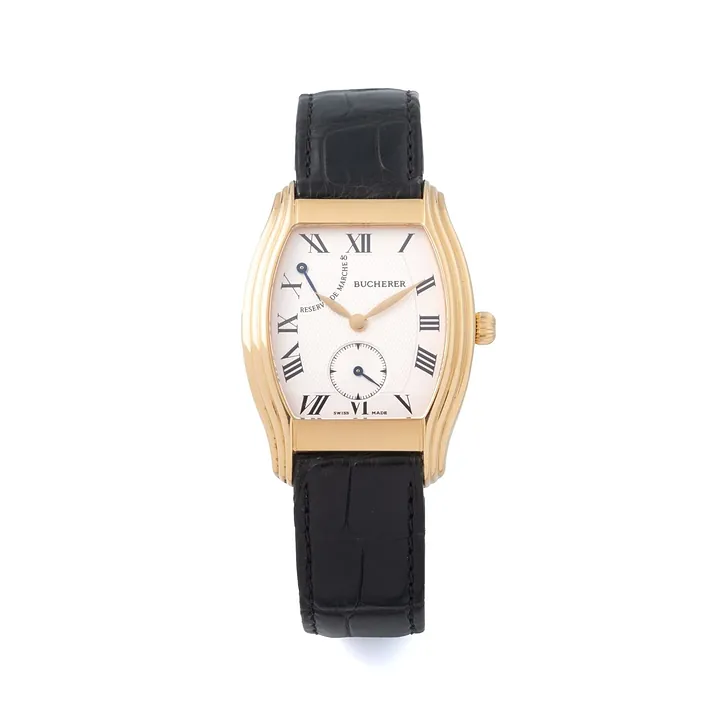
Bucherer Archimedes, ref. 1004-001, c. 2000
Antiquorum auction archive, Geneva
Wristwatches · c. 1970
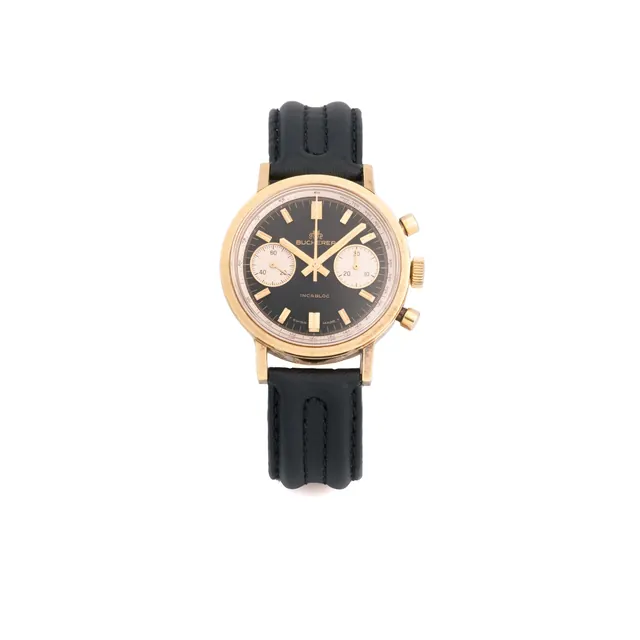
Bucherer wristwatch, Minute Counter Black Dial, circa 1970
Antiquorum auction archive, Geneva
Pocket Watches · c. 1925
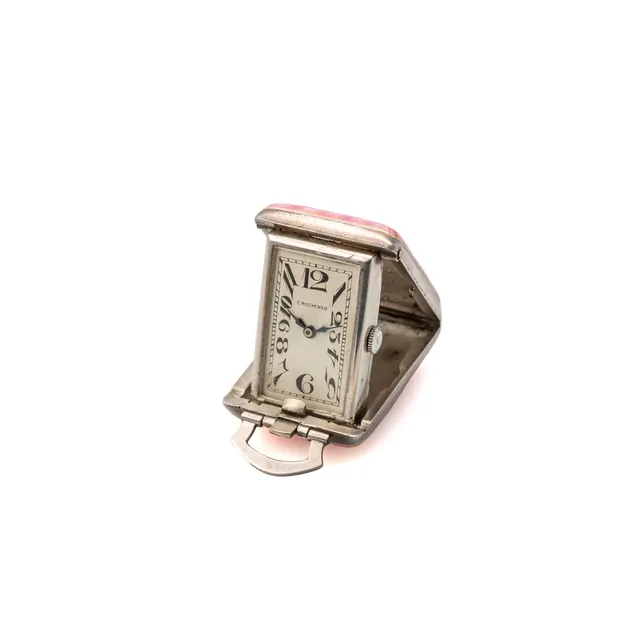
Bucherer pocket watch, Pink Enamel, circa 1925
Antiquorum auction archive, Geneva
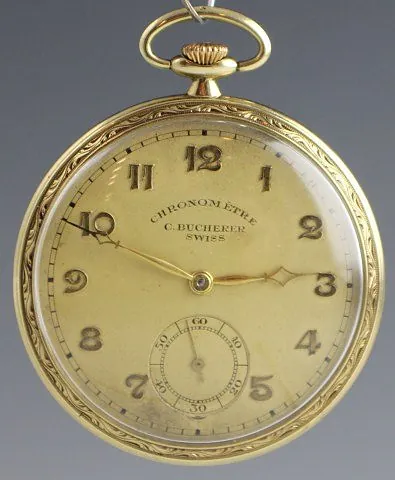
Pocket Watches · c. 1900
Mens 14K gold pocket watch by Bucherer, c. 1900
LiveAuctioneers auction archive

Wristwatches · 1970
Wristwatch by Heno, Switzerland, 1970
Museum Rotterdam
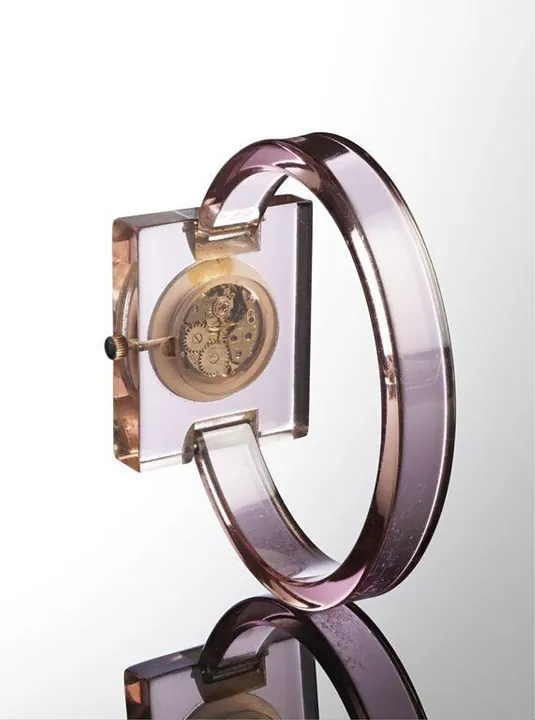
Wristwatches · 1970s
Wristwatch, plastic, by Gucci; Italy, 1970s.
Victoria and Albert Museum, London
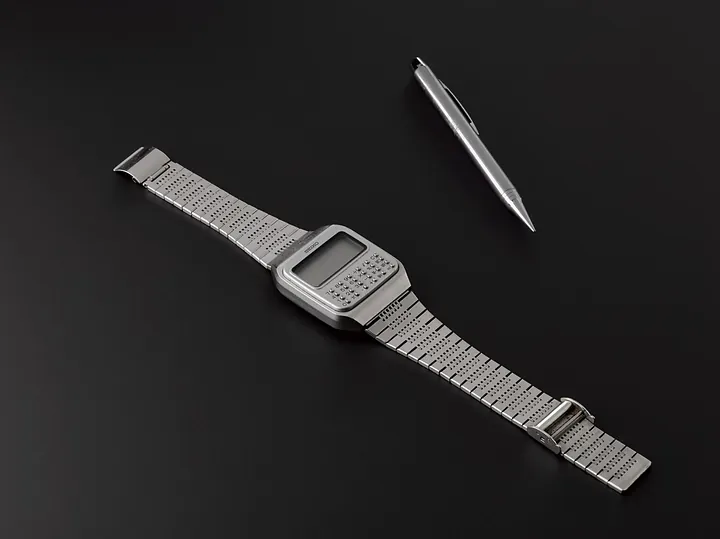
Wristwatches · 1978
Calculator wristwatch by Suwa Seikosha Co. Limited, Japan, 1978
Science Museum Group, London
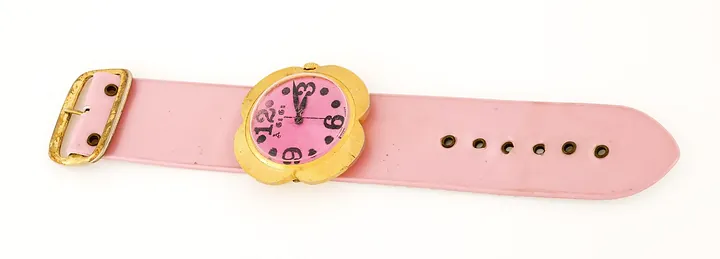
Wristwatches · 1980
Wristwatch, 1980 (no. 71413)
Museum Rotterdam